How it works · · 5 min read
The Timestamp on an Orbit: How Fast a Catalogued Position Goes Wrong
An element set is a measurement with an expiry date, good to about a kilometre when it is taken. The orbits behind GCAT's 315 objects below 250 kilometres have a median age of 57 days.
A satellite catalog looks like a list of facts. Object 61504 is at 82 by 1,565 kilometres; object 100753 is at 245 by 261. Read it that way and you will be wrong about most of it, because each row is not a property of the object but a measurement of it, taken at one moment and carried forward by arithmetic ever since. The useful question about a catalogued orbit is not where the object is. It is when somebody last looked.
The problem class: a position with an expiry date
Nothing in orbit is observed continuously. A radar or telescope sees an object for a few seconds as it crosses the beam, and a handful of those passes are fitted into a set of orbital elements that reproduces them. From then on, software propagates the fit forward. The elements carry an epoch — the instant the fit refers to — and the gap between that epoch and now is the most informative number in the row.
How good is the fit at its best? For the public two-line element sets and the SGP4 propagator they belong to, "the accuracy of the propagator is generally in the kilometer-level range", as the standard reference on the format puts it Vallado et al.. A kilometre, on the day it was made, for an object moving at 7.7 kilometres a second — and that is the ceiling, not the typical case.
What the element set does not contain
Two things are missing from a two-line set, and both matter more than the precision of the digits.
The first is any statement of its own quality. A review of conjunction-analysis practice for ESA's 2021 space debris conference puts it flatly: the element set "does not provide accuracy of the orbit", and notes "the lack of orbital uncertainty information (as is also the case with TLE)" Kerr & Sanchez Ortiz. A serious collision assessment needs a covariance — a description of how uncertain the position is, in which directions — and that normally comes from the orbit determination process rather than from the published elements.
The second is portability. The numbers are mean elements, with the periodic wobbles of the real orbit averaged out in a way only its own propagator knows how to put back. Feed them to a better integrator and you get a worse answer: "using this TLE data in another general perturbations propagator will result in completely erroneous results" Vallado et al.. The format is a matched pair of data and model, and borrowing half of it is a common and expensive mistake.
Why it goes stale, and why low means faster
The term that ruins a propagation is drag. Above roughly 800 kilometres an orbit holds its shape for years; below 400 the air is thick enough to matter within days, and its thickness is not constant. It swells with solar activity and geomagnetic storms, and an object's response depends on its mass, cross-section and attitude — whether a derelict is tumbling or flying edge-on, which nobody is measuring.
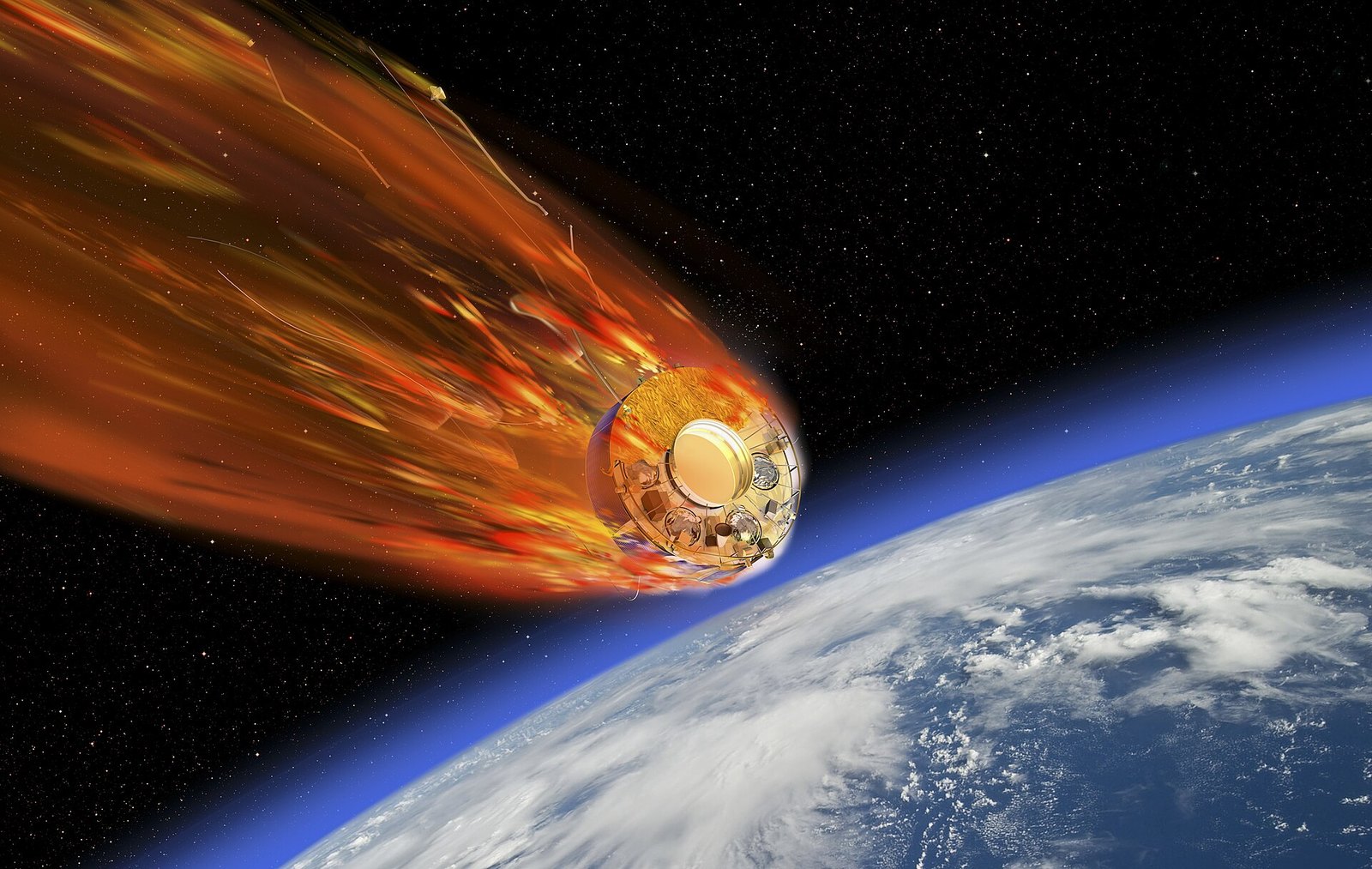
So the useful life of an element set is not fixed. For a GEO object it may be weeks; for something at 250 kilometres in an active sun it can be less than a day, and the error does not stay put: "the further into the future a state is propagated the worse the accuracy" Kerr & Sanchez Ortiz. The practical consequence is that the objects whose orbits age fastest are exactly the ones closest to reentry, which is where we wrote about prediction windows widening to plus or minus twenty per cent.
How often anybody actually looks
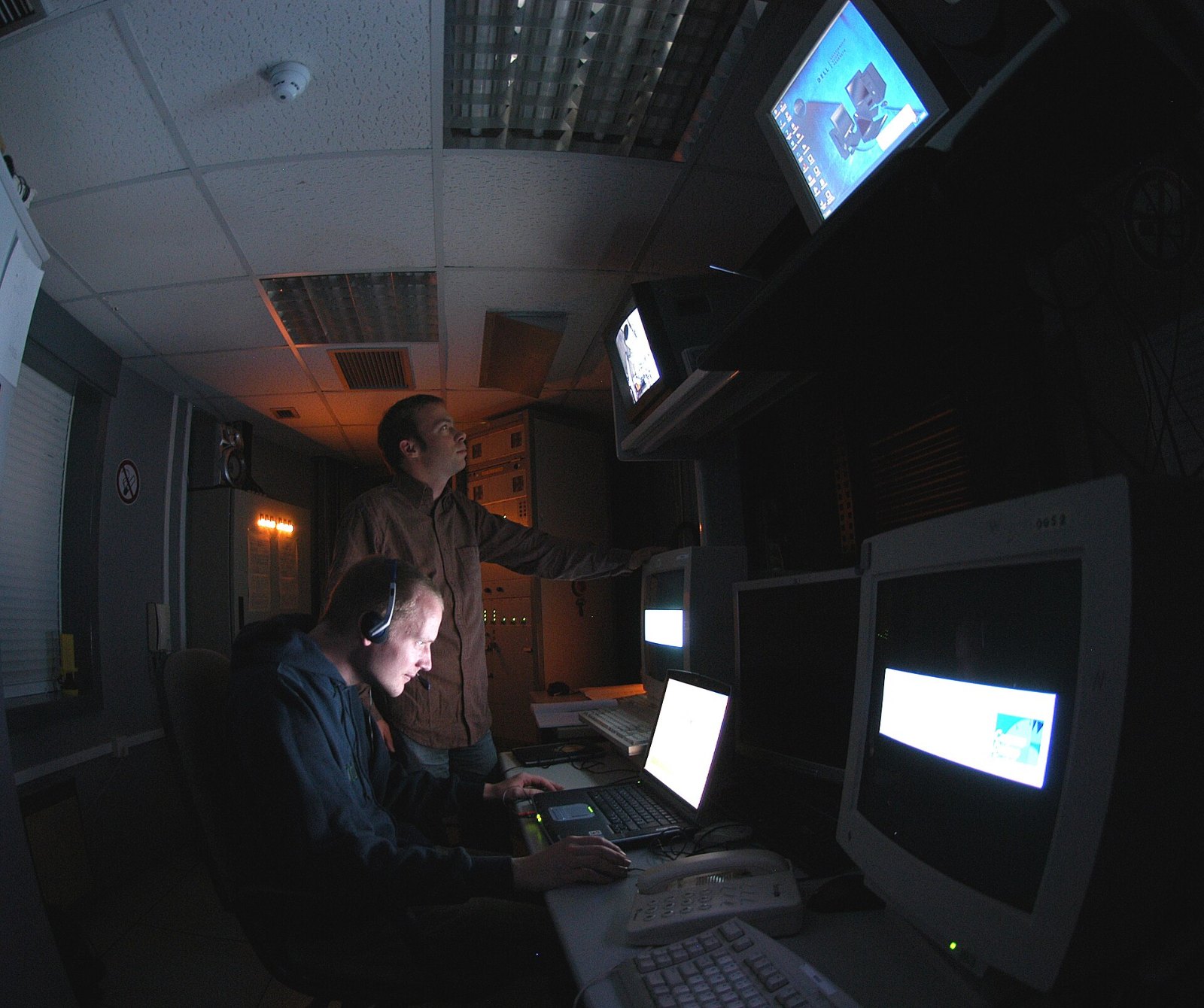
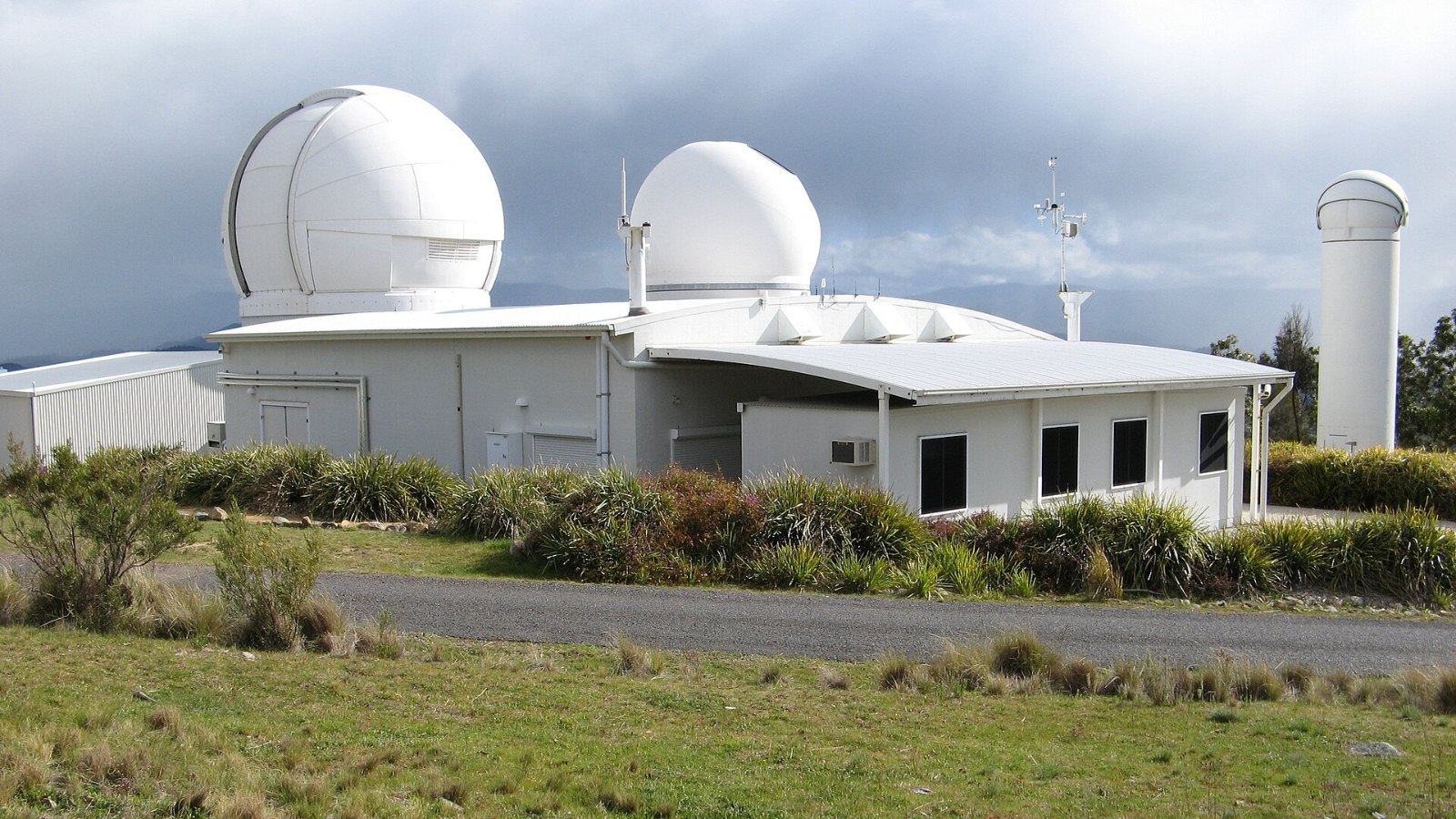
The operational machinery is faster than most readers assume. USSPACECOM describes element sets on Space-Track as "updated at least once per day", against "an average of 50,000 new elsets each day", with "multiple conjunction assessment screenings per day" and some 650,000 conjunction data messages issued daily USSPACECOM. Precision instruments do far better than a kilometre: satellite laser ranging, Flown for decades at stations such as Mount Stromlo, measures range to centimetres, and ESA's TIRA radar can "detect debris and determine coarse orbit information for objects of diameters down to 2 cm" ESA.
The catch is that none of this is uniform. Sensor time is finite and tasked by priority. Catalogue maintenance in low orbit covers objects "typically greater than 10 cm" ESA, and ESA counts about 47,140 objects in catalogues against a modelled 68,450 above that threshold ESA DISCOS. A crewed station, a launch in progress and an active constellation get attention; a thirty-year-old upper stage with no owner gets what is left, and the public record is a further subset of that.
Reading the age yourself
Every row in GCAT carries an ODate field: the date of the orbital elements behind the perigee and apogee printed beside it GCAT. It is the field to read first. In the current file, the 315 catalogued objects in low orbit with a perigee below 250 kilometres have element dates with a median age of 57 days, and twelve of them were last measured more than a year ago — including a Long March 3B third stage listed at an 82-kilometre perigee on elements from February 2025 GCAT. Our own decay queue only admits objects whose elements are less than 30 days old, which is why it lost 28 entries overnight on 21 October without a single reentry, as today's briefing describes.
The same discipline applies to any conjunction screening, including ours. A predicted miss distance inherits the age of the two orbits behind it, which is why our close-approach pages carry the screening date, recompute each encounter with newer orbit data and flag the pairs where the two answers disagree — and why they state plainly that the probability figures assume a position uncertainty, because public orbit data carries none. The warning-to-manoeuvre chain described in one in ten thousand is largely a story about replacing old orbits with fresh ones before committing propellant.
ClearOrbit's view
The catalog is a good census and a poor map. It tells you how many objects there are and roughly where they live; it is not built to say where one derelict will be next Tuesday to the accuracy a rendezvous needs. That is not a flaw to complain about but a design reflecting who has been paying for the observations, and why.
It does set a requirement that removal work cannot dodge. A capture mission needs its target's orbit fresh and with a stated uncertainty, which means either dedicated tracking in the weeks before approach or the spacecraft's own sensors finding the object from a coarse prior. Both are Proposed rather than routine today, and the first uncooperative capture will probably use both.
What we would argue for is cheaper than either: a published ephemeris service for derelicts, at a stated cadence and accuracy, for the few hundred large objects that dominate the risk. The sensors and the formats already exist. It is a ClearOrbit vision only in the sense that nobody has decided to fund the dull work of pointing them at objects with no operator to ask — and until somebody does, the targets of the first removal missions will be the objects we know least precisely of all.
Reader mail
Have a better idea?Spotted something we got wrong?
We publish in public so the numbers can be checked. If a figure looks wrong, a source is missing, or you know something this piece should have said, send it over. One box, no sign-up.
Send an idea or correctionQuick question
If you could fund one thing first to cut collision risk in low Earth orbit, what would it be?
Anonymous. You will see how others answered after you vote.
Sources
- Vallado, Crawford, Hujsak & Kelso, Revisiting Spacetrack Report #3, AIAA 2006-6753
- Kerr & Sanchez Ortiz, State of the Art and Future Needs in Conjunction Analysis, 8th European Conference on Space Debris (2021)
- USSPACECOM, Space-Track.org demonstration (UNOOSA)
- ESA, Scanning and observing
- ESA Space Environment Statistics
- GCAT, J. McDowell