How it works · · 6 min read
One in Ten Thousand: How a Close-Approach Warning Becomes a Manoeuvre
A low-orbit satellite gets hundreds of close-approach alerts a week and burns its thrusters about once a year. Here is the filter in between, and why it does nothing for the 14,075 objects that cannot be steered.
The problem class: hundreds of warnings, one burn a year
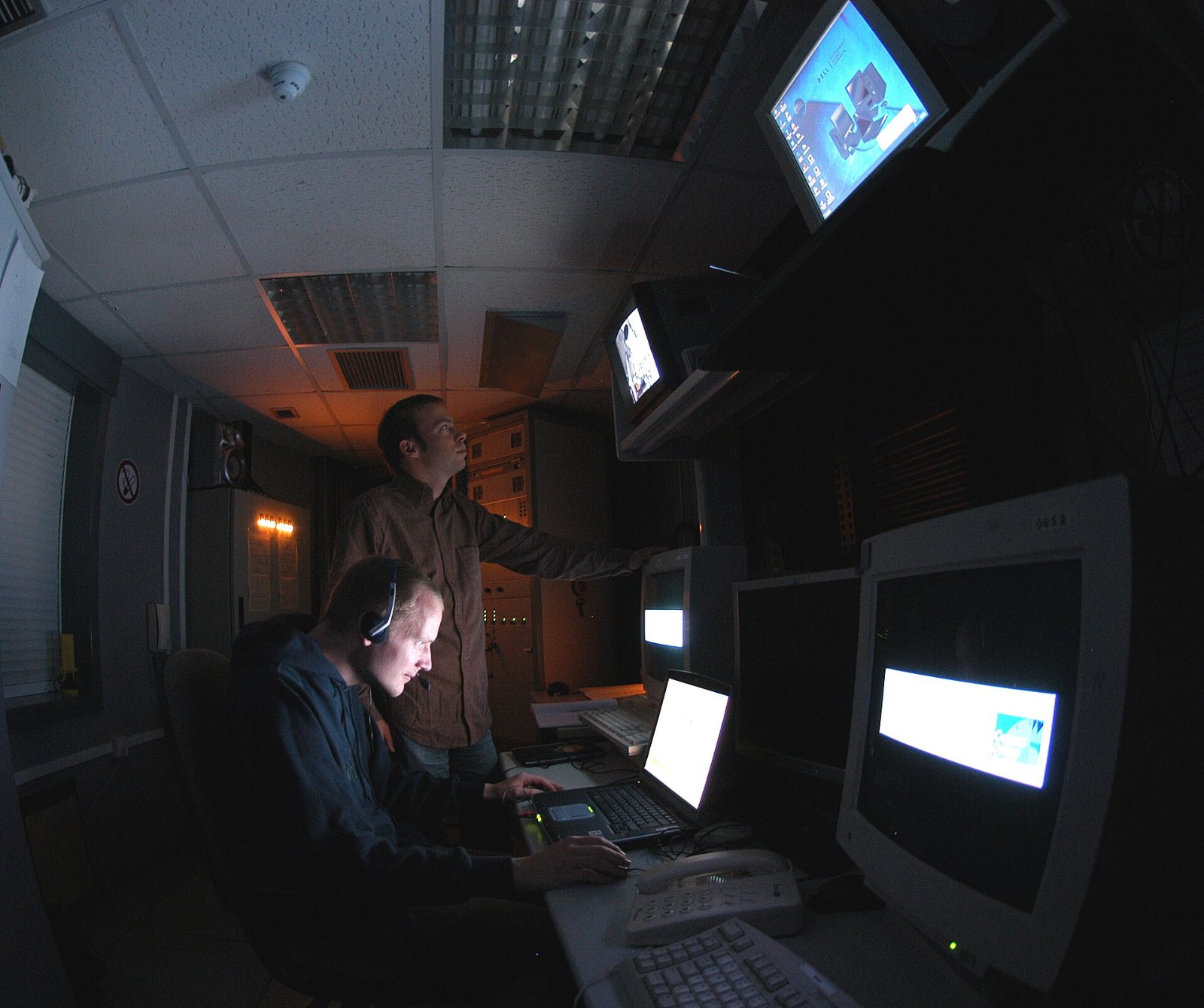
A satellite in low Earth orbit is warned about close approaches constantly. ESA reports that a typical low-orbiting spacecraft receives hundreds of conjunction alerts per week, that about two of those per satellite per week need an analyst to sit down with them for hours, and that ESA ends up performing more than one avoidance manoeuvre per satellite per year on average, mostly because of debris ESA.
That is a filter with a ratio of roughly ten thousand to one, and it is the most consequential piece of unglamorous engineering in orbit today. Everything that keeps working satellites from hitting things runs through it, and nothing in it helps an object that cannot be steered, which is where this explainer ends.
Step 1: screening, and what an alert actually is
Screening does not look for collisions. It looks for proximity. A volume is drawn around the protected satellite and moved along its predicted path through the catalog; anything that penetrates it generates a Conjunction Data Message. Current practice screens about a week ahead, and in low orbit the predicted positions are usually tabulated at one-minute steps NASA CARA.
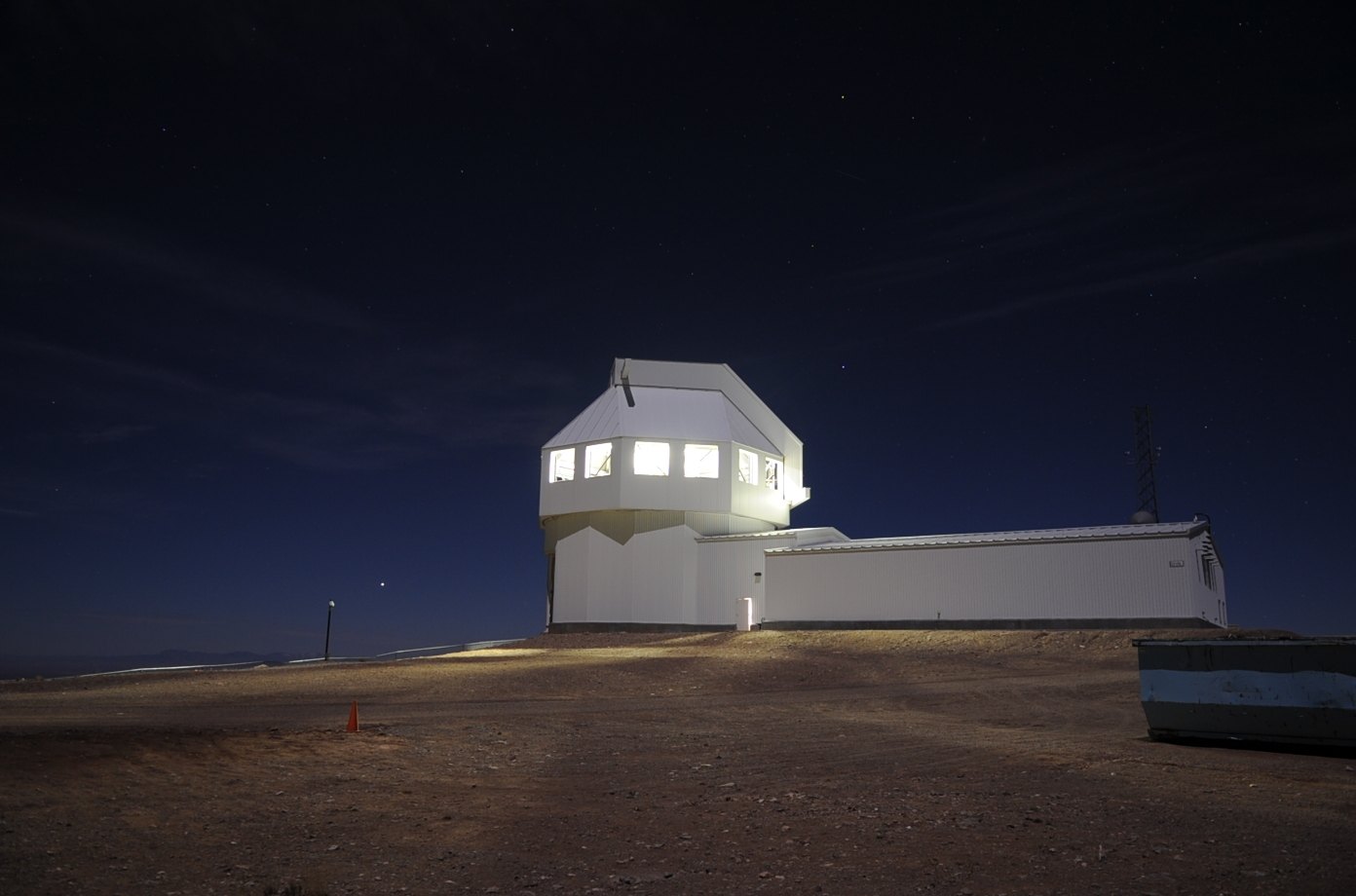
The principal supplier is the US Space Force's 18th Space Defense Squadron, and each message carries the predicted positions at closest approach, the covariance — the formal uncertainty — attached to each, and details of the orbit determination behind it NASA CARA. NASA's guidance is blunt about how to read one: these are not collision warnings. They are proximity alerts, and the risk assessment is a separate job.
This is why a raw alert count is nearly meaningless as a safety statistic. A screening volume generous enough to catch the dangerous cases catches hundreds of harmless ones, and shrinking it to cut the noise just means missing events whose uncertainty was larger than the box. What matters more is the breadth of the catalog behind it, and that catalog has hard edges of its own, as how tracking works sets out.
Step 2: turning a miss distance into a probability
The quantity that drives decisions is the probability of collision, written Pc. It is not the chance of passing close; it is the chance that the true miss distance proves smaller than the two objects' combined size, integrated over all the ways the prediction could be wrong. A comfortable predicted miss with enormous uncertainty can carry more risk than a tighter pass that is precisely known.
NASA's thresholds are explicit. A Pc above one in ten million warrants operational attention. A Pc above one in ten thousand requires mitigation action NASA CARA. ESA works to a comparable trigger, typically beginning to prepare a manoeuvre once collision probability exceeds about one in ten thousand ESA.
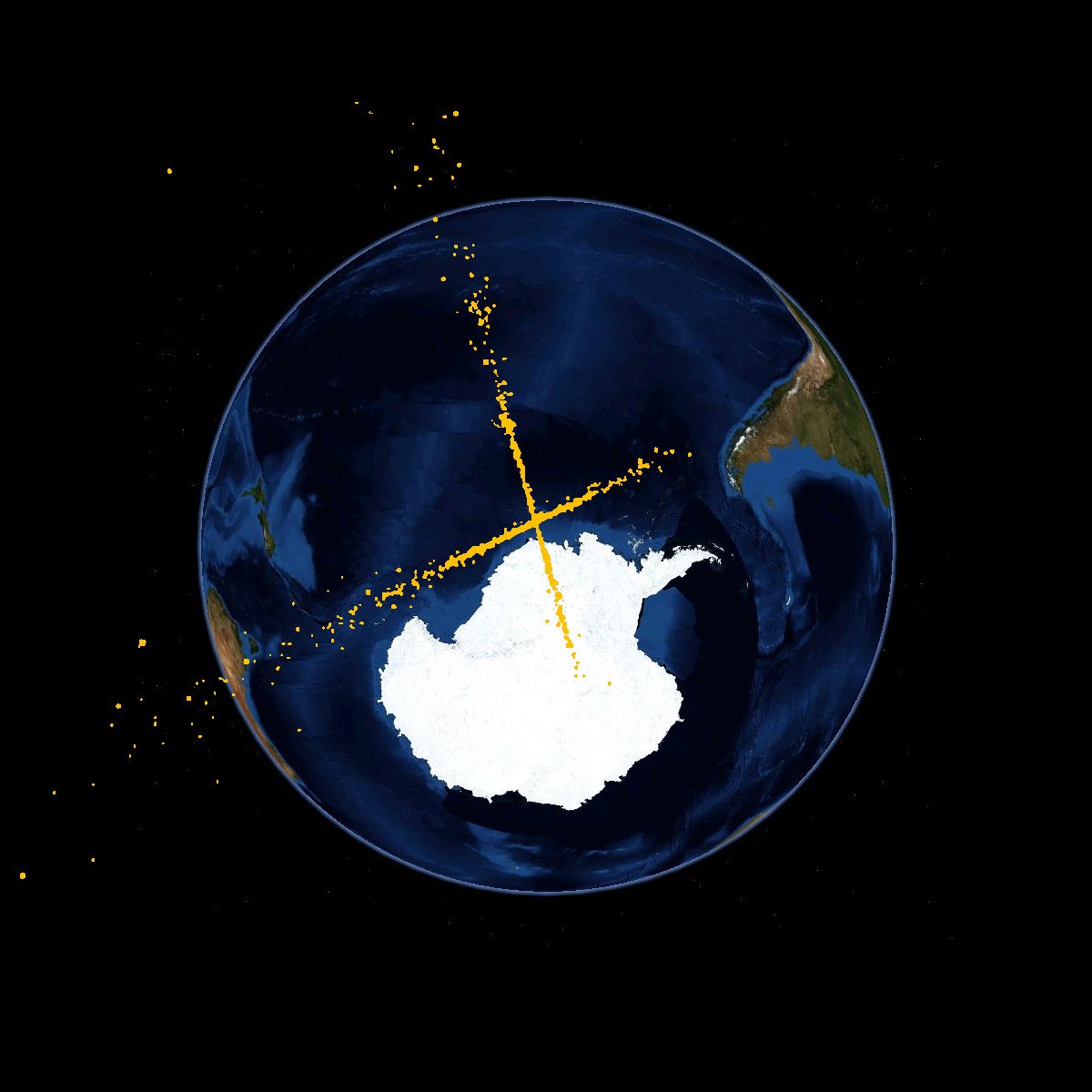
The threshold sits so low because of the consequence. Most low-orbit conjunctions close at around 10,000 metres per second, where a collision is presumed to end the mission outright and a catastrophic one can produce several thousand fragments larger than 5 centimetres NASA CARA. Where neither object is a protected spacecraft, the calculus shifts to how much debris a hit would create; an event generating 50 to 100 trackable pieces is already treated as significant. A one-in-ten-thousand gamble is cheap to decline and expensive to lose, and the loss is paid by everyone in the shell.
Step 3: the commitment point
Timing is the part outsiders get wrong. Risk usually falls as the event approaches, because more tracking data narrows the uncertainty, so the instinct to act early is often wrong. NASA begins mitigation planning around three days before closest approach for high-risk events, with the commitment point — the final check that decides whether to burn — typically one day to half a day out NASA CARA.
Waiting is not free. An earlier burn achieves the same separation with less propellant, so the trade is fuel against the chance the event evaporates on its own. Operators map it explicitly, plotting burn size against burn time with the resulting Pc as the third axis. The target is not merely to drop below one in ten thousand: NASA asks for roughly one and a half orders of magnitude below it, about three in a million.
Step 4: a burn that does not create the next problem
Not every satellite manoeuvres. Those with propulsion change trajectory. A smaller group with no useful thrust rotates to change the area it presents into the airflow, using differential drag to shift position over the following days. A smaller group still, with no trajectory control at all, turns its narrowest cross-section towards the oncoming object to shrink the geometric target NASA CARA.
Whichever is chosen, the fix is checked against everything else: the operator builds a trajectory that includes the planned manoeuvre and submits it to be screened again, and only if that turns up no new high-risk event does the burn go ahead. Dodging one object into another is a real failure mode, and in a band holding thousands of objects it is not a remote one, as the 850-kilometre cascade works through as a hypothetical.
What the whole machine cannot do
Every step above assumes one party can move. GCAT lists 33,670 objects on orbit, of which 14,075 are spent rocket bodies and catalogued debris, 2,499 of those fragments in the 800 to 900 kilometre band alone GCAT. None can be warned or asked to burn. When two of them converge, the probability of collision is computed, reported, and then watched.
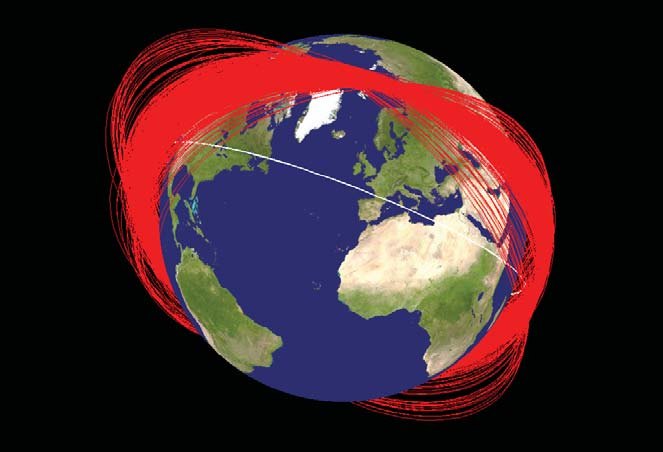
That gap makes debris-on-debris conjunctions the structurally unsolved case, and it is why two otherwise unrelated ideas keep appearing beside conjunction assessment. One is just-in-time collision avoidance: nudging a dead object hours before a predicted hit. ESA's OMLET study — Orbit Maintenance via Laser MomEntum Transfer — is a worked example, a ground-based high-power laser with adaptive optics that would transfer momentum to a debris object and bend its path by a small, controlled amount. It is in Phase A/B1 under a consortium led by DLR's Institute of Technical Physics, and it is Proposed: no such system has flown ESA.
The other is removal, and it belongs in the same conversation for arithmetic reasons. Avoidance is a recurring cost paid forever against a population that grows; removal is a one-off cost that shrinks what the avoidance system must screen against.
ClearOrbit's view
Conjunction assessment is the quiet success of the last two decades. It is Flown, it works, it is run by people who are careful about uncertainty, and it has prevented losses nobody will ever count. Anyone arguing that orbit is unmanaged has not read a conjunction data message.
Its limit is structural rather than technical. The filter protects what can still be steered, and the steerable share of the catalog is falling: 14,075 of today's 33,670 objects are already debris or dead stages. More sensors and better software sharpen the warnings without changing who can act on them.
So avoidance buys time, and the bill arrives every week in analyst hours and propellant. We think that time should be spent making the uncontrollable population smaller — passivating stages so they never fragment, choosing disposal perigees the atmosphere can reach, and demonstrating the first removal of a derelict from a band the air will not clear. None of that replaces conjunction assessment; it is what stops it becoming a permanent tax that rises every year.
Reader mail
Have a better idea?Spotted something we got wrong?
We publish in public so the numbers can be checked. If a figure looks wrong, a source is missing, or you know something this piece should have said, send it over. One box, no sign-up.
Send an idea or correctionQuick question
If you could fund one thing first to cut collision risk in low Earth orbit, what would it be?
Anonymous. You will see how others answered after you vote.