Article · · 7 min read
Nobody Has Removed a Piece of Debris Yet
An honest ledger of active debris removal: what has flown, what is planned for 2027-2028, and why the first capture of an uncooperative object will be a genuine milestone.
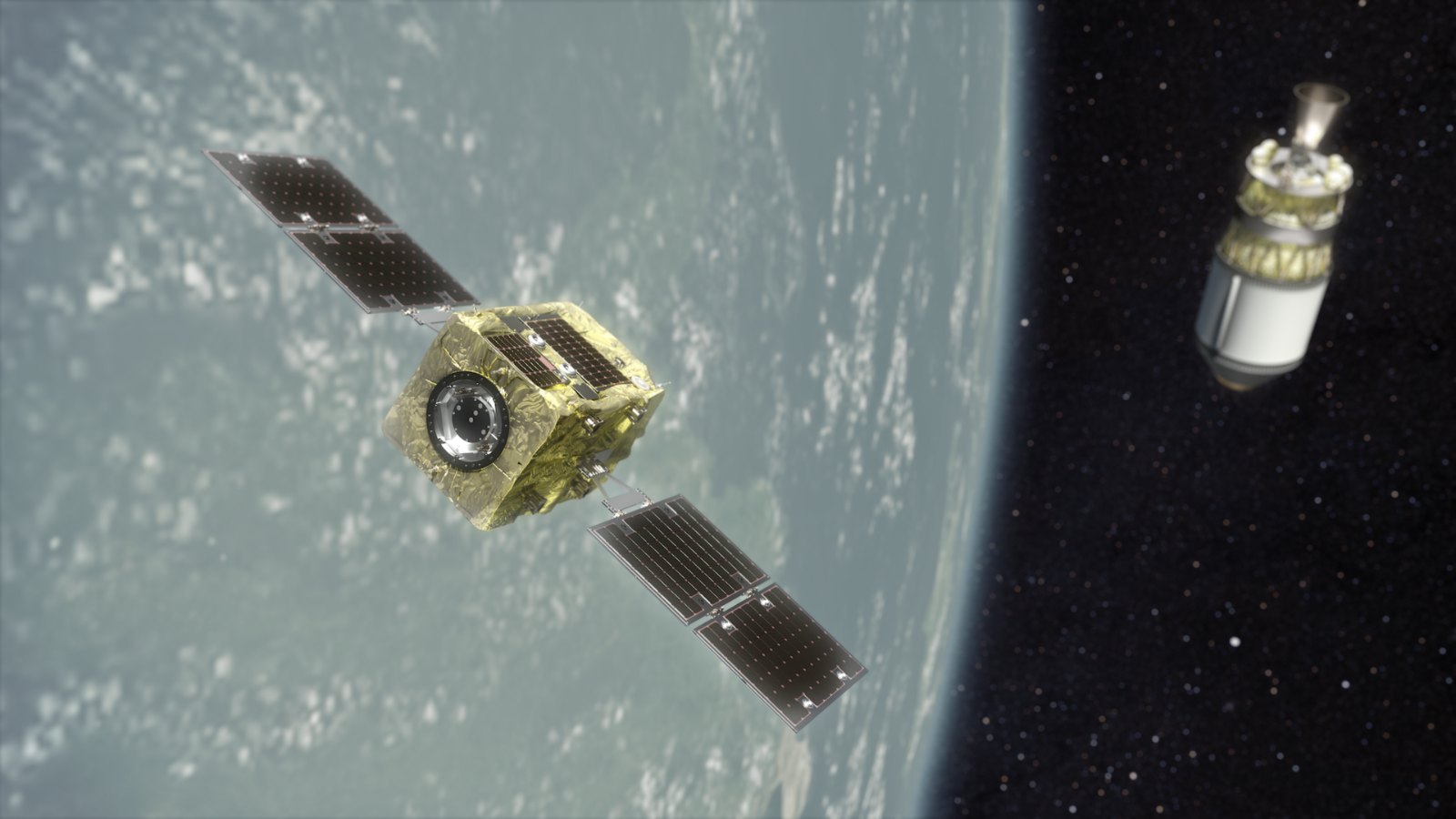
Here is a sentence that surprises most people who follow space news: as of September 2026, no mission has captured and removed an existing, uncooperative piece of large orbital debris. There have been impressive demonstrations, close inspections and commercial dockings. But the specific act the phrase "debris removal" implies, grabbing a dead object that was never designed to be grabbed and taking it out of orbit, has not yet happened.
That is not a criticism of the teams involved. It is a measure of how hard the problem is, and a reason to take the first real attempt seriously when it comes.
What has actually flown
To be precise, this piece uses four labels: Flown means it has operated in orbit, Planned means funded or contracted with a date, Proposed means studied but not funded, and ClearOrbit vision marks ClearOrbit's own forward-looking ideas.
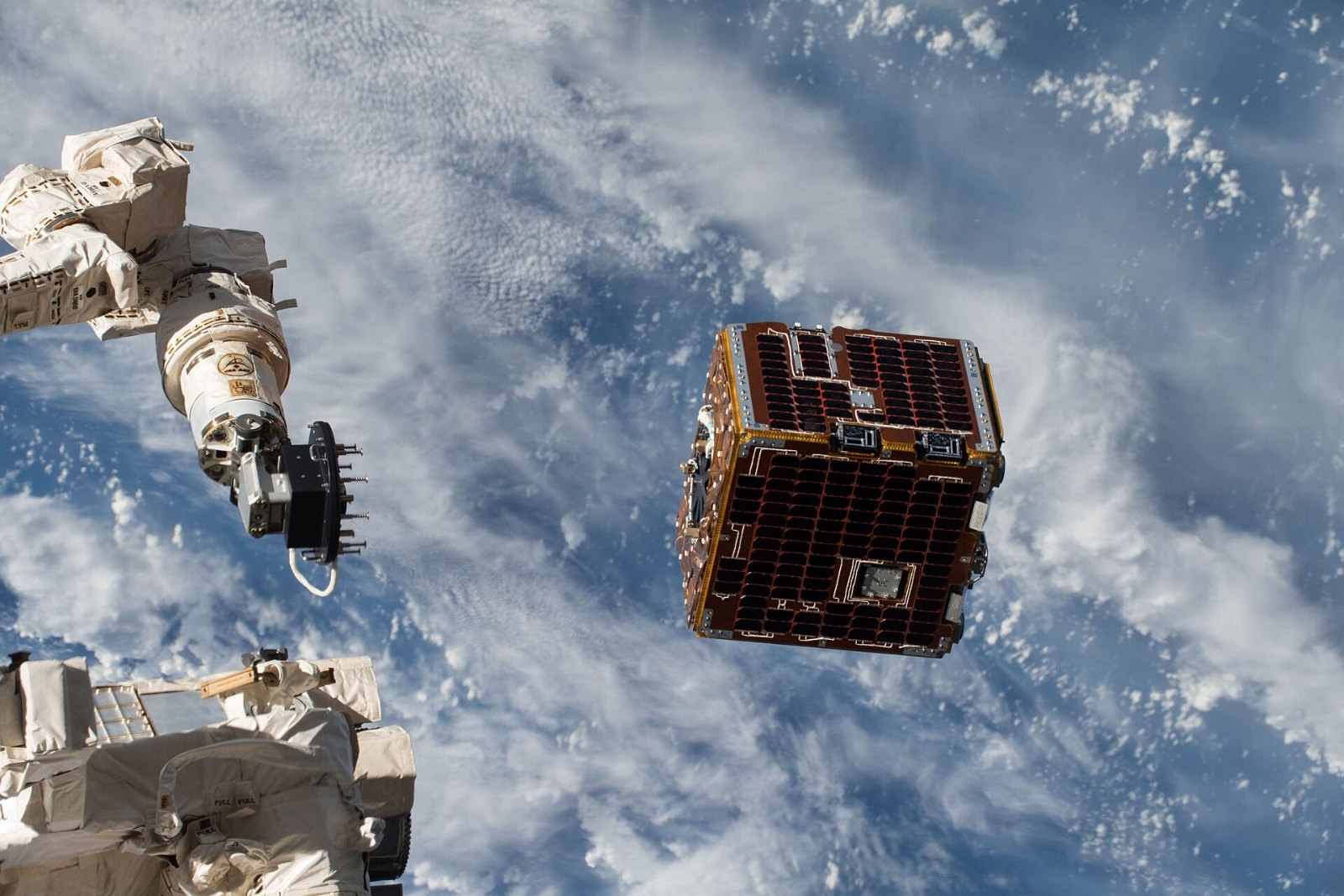
RemoveDEBRIS (Flown, 2018-2019). Built by a consortium led by the University of Surrey's Surrey Space Centre with Airbus and SSTL, RemoveDEBRIS was released from the International Space Station on 20 June 2018 Surrey Space Centre. It tested a net on 16 September 2018, vision-based navigation in October 2018, and a harpoon in February 2019, all successfully; its drag sail failed to deploy in March 2019 RemoveDEBRIS, Wikipedia. The important caveat is that its targets were ones it carried with it, including an inflated target for the net and a panel on a 1.5 m boom for the harpoon RemoveDEBRIS, Wikipedia.
ELSA-d (Flown, 2021-2024). Astroscale's mission launched a servicer together with a client satellite fitted with a magnetic docking plate. It demonstrated repeated magnetic capture in August 2021 Astroscale. A later autonomous capture was aborted after an anomaly and the servicer lost four of its eight thrusters; deorbit operations finished on 24 January 2024 Astroscale. Again, the client was designed to be caught.
ADRAS-J (Flown, 2024-2026). This is the mission that came closest to real debris. Under JAXA's Commercial Removal of Debris Demonstration programme, Astroscale's ADRAS-J approached a genuine derelict: a Japanese H-IIA upper stage about 11 m long and roughly 3 tonnes, never designed for servicing. It came within about 15 m and flew around the stage to characterise it JAXA. No capture was ever part of the plan; the spacecraft finished operations and completed its own deorbit by 25 March 2026 Astroscale.
MEV-1 and MEV-2 (Flown, 2020 onward). Northrop Grumman's Mission Extension Vehicles dock with working geostationary satellites to extend their lives. MEV-1 docked with Intelsat 901 in February 2020 and undocked on 9 April 2025, leaving the satellite in a graveyard orbit Northrop Grumman. These are real dockings with real satellites, but the clients are cooperative, stable and designed with features a servicer can use.
There have also been setbacks worth remembering. JAXA's KITE experiment in 2017 was meant to deploy a 700 m electrodynamic tether from a cargo ship; the tether failed to deploy Spaceflight Now. And in July 2026 Northrop Grumman launched its Mission Robotic Vehicle, with two robotic arms intended for inspection, repair, relocation and eventually debris removal; its first job is fitting a propulsion pod to a working satellite, targeted for late 2027 Northrop Grumman.
What is planned
ADRAS-J2 (Planned, Japanese FY2027). The follow-on to ADRAS-J will use a robotic arm to capture and deorbit an H-IIA-class stage. Astroscale announced launch on Isar Aerospace's Spectrum rocket on 1 September 2026, and describes the mission as aiming to "become the world's first mission to capture and remove an existing piece of large orbital debris" Astroscale.
ELSA-M (Planned, FY2028 or later). Astroscale UK's servicer will remove a defunct Eutelsat OneWeb satellite that was fitted with a docking plate before launch. The launch contract with Isar was signed in March 2026, with the date now "FY2028 or later" Astroscale.
ClearSpace-1 (Planned, around 2028). ESA's first removal mission has been delayed several times. Its original target, a VESPA payload adapter, was apparently struck by an untracked object in August 2023, creating new debris nearby ESA. The mission switched its target to the small PROBA-1 satellite ClearSpace, and launch is now reported for around 2028 on Vega-C ClearSpace-1, Wikipedia, though some reports say 2029. Before that, ClearSpace's PRELUDE pair of small spacecraft is planned to practise close-proximity operations in 2027 ClearSpace.
The UK national mission (Planned, date uncertain). The UK Space Agency set out to remove two defunct UK-licensed satellites, but missed its March 2026 contract award deadline European Spaceflight. An award to ClearSpace has been reported, but not yet confirmed by primary sources, so the timeline should be treated as open.
Starfish Space (in orbit, docking pending). Starfish's Otter Pup 2 has been in orbit since June 2025 attempting to dock with an unprepared satellite using electrostatic adhesion; no confirmed docking had been reported as of September 2026 GeekWire. Separately, the US Space Development Agency awarded Starfish a $52.5M end-of-life disposal service contract with launch planned for 2027 Breaking Defense.
The timeline at a glance
- 2017: KITE tether fails to deploy (Flown, unsuccessful)
- 2018-2019: RemoveDEBRIS net, navigation and harpoon tests against its own targets (Flown)
- 2020: MEV-1 docks with Intelsat 901 in GEO (Flown)
- 2021: ELSA-d magnetic capture of its own client (Flown)
- 2024: ADRAS-J approaches a real H-IIA stage to 15 m (Flown)
- 2025: MEV-1 undocks; Otter Pup 2 launches (Flown)
- July 2026: Northrop Grumman MRV launches (Flown)
- 2027: PRELUDE proximity demo; SDA-Starfish disposal service (Planned)
- FY2027: ADRAS-J2 capture of an H-IIA-class stage (Planned)
- ~2028 and later: ClearSpace-1, ELSA-M, UK mission (Planned)
Why an uncooperative capture is so hard
A derelict rocket stage has no docking port, no grapple fixture, no reflectors for navigation and no working attitude control. It may be tumbling. Its surfaces may be degraded after decades of sunlight and atomic oxygen, and nobody knows exactly how its structure has aged. The servicer has to measure the target's spin from a distance, match it or wait for a safe moment, and close in on something several tonnes heavy moving at orbital speed, all while avoiding creating new debris. ADRAS-J's close inspection data is exactly the input needed to plan that final approach.
That is why the first successful capture of an object like this will matter far more than its single-object impact on the environment. It converts removal from a laboratory idea into a repeatable operation with a known risk profile, which is what insurers, regulators and paying customers need before a market can form.
ClearOrbit's view
We think the space community should say the quiet part clearly: removal has not yet been done, and 2027 to 2028 is when it will first be tried in earnest. Overclaiming earlier demonstrations makes it harder to fund the real thing, because it suggests the problem is already solved.
At the same time, the flight record is genuinely encouraging. Navigation, nets, harpoons, magnetic capture, close inspection of real debris and commercial docking in GEO have all worked in orbit. The building blocks exist. What is missing is integration, repetition and a paying customer base.
We want the first uncooperative captures to be treated as the start of a service, not the end of a programme. That means planning the second and third missions before the first one flies, publishing results openly, and designing new satellites so the next removals are easier. Those ideas sit at the core of the ClearOrbit plan, which is a ClearOrbit vision rather than flown hardware.
Reader mail
Have a better idea?Spotted something we got wrong?
We publish in public so the numbers can be checked. If a figure looks wrong, a source is missing, or you know something this piece should have said, send it over. One box, no sign-up.
Send an idea or correctionQuick question
Who should pay for cleaning up orbit?
Anonymous. You will see how others answered after you vote.
Sources
- Surrey Space Centre, RemoveDEBRIS
- RemoveDEBRIS (Wikipedia)
- Astroscale, ELSA-d concludes de-orbit operations
- Astroscale, ELSA-d repeated magnetic capture
- Astroscale, ADRAS-J completes operations
- JAXA press release, ADRAS-J (Jul 2024)
- Astroscale, ADRAS-J2 launch on Isar Spectrum
- Astroscale, ELSA-M launch contract
- ClearSpace, ClearSpace-1 mission changes
- ESA, objects detected near ClearSpace-1 target
- ClearSpace-1 (Wikipedia)
- European Spaceflight, UK misses ADR contract deadline
- Northrop Grumman, MEV-1 undocking
- Northrop Grumman, MRV launch
- GeekWire, Starfish Space docking target
- Breaking Defense, SDA taps Starfish
- Spaceflight Now, KITE tether experiment
- ClearSpace, PRELUDE
- ESA Space Environment Report 2026