Article · · 7 min read
929 Satellites Where the Air Does Not Reach
OneWeb flies 654 satellites near 1,200 kilometres and Qianfan 275 near 1,000, where NASA puts natural orbital lifetimes at a thousand years. Between them they have brought down two satellites.
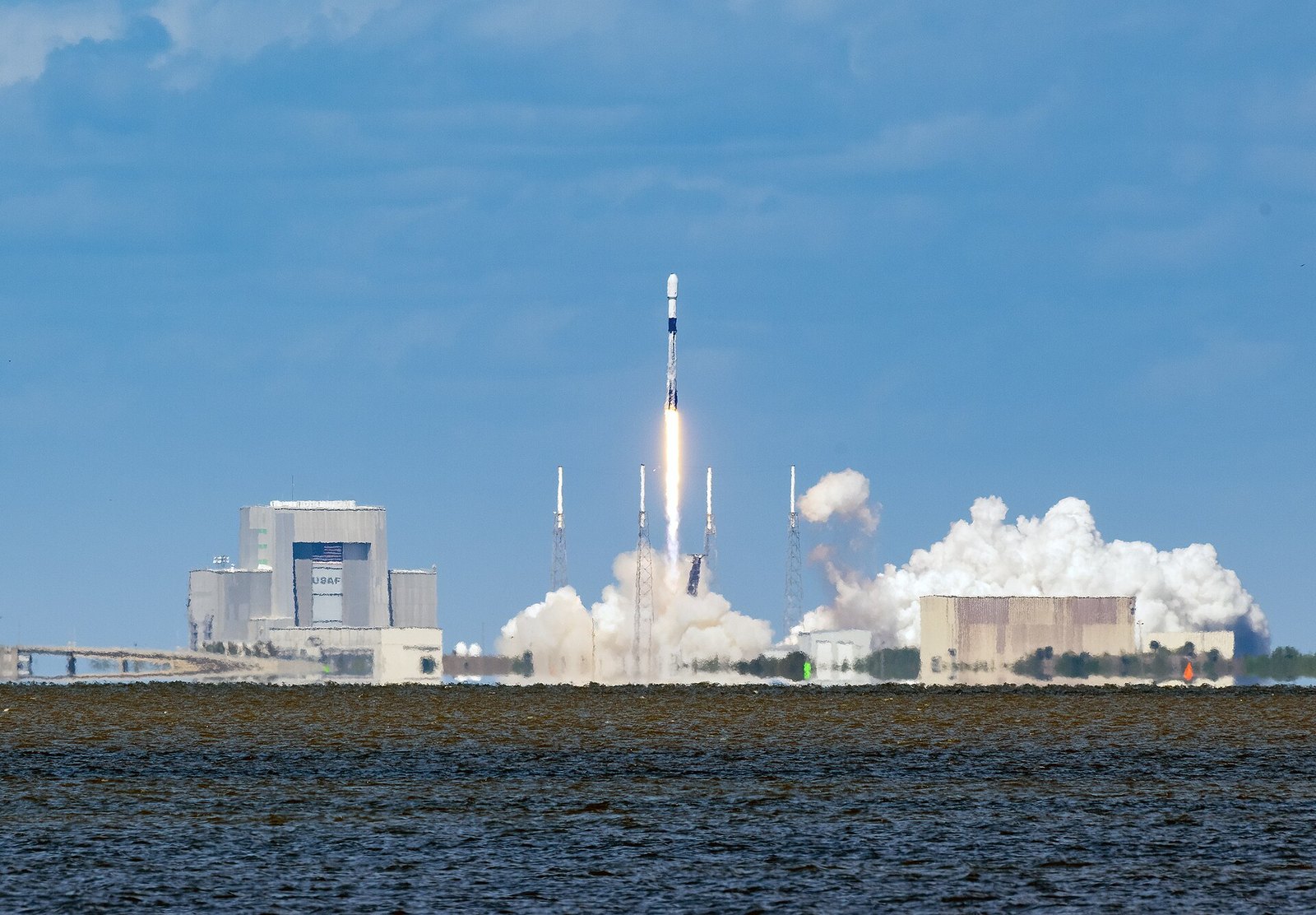
Most of the argument about megaconstellations is an argument about the 400-to-500-kilometre shell, because that is where almost all of them are. This morning the public catalog holds 10,418 objects between 400 and 500 kilometres, and 10,231 of them are working payloads (GCAT). It is the most crowded band in orbit by a factor of four, and it is also the most forgiving one, because a satellite abandoned there comes down on its own within a few years.
Two large constellations made a different choice. Eutelsat OneWeb flies 654 satellites, 649 of them between 1,100 and 1,300 kilometres with a mean perigee of 1,194. China's Qianfan, the Thousand Sails network, has 275 up, 210 of them between 1,000 and 1,100 kilometres. That is 929 spacecraft in orbits where the atmosphere does essentially nothing — Flown, operating today, and with a combined reentry record of exactly two satellites.
What a thousand kilometres means
NASA's Orbital Debris Program Office puts the arithmetic plainly. "Debris in orbits below 373 miles (600 kilometers) normally falls back to Earth within several years." At 800 kilometres, "orbital decay often takes centuries." And "above 621 miles (1,000 kilometers), orbital debris normally continues orbiting Earth for 1,000 years or more" (NASA ODPO).
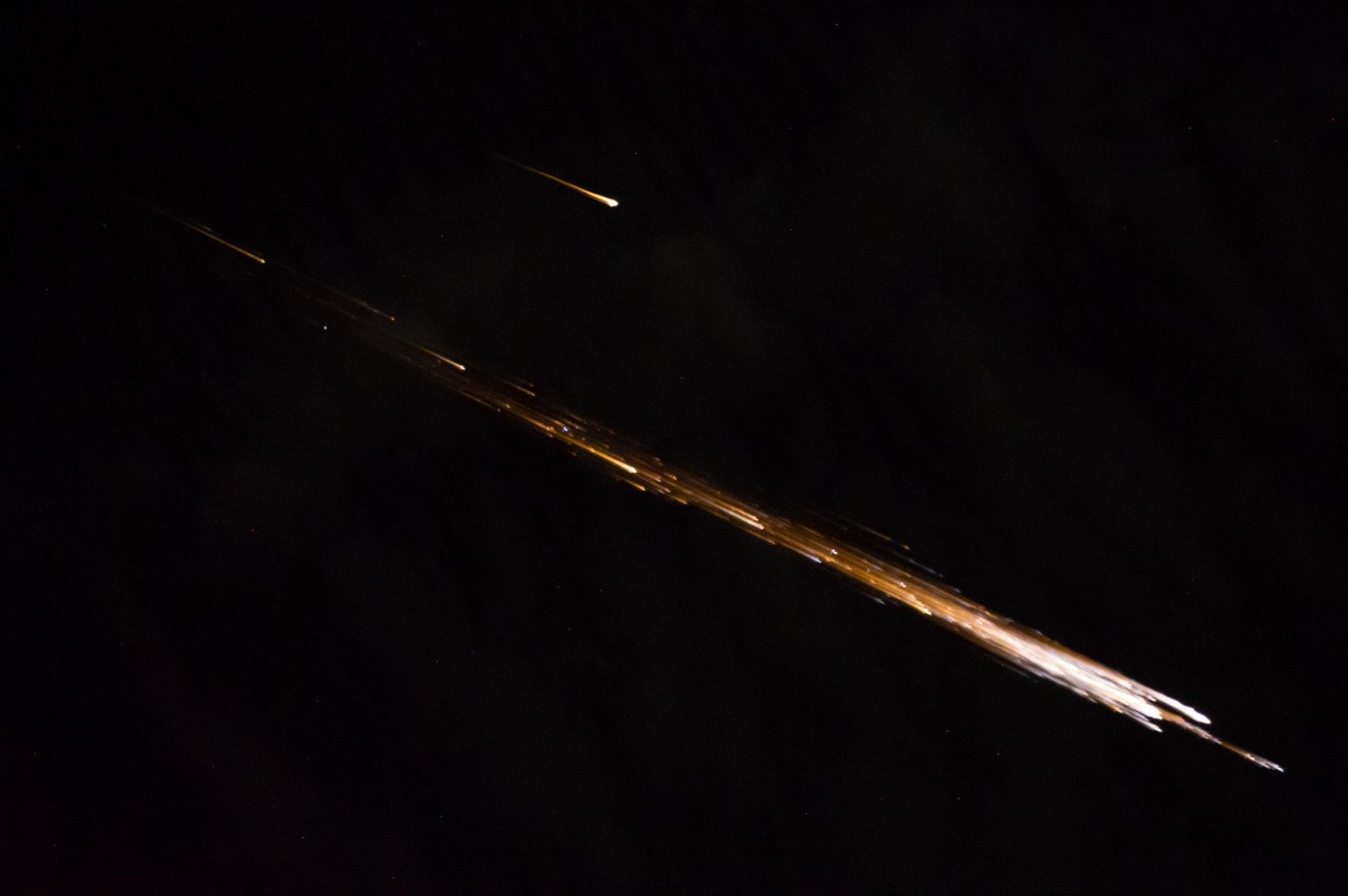
Those three sentences describe three different regulatory worlds. Below 600 kilometres, disposal is the default and failure is survivable: the 10 August 2022 Long March 6 launch we wrote up in today's briefing put sixteen satellites into a low sun-synchronous orbit and fourteen have already come down with nobody lifting a finger. Above 1,000 kilometres, disposal is a manoeuvre that has to work, performed by a spacecraft at the end of its life, or it does not happen in any timeframe a human institution can plan around.
ESA's own environment report is blunt about how often that manoeuvre works. Across the last decade, between 15 and 60 per cent of payloads reaching end of life in non-compliant orbits attempted to meet the old 25-year disposal limit, and "between 5 and 50% do so successfully, with the level remaining far from targets." Against the newer five-year threshold, between 5 and 35 per cent complied successfully (ESA Annual Space Environment Report, issue 10.1). The same report notes that constellations as a class look good on compliance — close to 90 per cent against the 25-year limit — but that figure is earned by altitude, not by behaviour. It counts satellites whose orbits comply naturally.
OneWeb: 654 up, two down
OneWeb's altitude was in its licence from the start. The FCC's 2017 market access grant describes a constellation "evenly distributed in 18 near-polar orbital planes, at an approximate altitude of 1200 kilometers," with satellite operations "subject to direct and effective regulation by the United Kingdom" (FCC 17-77). The design life is at least five years at that altitude, and each satellite carries electric propulsion that raises it from a roughly 450-kilometre drop-off to station — and is meant to lower it again at the end.
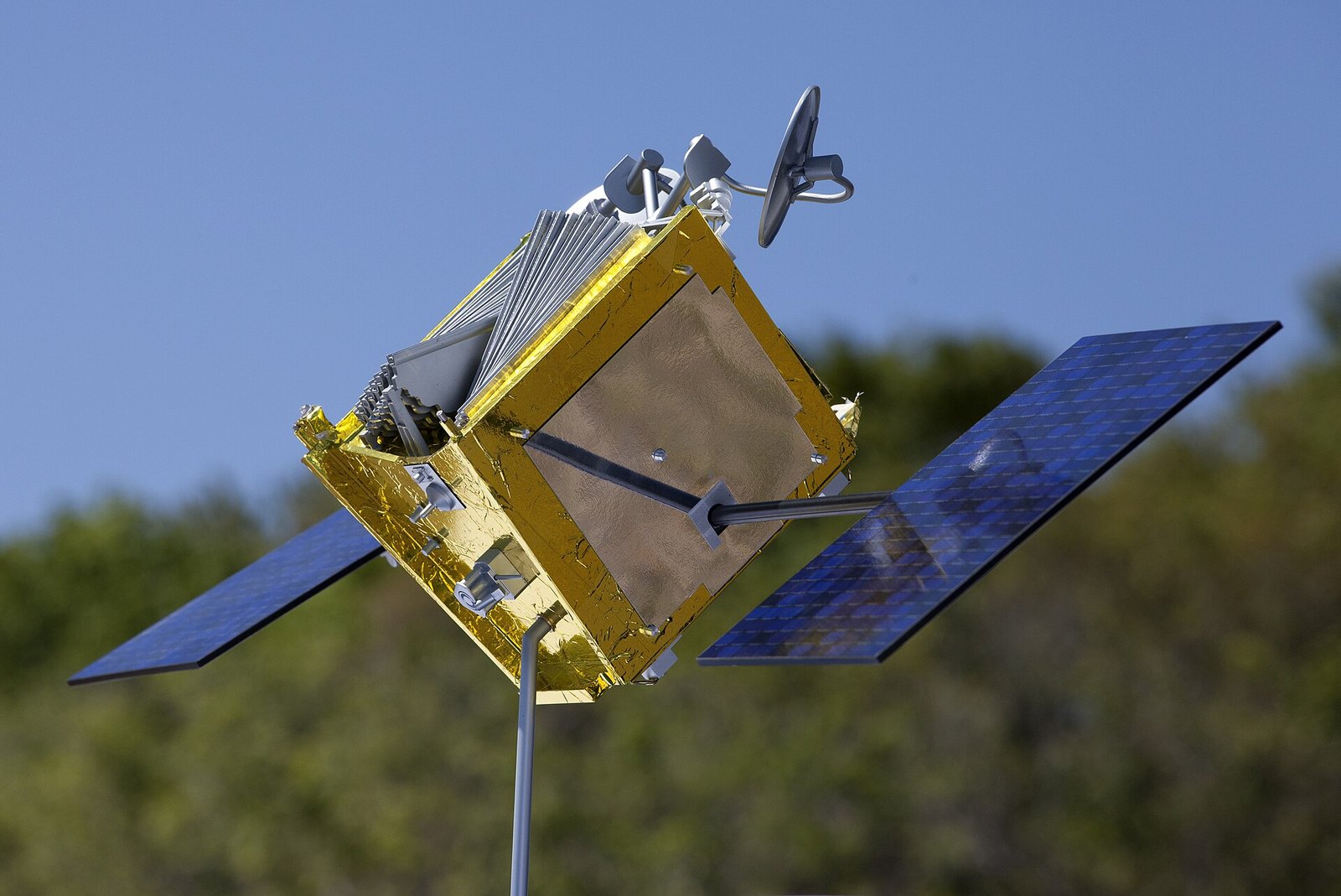
The catalog's record of that plan in action is thin, for the simple reason that the constellation is young. GCAT lists 676 OneWeb entries ever catalogued. Of the satellites, 654 are in Earth orbit and two have reentered: SL0251 and SL0265, both launched on 1 July 2021 and both booked down during 2022, years ahead of any planned end of life (GCAT). Everything else that has come down from a OneWeb launch is a dispenser, and those reentered within hours because they were released low.
So the disposal system is Planned rather than demonstrated, and OneWeb did something unusual about the case where it fails. Each satellite carries a magnetic capture feature so that a servicer can grapple it if it cannot deorbit itself (ESA). The servicer built against that interface is Astroscale UK's ELSA-M, funded in its final phase with EUR 13.95 million from the UK Space Agency and ESA under the Sunrise partnership, against a contract with Eutelsat OneWeb, and described by Astroscale as the first commercial end-of-life service for prepared satellites (Astroscale UK). It has not flown yet. Nothing has ever removed a derelict from 1,200 kilometres, which is the point our ledger of removal missions keeps coming back to.
Qianfan: 275 up, none down, and a cloud already there
Qianfan is younger, faster-growing and less prepared. GCAT puts 275 satellites in orbit, 257 of which have a published orbit; their mean perigee is 1,023 kilometres and 210 of them sit between 1,000 and 1,100. The eighteen newest have no element set at all yet. Not one Qianfan satellite has reentered (GCAT). Published plans run to thousands of spacecraft in that regime.
The constellation also arrived with its own debris. The first batch of eighteen satellites went up on a Long March 6A on 6 August 2024 to a roughly 800-kilometre polar orbit, and the upper stage broke apart in plane with them: LeoLabs estimated at least 700 fragments and possibly more than 900, while US Space Command initially tracked over 300 (SpaceNews). A second CZ-6A stage came apart in 2024 as well; between the two events, 1,182 fragments from that rocket type are still in orbit. Those fragments sit a little below the operational shell, in exactly the band NASA describes as taking centuries.
A constellation can be disciplined about its satellites and still leave a mess at those altitudes through the vehicle that put them there. Passivation of the upper stage is the cheapest debris mitigation anyone has ever found — how it works is not an unsolved engineering problem — and it is the step that was skipped.
Why this band matters more than its headcount
In raw numbers, high orbits look quiet. The catalog holds 1,059 objects between 1,000 and 1,100 kilometres, 1,026 between 1,100 and 1,200 and 862 between 1,200 and 1,300 — small next to the 10,418 down at 400 kilometres. But 723, 447 and 516 of those, respectively, are already debris or spent stages, and OneWeb and Qianfan between them supply most of the live traffic in the same shells (GCAT).
Three features make that mix worse than the count suggests. Collision energy does not care about altitude, so a fragmentation at 1,200 kilometres produces the same cloud as one at 500. The cloud does not clear: at 500 kilometres a breakup is a decade-long problem, at 1,200 it is a millennial one. And because the orbits are nearly polar — OneWeb averaging 87.9 degrees of inclination, Qianfan 88.9 — the planes cross over the poles at high relative velocity, which is the same geometry that governs the most crowded debris shells lower down.
ESA's statistics, updated on 2 November 2026, count about 47,390 objects tracked and catalogued and more than 17,500 tonnes of material in orbit (ESA DISCOS). The tonnage that will still be there in the year 3000 is, overwhelmingly, the tonnage above 1,000 kilometres.
ClearOrbit's view
ClearOrbit has flown nothing, holds no contracts and has no customers. We think the honest reading of these two constellations is that one of them has planned for its own failures and the other has not, and that neither case is yet evidence of anything, because no OneWeb or Qianfan satellite has reached a natural end of life and been disposed of from altitude.
That makes the next few years unusually informative. When the first OneWeb satellites retire in earnest, the catalog will record, satellite by satellite, what fraction of a well-funded constellation with onboard propulsion and a five-year design life actually gets itself down from 1,200 kilometres. ESA's 5-to-50-per-cent range for historical compliance is the number to beat, and it is a wide range because the historical record is mostly one-off spacecraft. A constellation gives the first clean, large sample.
The magnetic plate on every OneWeb satellite is the detail worth copying. It costs a few hundred grams and it converts a dead satellite from an unreachable object into a serviceable one. Our ClearOrbit vision is that a capture interface becomes as standard above 600 kilometres as a passivation sequence should already be on upper stages, and that licensing above 1,000 kilometres carries a removal provision that does not depend on the spacecraft still working. The alternative is the arrangement we already have in the 700-to-900-kilometre band: 4,754 pieces of debris, nobody to call, and physics that will not help for centuries.
Reader mail
Have a better idea?Spotted something we got wrong?
We publish in public so the numbers can be checked. If a figure looks wrong, a source is missing, or you know something this piece should have said, send it over. One box, no sign-up.
Send an idea or correctionQuick question
Who should pay for cleaning up orbit?
Anonymous. You will see how others answered after you vote.
Sources
- GCAT, J. McDowell
- NASA Orbital Debris Program Office, Frequently Asked Questions
- ESA Annual Space Environment Report, issue 10.1, 8 September 2026
- FCC 17-77, OneWeb market access grant, 22 June 2017
- ESA, Sustainable connectivity in space
- Astroscale UK, final phase of the ELSA-M in-orbit demonstration
- SpaceNews, Chinese rocket stage breaks up into cloud of more than 700 pieces
- ESA Space Environment Statistics (DISCOS)