Daily briefing · · 3 min read
Orbit on 17 September 2026: a 22-year-old rocket stage is about to fall, and Qianfan adds another batch
33,553 objects on orbit, up 11 in a day; 270 new objects in 30 days; a Long March stage launched in 2004 is skimming 135 km and will not last the week.
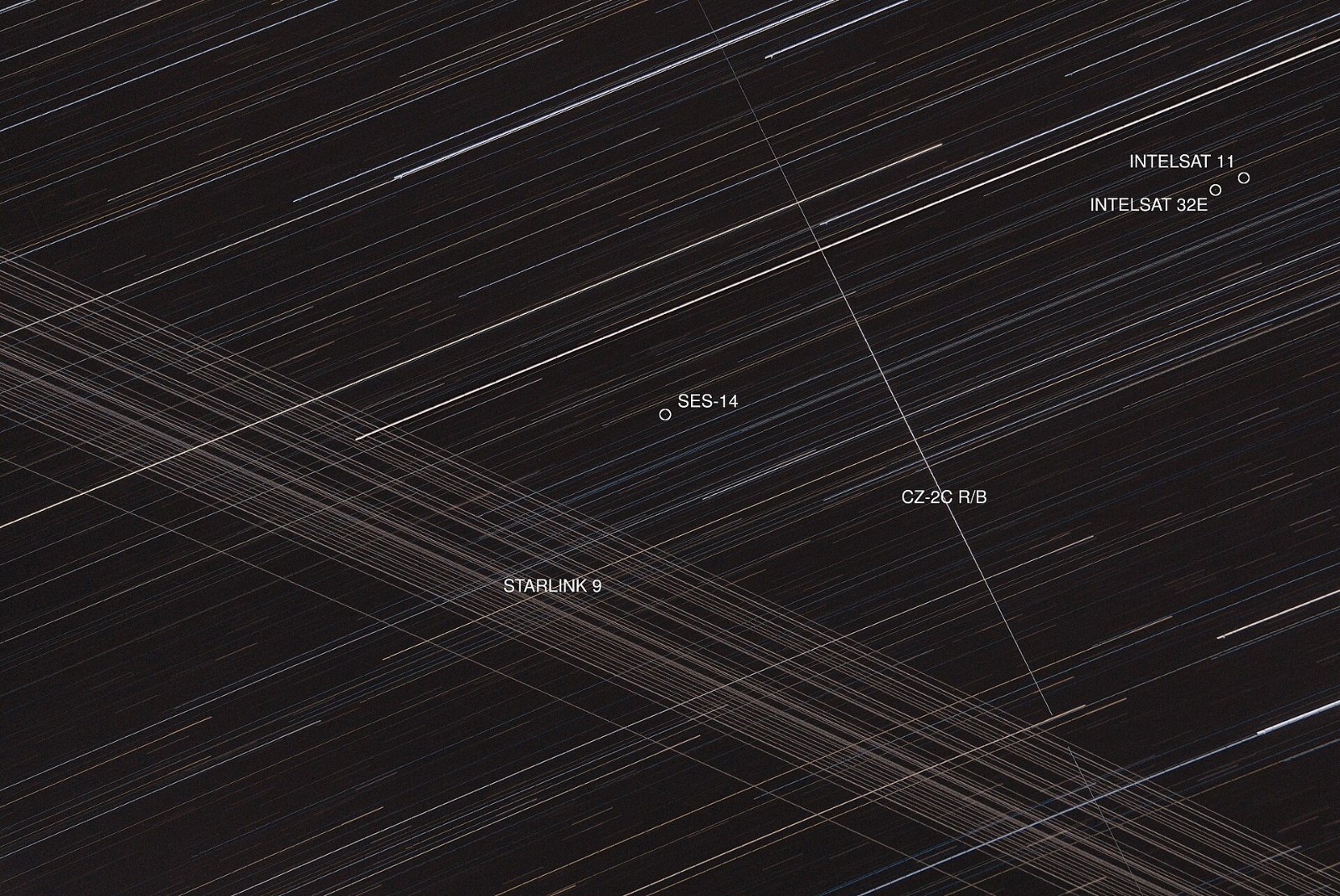
This morning's refresh of the public catalog counts 33,553 objects in Earth orbit, eleven more than yesterday. Of those, 19,511 are payloads and 14,042 are rocket bodies, fragments and discarded components; about 16,312 payloads are flagged as active, which means roughly half of everything up there is dead weight (GCAT). The day-over-day change is small but the direction is the one that matters: ten of the eleven new entries are payloads, and only one is debris, which is the pattern of a launch-driven month rather than a breakup-driven one.
What changed
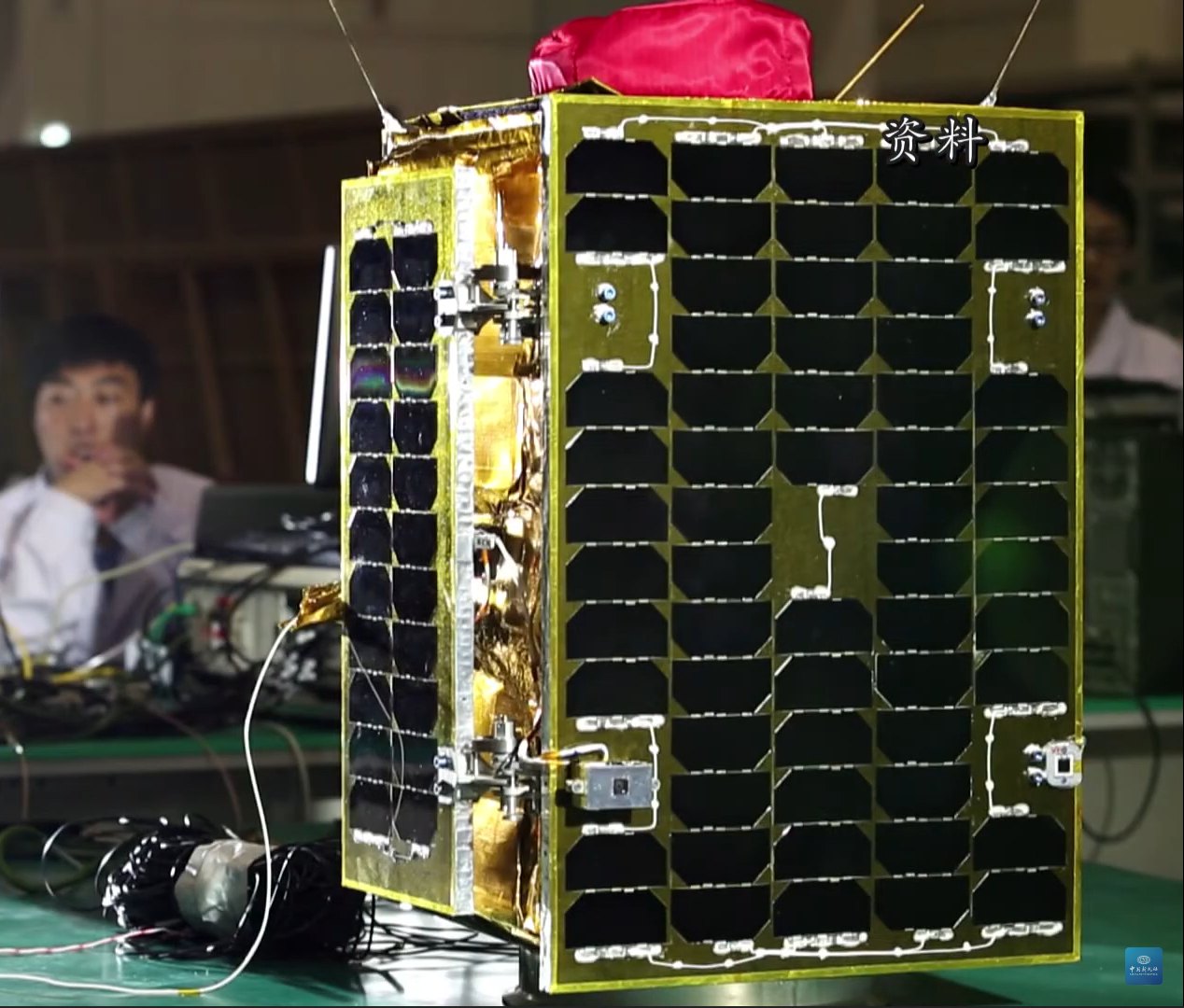
Over the last 30 days the catalog gained 270 new objects, while 80 objects re-entered the atmosphere, eight of them in the last week. The most recent additions are a Progress MS-35 cargo ship for the International Space Station on 16 September and a batch of Qianfan Xingzuo satellites launched on 15 September, catalogued as 26-03 through 26-08 and beyond, which lifts China's Qianfan constellation to 257 satellites in orbit at a mean altitude of about 1,029 km (GCAT). That altitude deserves a second look. Starlink's 11,127 satellites sit at a mean of 459 km, where a failed spacecraft falls back within a few years on its own; Qianfan's shell is more than twice as high, in the region where natural decay is measured in centuries rather than years (NASA ODPO). Every satellite placed there is a satellite that must be disposed of deliberately, or it stays.
The reentry side of the ledger is dominated by Starlink, as it has been all year: 48 percent of the 166 objects that came down in the last 60 days carried that name, including Starlink 1770 and Starlink 1234 on 14 September, both launched in 2020. Two non-Starlink entries stand out. The Russian payload Kosmos-2558, launched on 1 August 2022, re-entered on 12 September after four years in orbit, and a Long March 7A third stage launched on 23 June this year came down on 11 September, a controlled disposal within three months of launch that is exactly what the guidelines ask for (GCAT).
Object of the day: CZ-2C Y14 Stage 2
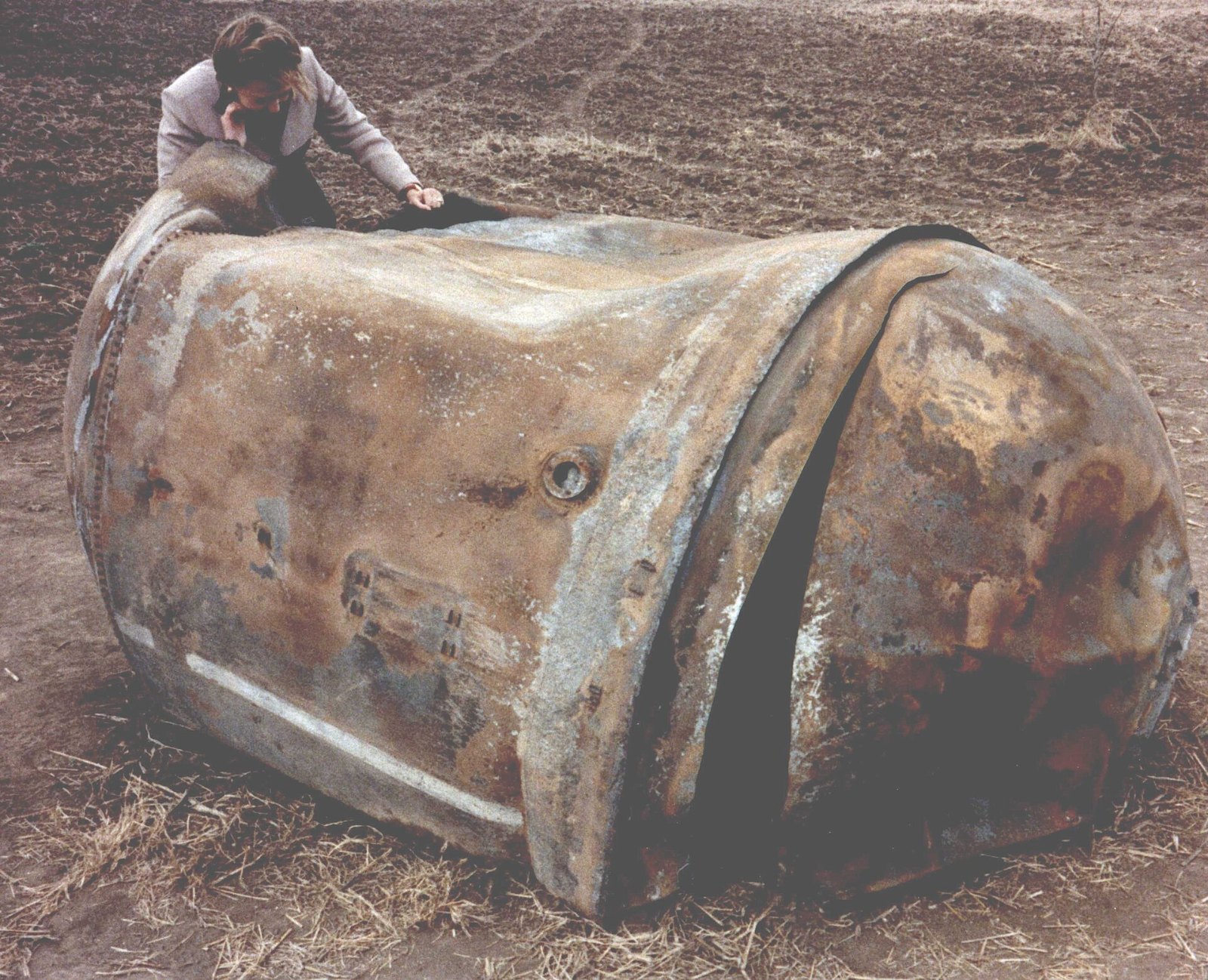
The lowest-flying catalogued object this morning is NORAD 28222, the second stage of a Long March 2C launched on 18 April 2004. Its latest orbit, from an epoch of 15 September, is 135 by 153 km, which is deep inside the thick part of the upper atmosphere. At that height drag doubles every few kilometres of descent; an object at 135 km perigee typically has hours to a few days left, and the timing of the final plunge cannot be predicted to better than a few hours even the day before (NASA ODPO). Rocket stages of this class weigh a few tonnes and carry titanium and stainless-steel components that can survive to the ground, which is why an uncontrolled reentry of a stage is treated differently from a Starlink satellite designed to burn up completely.
Twenty-two years is a long time for an upper stage to linger. That is the natural-decay clock working at an altitude that was, in 2004, considered low enough not to matter. Several other objects are below 200 km perigee this morning, most of them Starlink satellites on their planned way down.
Where the junk is
The most crowded 100 km band is still 400 to 500 km, with 10,139 catalogued objects, almost all of them working Starlink satellites. The band that should worry anyone thinking about the long term is 800 to 900 km, with 2,760 objects of which 2,485 are debris or rocket bodies, and the 700 to 800 km band just below it with 2,248 more. That is where the Fengyun-1C anti-satellite fragments (2,127 still tracked, mean altitude 832 km) and the Cosmos 2251 fragments (611, mean 743 km) live, and where the nine-tonne Zenit stages on the most-dangerous-objects list sit (GCAT). Nothing up there is coming down on its own in our lifetimes.
Why it matters
Today's numbers are the normal rhythm of a busy year: a few hundred launches in, a few dozen reentries out, net growth. The two details worth remembering are that new constellations are being placed above 1,000 km, where mistakes are permanent, and that a stage launched in 2004 is only now leaving orbit from a height once thought harmless. The atmosphere is doing all of the clean-up that exists today, and it only works below about 600 km. Above that, someone has to go and get it.
ClearOrbit's view
The Qianfan shell at 1,029 km is exactly the kind of decision that should come with a removal plan attached before launch, not after. ESA's 2026 environment report said active debris removal "must become part of the solution and soon"; a constellation at that altitude is a standing order for it. We would like to see every operator above 700 km publish its disposal reliability target and the name of the removal service it will call if a satellite fails, and we will keep counting until they do.
Reader mail
Have a better idea?Spotted something we got wrong?
We publish in public so the numbers can be checked. If a figure looks wrong, a source is missing, or you know something this piece should have said, send it over. One box, no sign-up.
Send an idea or correctionQuick question
Who should pay for cleaning up orbit?
Anonymous. You will see how others answered after you vote.