Daily briefing · · 3 min read
Orbit on 18 November 2026: 37 years after launch, COBE and its own dewar cap still fly at 875 kilometres
GCAT lists 105 catalogued pieces from the 18 November 1989 COBE launch. Four are still in orbit: the satellite, its Delta second stage, a sensor cover, and the dewar cap it threw away three days in.
What changed
Nothing in the catalog did. The on-orbit count stands at 34,009 — 19,922 payloads against 14,087 rocket bodies and debris fragments — for a third morning, and the highest catalog number is still 101,400, because the file behind these figures is the same 15 November build as yesterday's (GCAT). The two numbers that moved are rolling windows moving, not hardware coming down: 67 reentries in the last thirty days where yesterday read 68, and 10 in the last seven where yesterday read 13. Across those thirty days, 267 objects were added by launch against 67 down.
Ninety-four objects hold a perigee below 250 kilometres on an orbit measured this month, and the crowded shells are unchanged: 10,344 objects between 400 and 500 kilometres, 10,152 of them working payloads, against 2,769 between 800 and 900 kilometres of which 2,501 are debris (GCAT). ESA's statistics, updated on 13 November 2026, count about 47,280 objects catalogued, more than 17,600 tonnes in orbit, and more than 660 fragmentation events (ESA DISCOS).
Close approach of the day
There is none from current data. The screening behind our close-approach pages is still the run of 8 October 2026, forty-one days old — a record of that morning, not a live feed. Today's pipeline did pull a fresh screening from USSPACECOM's public conjunction data on Space-Track.org, and none of it is published: we are waiting for written confirmation that redistributing events derived from that feed is permitted. Anyone who needs a current screening should take it from Space-Track directly, where a free account reaches the same public messages. No predicted encounter has passed since the last check, and none falls in the next 48 hours.
The object of the day: COBE, catalog number 20322
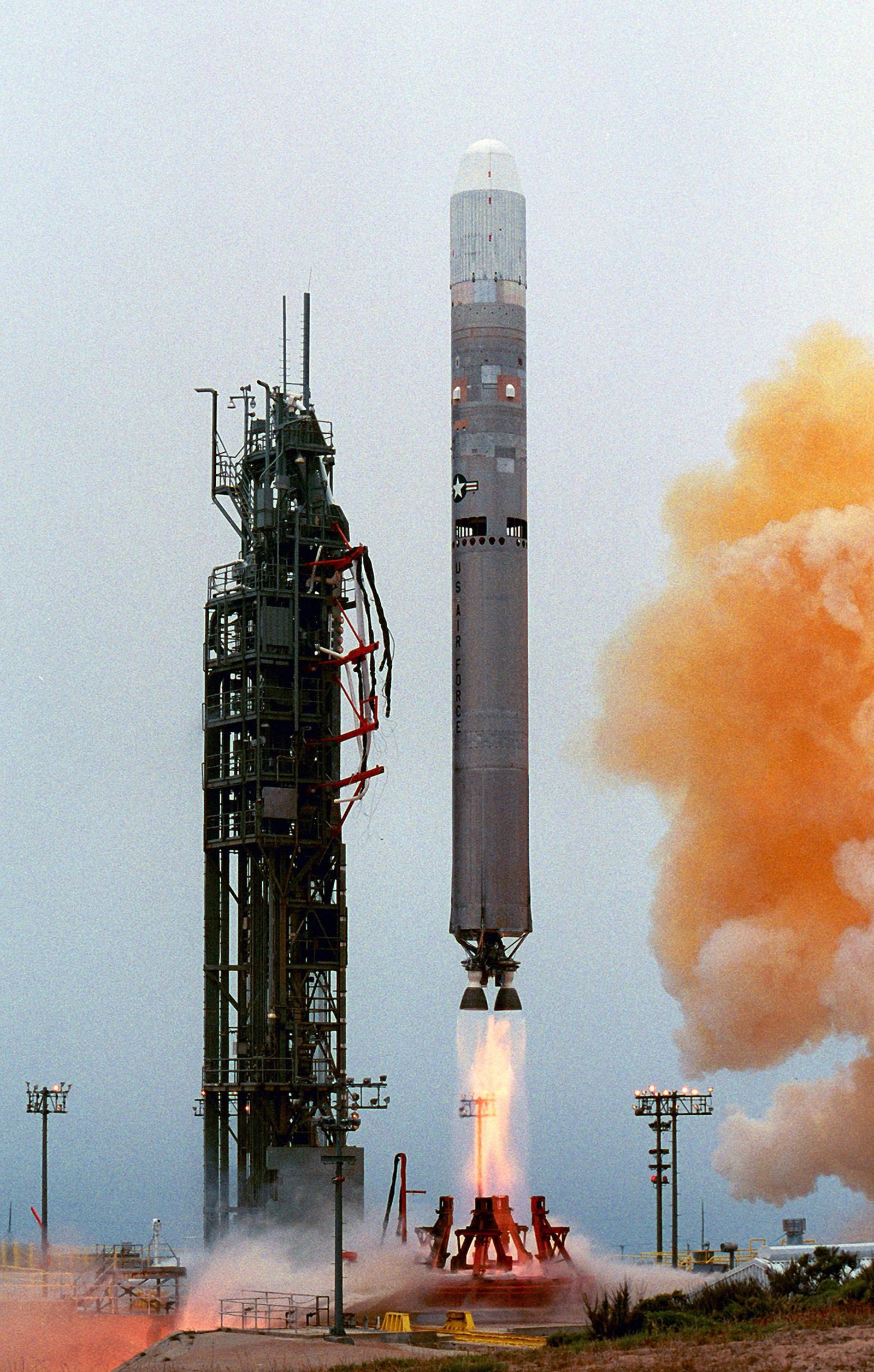
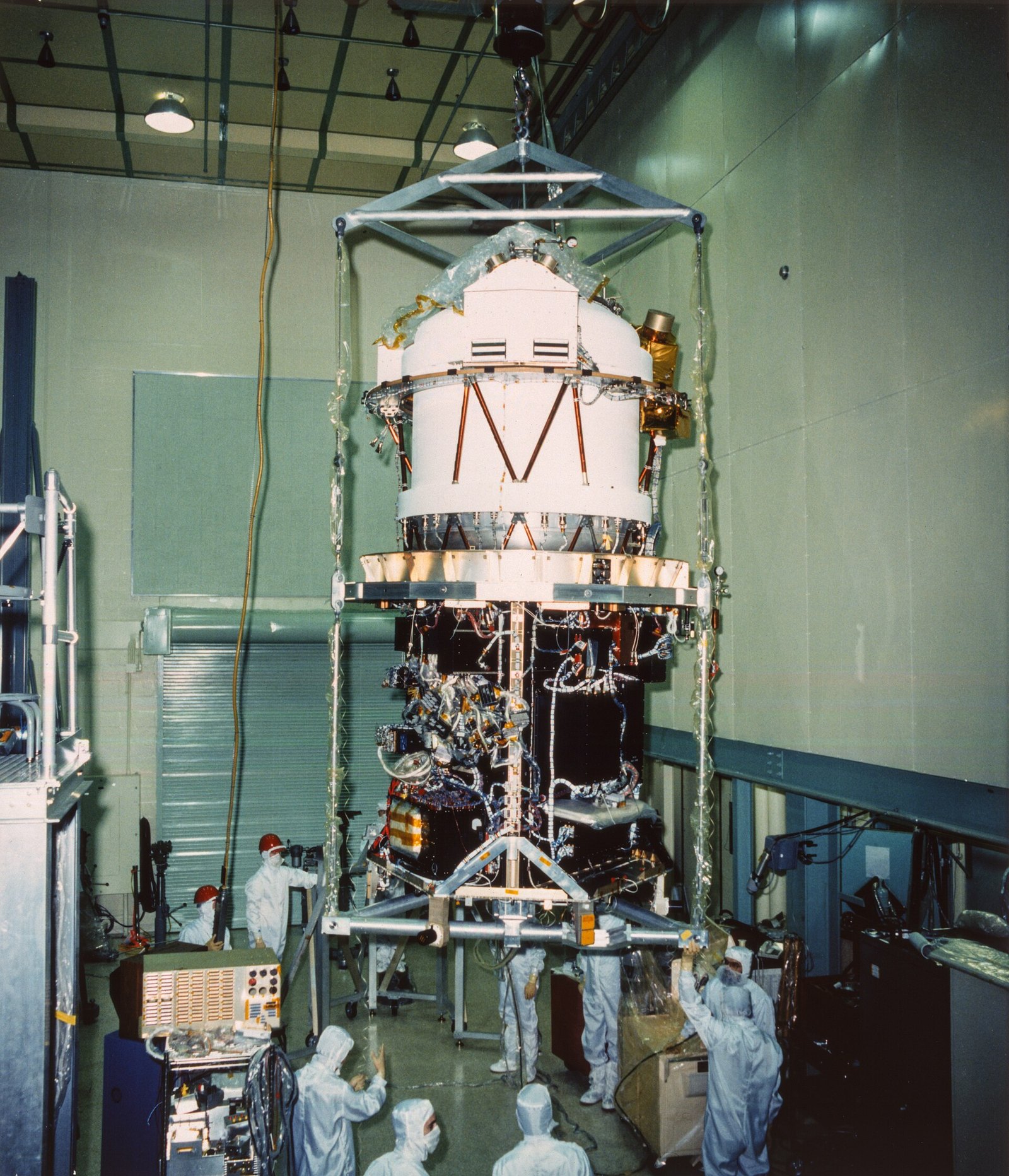
At 1434 UT on 18 November 1989, Delta rocket No. 189 lifted the Cosmic Background Explorer out of Vandenberg into a Sun-synchronous orbit of about 900 kilometres at 99 degrees (NASA LAMBDA). Three days later the spacecraft ejected the cover over its helium dewar so that two of its instruments could see the sky. Its liquid helium ran out on 21 September 1990, and instrument operations were terminated on 23 December 1993 (NASA LAMBDA, NASA NSSDCA).
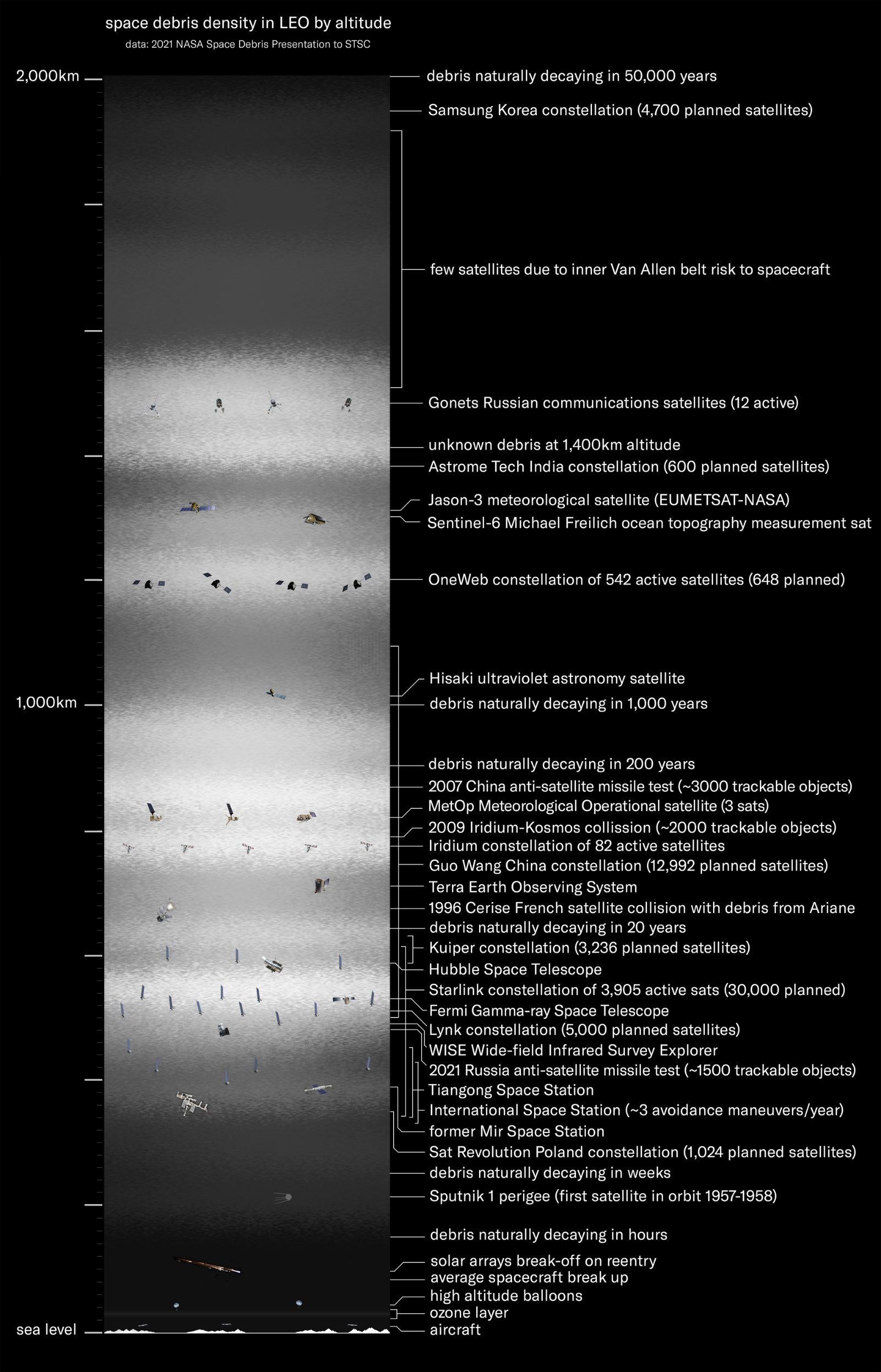
Thirty-seven years later, all of it is still up. GCAT lists 105 catalogued pieces under the designator 1989-089; 101 have come down and four have not. COBE itself, 2,206 kilograms, was measured on 14 November at 868 by 881 kilometres (NASA NSSDCA, GCAT). The dewar cap it discarded in 1989 is at 874 by 879 kilometres, a few kilometres from the satellite that threw it. The sensor cover is at 812 by 831. The Delta second stage, left lower, is at 673 by 772. In thirty-seven years the air has taken about twenty-five kilometres off COBE's orbit, which is the point: NASA's own guidance is that at 800 kilometres "orbital decay often takes centuries" (NASA ODPO).
ClearOrbit's view
COBE did its job perfectly: the 2006 Nobel Prize in Physics went to two of its scientists "for their discovery of the blackbody form and anisotropy of the cosmic microwave background radiation" (Nobel Foundation). Nothing about the mission was careless. It simply happened before anyone wrote down that a satellite has to come home, and so a successful mission left four objects in the shell that is now the single most debris-polluted band in low orbit.
That is the honest shape of the derelict problem. The 2,501 debris objects between 800 and 900 kilometres are not mostly the product of recklessness; they are the exhaust of decades of good missions flown under rules that did not exist yet. No future disposal requirement reaches them: every one is already up, and none has a working engine.
ClearOrbit has flown nothing. What we are arguing is that the backlog deserves its own line item, separate from launch-side reform. A catalogued, tracked, intact 2.2-tonne spacecraft at 875 kilometres is about the most tractable removal target anyone could ask for — and it will still be there, dewar cap alongside, long after the rules that would have prevented it turn a century old.
Reader mail
Have a better idea?Spotted something we got wrong?
We publish in public so the numbers can be checked. If a figure looks wrong, a source is missing, or you know something this piece should have said, send it over. One box, no sign-up.
Send an idea or correctionQuick question
Who should pay for cleaning up orbit?
Anonymous. You will see how others answered after you vote.