Daily briefing · · 3 min read
Orbit on 19 September 2026: the catalog shrank overnight, and a student CubeSat ends a twelve-year fall
33,584 objects on orbit, seven fewer than yesterday, and the arithmetic points to bookkeeping rather than reentry. Duchifat-1 weighs one kilogram and is twelve years into coming down.
This morning's catalog refresh counts 33,584 objects in Earth orbit, seven fewer than yesterday: 19,540 payloads and 14,044 rocket bodies, fragments and discarded components, with roughly 16,341 payloads flagged as active (GCAT). A daily fall in the count is rare, and the explanation is not what it looks like.
What changed
Six of the seven missing entries were payloads and one was debris — but the running total of objects that have re-entered is unchanged at 37,333, and the highest catalog number in use fell from 100,751 to 100,745 (GCAT). Nothing came down to account for the drop. The arithmetic points to catalog housekeeping instead: provisional numbers withdrawn or merged as tracking firms up which object is which. The catalog is a maintained record of what sensors can identify, not a census of what is up there.
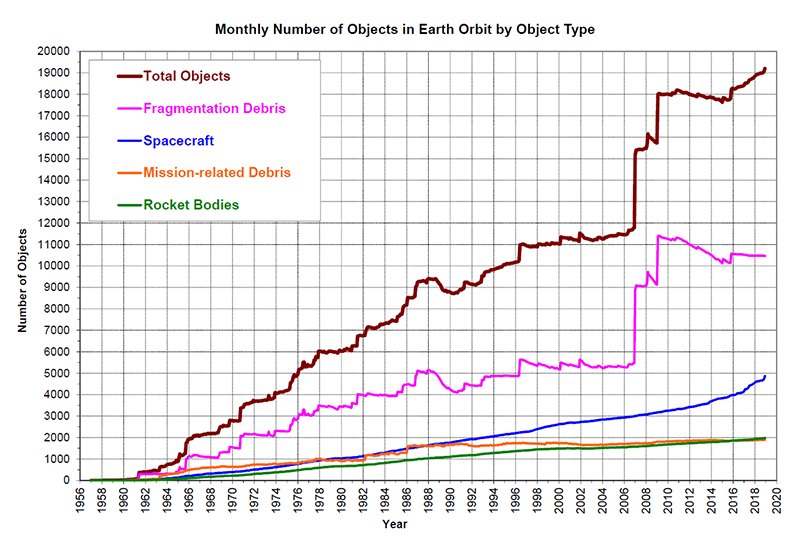
The real movement is elsewhere. The 30-day launch tally now reads 277 new objects, down from 307 a day earlier as a busy mid-August day rolled out of the window. Against that, 72 objects re-entered in the last 30 days and five in the last week; of the 158 that came down over 60 days, 47 percent were Starlink. 193 catalogued objects now have perigees below 250 km, three more than yesterday (GCAT).
Object of the day: Duchifat-1, and the class of 2014-033
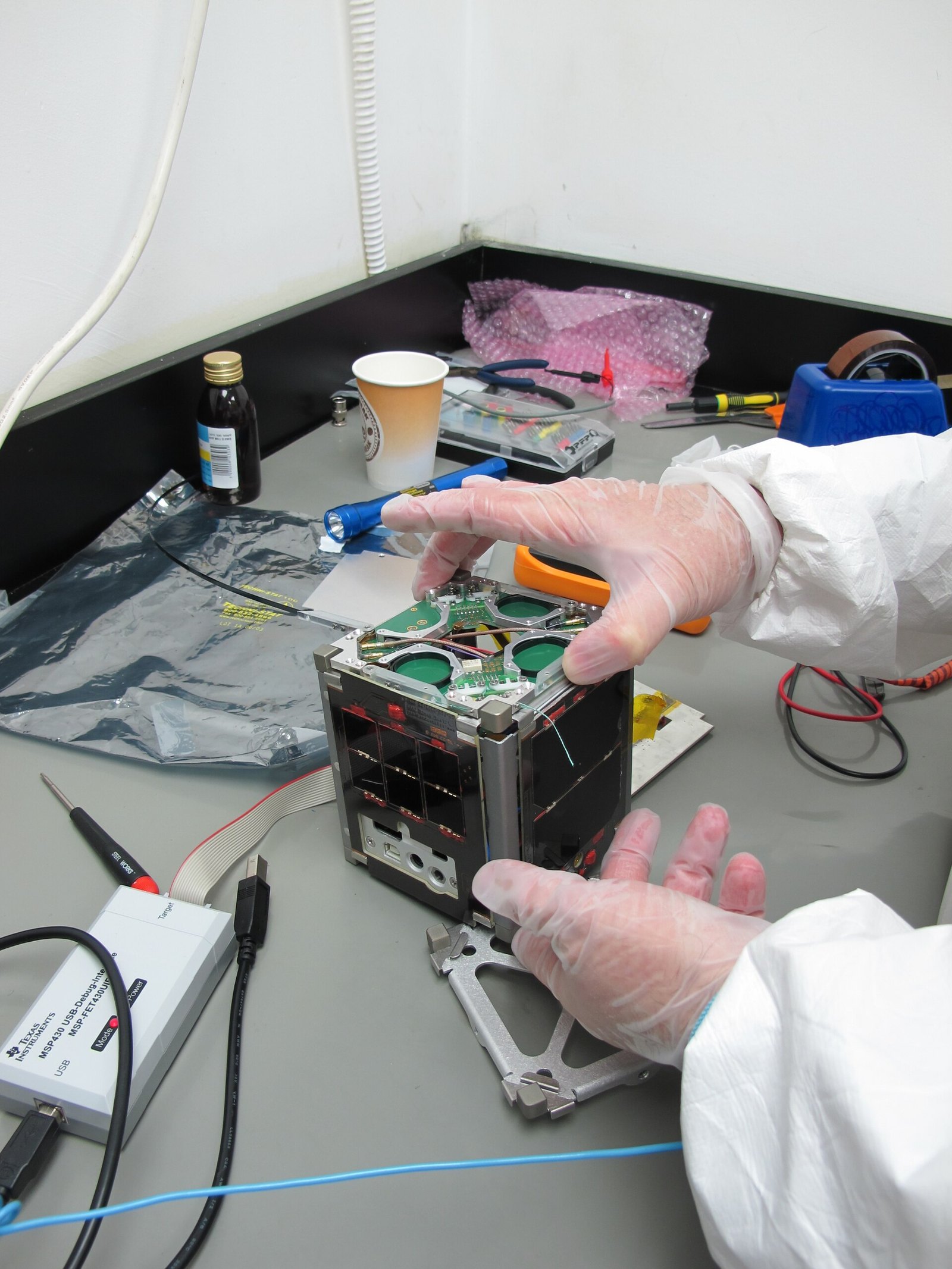
NORAD 40021, Duchifat-1, is a one-kilogram 1U CubeSat built by high-school students at the Herzliya Science Center and launched on 19 June 2014. Its reference orbit, measured eight days later, was 603 by 621 km. This morning it is at 155 by 172 km, days from the end (GCAT).
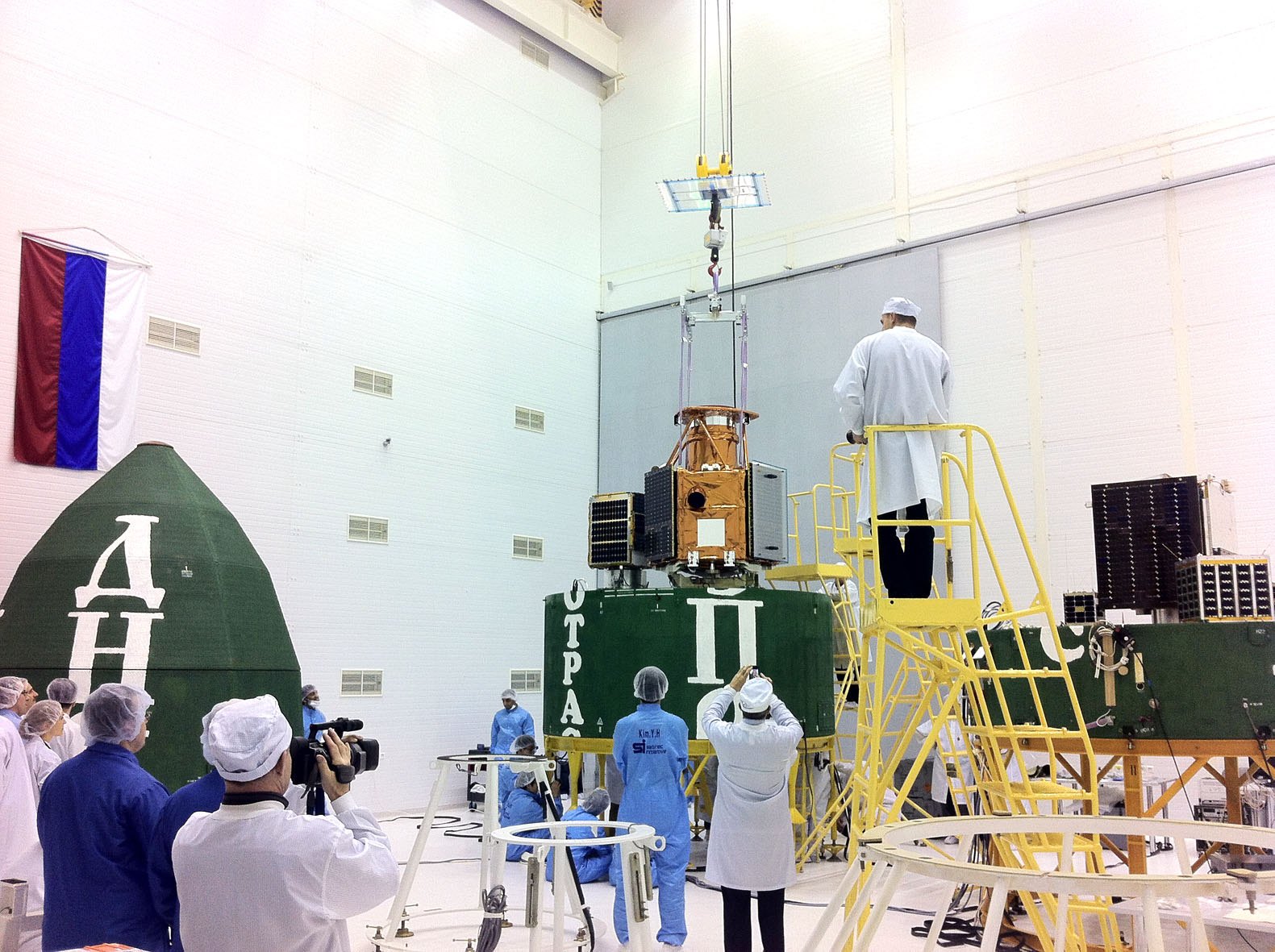
What makes it worth a paragraph is the company it launched with. That Dnepr flight, 2014-033, put 40 catalogued pieces into nearly the same orbit on one afternoon — a natural experiment with a clean control. Twelve years on, GCAT records 25 of the 40 still in orbit, twelve re-entered and three renamed or transferred. Eleven of the twelve are Planet's Flock 1c CubeSats (Flown), 4.25 kg three-unit boxes that came down between 17 December 2024 and 25 November 2025 (GCAT). Duchifat-1 will be the thirteenth, at twelve years and three months.
Everything heavier is still up: KazEOSat-2 at 177 kg, Saudisat 4 at 100 kg, both Hodoyoshi satellites, and the Dnepr third stage — 1,000 kg of spent hardware in a 608 by 1,453 km orbit, most of it flown far above the thin air that caught the CubeSats. Six hundred kilometres is low enough to clear a light, flat object in about a decade. It is not low enough for anything dense.
Where the junk is
The 400 to 500 km shell is still the most crowded at 10,155 objects, but only 185 are debris; it largely cleans itself. The trouble sits higher, where 800 to 900 km holds 2,763 objects, 2,486 of them debris or rocket bodies (GCAT). ESA's modelled population puts 68,450 objects larger than 10 cm and about 1.5 million between 1 and 10 cm in orbit, more than 17,000 tonnes in total (ESA DISCOS). None of those fragments can be tracked or dodged, and each came off something intact left where it does not come down.
ClearOrbit's view
The class of 2014-033 is a measurement, not a model. GCAT already contains, for every launch ever flown, the number nobody publishes: the fraction of that launch's catalogued pieces still in orbit ten years later. It costs nothing to compute and says more than any disposal pledge made at licensing time.
We would like that figure — call it cohort clearance — reported for every launch on its tenth anniversary. A rideshare at 600 km can expect most of its small passengers to leave on their own; the same rideshare 200 km higher will show near-total retention. That difference is a choice made once, on the ground, years before anyone worries about it.
It is also how removal should be prioritised (ClearOrbit vision). Ranking objects by mass or collision probability gives a list that changes weekly; ranking launch cohorts by what they failed to clear gives a stable one, pointing at the same thing every time: the upper stage. Duchifat-1 is about to do the right thing without being asked. The thousand-kilogram stage that carried it will not.
Reader mail
Have a better idea?Spotted something we got wrong?
We publish in public so the numbers can be checked. If a figure looks wrong, a source is missing, or you know something this piece should have said, send it over. One box, no sign-up.
Send an idea or correctionQuick question
Who should pay for cleaning up orbit?
Anonymous. You will see how others answered after you vote.