Daily briefing · · 3 min read
Orbit on 28 September 2026: EagleEye is 360 kilometres below the orbit it was launched into
The catalog did not move overnight. The reentry window emptied, and a 50-kilogram Polish satellite is now the lowest working-class payload on the list.
What changed
Nothing, in the headline number. The catalog stands at 33,646 objects on orbit, 19,556 of them payloads and 14,090 of them debris and spent rocket bodies, exactly where it stood yesterday GCAT. Two days in six now with a flat overnight count. That is a property of the catalog, not of orbit: objects are still being launched and still coming down, but the element set that feeds these figures has not been refreshed since 27 September, and no additions or removals have been booked against it.
What did move is the rolling window. Six objects have decayed in the last seven days, down from ten counted yesterday, and the thirty-day total has slipped from 82 to 79 as older reentries age out of the window GCAT. Over sixty days, 170 objects have come down, 49 of them Starlinks. Launches over thirty days stand at 203, so the traffic into orbit continues to outrun the traffic out of it by better than two to one.
Low down, 114 catalogued objects now have a perigee below 250 kilometres, which is the band where an orbit has weeks or days left rather than years GCAT. The crowding above is unchanged: 10,197 objects between 400 and 500 kilometres, almost all of them working payloads, against 2,769 between 800 and 900 kilometres of which 2,497 are debris. The first band is busy and self-clearing. The second is quiet, lethal and permanent.
Object of the day: EagleEye
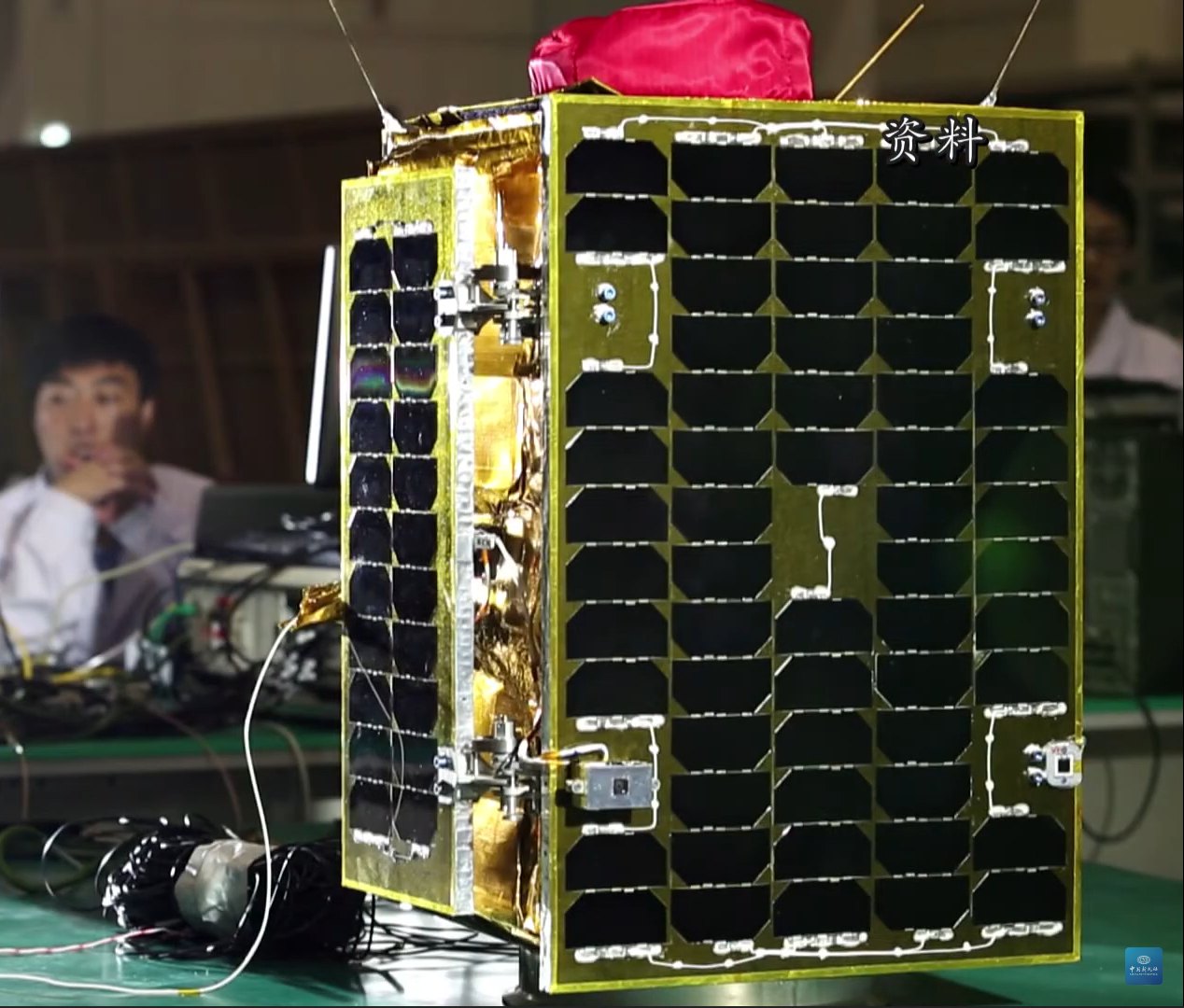
The second-lowest object in the catalog is EagleEye, a 50-kilogram Polish Earth-observation satellite, sitting in a 139 by 157 kilometre orbit on its 23 September element set GCAT. It is the lowest payload on the list, and at that altitude it has days rather than weeks.
EagleEye launched from Vandenberg in August 2024 and its builder, Creotech Instruments, reported it in a stable orbit at about 510 kilometres with onboard systems performing nominally Creotech. The mission was unusual by design: it carried an ion engine intended to walk it down from 500 kilometres into a very low operating orbit of 300 to 350 kilometres, where its optics would resolve one metre on the ground eoPortal. Flying low buys sharper images and cheap disposal, because the atmosphere does the deorbiting for free.
It is now roughly 360 kilometres below the orbit it was launched into, and well beneath the band it was built to work in. The elements alone cannot say how much of that descent was thrust and how much was drag, and nothing in the public record settles it. What they do say is that the descent is over: below about 160 kilometres there is no holding station, whatever the propulsion system is doing.
The general lesson is the useful one. Very low orbits are the one part of the shell that cleans itself, and a satellite that spends its life at 350 kilometres is a satellite that never becomes somebody else's problem. That is why the population at 400 to 500 kilometres, for all its size, is not what keeps people awake, while the 2,497 dead fragments sitting at 800 to 900 kilometres are. ESA's modelled population puts about 1.5 million objects between 1 and 10 centimetres in orbit against roughly 47,080 tracked well enough to be catalogued ESA DISCOS, and the untracked majority is concentrated where the air is too thin to help.
ClearOrbit's view
A satellite designed to fall is a satellite designed responsibly, and EagleEye's architecture, whatever happened to the mission, was the right shape: go low, work low, come down on your own. We would like that to be the default rather than the exception for anything flying under 600 kilometres.
It does not solve the part we care about. The objects that need removing are the ones that chose an altitude where the atmosphere never arrives, and there are thousands of them. No one has removed a single one. We think the first job is to stop adding to that population, and the second is to build the machine that subtracts from it.
Reader mail
Have a better idea?Spotted something we got wrong?
We publish in public so the numbers can be checked. If a figure looks wrong, a source is missing, or you know something this piece should have said, send it over. One box, no sign-up.
Send an idea or correctionQuick question
Who should pay for cleaning up orbit?
Anonymous. You will see how others answered after you vote.