Daily briefing · · 3 min read
Orbit on 10 October 2026: a reentry column that read zero yesterday now holds 25
After nine days with nothing booked down, a batch of back-dated decays landed at once, among them a crew Dragon and the trunk it dropped twelve minutes earlier.
What changed
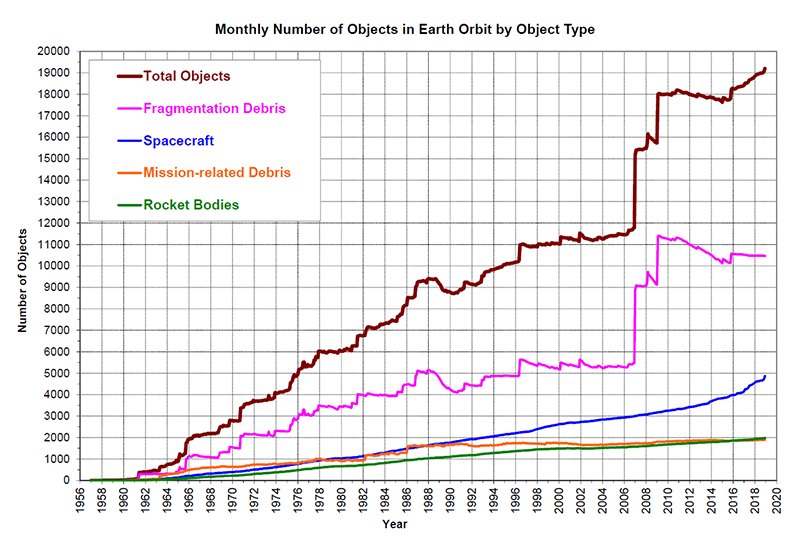
The reentry column filled up overnight. For nine days nothing had been booked down anywhere in the catalog; this morning the seven-day count stands at 25 and the thirty-day count at 102, up from 74 yesterday GCAT. There are now 33,640 objects on orbit, thirty fewer than yesterday: 19,573 payloads, 2,113 spent rocket bodies, 10,629 catalogued fragments and 1,325 mission-related components. Of the 70,244 objects catalogued since 1957, 37,436 have come down, twenty-nine of those bookings posted since yesterday morning GCAT.
Almost all of the new bookings are back-dated, a cleared backlog, not a busy week. Eleven objects carry decay dates between 6 and 8 October: nine Starlinks, a crew Dragon and the trunk it dropped. Three objects these briefings watched falling are also settled: iSat on 29 September, Starlink 3083 on 2 October and Tianfu Dongpo 07, yesterday's object of the day, on 1 October. The queue below 250 kilometres thinned from 65 to 57, and the lowest object in the catalog is Starlink 4387 at 128 by 146 kilometres GCAT.
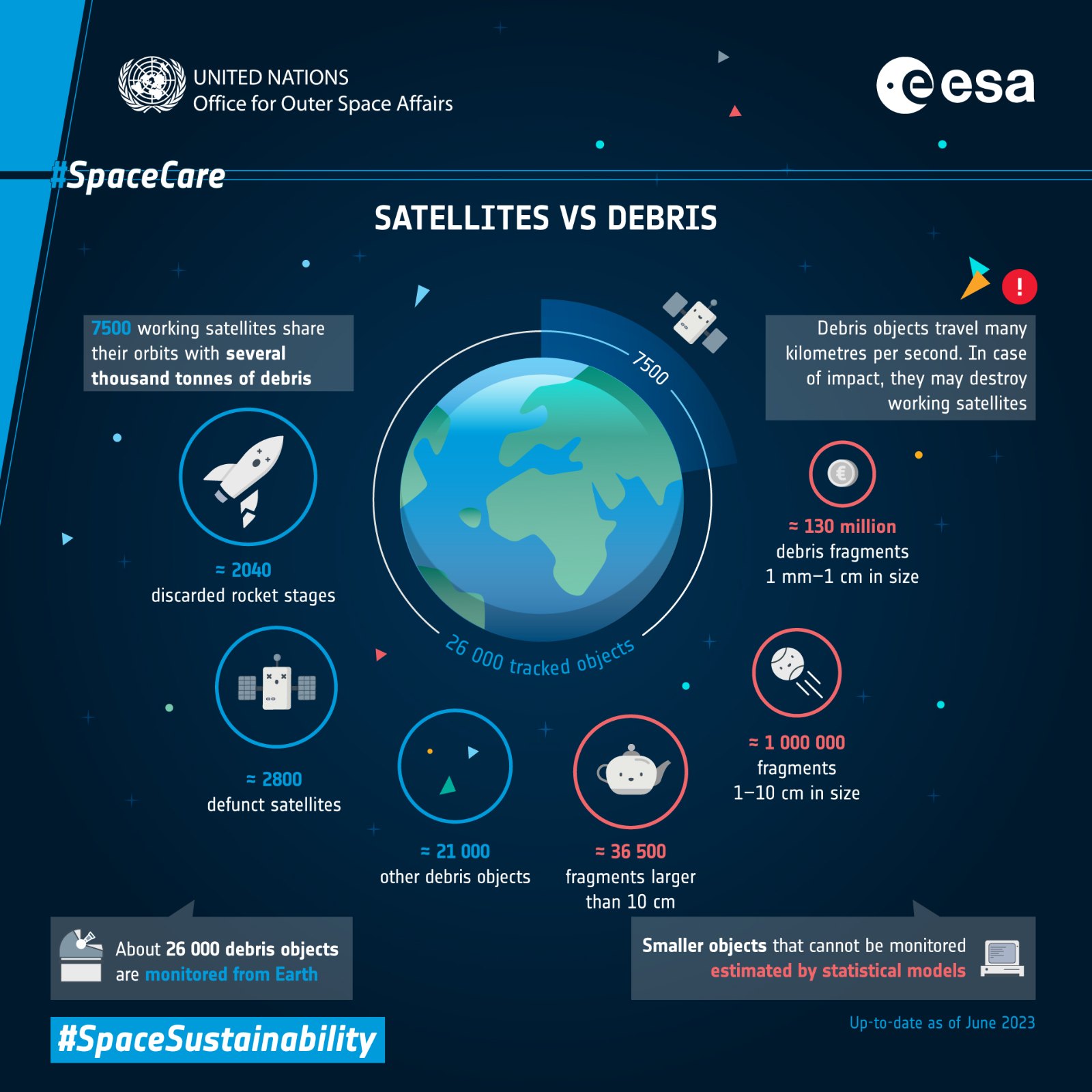
None of it touches the part of orbit that matters most. The 400 to 500 kilometre band holds 10,309 objects, 10,128 of them payloads and only 181 fragments; the 800 to 900 kilometre band holds 2,753, of which 2,490 are fragments GCAT. Drag emptied the first band's queue this week and will not touch the second in any of our lifetimes. ESA's catalogue, counting differently, puts 47,010 objects under regular tracking and more than 17,400 tonnes of material in orbit ESA DISCOS.
Close approach of the day
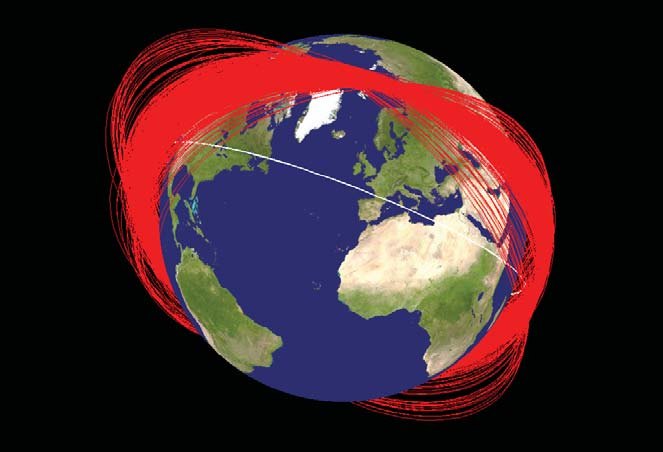
On 12 October at 12:40 UTC the working Chinese weather satellite Fengyun 3B and a derelict Soviet upper stage are predicted to pass 1.10 kilometres apart at about 846 kilometres over the Southern Ocean, closing at 12.98 kilometres per second, with a worst-case probability of 1 in 15,788 — roughly twenty times likelier than yesterday's pair. The figure is propagated from public orbit data and CelesTrak's 8 October screening file, because this morning's refresh could not reach CelesTrak; it is a kilometre-accurate estimate, not a warning CelesTrak SOCRATES Plus.
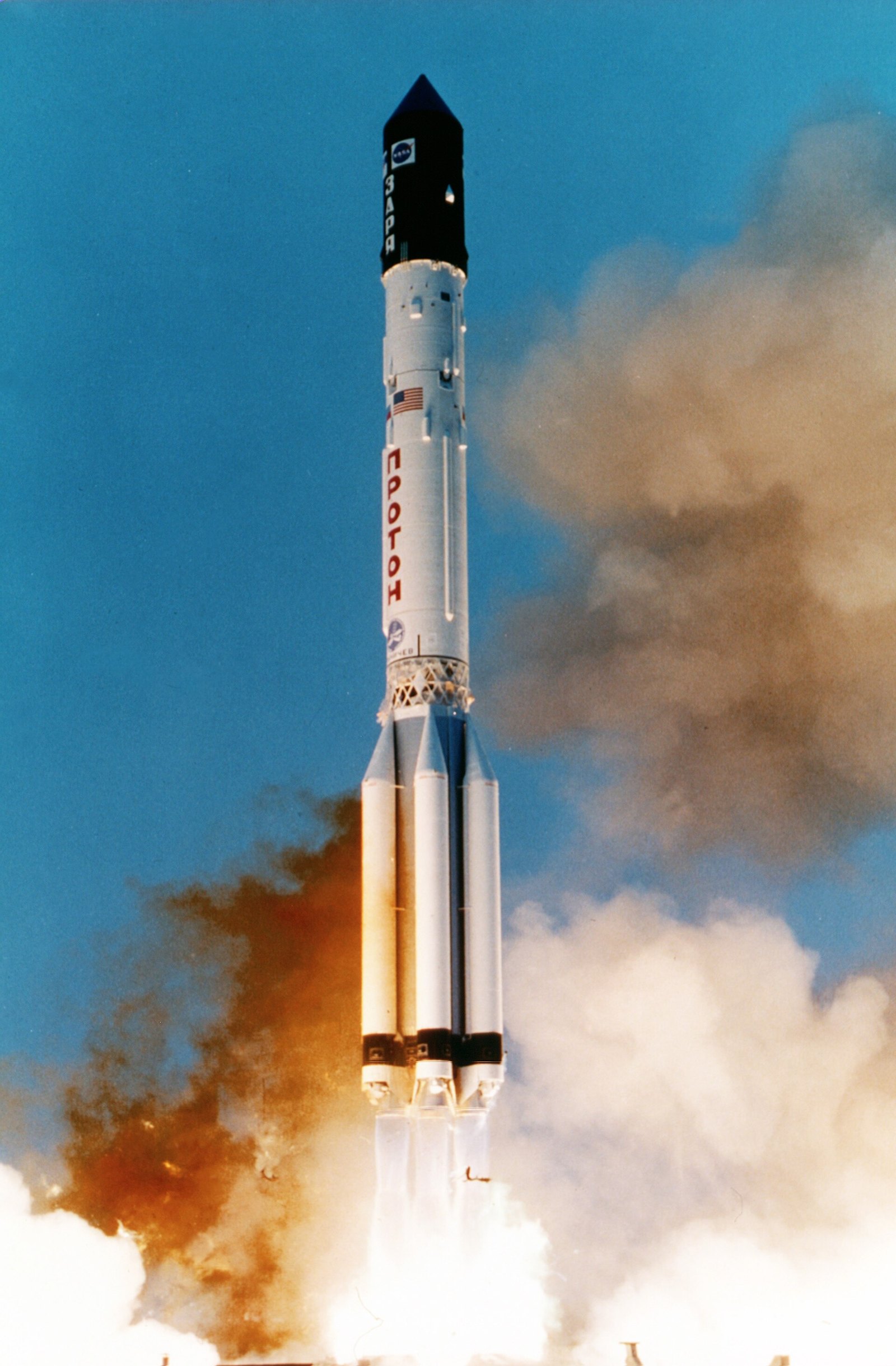
The derelict is Blok DM-2 No. 6L, the Proton upper stage from the launch of the Soviet radar-reconnaissance satellite Kosmos-1603 on 28 September 1984, still circling at 836 by 843 kilometres. Twenty-nine objects were catalogued from that launch, mostly fragments of its two SOZ ullage motors, the auxiliary tanks with a record of coming apart years after use — the reason passivation is a discipline. Five are still up, all between 805 and 856 kilometres, and 251 Blok DM stages remain in orbit GCAT. See the 3D view.
Object of the day
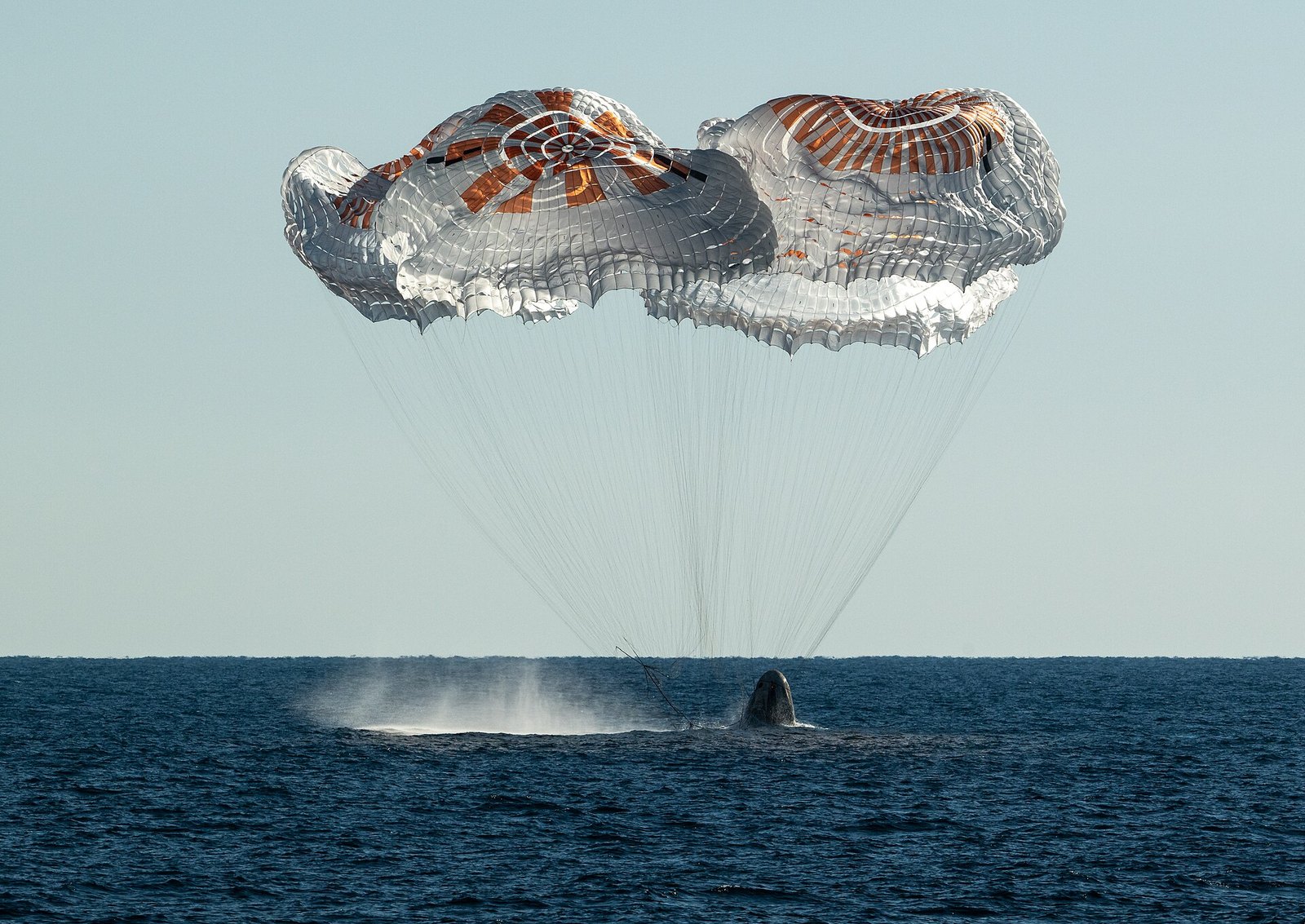
Dragon Freedom came down on 8 October at 15:34 UTC after 237 days in orbit on the Crew-12 rotation. It is the only object in the batch whose reentry anyone aimed: a crew capsule returns to a chosen patch of water. Twelve minutes earlier the trunk it had jettisoned — catalogued separately, its decay time marked uncertain — burned up wherever drag put it. The two entries sit side by side and the column does not distinguish them, which is worth remembering whenever a reentry count is read as cleanup: of 200 objects booked down in sixty days, 49 were Starlinks losing altitude on their own GCAT.
ClearOrbit's view
A nine-day gap closing in one morning is a reminder that the catalog is bookkeeping, not physics. Nothing fell faster yesterday; people simply finished confirming what the atmosphere had done. Below 500 kilometres drag is a working removal service, and the Starlinks in this batch are its customers whether they wanted to be or not. Above 700 kilometres there is no service, and a Proton stage from 1984 is still making encounters with working satellites forty-two years on.
We think that asymmetry is the whole brief. Reentry statistics will keep improving as low constellations cycle through, making orbit look healthier than it is. The number worth watching has not moved: the 2,490 fragments between 800 and 900 kilometres, where nothing flying today can reach them. Building something that can is the work, and those dead stages are where it starts.
Reader mail
Have a better idea?Spotted something we got wrong?
We publish in public so the numbers can be checked. If a figure looks wrong, a source is missing, or you know something this piece should have said, send it over. One box, no sign-up.
Send an idea or correctionQuick question
Who should pay for cleaning up orbit?
Anonymous. You will see how others answered after you vote.