Daily briefing · · 3 min read
Orbit on 8 October 2026: a fourth morning with nothing in or out, and the queue below 250 kilometres lost 27 objects
The catalog has not moved in four days and only one reentry has been booked in a week. Tomorrow a 1998 upper stage and a 2007 ASAT fragment pass 229 metres apart.
What changed
The catalog has stood still for four mornings. There are 33,670 objects on orbit: 19,595 payloads, 2,113 spent rocket bodies, 11,962 catalogued fragments and 1,325 mission-related components. Of 70,235 catalogued since 1957, 37,407 have come down. None of those figures has moved since 5 October GCAT.
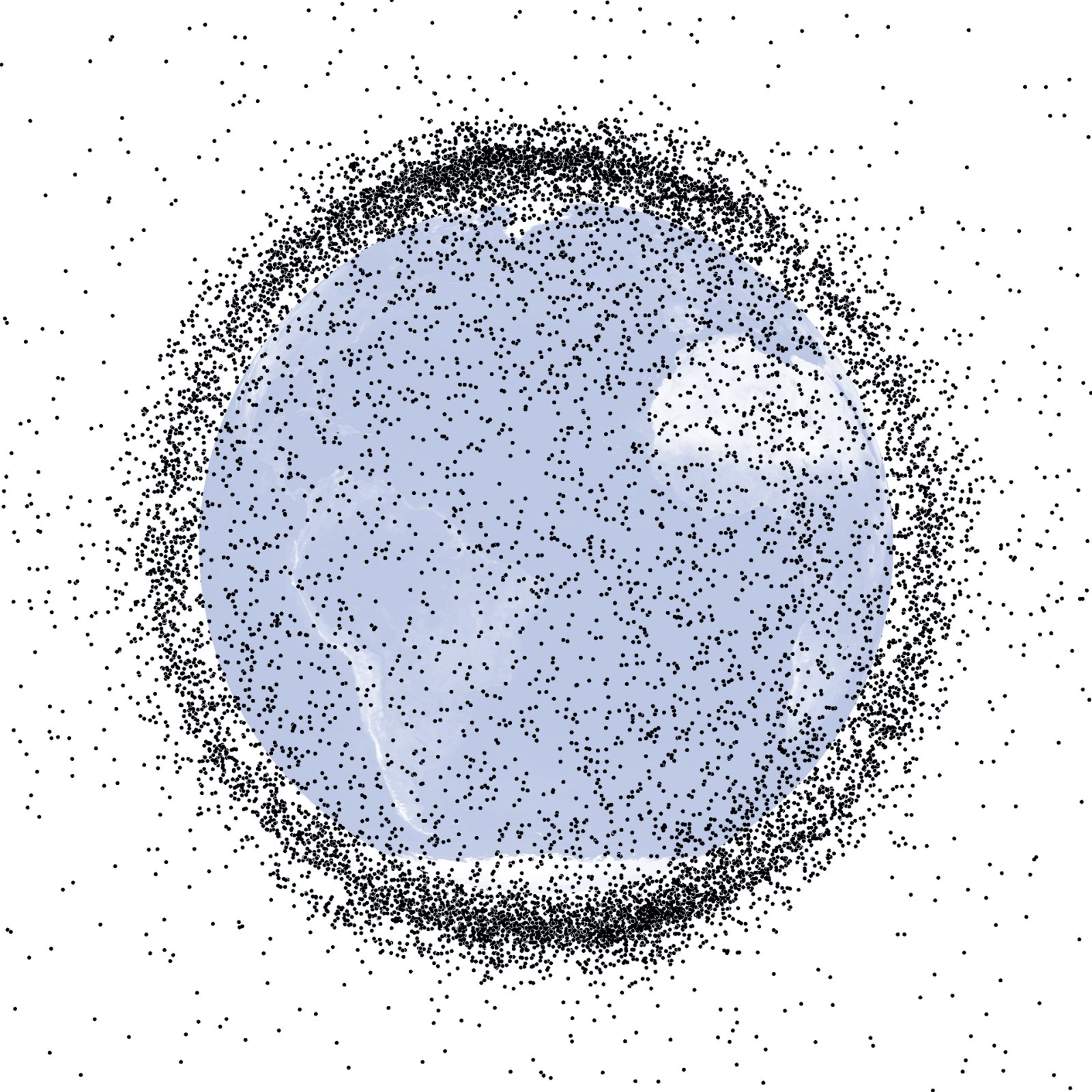
The rolling windows did move. The thirty-day reentry count slipped from 76 to 75 and the seven-day count from two to one, the striking figure this morning: in a week exactly one object has been booked down, Starlink 1453 on 1 October. The sixty-day total fell from 180 to 177, 47 of them Starlink, and the thirty-day launch count is unchanged at 193 GCAT. Conjunction figures in the daily statistics file are stale, so the screening below comes from today's CelesTrak file.
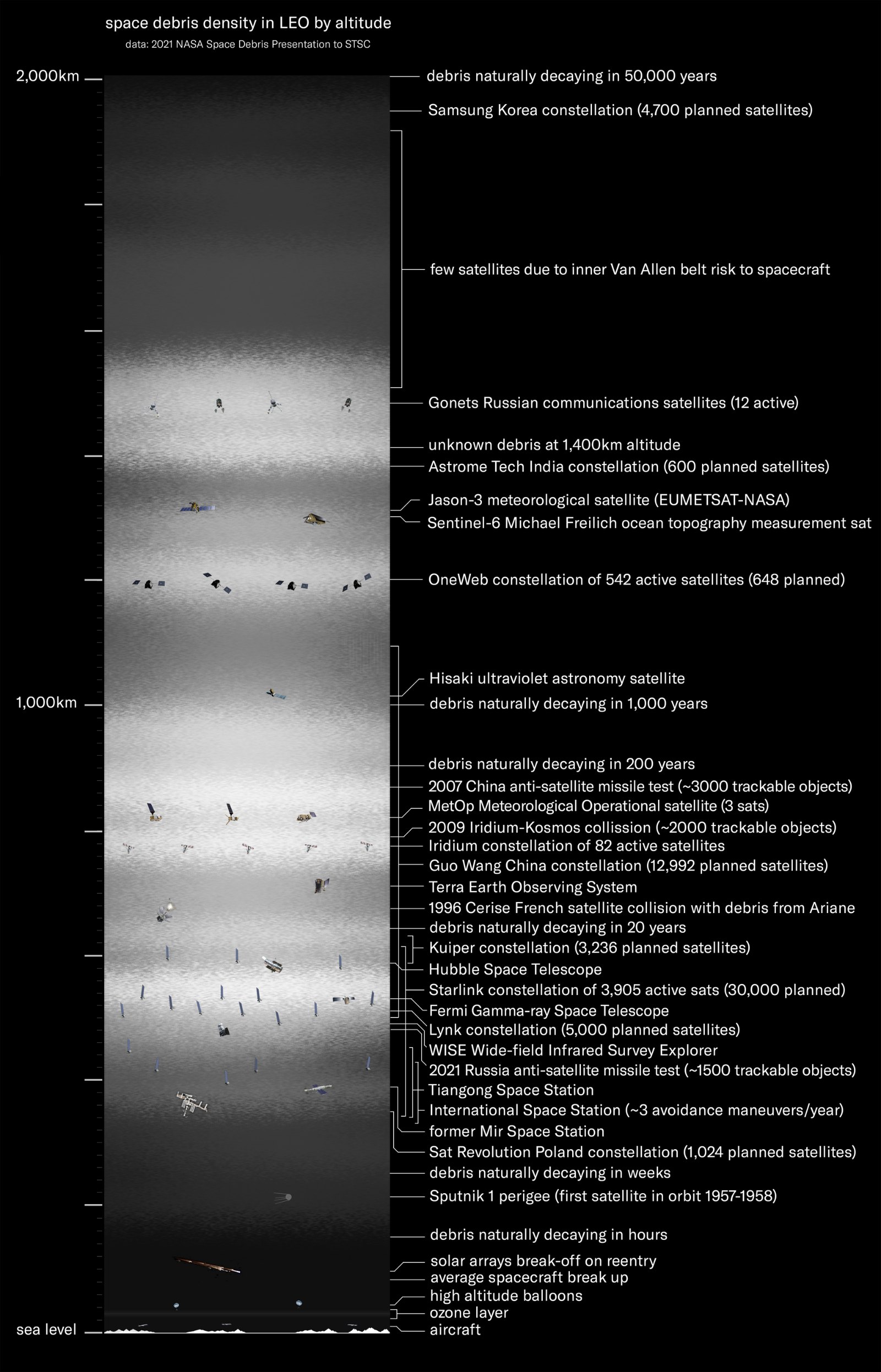
The low queue moved the other way. Yesterday 93 catalogued objects had a perigee below 250 kilometres; this morning 66 do GCAT. Nothing was booked down in between, so the drop is almost certainly fresh element sets lifting objects out of the band, not twenty-seven unrecorded reentries. The queue is an estimate, not a countdown. The lowest three are a Kuaizhou-11 third stage at 133 kilometres, Tianfu Dongpo 07 at 143 and iSat at 150. The altitude distribution is unchanged: 10,235 objects between 400 and 500 kilometres, 10,055 of them working payloads and 180 debris, against 2,764 between 800 and 900, 2,499 of them debris GCAT.
Close approach of the day: 229 metres, and neither object can move
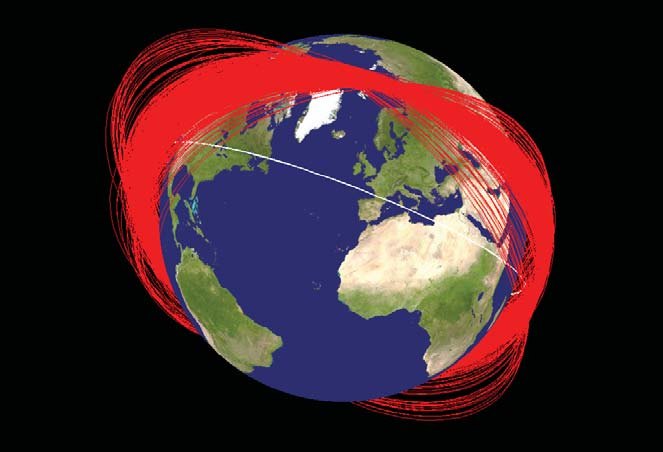
Tomorrow at 16:15 UTC a spent Taurus upper stage and a fragment of a Chinese weather satellite are predicted to pass 229 metres apart at a closing speed of 13.8 kilometres a second CelesTrak SOCRATES Plus. Both are uncontrollable. The stage, catalog number 25160, designator 1998-007D, has circled at 771 by 863 kilometres for twenty-eight years in a retrograde orbit inclined 108 degrees; the fragment, 31089, runs 783 by 1,083 kilometres at 99 degrees GCAT. They cross near 800 kilometres. Re-propagating from today's orbit data moved the predicted miss only from 223 to 229 metres, unusually stable for this screening, where several events shifted fivefold. The 3D view shows the geometry.
Today's whole-catalog screening holds 174,512 predicted conjunctions for the coming week, 7,834 inside a kilometre and 111 inside 100 metres. Twenty-one are debris against debris, with no operator at either end, and this is the closest CelesTrak SOCRATES Plus. These are predictions from public element sets, not warnings.
Object of the day: the Fengyun-1C cloud, nineteen years on
That fragment is one of 2,125 pieces of Fengyun-1C still on orbit, out of 3,586 catalogued, at a mean altitude of 833 kilometres GCAT. The cloud dates from the Chinese anti-satellite intercept of 11 January 2007, the largest debris-generating event on record NASA ODQN. It still supplies a large share of the 2,499 fragments between 800 and 900 kilometres, which is why that band, not the busier Starlink shell below, is the one modellers watch. At 800 kilometres orbital lifetimes run to centuries NASA ODPO, so almost nothing from ESA's record of more than 660 break-ups, explosions and collisions since 1957 ESA DISCOS has gone away.
ClearOrbit's view
A flat week in the catalog is a bookkeeping fact, not a physical one. One reentry in seven days does not mean the sky emptied; the decay column is written in batches and this week's has not been written.
Tomorrow's encounter is the part worth sitting with. Two objects, neither with an operator or propellant, pass closer than two football pitches apart at a speed that would turn either into hundreds of new fragments. No warning helps: there is nobody to warn and nothing to fire. The only intervention is removing one of the two years in advance, and removing a derelict remains Proposed; nothing of the kind has been Flown.
We think the 800-to-900-kilometre shell deserves the first removal missions, ahead of the busier bands below, where the atmosphere already does the job and most traffic can manoeuvre. At 833 kilometres neither is true, and those 2,125 fragments will still be making encounters like tomorrow's long after everything in the Starlink shell has burned. The Orbital Clock sets out why.
Reader mail
Have a better idea?Spotted something we got wrong?
We publish in public so the numbers can be checked. If a figure looks wrong, a source is missing, or you know something this piece should have said, send it over. One box, no sign-up.
Send an idea or correctionQuick question
Who should pay for cleaning up orbit?
Anonymous. You will see how others answered after you vote.