Daily briefing · · 3 min read
Orbit on 7 October 2026: a third morning with nothing in or out, and five tonnes of spent stage below 250 kilometres
No additions, no decays, no change in any column for the third day running. The thirty-day launch count fell 27 to 193 purely by ageing out, and the heaviest object in the low queue is a 5,000-kilogram rocket stage.
What changed
Nothing, for the third morning running, and at this point the stillness is the finding. There are 33,670 objects on orbit: 19,595 payloads, 2,113 spent rocket bodies, 11,962 catalogued fragments and 1,325 mission-related components. Of the 70,235 objects catalogued since 1957, 37,407 have come down. Every one of those figures is identical to yesterday's and to the day before's GCAT.
The rolling windows still moved, because they are windows. The thirty-day reentry count fell from 83 to 76 and the seven-day count from three to two; the sixty-day total slipped from 184 to 180, 46 of them Starlink. The thirty-day launch count dropped 27 in one step, from 220 to 193 GCAT. None of those falls records anything happening. They record late-September entries dropping off the back of the window with nothing arriving at the front: the newest decay on the books is still Starlink 1453 on 1 October, six days ago, and the highest catalog number is still 100,960, USA 708, launched 2 October GCAT. Conjunction figures are stale in the pipeline this morning and are not quoted here.
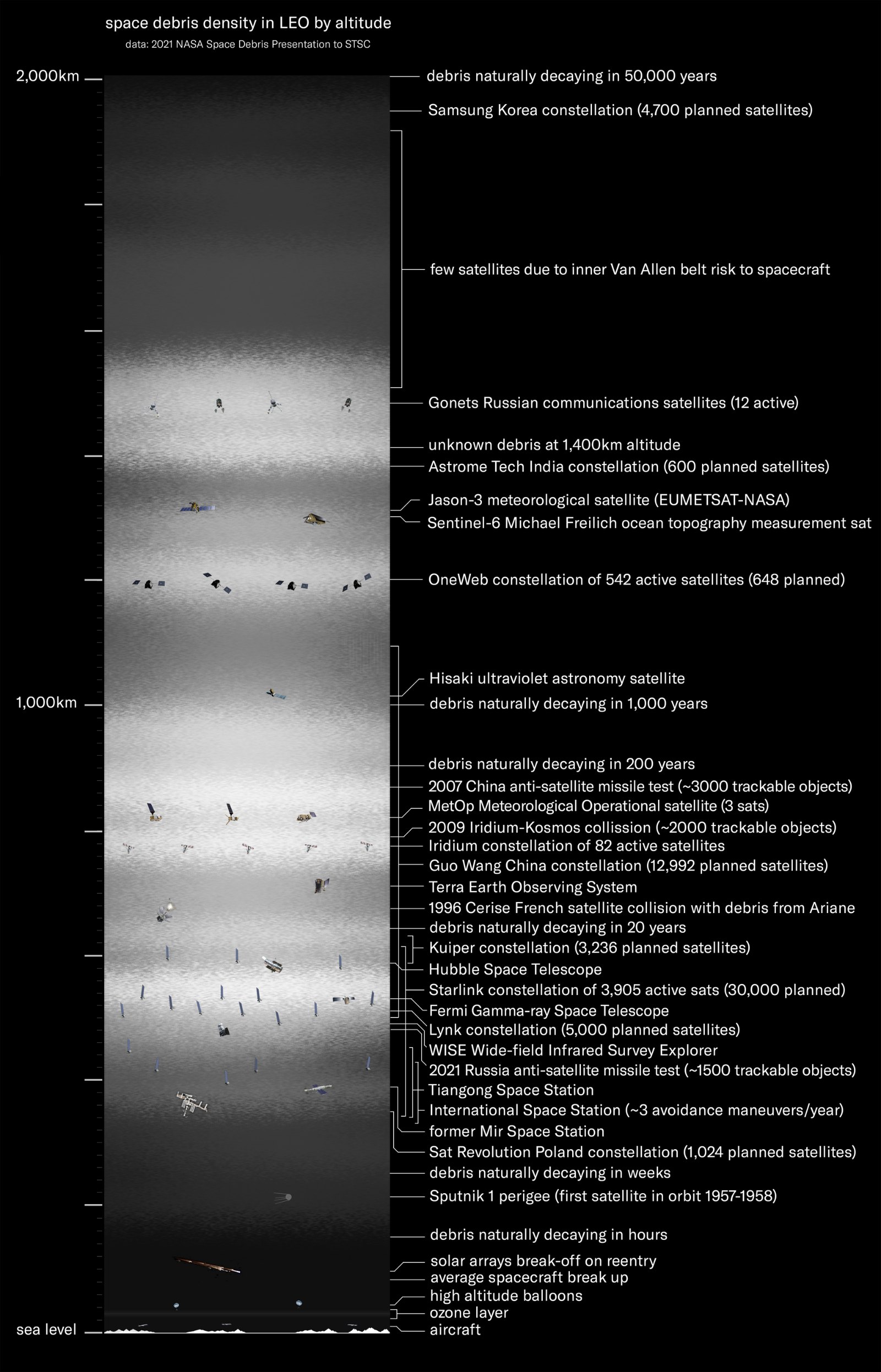
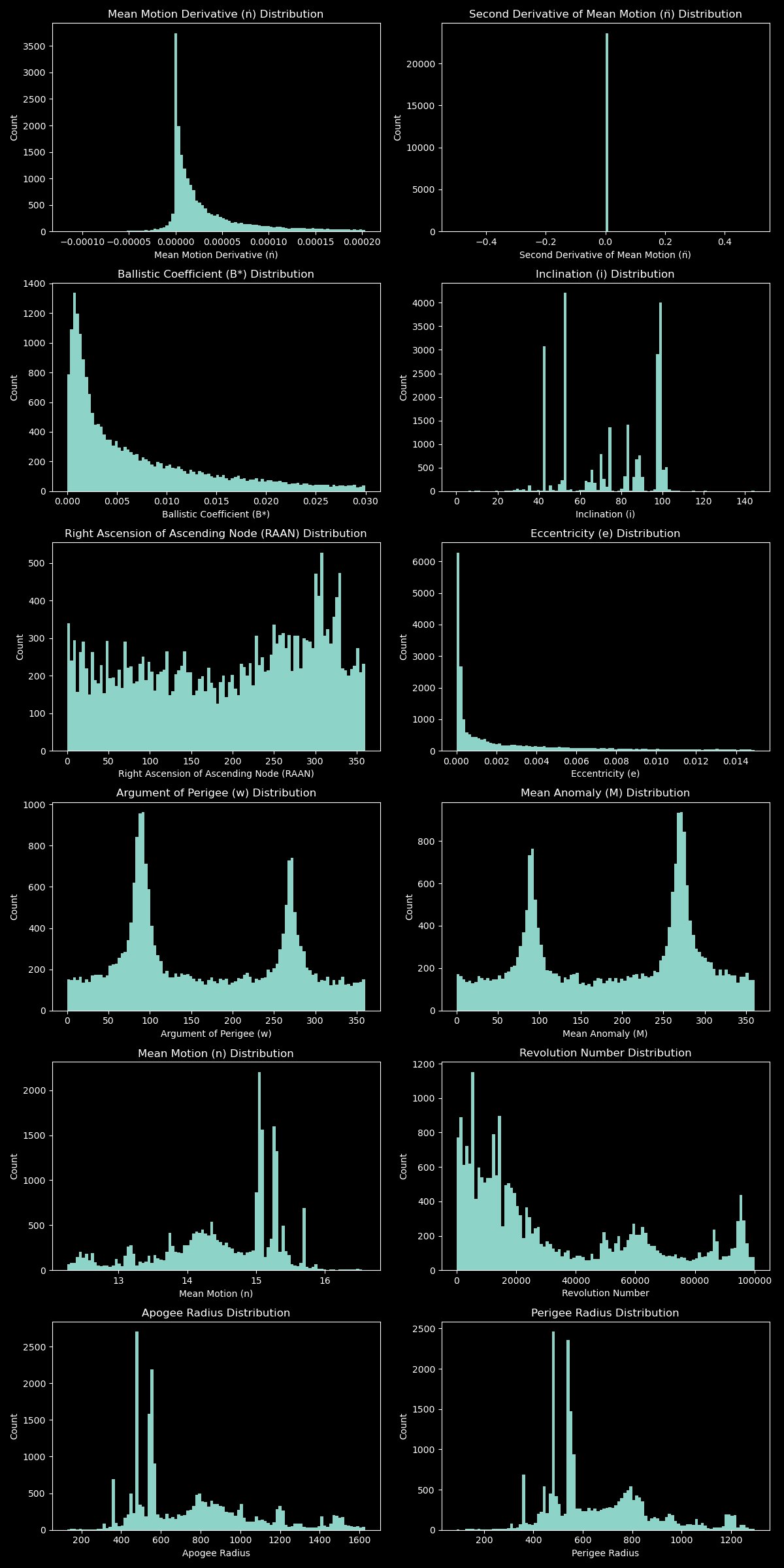
Underneath the frozen ledger, 93 catalogued objects sit below a 250-kilometre perigee, where the remaining air takes kilometres off an orbit every day. The distribution has not shifted either: 10,235 objects between 400 and 500 kilometres, of which 10,055 are working payloads and only 180 debris, against 2,764 between 800 and 900, of which 2,499 are debris, and another 2,246 fragments between 700 and 800 GCAT.
Object of the day: Zhuque-2E Y5 Stage 2, five tonnes in the low queue
Most objects at the front of the decay queue are small. Catalog number 69095 is not. GCAT lists it as the second stage of Landspace's Zhuque-2E flight Y5, launched on 14 May 2026: 5,000 kilograms, about 12 metres long and 3.4 metres across, released into 209 by 872 kilometres at 88.98 degrees. Its latest element set, dated 1 October, puts it at 195 by 588 kilometres GCAT. Of the fifteen lowest objects in the catalog this morning it is the heaviest by a factor of sixteen; the next largest is a 300-kilogram Starlink GCAT.
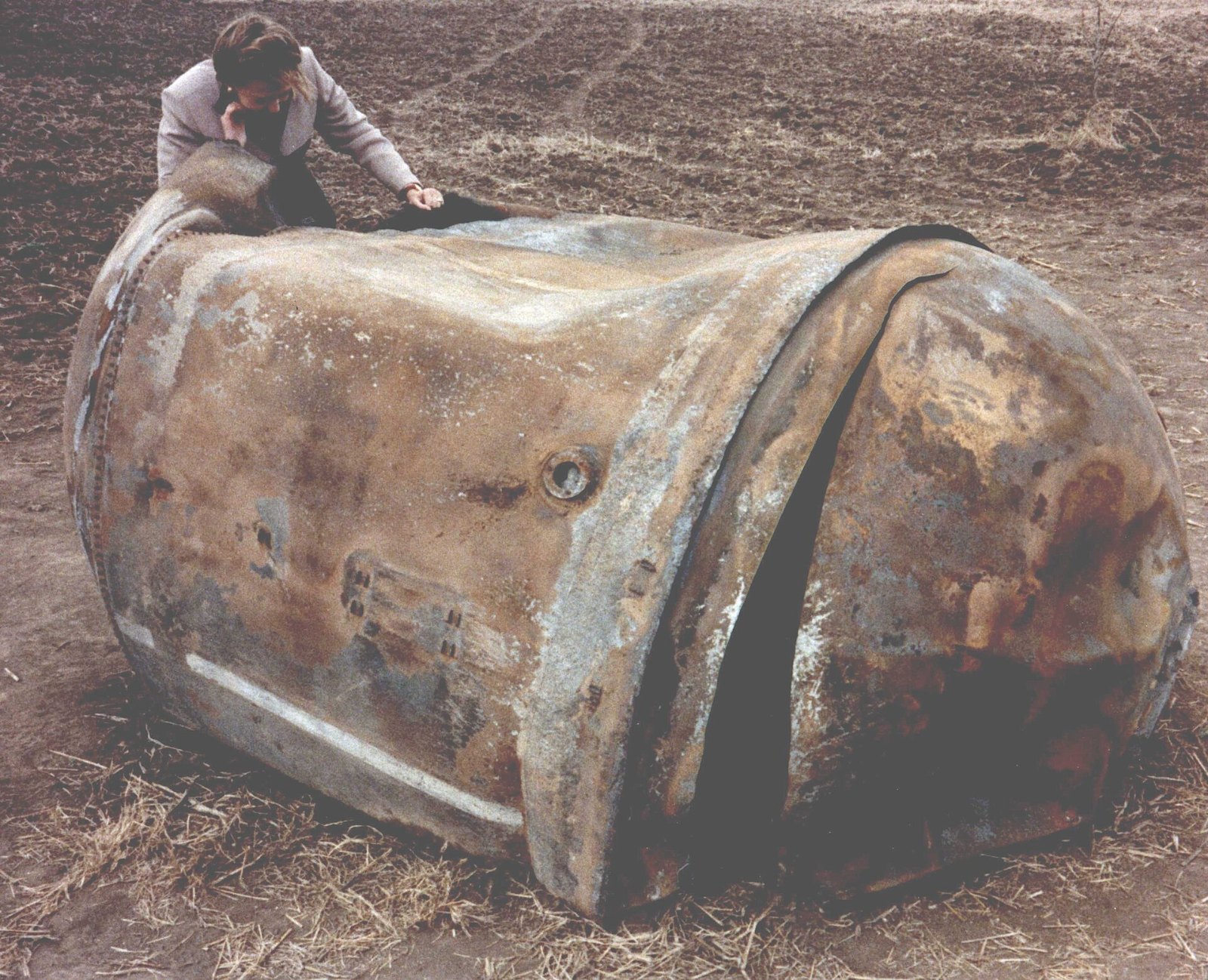
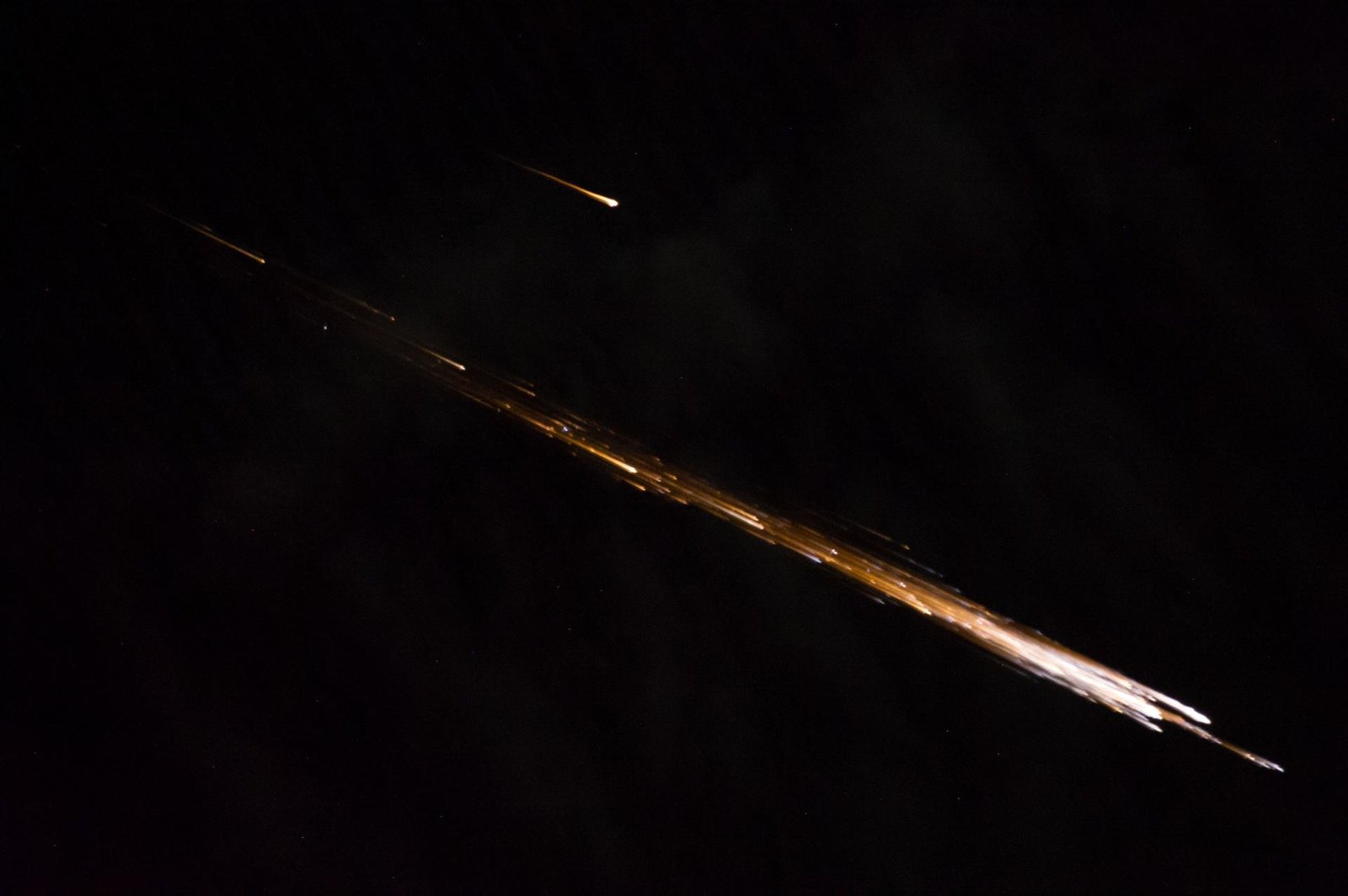
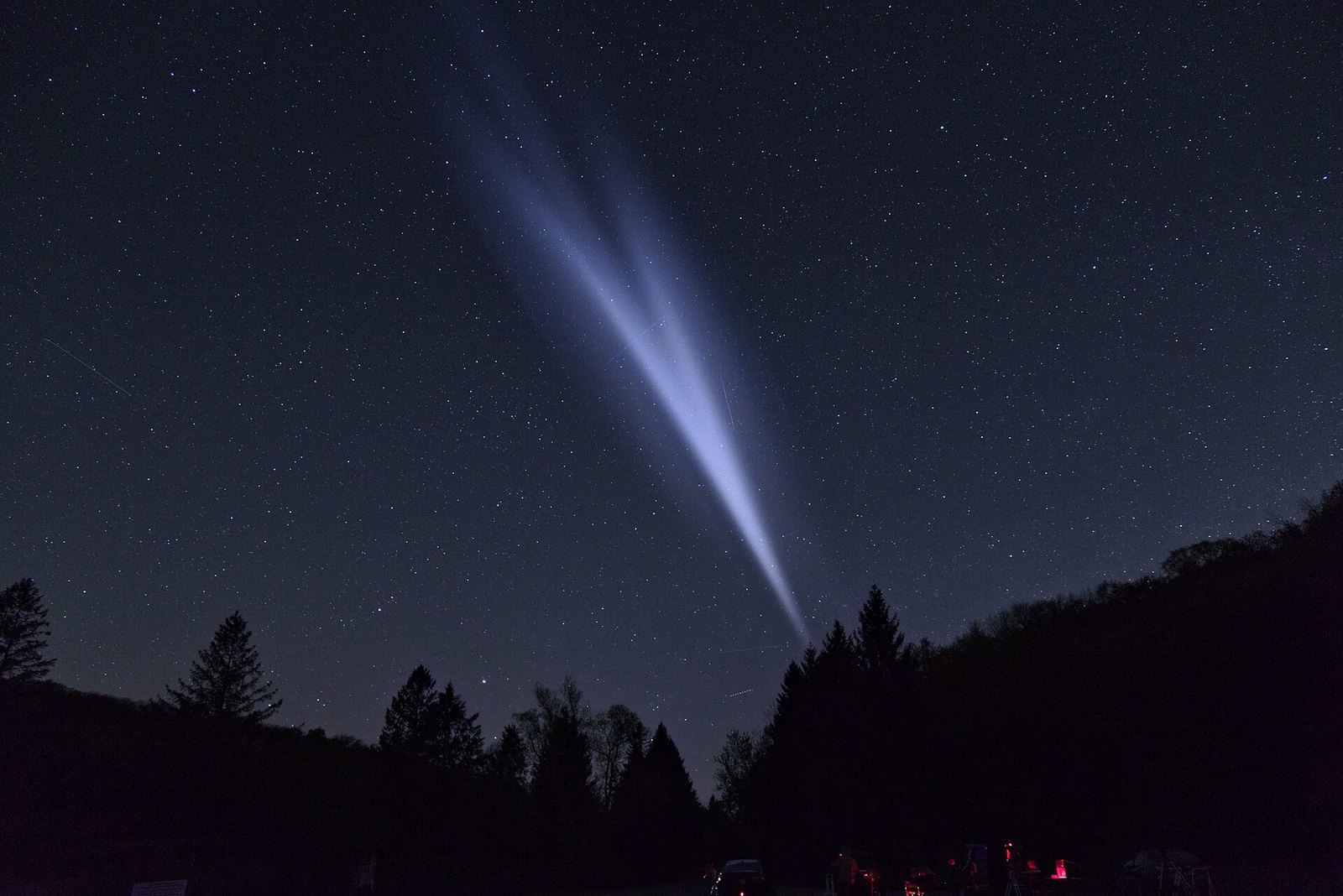
The photograph at the top of this briefing is the same stage a few hours after launch. Amateur astronomers in Sauk County, Wisconsin watched what they first took for a cloud spread across the sky late on 13 May 2026 and identified it as a propellant dump from the Zhuque-2E Y5 upper stage (Commons, CC BY 4.0). Venting the leftovers is passivation, the step that stops a dead stage becoming a fragment cloud years later. ESA's modelled record counts more than 660 break-ups, explosions and collisions since 1957 ESA DISCOS.
The other half of the story is where it was left. A perigee of 209 kilometres is a disposal decision, not an accident, and it has cost this stage under five months to pull its apogee down 284 kilometres. Five tonnes of hardware is taking itself out of the problem because somebody chose an altitude the atmosphere could reach. The 2,499 fragments at 800 to 900 kilometres are the counterexample, as The Orbital Clock sets out: same physics, centuries slower.
ClearOrbit's view
Three days without a change in the catalog is not evidence of a quiet sky. It is evidence that reentries are written down in batches and this week's batch has not been written. The 93 objects below 250 kilometres are coming down whether or not anybody records it.
What the Zhuque stage shows is how cheap the good outcome can be. Nobody removed it and nobody will spend a cent on it. A launch provider picked a perigee low enough that the air finishes the job, and five tonnes of hardware stopped being a long-term hazard on the day it separated.
The hard residue is everything already parked above 700 kilometres, where no disposal choice was made and no atmosphere is coming to help. Removing a derelict from those shells remains Proposed; nothing is Flown. We think the split is exactly this one: regulate the perigee choice hard, because it is nearly free, and build removal for the bands where that choice was never available.
Reader mail
Have a better idea?Spotted something we got wrong?
We publish in public so the numbers can be checked. If a figure looks wrong, a source is missing, or you know something this piece should have said, send it over. One box, no sign-up.
Send an idea or correctionQuick question
Who should pay for cleaning up orbit?
Anonymous. You will see how others answered after you vote.