Daily briefing · · 3 min read
Orbit on 17 October 2026: seventeen satellites arrived with no published orbit, and 94 objects now fly unscreened
Seventeen payloads catalogued on 16 October have no orbital elements at all. Ninety-four objects in orbit now have none, and no public conjunction screening can include them.
What changed
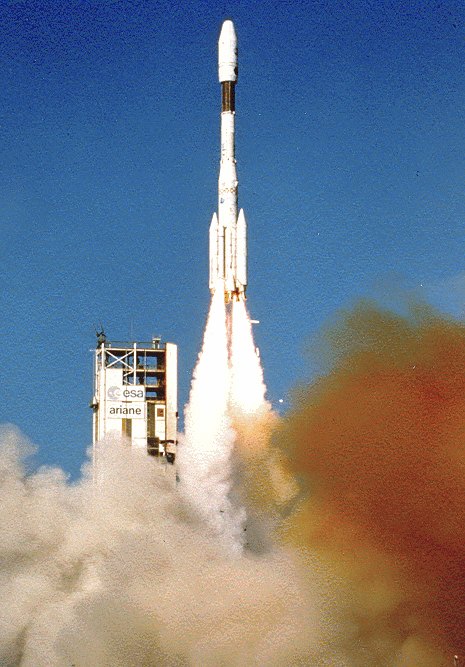
Seventeen satellites entered the catalog yesterday with no orbit attached to them. They are numbered USA 709 to USA 725, they left Vandenberg SLC-4E on a Falcon 9 at 00:01 UTC on 16 October as the USSF-481 mission, and the catalog records no perigee, apogee or inclination for any of them — only the 300 by 300 kilometre orbit at 80 degrees implied by the launch profile GCAT. It is the fourth such batch in five weeks, after 23 payloads on 10 September, 17 on 17 September and 23 on 26 September. Ninety-four objects now in orbit have no published elements, 91 of them American, 88 of them launched since 1 September GCAT.
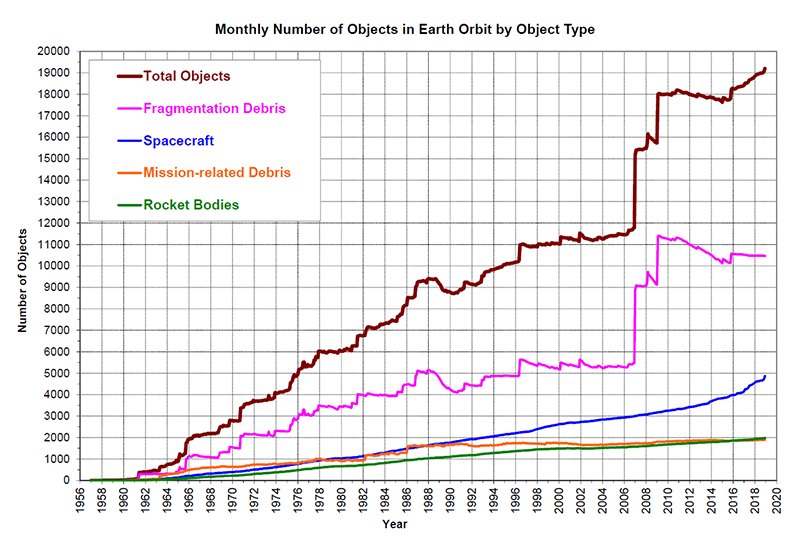
Counting them, 39 entries joined the catalog overnight, taking it to 70,401 ever tracked, and the on-orbit total rose by 25 to 33,759: 19,680 payloads, up 33, against 14,079 pieces of debris and spent hardware, down eight GCAT. Over thirty days 269 objects went up and 112 came down, 22 of them this week, the latest Starlink 5470 on 16 October GCAT. The queue below 250 kilometres shrank from 73 to 65; its floor is unchanged, a Zhuque-2E second stage dipping to 133 kilometres and climbing back to 537 once an orbit.
The bands did not move: 10,368 objects between 400 and 500 kilometres, 10,185 of them working, against 2,761 between 800 and 900, 2,499 of them debris GCAT. Those are only the trackable ones: ESA's modelled population, updated on 14 October, puts 68,450 objects larger than 10 centimetres in orbit against roughly 47,130 regularly tracked worldwide ESA DISCOS.
Close approach of the day
There is no forecast encounter today, for the second day running. The screening behind the close approaches page is CelesTrak's run of 8 October, its seven-day window expired on 15 October, and the service has been unreachable from here since 9 October; today's single attempt was refused at the connection CelesTrak SOCRATES Plus. Forty-eight passed encounters stay marked "checking" until tracking data from after the event can be fetched.
A working screening would not have closed the whole gap. SOCRATES Plus pairs every object in the public catalog and propagates both forward; an object with no published elements cannot be propagated, so it never appears in a pair. The seventeen added yesterday, and the 77 before them, are in orbit and in nobody's public conjunction list. Their operators get warnings from the US Space Force. Everyone else flying through 300 kilometres at 80 degrees does not.
Object of the day: a Cosmos 2251 fragment, down after seventeen years
On 13 October a piece catalogued as 1993-036AKM reentered the atmosphere. It began as part of Kosmos 2251, a Russian communications satellite launched on 16 June 1993 and long dead by 10 February 2009, when it struck the working Iridium 33 at 16:56 UTC and made the largest debris cloud in low orbit GCAT. It was last measured on an orbit of 650 by 1,059 kilometres, and took seventeen years and eight months to fall out of it.
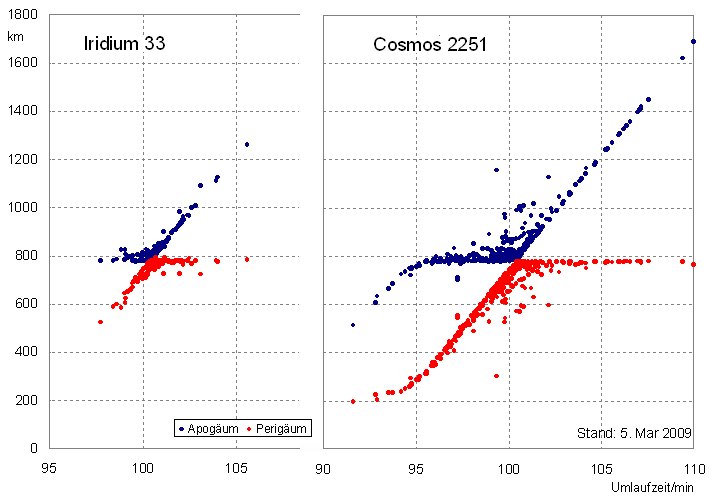
It is one of 1,726 Cosmos 2251 fragments ever catalogued, of which 607 are still up, at a mean altitude of 745 kilometres GCAT. Thirty-five have come down this year. At that rate the cloud made in one afternoon in 2009 outlasts everyone now working on it.
ClearOrbit's view
Two things here point the same way: a fragment needs seventeen years of air resistance to clear 650 kilometres, and seventeen satellites can reach orbit without the public learning where they are.
The second is the easier fix. Classified missions have reasons to withhold detail, but a screening-grade ephemeris is not a capability disclosure, and the US Space Force already computes one. Publishing conjunction-quality orbits for everything in low orbit, without saying what any of it is, costs nothing operationally and shows every other operator what it is flying through.
The first is what we are building toward. Nothing in orbit today removes a dead object, and drag at 745 kilometres is not a plan. ClearOrbit has flown nothing: what we have is a roadmap for reaching the fragments the air will not, and the argument that leaving them there is a decision taken by default.
Reader mail
Have a better idea?Spotted something we got wrong?
We publish in public so the numbers can be checked. If a figure looks wrong, a source is missing, or you know something this piece should have said, send it over. One box, no sign-up.
Send an idea or correctionQuick question
Who should pay for cleaning up orbit?
Anonymous. You will see how others answered after you vote.