Daily briefing · · 3 min read
Orbit on 15 October 2026: today's only predicted close approach was computed from week-old orbit data
Two uncontrollable objects passed 3.83 km apart at 847 km this morning. Both orbits were seven days old, because the screening behind the prediction has not refreshed since 9 October.
What changed
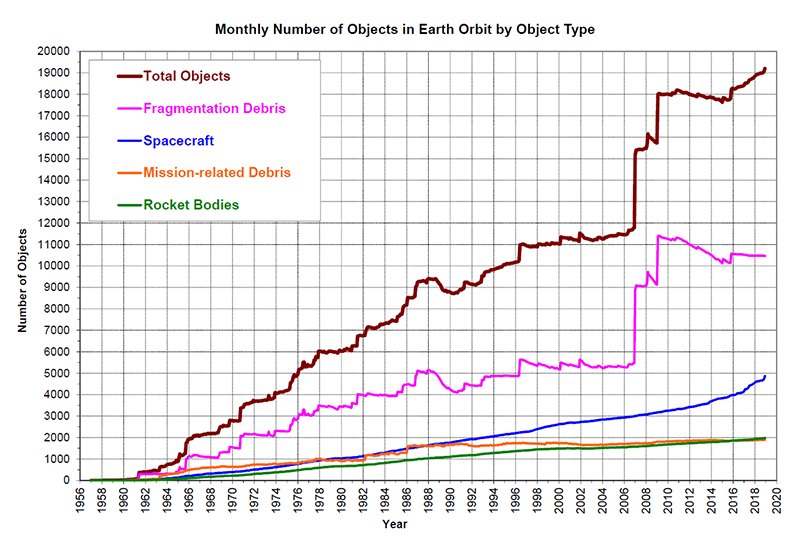
Fifteen objects joined the catalog overnight, nine of them debris or spent rocket stages and six of them payloads, bringing the total on orbit to 33,740: 19,651 payloads against 14,089 pieces of debris and spent hardware GCAT. Over the last thirty days 253 objects have been launched and 108 booked down, seventeen of those in the past week, the most recent being Starlink 30182 on 14 October and an Electron kick stage on 13 October GCAT. Fifty-five objects are circling with a perigee below 250 kilometres, three fewer than yesterday; the lowest is the imaging CubeSat Flock 4q-31 at 141 by 158 kilometres.
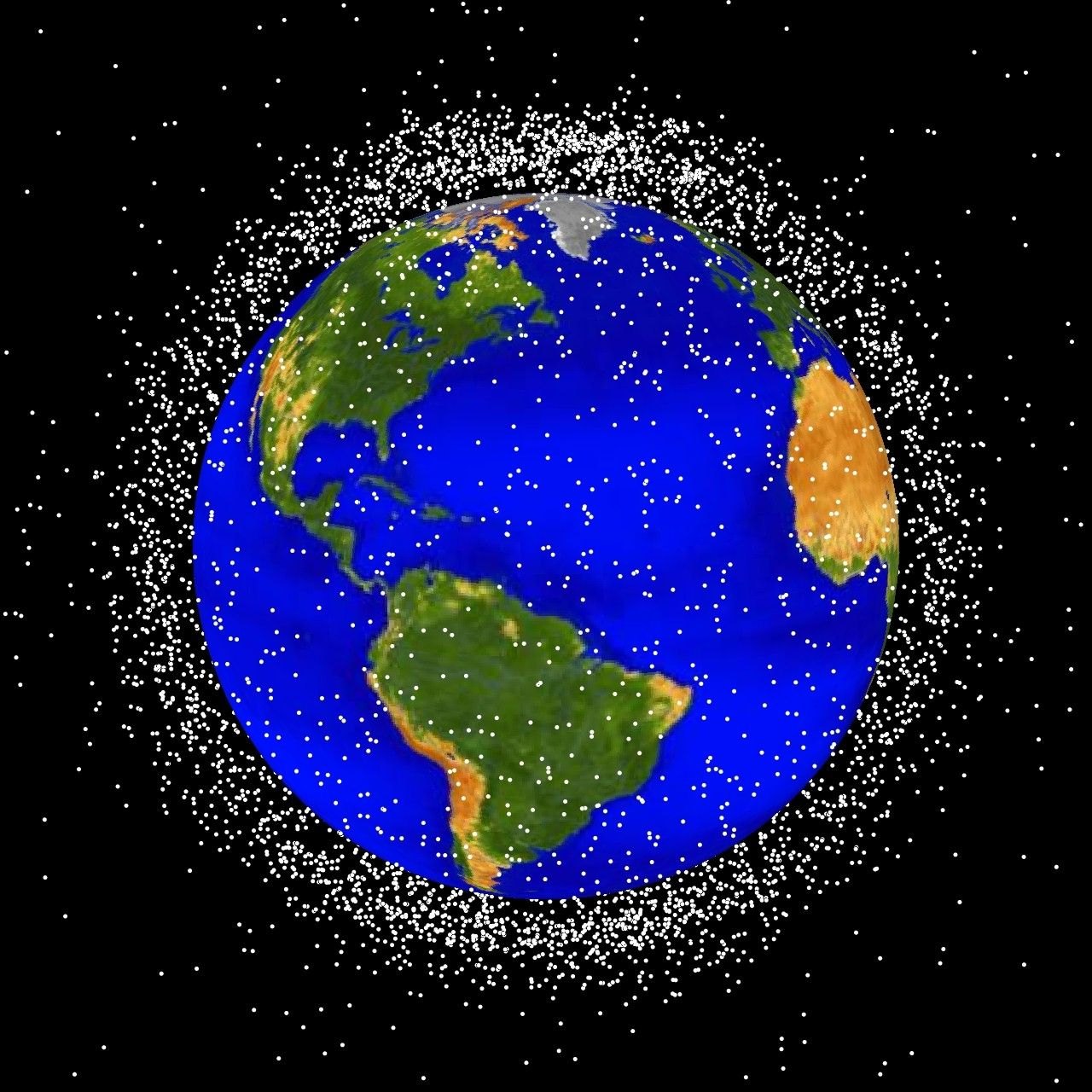
Altitude matters more than the headcount. From 400 to 500 kilometres the catalog holds 10,346 objects and 10,164 of them are working payloads; from 800 to 900 kilometres it holds 2,757, of which 2,495 are debris GCAT. Those are only the trackable ones: ESA's modelled population puts 68,450 objects larger than 10 centimetres in orbit and another 1.5 million between 1 and 10 centimetres, which nothing catalogues at all ESA DISCOS. Every individual encounter is on the close approaches page.
Close approach of the day
At 07:01:59 UTC this morning, a spent Taurus fourth stage and a fragment of a 1975 Soviet weather satellite launch passed 3.83 kilometres apart, 846.6 kilometres above northern Russia, closing at 14.37 kilometres per second across a 151.3-degree crossing angle, worst-case probability 1 in 6,191,950 CelesTrak SOCRATES Plus. Neither has a thruster or an operator. The 3D view of the encounter shows the geometry.
The age of those numbers is the real story. Both orbits carry an epoch of 8 October, seven days before the pass, because the daily refresh behind this screening has not reached CelesTrak since 9 October; the event page prints that data age beside each object. Public orbit data is accurate to roughly a kilometre when fresh and drifts from there, so 3.83 kilometres is an estimate carrying a week of accumulated error, not a warning — and it is the last encounter in a forecast window that has now elapsed.
Object of the day: the entire 1975 Meteor-2 launch
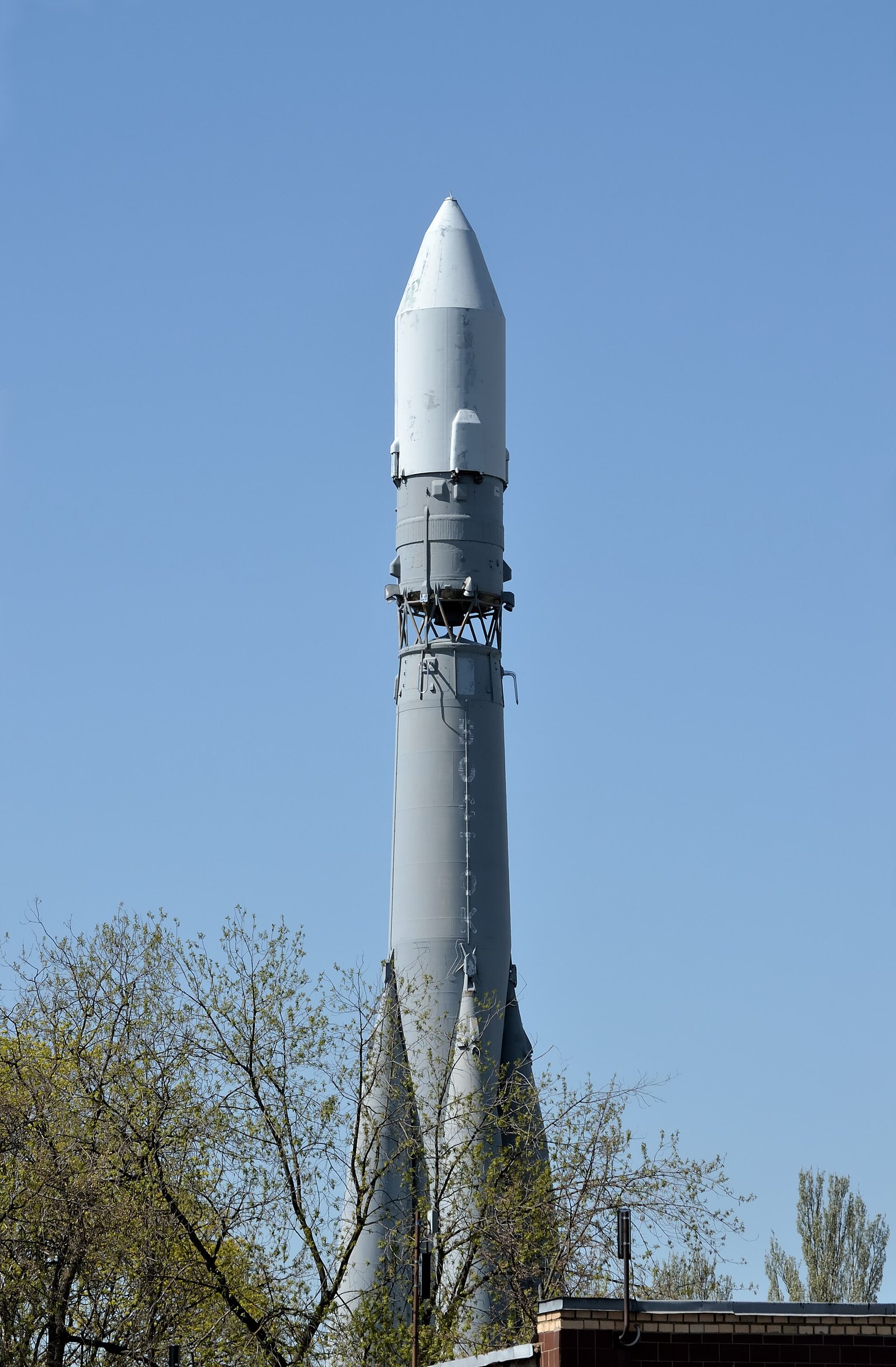
On 11 July 1975 a Vostok-2M lifted Meteor-2 No. 1L, a 1,500-kilogram weather satellite, into a near-polar orbit. Six objects from that flight were eventually catalogued: the satellite, the 1,440-kilogram third stage, and four fragments. Fifty-one years later, every one of the six is still in orbit GCAT.
The fragment in this morning's encounter is 1975-064D, catalog number 8110, running 830 by 879 kilometres at an inclination of 81.35 degrees CelesTrak SOCRATES Plus. Two of its siblings carry catalog numbers 38532 and 57492, issued decades after the rocket flew, which means those pieces were first tracked long after anyone was watching for them. The stage it nearly met is smaller than most people assume: 202 kilograms, 1.4 metres long and a metre across, the Orion 38 fourth stage of a Taurus launched from Vandenberg on 10 February 1998, and left in a retrograde orbit inclined 108 degrees GCAT. That is what the 800-to-900-kilometre shell is made of.
ClearOrbit's view
The uncomfortable part of today's encounter is not the 3.83 kilometres. It is that the best public prediction available for a pass at 14.4 kilometres per second was built on week-old orbit data, and that both objects will still be there, same shell, same crossing geometry, next week and in fifty years.
Two things follow. Screening data should be a public utility with the reliability of one, not a courtesy that can go a week without refreshing while the predictions built on it keep being published. And objects like these — small, old, unowned, in the one shell that is nine-tenths debris — are the removal targets that will never generate a customer or a warning notice. ClearOrbit has flown nothing. What we are building is the case that somebody has to go and get them, and the data to say which ones first.
Reader mail
Have a better idea?Spotted something we got wrong?
We publish in public so the numbers can be checked. If a figure looks wrong, a source is missing, or you know something this piece should have said, send it over. One box, no sign-up.
Send an idea or correctionQuick question
Who should pay for cleaning up orbit?
Anonymous. You will see how others answered after you vote.