Daily briefing · · 3 min read
Orbit on 14 October 2026: 44 objects joined the catalog overnight, and 17 of them are debris
The on-orbit count rose by 44 in a day: 31 new payloads, 17 new debris fragments and four fewer rocket bodies than yesterday's snapshot.
What changed
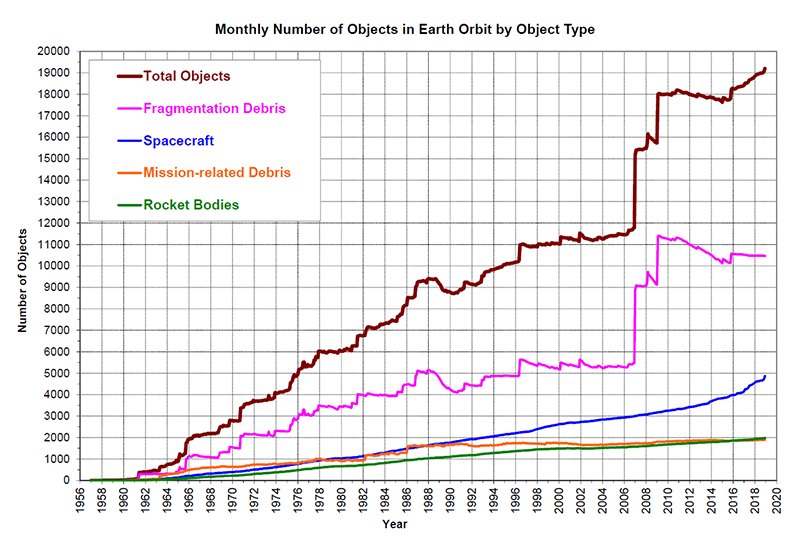
The catalog counted 33,725 objects in Earth orbit at 00:20 UTC today, 44 more than the snapshot a day earlier: 31 more payloads, 17 more debris fragments and four fewer rocket bodies GCAT. Payloads now stand at 19,645 and debris and spent stages together at 14,080, and the all-time catalog has reached 70,341 entries with the highest number issued so far 101,049.
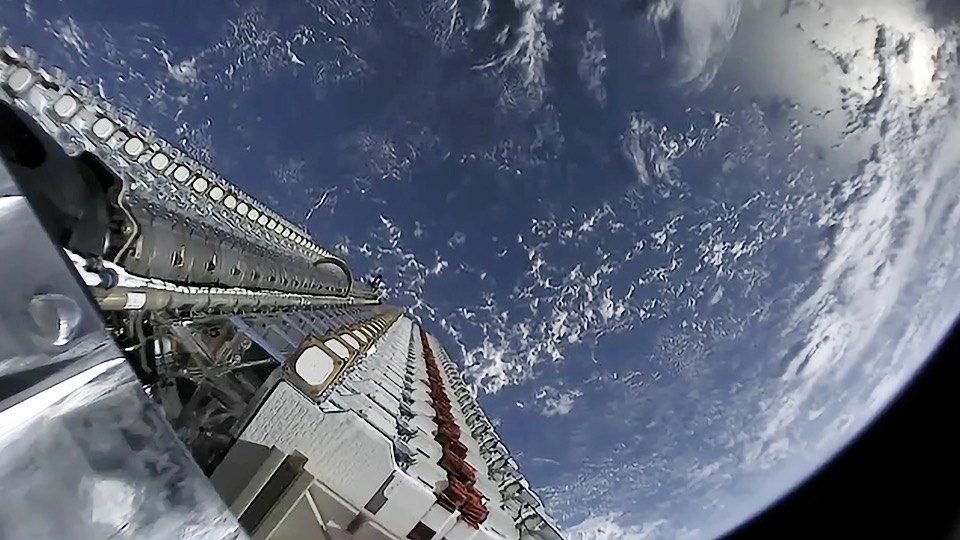
Most of the payload side arrived on one Tuesday. Twelve objects carry a launch date of 13 October — the Dragon CRS-35 cargo ship and eleven Starlinks, catalog numbers 101020 through 101031 GCAT. The thirty-day launch count moved from 212 to 242 in a single update, the thirty-day reentry count from 101 to 107, and the seven-day count from 14 to 18. Fifty-eight objects are circling with a perigee below 250 kilometres, and four of the fifteen lowest in this morning's list have since been booked as reentered: Flock 4q-36, an unidentified Kosmos fragment, SITRO-AIS-44 and Starlink 1810.
Where the seventeen new debris entries sit matters more than the count. From 800 to 900 kilometres the catalog holds 2,759 objects, 2,496 of them debris; 400 to 500 kilometres holds 10,343, but 10,161 of those are working payloads and 9,375 are Starlink GCAT. ESA's catalogue, counting differently, puts more than 17,400 tonnes of material in Earth orbit ESA DISCOS. Today's full conjunction list is on the close approaches page.
Close approach of the day
Tonight at 23:42:12 UTC, ORBCOMM FM20 and the second stage of an H-2A launched on 14 December 2002 are predicted to pass 3.426 kilometres apart at a closing speed of 14.078 kilometres per second CelesTrak SOCRATES Plus. The figure is predicted from public orbit data, re-propagated from the whole-catalog screening CelesTrak published on 8 October, the most recent available for this run; the 3D view of the encounter shows the geometry.
The closing speed is the whole story. ORBCOMM FM20 is a 42-kilogram messaging satellite launched on 2 August 1998 into a 45-degree orbit; the stage is four tonnes of empty hardware, 9.2 metres long and 4 metres across, left in a near-polar 98.73-degree orbit GCAT. Orbits crossing at more than fifty degrees meet almost head-on, which is why the pass arrives at fourteen kilometres a second rather than one. Only the 42-kilogram object has a thruster.
Object of the day: Flock 4q-31
The lowest catalogued object this morning weighs 5.7 kilograms. Flock 4q-31 is a Planet Labs Dove launched on 11 November 2023 into a 515-by-530-kilometre orbit; it is now at 150 by 166 kilometres, 365 kilometres lower, with nothing aboard that could have put it there GCAT.
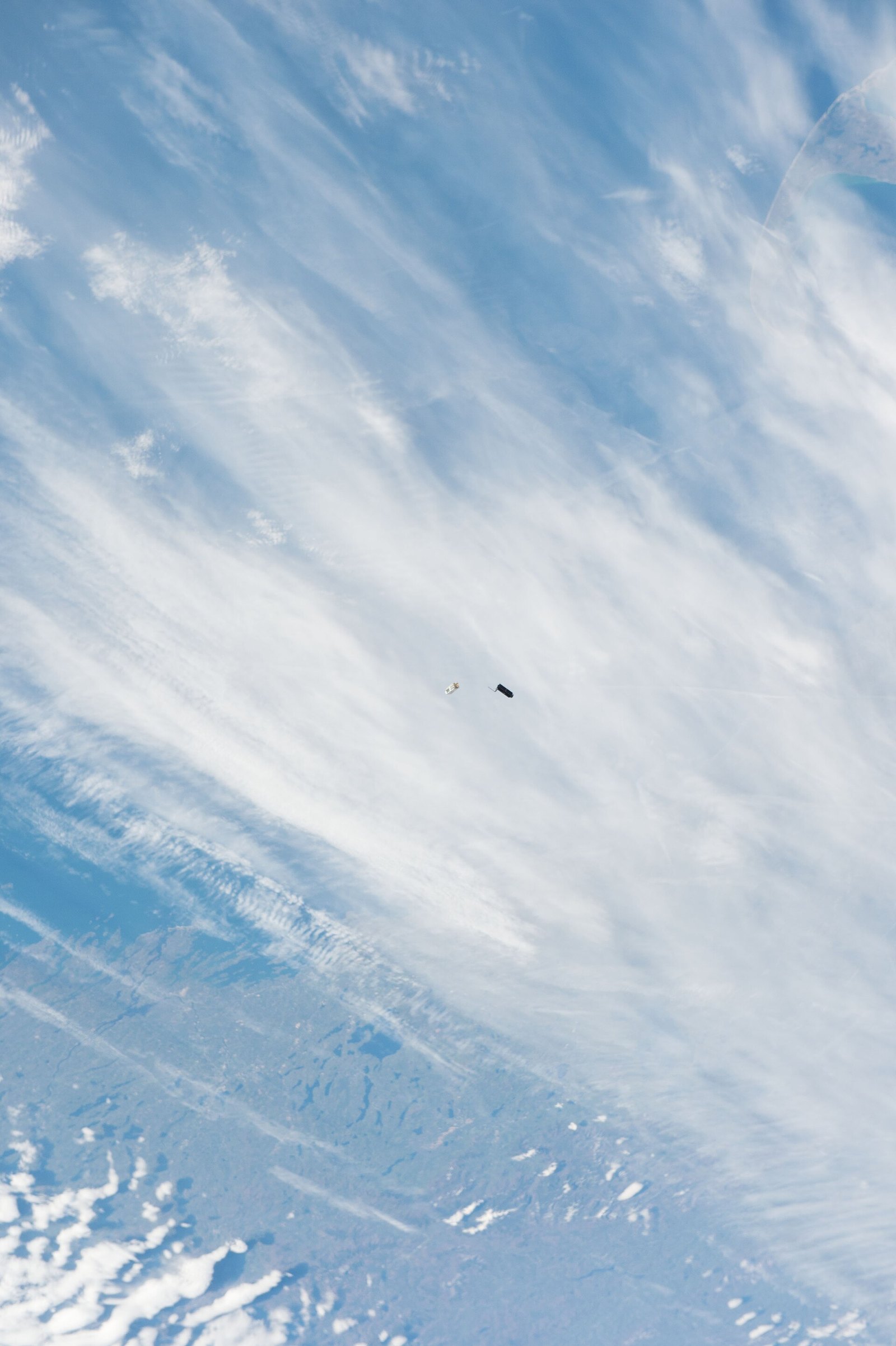
Its launch-mates are on the same curve: Flock 4q-36 was booked as reentered on 6 October, Flock 4q-33 is at 178 by 194 kilometres, and Flock 4be-15, launched in August 2024 into 508 by 518, is down to 158 by 175 GCAT. A 30-centimetre box of 5.7 kilograms with two solar panels presents a lot of area for very little mass, and at these altitudes that ratio decides everything: drag that takes decades off a dense rocket stage takes a Dove down in under three years, with no deorbit hardware and no decision by anyone.
ClearOrbit's view
Today's catalog is two populations sharing a file. One of them — the Doves, the low Starlinks, the SITRO-AIS satellites — clears itself because it was put where the air still reaches, and this morning's rising reentry counts are almost entirely that population keeping its promise. The other is the 2,496 fragments at 800 to 900 kilometres and the four-tonne stage crossing a working satellite tonight. Nothing overnight touched the second group, and no spacecraft has yet captured and removed a derelict — the closest anyone has come is an inspection, Flown, once.
We think the measure of a day like this is not the 44 objects added or the 18 that came down in a week, but whether anything moved where drag has stopped working. Today, nothing did. The lesson from Flock 4q-31 is worth copying — put it low, give it area, and disposal solves itself — but it applies to what gets launched next, not to the 14,080 pieces of debris and spent stage already parked above the air.
Reader mail
Have a better idea?Spotted something we got wrong?
We publish in public so the numbers can be checked. If a figure looks wrong, a source is missing, or you know something this piece should have said, send it over. One box, no sign-up.
Send an idea or correctionQuick question
Who should pay for cleaning up orbit?
Anonymous. You will see how others answered after you vote.