Daily briefing · · 3 min read
Orbit on 16 October 2026: nothing new was catalogued, and 73 objects are now falling below 250 kilometres
No object entered the catalog overnight and six left it. The queue of objects with a perigee below 250 kilometres jumped from 55 to 73, and four of the fifteen lowest are on orbits that still reach above 500 kilometres.
What changed
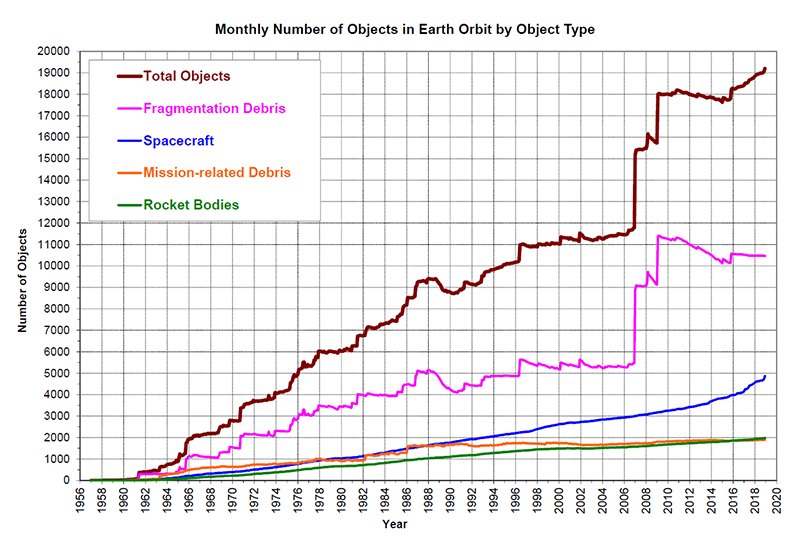
Not one object was added to the catalog overnight — it still stands at 70,362 ever tracked — and six were booked off the on-orbit list, four payloads and two pieces of debris or spent hardware. That leaves 33,734 objects in orbit, 19,647 of them payloads and 14,087 debris and dead rocket stages GCAT. Over thirty days 231 objects have been launched and 103 booked down, twelve of those in the past week, the most recent the Starlink 30182 satellite on 14 October GCAT.
The movement today is at the bottom. Seventy-three objects now have a perigee below 250 kilometres, eighteen more than yesterday, and the lowest is a Chinese Zhuque-2E second stage at 133 by 537 kilometres GCAT. That queue is usually read as a reentry list, and mostly it is: Flock CubeSats at 141 by 158 kilometres, a PSLV fourth stage at 148 by 160. But four of the fifteen lowest are on elliptical orbits still reaching above 500 kilometres, dipping into the atmosphere once per revolution and climbing back out through everything above them. Their forecast encounters are on the close approaches page.
From 400 to 500 kilometres the catalog holds 10,361 objects and 10,178 of them work; from 800 to 900 kilometres it holds 2,764, of which 2,502 are debris GCAT. Those are only the trackable ones: ESA's modelled population, updated on 14 October, puts 68,450 objects larger than 10 centimetres in orbit against roughly 47,040 actually tracked ESA DISCOS.
Close approach of the day
There is no predicted encounter ahead of us today, for the first time since this site began publishing them: the screening behind the forecast is CelesTrak's run of 8 October, its seven-day window has elapsed, and the service has not been reachable from here since 9 October CelesTrak SOCRATES Plus.

The closest pass in the window that just ran out is worth recording anyway. At 11:02 UTC on 14 October, the Chinese radar satellite Yaogan 40-02-03 and a fragment of Cosmos 2251 — the satellite destroyed in the 2009 Iridium collision — were predicted to pass 142 metres apart, 844 kilometres above northern Siberia, closing at 13.26 kilometres per second, worst-case probability 1 in 1,283 CelesTrak SOCRATES Plus. The 3D view of the encounter shows the geometry. Fifty-eight passed encounters, that one included, are still marked "checking", because confirming what happened needs orbit data from after the event, and that is exactly what we cannot fetch.
Object of the day: two Ariane leftovers falling the long way
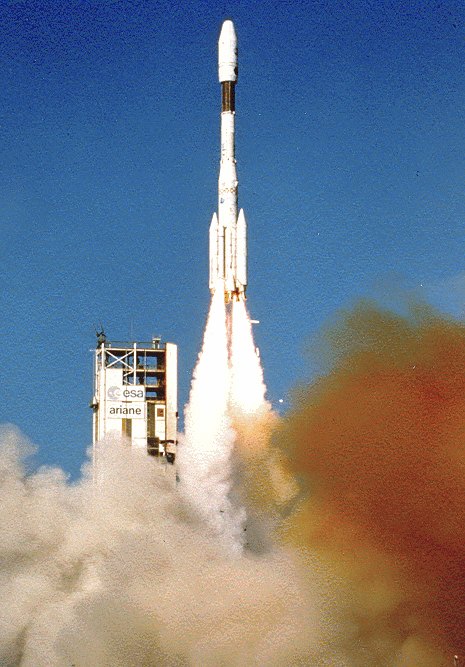
The fifteenth-lowest object in the catalog is an Ariane 4 third stage, number 22913, launched from Kourou on 20 November 1993: 14.1 metres long, 2.6 across, 2,080 kilograms empty, left in a transfer orbit of 194 by 36,125 kilometres GCAT.
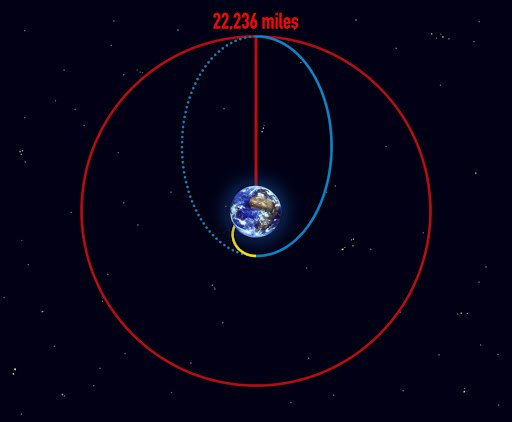
Today it runs 216 by 1,905 kilometres. Thirty-three years of brushing the upper atmosphere at perigee have scrubbed roughly 34,000 kilometres off its apogee without lifting its lowest point at all, which is how transfer orbits die: the high end comes down to meet the low one. Fourteen metres of empty stage now crosses the whole of low orbit twice per revolution, including the 800-to-900-kilometre shell that is nine-tenths debris. Behind it is Sylda 5A, catalog number 44478, the 440-kilogram structure that held two satellites apart inside an Ariane 5 fairing on 6 August 2019; injected at 232 by 35,585 kilometres, it is already down to 203 by 1,570 GCAT. Seven years, the same 34,000 kilometres gone, because it is light and wide and the air gets a better grip.
ClearOrbit's view
A day with nothing added and six things removed is the catalog working as it should. But the eighteen objects that joined the queue below 250 kilometres are not all leaving, and the two Ariane structures are the clearest case: they will spend years crossing every populated shell on the way down, and for all of those years nobody can steer them or be warned about them.
Two things follow. Reentry is not a plan; it is a timetable somebody else sets, and for anything injected into a transfer orbit that timetable runs decades. And a screening service that can go eight days without being reachable is not infrastructure. ClearOrbit has flown nothing. What we are building is the case for going after exactly this class of object — large, empty, unowned, crossing everything — and the record that says which ones first.
Reader mail
Have a better idea?Spotted something we got wrong?
We publish in public so the numbers can be checked. If a figure looks wrong, a source is missing, or you know something this piece should have said, send it over. One box, no sign-up.
Send an idea or correctionQuick question
Who should pay for cleaning up orbit?
Anonymous. You will see how others answered after you vote.