Daily briefing · · 3 min read
Orbit on 25 October 2026: Electron 98's kick stage was left 338 kilometres below the 33 still up there
The catalog has not been republished since Saturday evening, so the one new thing in today's file is where Rocket Lab left the two upper stages it flew on Friday.
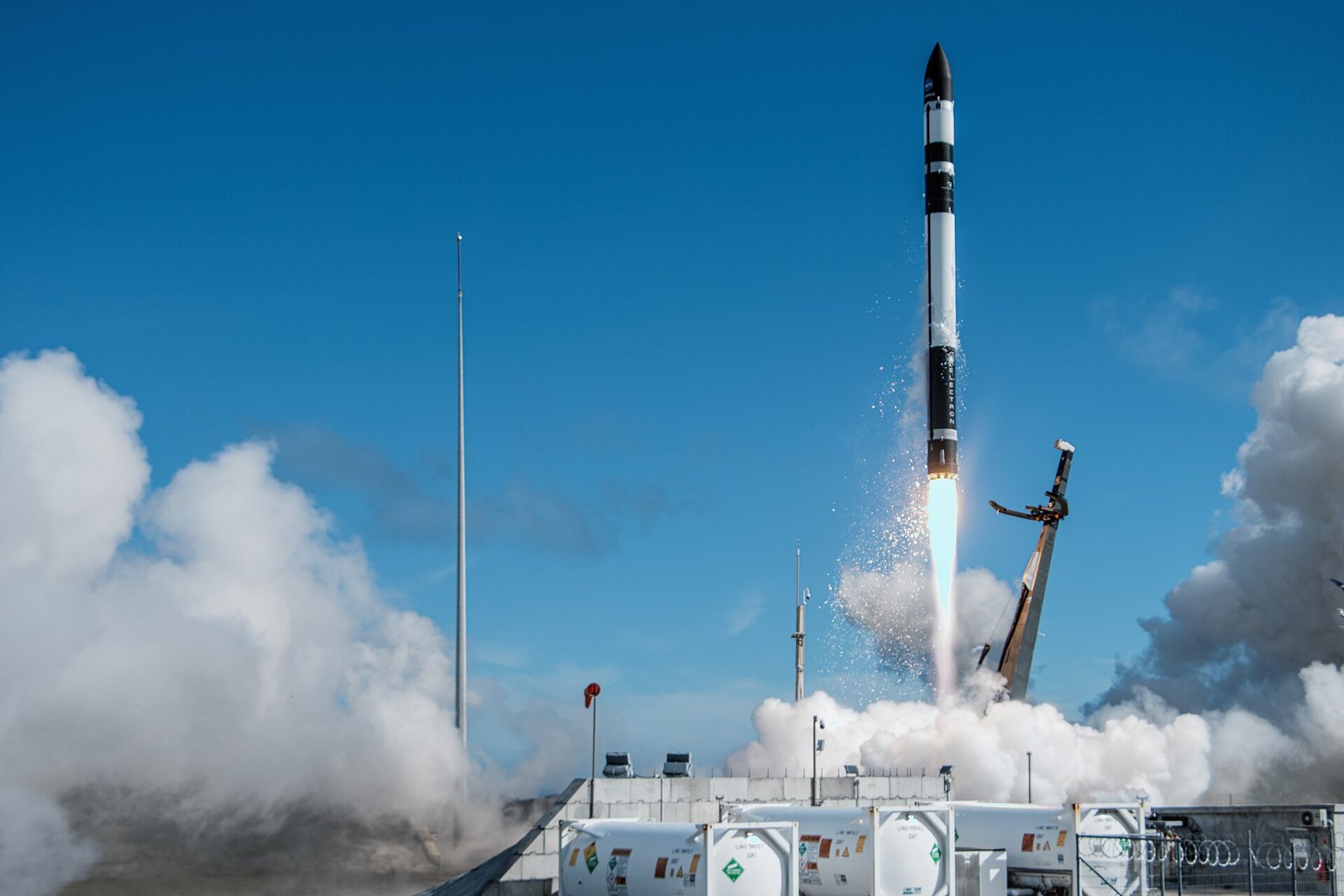
Rocket Lab's ninety-eighth Electron lifted off from Mahia at 07:00 UTC on 23 October with three HawkEye 360 satellites, and the element sets published that day put both upper stages on the way down: the second stage at 167 by 511 kilometres, the kick stage at 214 by 526 GCAT. Both sit in this site's decay queue of objects with perigees below 250 kilometres — the exception, not the rule. Of the 73 Electron kick stages ever catalogued, 33 are still in orbit, the typical one left at 552 by 609 kilometres — 338 kilometres higher at perigee than Friday's GCAT.
The same rocket's two upper stages have opposite records. Seventy-eight second stages have reentered, median life fifteen days, because each is spent at a perigee near 180 kilometres and the air finishes the job. The kick stage circularises at the customer's altitude, which in practice is where nothing comes down on its own: 25 of the 33 still flying were left with perigees at or above 500 kilometres, five reaching past 1,000 at apogee GCAT. Of the 40 that have reentered, the median took 322 days, nineteen more than a year, and the slowest 2,241 days. Each weighs 40 to 50 kilograms, accumulating where most imaging satellites work. The kick stage from Electron 95, launched on 11 September, reentered on 23 October, 42 days up. Whether that marks a change in practice or mission profile, the record over coming months will show.
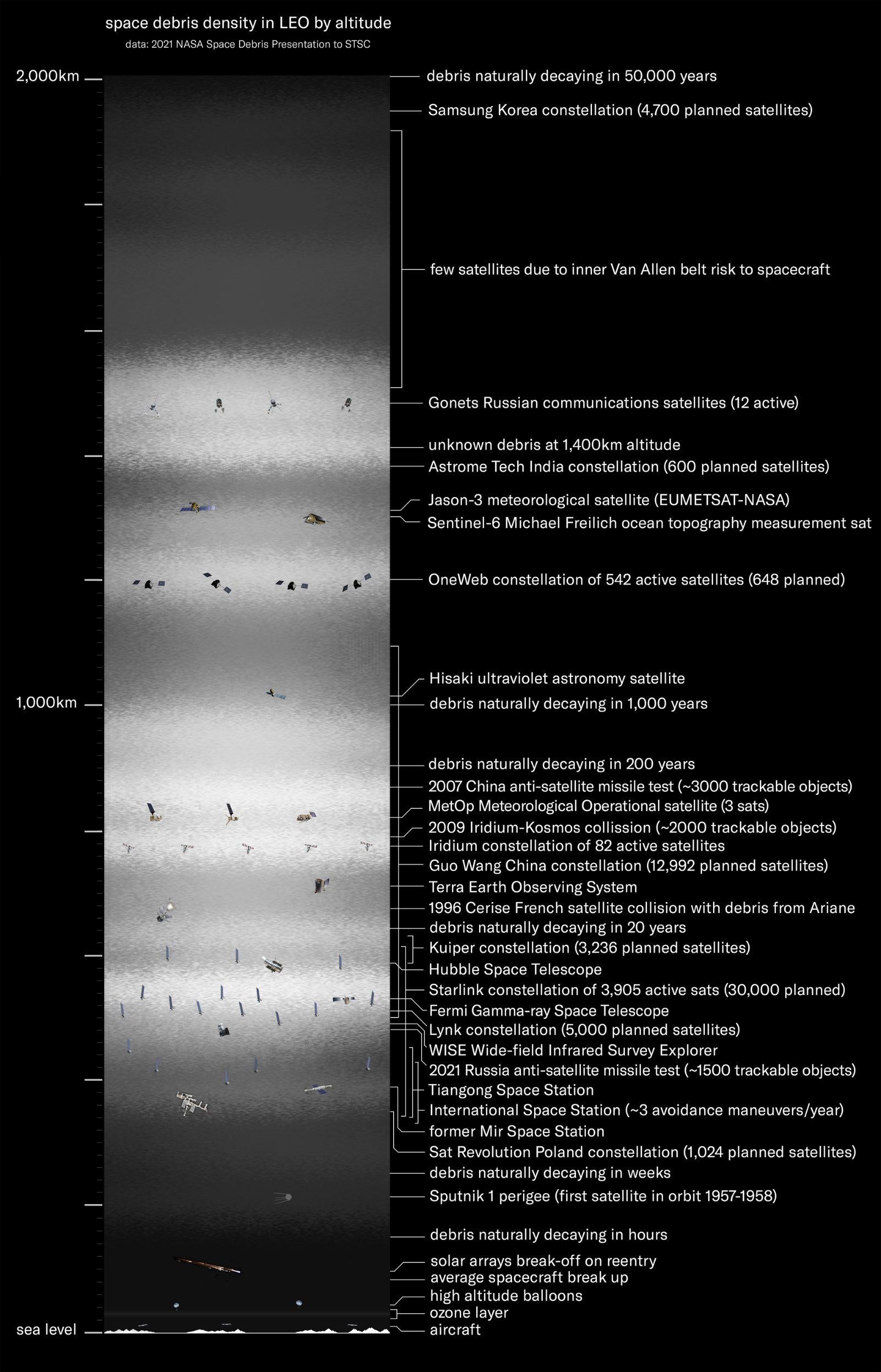
Nothing else moved. GCAT last republished at 19:03 UTC on 24 October, so this morning's file is Saturday evening's: 33,811 objects on orbit, of them 19,731 payloads, 2,111 rocket bodies and 14,080 stages and debris together, unchanged in every column GCAT. The rolling windows shrank anyway, as old events aged out: 100 reentries within thirty days against 102 yesterday, twelve within seven against thirteen, 255 launches in thirty days against 261. Fifty-nine objects carry a perigee below 250 kilometres, the lowest Starlink 4454 at 140 by 155. Crowding is unchanged: 10,411 objects between 400 and 500 kilometres, 2,758 between 800 and 900. Those counts are Saturday's carried forward rather than remeasured: GCAT's currentcat file is serving its header and no data rows this morning GCAT. ESA's statistics page of 14 October puts more than 17,400 tonnes of material in Earth orbit ESA Space Environment Statistics.
Close approach of the day
There is none, for the seventeenth day. The screening behind this site's close-approach pages is still the SOCRATES Plus file of 8 October 2026, and this morning's attempt at a newer one was refused at the network CelesTrak SOCRATES Plus. Every event in it has passed; a dark forecast layer is worse than a crowded one.
Object of the day: Electron 9 kick stage, catalog number 44636
It went up on 17 October 2019 and is still there, seven years and eight days later: a 40-kilogram stage left at 487 by 1,214 kilometres and 87.9 degrees GCAT. The 250-kilogram second stage from the same flight, left at 309 by 1,205, took until 13 September 2023 to come down — 1,427 days, the longest of any Electron second stage. The lighter object in the higher orbit will outlast it by decades; nothing failed that day. This is what success looked like in 2019.
ClearOrbit's view
Upper stages are the clearest case in the debris problem: after the burn there is no owner to negotiate with and no revenue to protect. A kick stage left at 550 kilometres is a decision made before launch, in a mission profile, and it can be made differently for reserved propellant. Electron 98 suggests that sometimes it now is.
The 33 already up there cannot be fixed that way. They are small, numerous, spread across the most valuable band in low orbit, and exactly the class removal has never been tried on — nobody has removed a piece of debris to date. We think the next decade's work is a vehicle that takes several such objects per flight, and a rule that stops making more of them. The first is engineering. The second is cheaper, and overdue.
Reader mail
Have a better idea?Spotted something we got wrong?
We publish in public so the numbers can be checked. If a figure looks wrong, a source is missing, or you know something this piece should have said, send it over. One box, no sign-up.
Send an idea or correctionQuick question
Who should pay for cleaning up orbit?
Anonymous. You will see how others answered after you vote.