Daily briefing · · 4 min read
Orbit on 10 November 2026: 250 Starlinks are still above 500 kilometres, with 51 days of the lowering plan left
SpaceX plans to have every Starlink below 500 kilometres by the end of this year. This morning 250 are not there yet, and 868 already fly in the new 330-to-370-kilometre shell.

SpaceX is lowering every Starlink below 500 kilometres and says the campaign finishes at the end of this year — Flown, and in progress now (SpaceX Space Safety). With 51 days left to run, this morning's catalog puts 250 Starlinks in the 500-to-600-kilometre band and none at all above 600, out of 11,202 on orbit (GCAT). The far end of the same move is already crowded: 868 Starlinks fly between 300 and 400 kilometres, the region SpaceX now lists as home to its direct-to-cell shells at 360 and 358.5 kilometres and to V3 broadband from 330 to 360.
The reason given is drag. SpaceX puts the gain at more than 80 per cent off the ballistic decay time of a satellite that cannot deorbit itself at solar minimum, four years or more down to a few months. That is the largest operator in orbit concluding that altitude, not hardware, is its strongest disposal lever.
What changed
The catalog gained 15 objects overnight and every one of them is a working payload: 19,871 payloads against 14,085 spent stages and debris, unchanged, out of 70,661 ever catalogued and 33,956 still on orbit (GCAT). The lowering campaign shows up in one night of band counts on our catalog page: the 400-to-500-kilometre band fell from 10,436 objects to 10,418, while the 300-to-400 band gained 16 and the 200-to-300 band five.
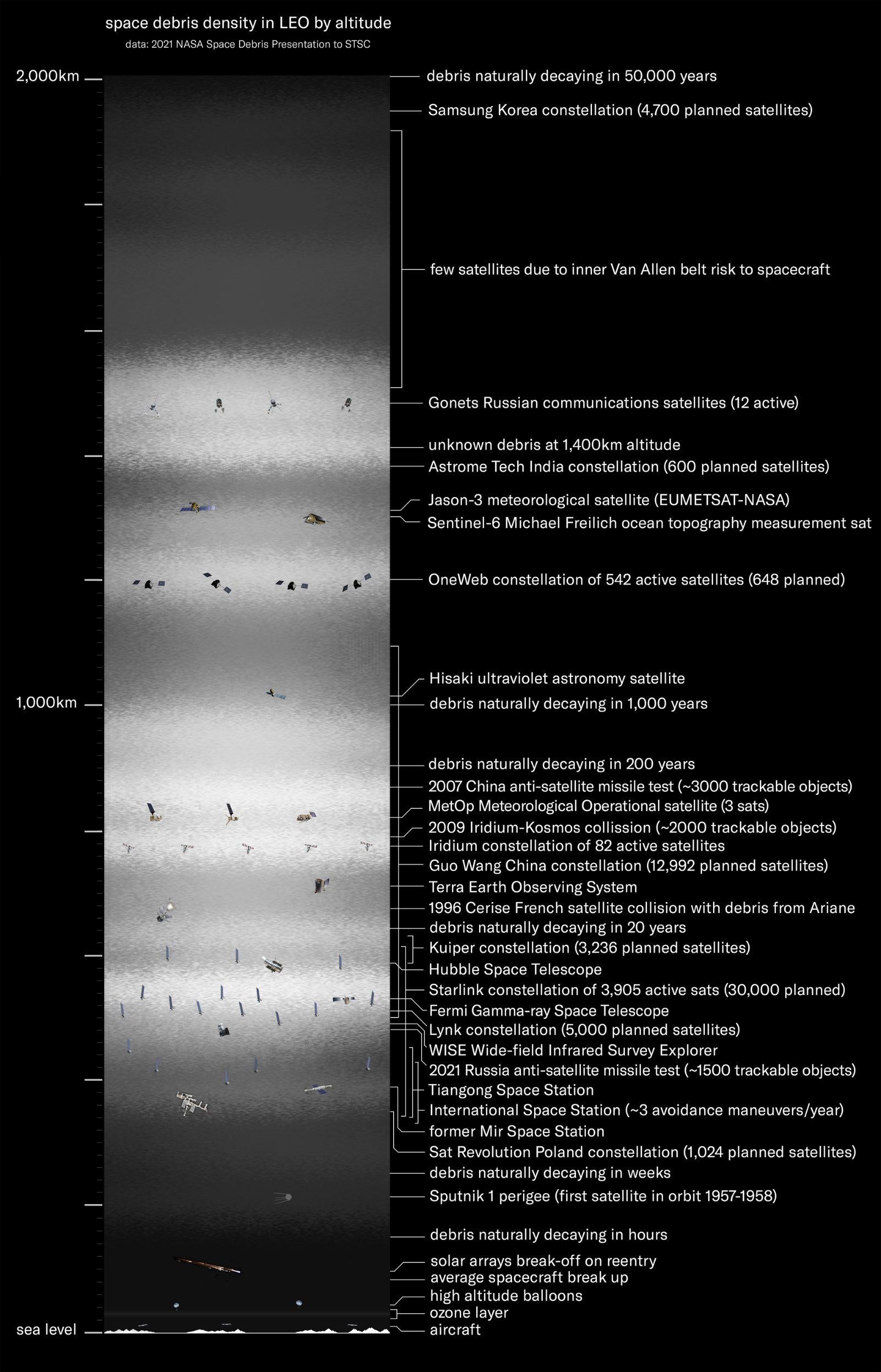
The decay ledger moved the other way. Total decays rose by 20 to 37,549, but the thirty-day reentry count fell from 75 to 73 and the seven-day count from nine to eight, so everything booked overnight was back-dated outside both windows. Launches over thirty days stand at 255. The queue below 250 kilometres holds 107 objects, led by HYPSO-1 at 125 by 144 kilometres and Henan-1 at 137 by 149. Higher up nothing shifts: 2,747 objects between 800 and 900 kilometres, 2,497 of them debris, and 2,663 between 700 and 800, 2,257 of them debris.
Close approach of the day
Again there is none to publish. This morning's screening ran cleanly — 117 rows of USSPACECOM public conjunction data on Space-Track.org merged into 38 future encounters, 35 of them recalculated with SGP4 — but posting events derived from that public feed is held pending a redistribution check with the data's owner, so we name no objects, times or distances from it. Our close-approach pages still carry the 8 October file and are history, not today's sky. The outcome check found nothing due: no published prediction has passed since the last posted run, and none falls in the next 48 hours.
The object of the day: Starlink 2298, catalog number 48022
The lowest Starlink in the catalog sits at 152 by 158 kilometres on a 4 November element set, inclination 53.1 degrees, and GCAT still marks it active (GCAT). It launched on 24 March 2021, which makes it five years and seven months old against the five-plus years of service SpaceX designs a satellite for, and it is now roughly 180 kilometres below the lowest shell the company operates.
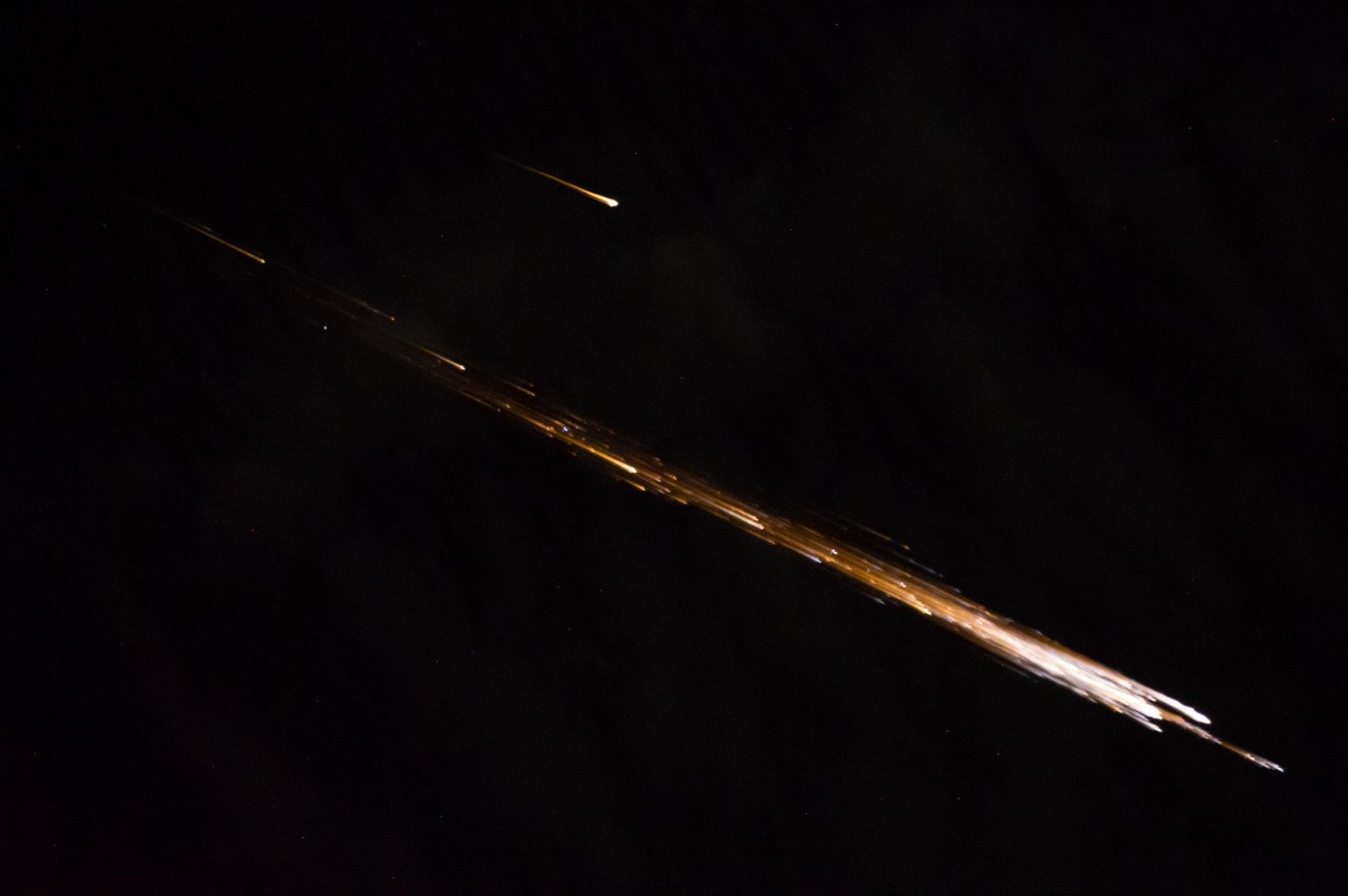
Nothing about it is remarkable, and that is the point: it is one satellite at the bottom of a conveyor that has already taken 1,503 Starlinks below 400 kilometres. At 152 kilometres the air finishes the job in days whether or not anyone is still commanding it.
ClearOrbit's view
ESA's statistics, last updated on 2 November 2026, count about 47,360 objects tracked and catalogued, more than 17,500 tonnes of material in orbit, and model 68,450 objects larger than ten centimetres with 1.5 million between one and ten (ESA DISCOS).
ClearOrbit has flown nothing and holds no contracts. What today's numbers argue is that the one operator with the fleet size to test the question has answered it in public: put the satellites where the atmosphere does the disposal and pay the stationkeeping bill. That works at 330 kilometres. It does nothing for the 4,754 pieces of debris between 700 and 900 kilometres, where there is no useful air, no propellant and nobody to spend it. No amount of good behaviour by new constellations removes them. Removal of what is already up there — our ClearOrbit vision — is the only mechanism that reaches that band.
Reader mail
Have a better idea?Spotted something we got wrong?
We publish in public so the numbers can be checked. If a figure looks wrong, a source is missing, or you know something this piece should have said, send it over. One box, no sign-up.
Send an idea or correctionQuick question
Who should pay for cleaning up orbit?
Anonymous. You will see how others answered after you vote.