Daily briefing · · 3 min read
Orbit on 3 November 2026: 368 catalogued objects dip below 400 kilometres and climb past 20,000
A GSLV cryogenic stage catalogued overnight at 168 by 37,722 kilometres joined them. Between them they pass through low orbit about 2,029 times a day.
What changed
The catalog moved after three still mornings: 33,877 objects on orbit, up 32 on yesterday, 19,797 of them payloads, up 34, and 14,080 fragments, stages and components, down two (GCAT). Thirty of the 42 new entries are Starlinks from the 31 October launch, still in a 245-by-257-kilometre parking orbit at 70 degrees before they climb into the 400-to-500-kilometre shell that already holds 10,487 objects, as our live catalog view shows. Six back-dated reentries were booked overnight too, taking the seven-day decay count from one to seven (GCAT currentcat).
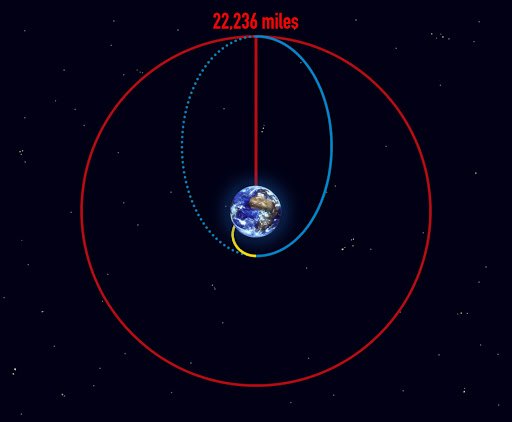
The other two new entries went the opposite way. NVS-03, an Indian navigation satellite launched on 30 October, sits in a 178-by-37,895-kilometre transfer orbit and will raise its perigee out of the way. The stage that put it there will not. GCAT lists GSLV CUS-14 at 168 by 37,722 kilometres on an eleven-hour orbit, so it falls to 168 kilometres and climbs back a little over twice a day, crossing every populated shell in low orbit four times daily.
It has company. 368 catalogued objects on orbit have a perigee below 400 kilometres and an apogee between 20,000 and 100,000 kilometres: 193 rocket bodies, 80 fragments, 76 adapters and other components, 19 payloads. 127 belong to Arianespace, 90 have perigees below 250 kilometres and 30 below 200. Totalled over their periods they make roughly 2,029 passes through low orbit a day, about 85 an hour. They are tracked less tightly than the shells they cross: 76 of them fly on orbit determinations more than a week old and 42 on determinations more than a year old, against 8.9 per cent of the 28,652 objects that stay below 2,000 kilometres.
Close approach of the day
There is none from current data, for an eighteenth morning. The screening behind our close-approach pages is still the CelesTrak SOCRATES Plus run of 8 October 2026 — 174,512 pairs, 7,834 inside a kilometre, 111 inside 100 metres — now 601 hours old. The replacement pipeline, built on USSPACECOM's public conjunction data at Space-Track.org, recalculated 38 future encounters today, none publishable until written confirmation arrives that redistributing that feed is permitted. The outcome ledger stays empty: nothing notable has passed since the screening went stale, and nothing is due in the next 48 hours.
The object of the day: Transtage 8, launched 21 December 1965
The oldest of those crossers is a Titan IIIC upper stage that has been doing it for sixty-one years. Transtage 8, catalog number 1863, delivered four payloads on 21 December 1965 and kept the orbit it was left on: 319 by 20,412 kilometres, six hours a revolution, eight passes through low orbit a day (GCAT currentcat).
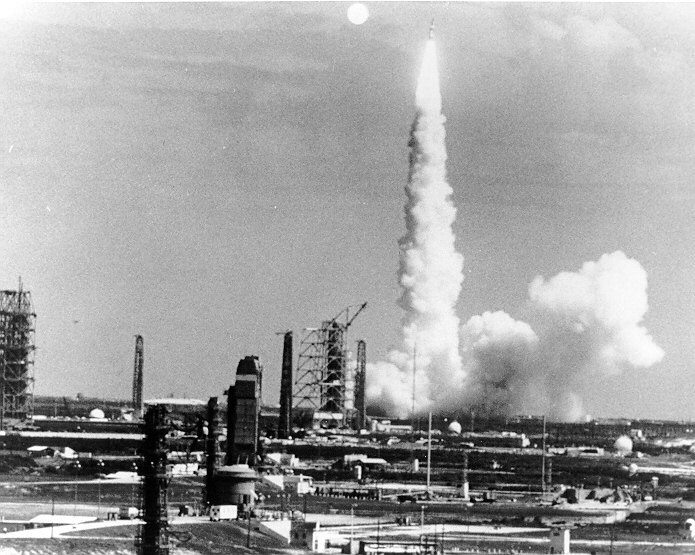
Then it came apart. GCAT counts 101 objects from that one launch still in orbit, 99 of them fragments, spread across perigees from 195 to 1,976 kilometres and apogees from 5,256 to 35,172. Seventeen pieces have come down in six decades; the rest cross the shells between them 627 times a day. ESA records more than 660 fragmentation events since 1957 and models 1.5 million debris objects between one and ten centimetres, the sizes that break a satellite and go untracked (ESA DISCOS, 23 October 2026).
ClearOrbit's view
An eccentric orbit hides a derelict in plain sight. It belongs to no shell, so it appears in no shell's headcount, and the altitude bands on our catalog page will never show it. Yet a stage on a transfer orbit meets traffic at 500 kilometres and at 800 and at 1,500, at closing speeds a same-altitude conjunction never produces, several times a day for decades.
That is an argument for ranking removal targets rather than counting them. A list drawn up shell by shell puts the 2,501 fragments between 800 and 900 kilometres first and leaves Transtage 8 and the 192 other rocket bodies like it off the page, though each visits that shell daily and carries the record of what an abandoned stage with energy still in it eventually does. ClearOrbit has flown nothing and holds no contracts. What we are building is the ranking: a target list ordered by how much risk removing one object retires, which means counting the crossers alongside the residents.
Reader mail
Have a better idea?Spotted something we got wrong?
We publish in public so the numbers can be checked. If a figure looks wrong, a source is missing, or you know something this piece should have said, send it over. One box, no sign-up.
Send an idea or correctionQuick question
Who should pay for cleaning up orbit?
Anonymous. You will see how others answered after you vote.