Daily briefing · · 3 min read
Orbit on 5 November 2026: 179 pieces of the first satellite breakup are still up there
Of 336 objects catalogued from the launch whose upper stage became the first recorded on-orbit breakup, 179 are still in orbit and 107 cross the 800-kilometre shell.
The oldest debris cloud in the catalog is also one of the largest still flying. A Thor-Ablestar launched from Cape Canaveral on 29 June 1961, and its upper stage became the first object known to come apart in orbit, the breakup NASA records as the first of its kind (NASA ODPO, History of On-Orbit Satellite Fragmentations, 16th edition). GCAT lists 336 objects from that single launch. One hundred and seventy-nine of them are still in Earth orbit this morning, and 107 of those cross the 800-to-900-kilometre shell, the dirtiest band in the catalog (GCAT).
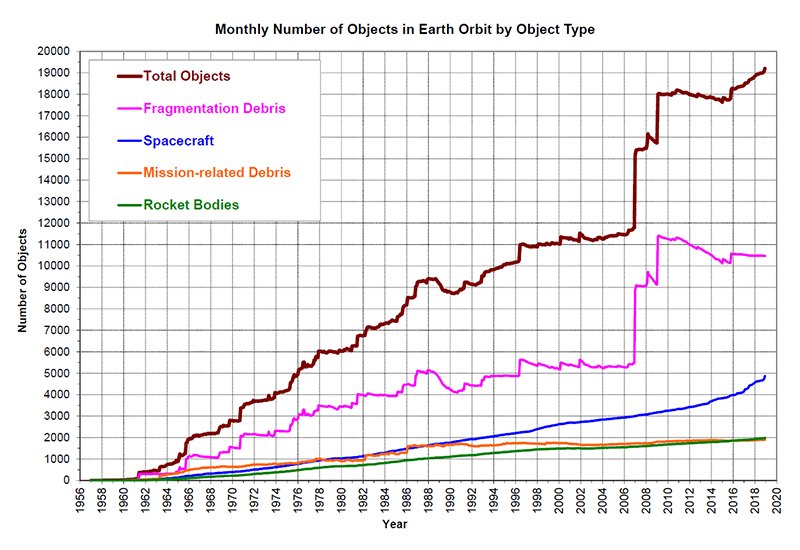
Today's numbers have not moved for a second morning: 33,877 on orbit, 19,797 payloads, 14,080 spent stages and debris, every day-over-day difference reading zero because the published catalog file has not been refreshed since 2 November (GCAT). What moves is the arithmetic around it. The reentry count stands at 79 in 30 days against 87 counted yesterday, and four in seven days against six, both falling because the windows slid past decays already on the books rather than because anything came down. Nothing has for four days, the last being Starlink 1283 on 1 November. Against that, 221 objects went up in 30 days. The decay queue holds 101 objects with perigees below 250 kilometres, the lowest Flock 4g-20 at 160 by 175 kilometres on an element set from 28 October. The 400-to-500-kilometre band still carries 10,487 objects, 10,301 of them payloads; the 800-to-900 band carries 2,752, of which 2,501 are debris (our catalog page).
Close approach of the day
For a twenty-eighth day there is none to give. Today's screening ran normally against USSPACECOM's public conjunction data on Space-Track.org and re-propagated the encounters it found, but publishing them is held pending a redistribution check on that source. Our close-approach pages therefore still carry the screening file of 8 October 2026, now 27 days old, and those figures should be read as history rather than as this morning's traffic.
The object of the day: Ablestar 008, catalog number 118
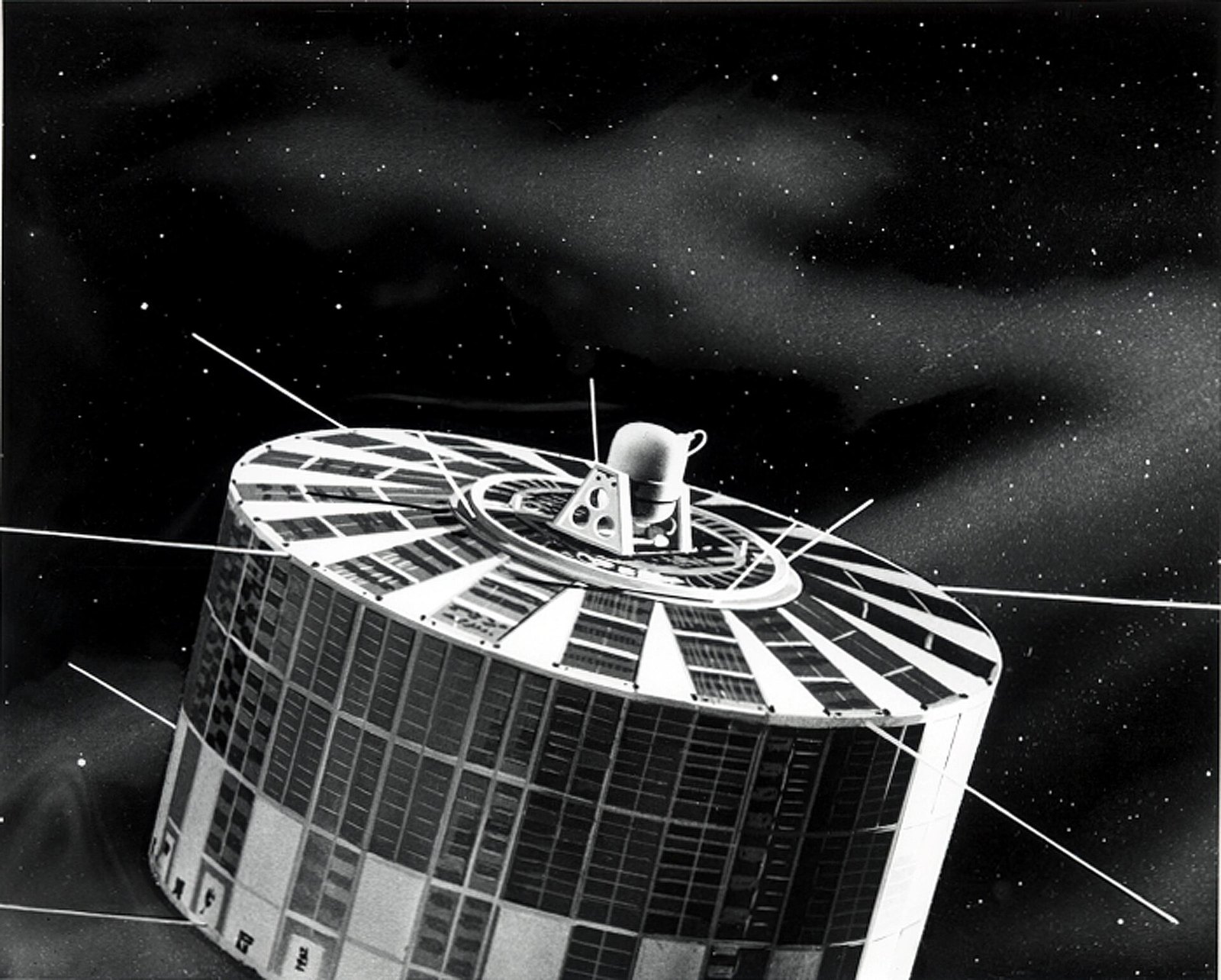
The stage is still there. Ablestar 008 put Transit 4A and Injun 1 into a 66.8-degree orbit near 900 kilometres and today reads 824 by 943 kilometres on an element set published on 1 November (GCAT). Both payloads outlived it as intact objects and are also still up, Transit 4A at 865 by 975 kilometres and Injun 1 at 869 by 986, the latter with the GREB radiation payload still attached because the two never separated.
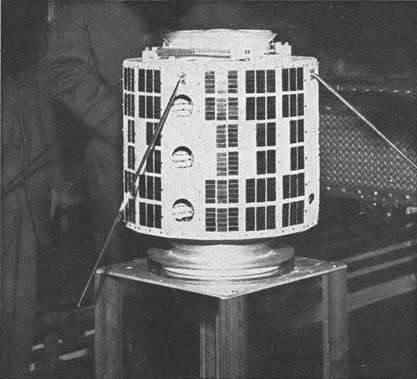
Around those three objects sit 174 catalogued fragments. Their median altitude is 901 kilometres; the lowest runs 470 by 475 and the highest-reaching climbs from 899 to 2,197. What the record shows plainly is how slowly the air works at that height. Of the 141 fragments that have reentered, 82 came down before 1990 and 59 in the 37 years since, only 18 of them after 2010. Drag took the low ones first, and what remains sits where it barely reaches.
ClearOrbit's view
That event was the first of more than 660 break-ups, explosions and collisions now on ESA's books, in a catalogue of about 47,280 tracked objects massing more than 17,500 tonnes (ESA DISCOS, 2 November 2026). Sixty-five years is long enough to see what a fragmentation actually costs: not the fireball, but a cloud that outlasts the agency that launched it, the mission it served and most of the people who worked on it.
ClearOrbit has flown nothing and holds no contracts. What we argue for is that prevention and removal be costed against that timescale rather than against a mission's. A stage passivated before it is abandoned costs a few kilograms of margin today; the one that was not, in June 1961, is still being tracked, still being screened for conjunctions, and will still be up when everything launched this week has come down.
Reader mail
Have a better idea?Spotted something we got wrong?
We publish in public so the numbers can be checked. If a figure looks wrong, a source is missing, or you know something this piece should have said, send it over. One box, no sign-up.
Send an idea or correctionQuick question
Who should pay for cleaning up orbit?
Anonymous. You will see how others answered after you vote.