Daily briefing · · 3 min read
Orbit on 16 November 2026: 34,009 objects on orbit, and the stage that put 26 of them there came down in 22 hours
The on-orbit catalog passed 34,000 overnight. Twenty-six of the new entries are Starlinks dropped at 263 kilometres by a Starship whose own reentry was logged 22 hours after launch.
The catalog crossed a round number overnight. There are 34,009 objects in Earth orbit this morning against 33,969 yesterday, a net gain of 40, and 38 of the 40 are payloads (GCAT). When these briefings started on 17 September the figure was 33,553. Two months later it is 456 higher, and 411 of that rise is payloads: debris and rocket bodies together went from 14,042 to 14,087, a gain of 45. The growth in orbit is almost entirely working satellites being added faster than old ones come down — 267 objects launched in the last 30 days against 69 reentries.
Low Earth orbit holds 28,548 of the total. The 400–500 kilometre shell is still the crowded one by headcount, 10,344 objects of which 10,152 are payloads and 192 are debris, because that is where the constellations fly and where the air still clears things out. The dirty shell is higher: 800–900 kilometres holds 2,769 objects and 2,501 of them are debris. Ninety-four catalogued objects now dip below 250 kilometres, the lowest of them a fragment of the 2021 Kosmos 1408 anti-satellite test at 118 by 136 kilometres on elements dated 4 November. ESA's statistics, updated on 2 November 2026, count about 47,390 objects tracked and catalogued and model 68,450 larger than ten centimetres against roughly 11,300 active payloads (ESA DISCOS).
No close approach of the day
There is no close approach of the day again, and the reason is ours rather than the sky's. Our close-approach pages are frozen on a screening file dated 8 October, now 38 days old, and nothing on them should be read as current. Today's screening did run against the US Space Force's public conjunction data on Space-Track.org, but the event pages derived from it are held back while a redistribution question about that data class is settled, so no event was published. Anyone who needs today's warnings should go to the source and not to us.
Object of the day: Starship FT-15, catalogued for 22 hours
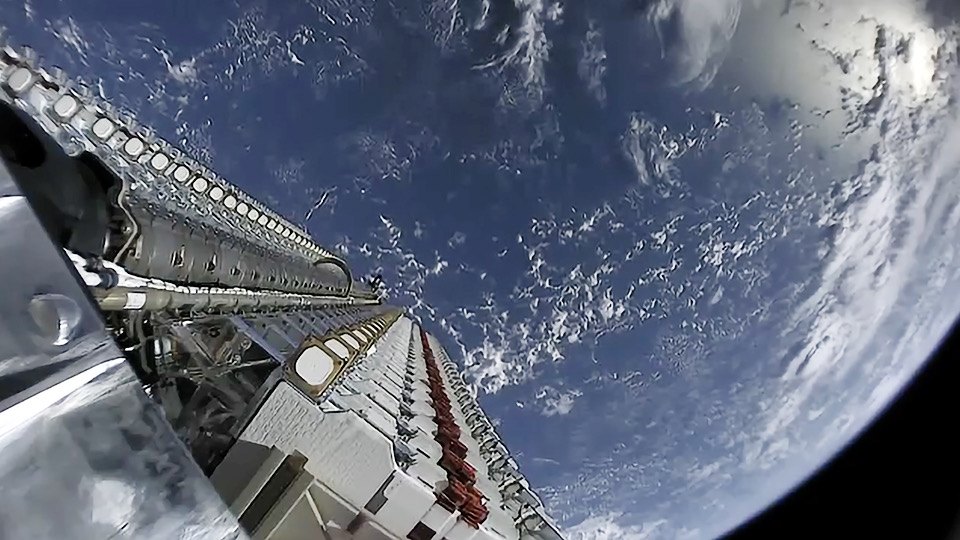
At 22:47 UTC on 13 November a Starship lifted from Starbase carrying Starlink Group 31-2, on a trajectory whose perigee GCAT records as 40 kilometres below the surface — a path that never closed into an orbit (GCAT). Twenty-six Starlinks separated and are catalogued as 101358 to 101383, sitting at roughly 263 by 273 kilometres and inclined 30.5 degrees. The ship itself entered the catalog as object 101384, Starship FT-15, and left it again at 21:20 UTC on 14 November, 22 hours and 32 minutes after launch (GCAT).
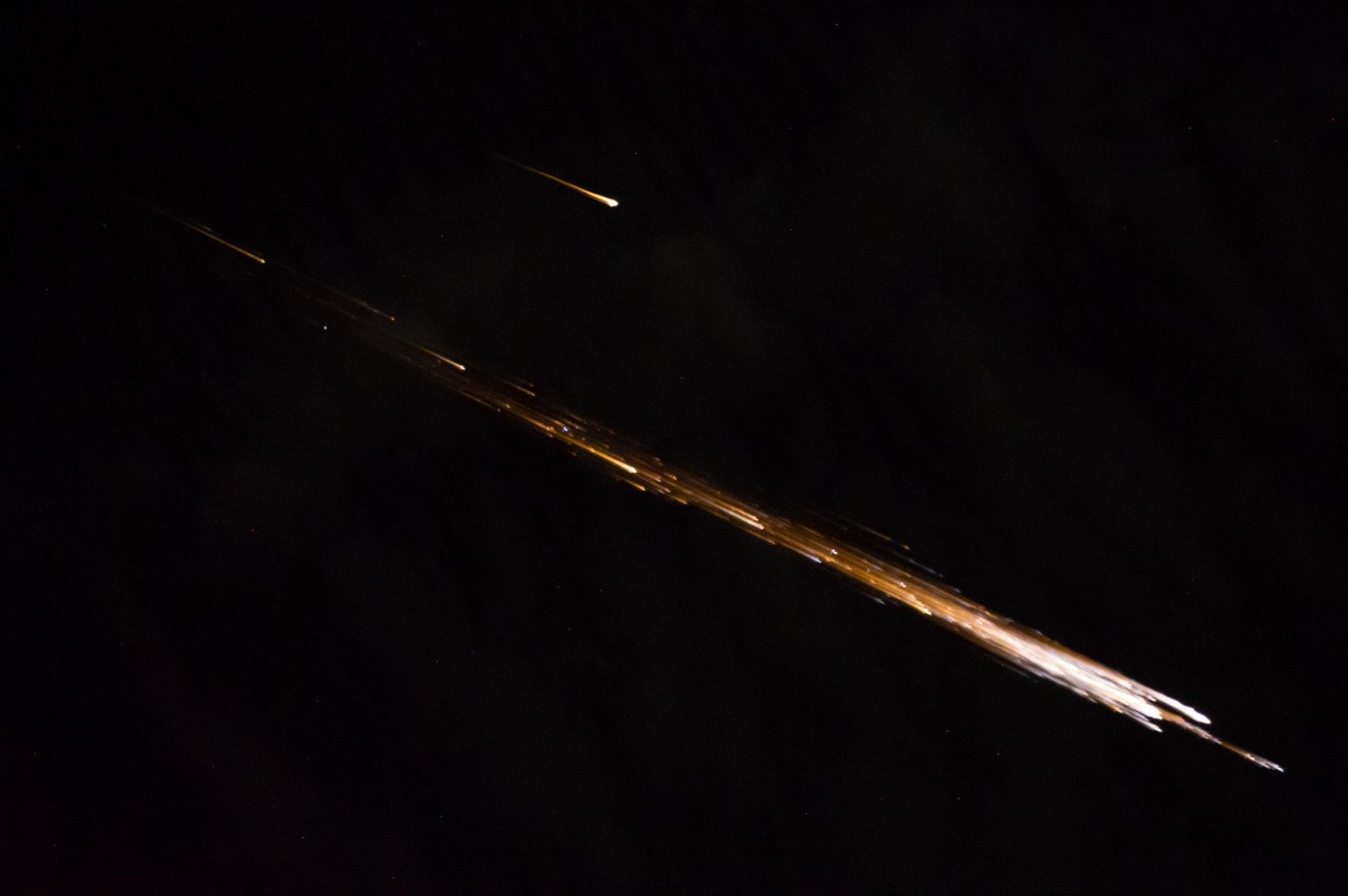
That is what disposal looks like when it is designed in rather than bolted on. The other way of doing the same job is still overhead: 2,120 rocket bodies are in orbit this morning, three of them launched before 1960, and 140 of them before 1970. A second launch the next day shows the ordinary case — a Soyuz-2-1b from Vostochny on 14 November left twelve payloads in a 499 by 511 kilometre orbit at 97.5 degrees and a thirteenth at 578 by 594, catalogued as 101388 to 101400, high enough that drag will take decades rather than hours to deal with anything left there.
ClearOrbit's view
A stage that reenters on the same day it launches is the cheapest debris-removal mission ever flown, because it removes an object that was never allowed to become debris. That is the right direction, and it is spreading, but it only governs what goes up from now on. It does nothing about the 14,087 pieces of debris and spent hardware already in orbit, and nothing at all about the 2,501 fragments sitting in the 800–900 kilometre shell where the air will not help for centuries.
We think the two problems need to be named separately and funded separately. Design rules fix the inflow. Only removal fixes the stock. Today's oldest survivor of that stock — a third stage from March 1958, still circling at 654 by 4,211 kilometres — is the subject of today's scenario.
Reader mail
Have a better idea?Spotted something we got wrong?
We publish in public so the numbers can be checked. If a figure looks wrong, a source is missing, or you know something this piece should have said, send it over. One box, no sign-up.
Send an idea or correctionQuick question
Who should pay for cleaning up orbit?
Anonymous. You will see how others answered after you vote.