How it works · · 5 min read
Drag Sails and Inflatables: Using the Air to Clean Orbit
Low Earth orbit still has a trace of atmosphere. Drag sails exploit it by making a satellite bigger and lighter for its size. Here is the physics, the flight record, and where it stops working.
The problem class: small satellites with no way down
Many small satellites and CubeSats are launched without propulsion. When their missions end, the only thing that brings them down is atmospheric drag. At low altitudes that works quickly. Higher up, it can take generations. A satellite that cannot manoeuvre also cannot dodge, so every extra year it spends in orbit is a year of collision risk it can do nothing about.
Drag sails and inflatable structures attack this with a very simple idea: if you cannot add thrust, add area.
The physics in plain language
Low Earth orbit is not a perfect vacuum. A thin trace of atmosphere remains, and every object moving through it at orbital speed feels a tiny backwards push. That push depends on how much area the object presents to the flow. How much it slows the object depends on the object's mass. A heavy, compact satellite shrugs the drag off; a light satellite with a large sail feels it strongly.
So the key number is the area-to-mass ratio. Orbital lifetime scales roughly in proportion to mass-to-area: halve that ratio and you roughly halve the lifetime Bureau of Meteorology. A sail that multiplies a small satellite's area many times over can cut years or decades off its time in orbit, with no fuel and no need for the satellite to work once the sail is out.
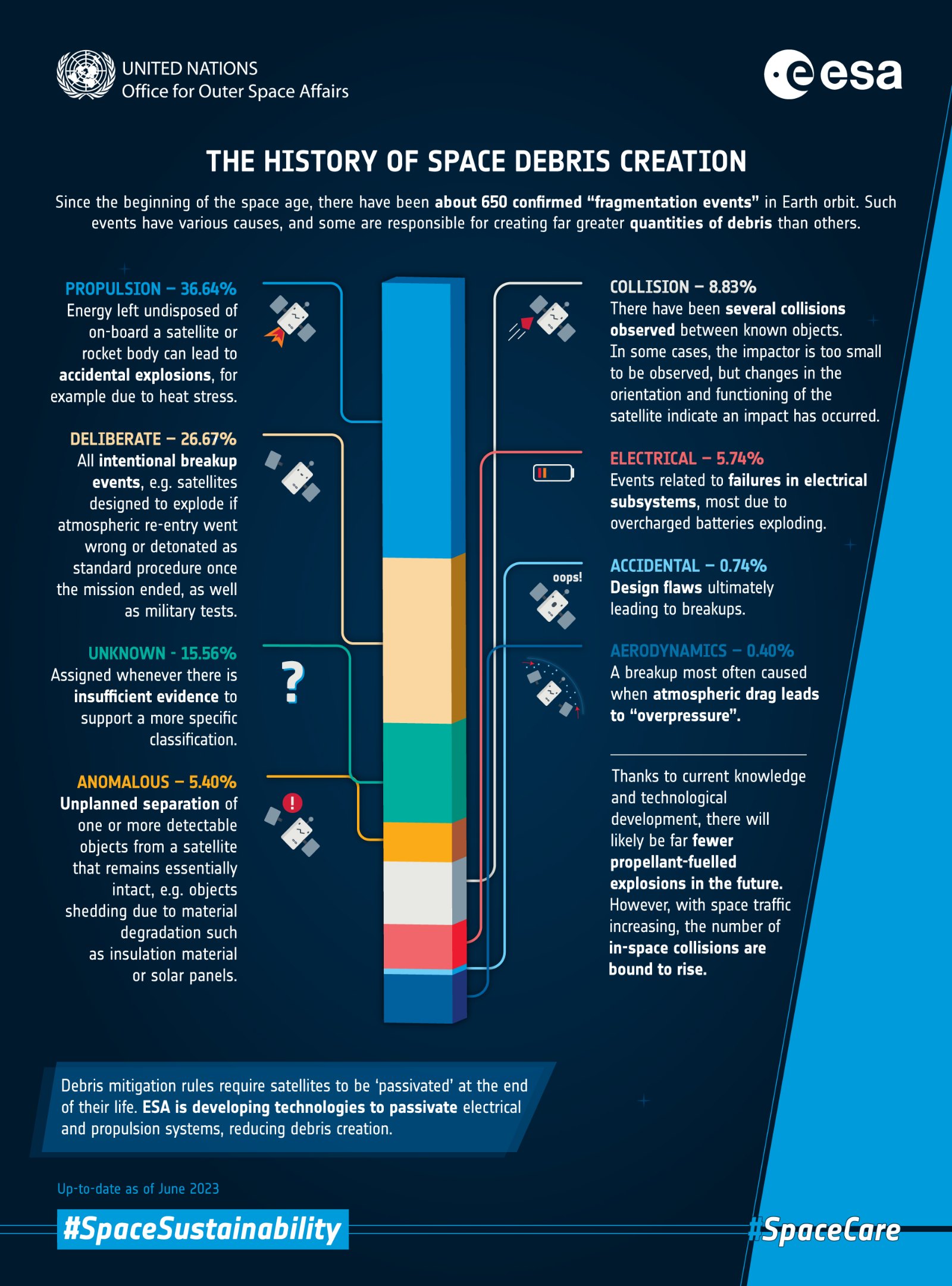
Altitude matters even more, because air density falls off steeply with height. Averaged over the solar cycle, a circular orbit at 400 km lasts roughly a year, at 500 km roughly 10 years, at 700 km roughly 100 years, and at 900 km roughly 1,000 years Space Academy. NASA's summary is similar: below 600 km objects re-enter "within several years", while at about 800 km decay "is often measured in centuries" NASA ODPO FAQ. The Sun adds noise: solar maximum heats and expands the upper atmosphere and can shorten lifetimes several times compared with solar minimum Bureau of Meteorology.
Why 400-700 km is the sweet spot
Put those facts together and a clear window appears. This is an analysis based on the lifetime figures above, not a published threshold.
- Below about 400 km, a sail adds little value. Objects there come down within roughly a year anyway Space Academy.
- Between about 400 and 700 km, natural lifetimes run from a year to a century. Here a sail can turn a multi-decade stay into one that meets tighter rules, such as the FCC requirement to dispose of LEO satellites "within 5 years of completing their missions" FCC.
- Above about 700 km, the air is so thin that even a large sail may leave an object up for decades, and a big sail makes a bigger target for small debris while it waits.
What has flown
Flown: InflateSail flew in 2017 and its inflatable de-orbit demonstration worked, providing rare flight data for inflatable drag augmentation University of Bristol.
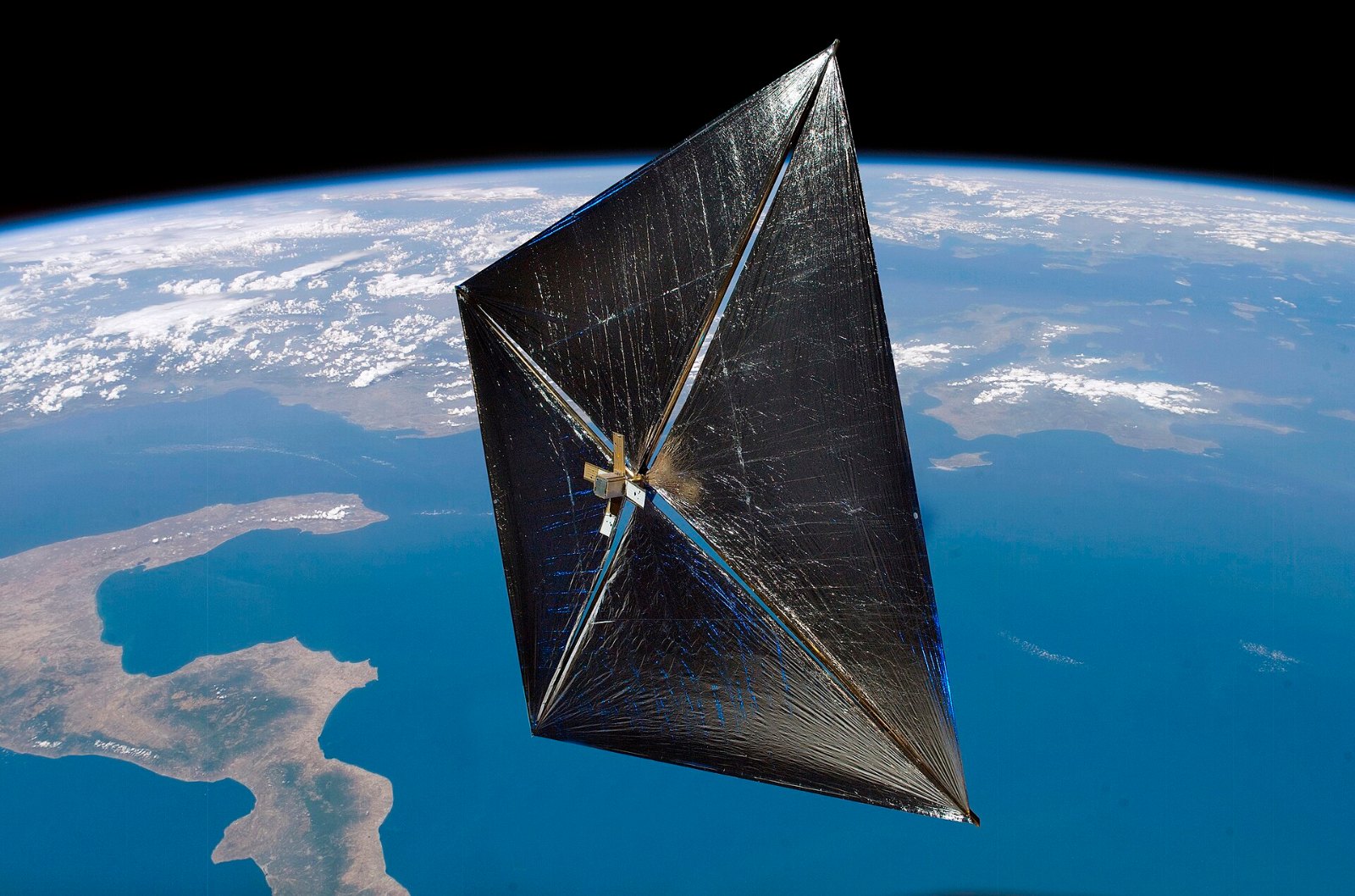
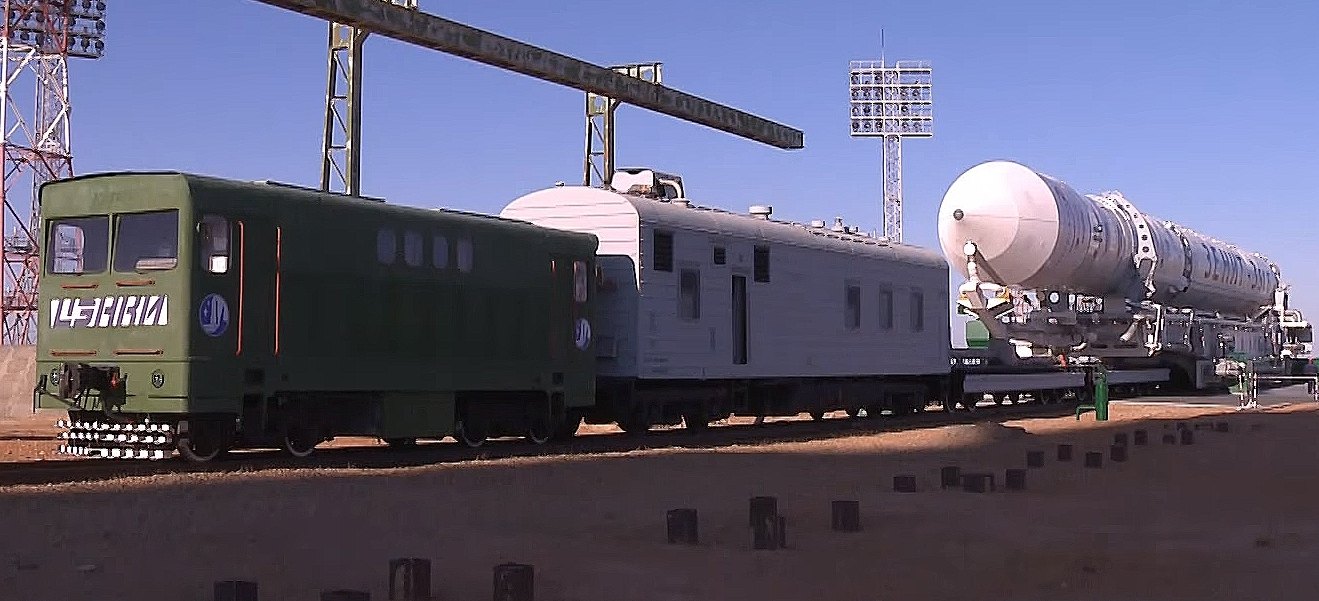
Flown: In December 2022, the ADEO braking sail built by HPS, 3.6 m² in area, deployed successfully from a D-Orbit ION carrier. It is qualified for satellites from 1 to 100 kg ESA. D-Orbit's ION carriers continue to fly, with their 23rd commercial mission launched on 7 July 2026 D-Orbit, making them a natural platform for this kind of hosted demo.
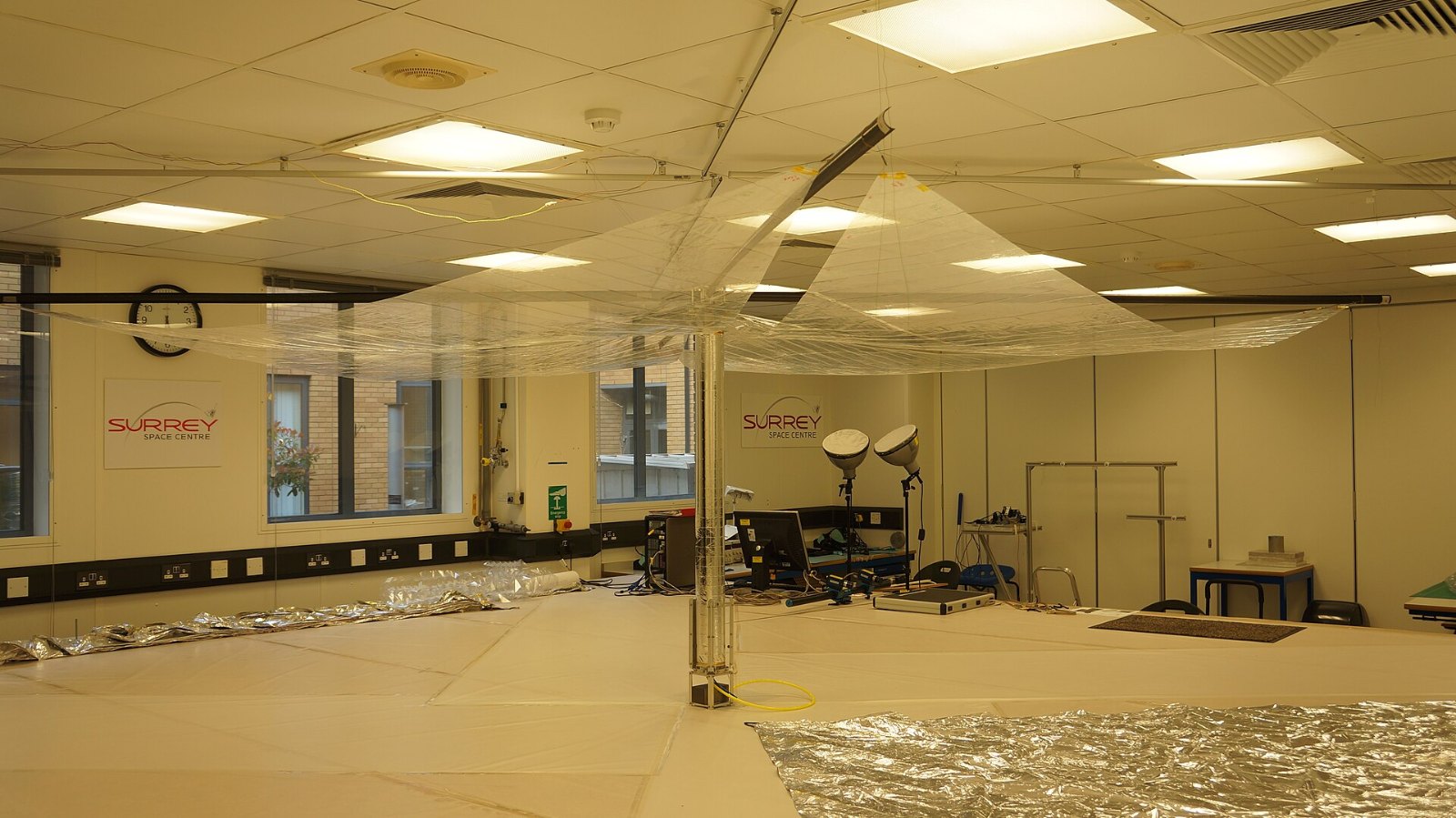
Flown, failed: The RemoveDEBRIS mission's final experiment, on 4 March 2019, was a drag sail on inflatable booms. It failed to deploy Surrey Space Centre. That is the central lesson of the whole technique: a sail that stays folded is worth nothing.
What is planned and proposed
Proposed: Drag sails are now mostly a product question rather than a research one for small satellites. Scaling them to large derelicts is different. A multi-tonne rocket stage at 800 km would need an enormous sail, fitted by a servicer, and would still take a long time to fall. Kits that a robotic servicer attaches to a captured object, combining drag and propulsion, remain proposed ideas.
Honest failure modes
- Deployment. A sail is a single moving event after years of storage. RemoveDEBRIS showed it can fail.
- It cannot choose where to come down. Drag produces uncontrolled re-entry, which is fine for small satellites that burn up but unsuitable for large objects whose parts could reach the ground.
- More area, more hits. A larger cross-section is struck more often by small debris during descent.
- No steering. A satellite descending on a sail cannot perform collision avoidance, and it crosses busy shells on the way down.
- Solar cycle uncertainty. Lifetimes can differ several times between solar minimum and maximum Bureau of Meteorology.
Cost and readiness
For small satellites, drag sails sit at roughly TRL 7-9, the most mature passive deorbit method available, with ADEO's flight as the reference. Inflatable devices trail at roughly TRL 6-7. Public prices are not available, but because a sail is a small, self-contained module with no propellant, it is likely among the cheapest ways for an operator to meet a disposal rule.
ClearOrbit's view
Drag sails are the unglamorous hero of debris mitigation. They do not capture anything, and they will not save us from the heaviest derelicts above 700 km. But for the flood of small satellites in the 400-700 km band, a reliable sail is the difference between a clean exit and decades of drifting risk.
The ClearOrbit vision is that every small satellite without propulsion that is headed above about 400 km carries a passive, independently triggered deorbit device, one that deploys even if the host satellite is dead. We want deployment reliability tracked and published across the industry, so the failures teach as much as the successes.
For large objects, sails are not the answer on their own. That job belongs to servicers and controlled re-entry, which is exactly why mitigation on small satellites should be solved now, while the harder removal problems are still being worked out.
Reader mail
Have a better idea?Spotted something we got wrong?
We publish in public so the numbers can be checked. If a figure looks wrong, a source is missing, or you know something this piece should have said, send it over. One box, no sign-up.
Send an idea or correctionQuick question
If you could fund one thing first to cut collision risk in low Earth orbit, what would it be?
Anonymous. You will see how others answered after you vote.
Sources
- ESA: Successful in-flight demonstration of the ADEO braking sail
- University of Bristol: InflateSail de-orbit flight demonstration results
- Surrey Space Centre: RemoveDEBRIS
- Space Academy: orbital lifetimes
- Australian Bureau of Meteorology: satellite orbital decay
- NASA ODPO FAQ
- FCC Second Report and Order (5-year rule)
- D-Orbit: Above the summer sky, July 2026