How it works · · 6 min read
Number 101,400: How an Object in Orbit Gets a Number, a Name and a Parent
Every catalogued object carries two identifiers and had to pass three tests to get them. GCAT's highest catalog number today is 101,400 — and about 17,600 tracked objects have no number at all.
The problem class: 70,731 objects, two names each
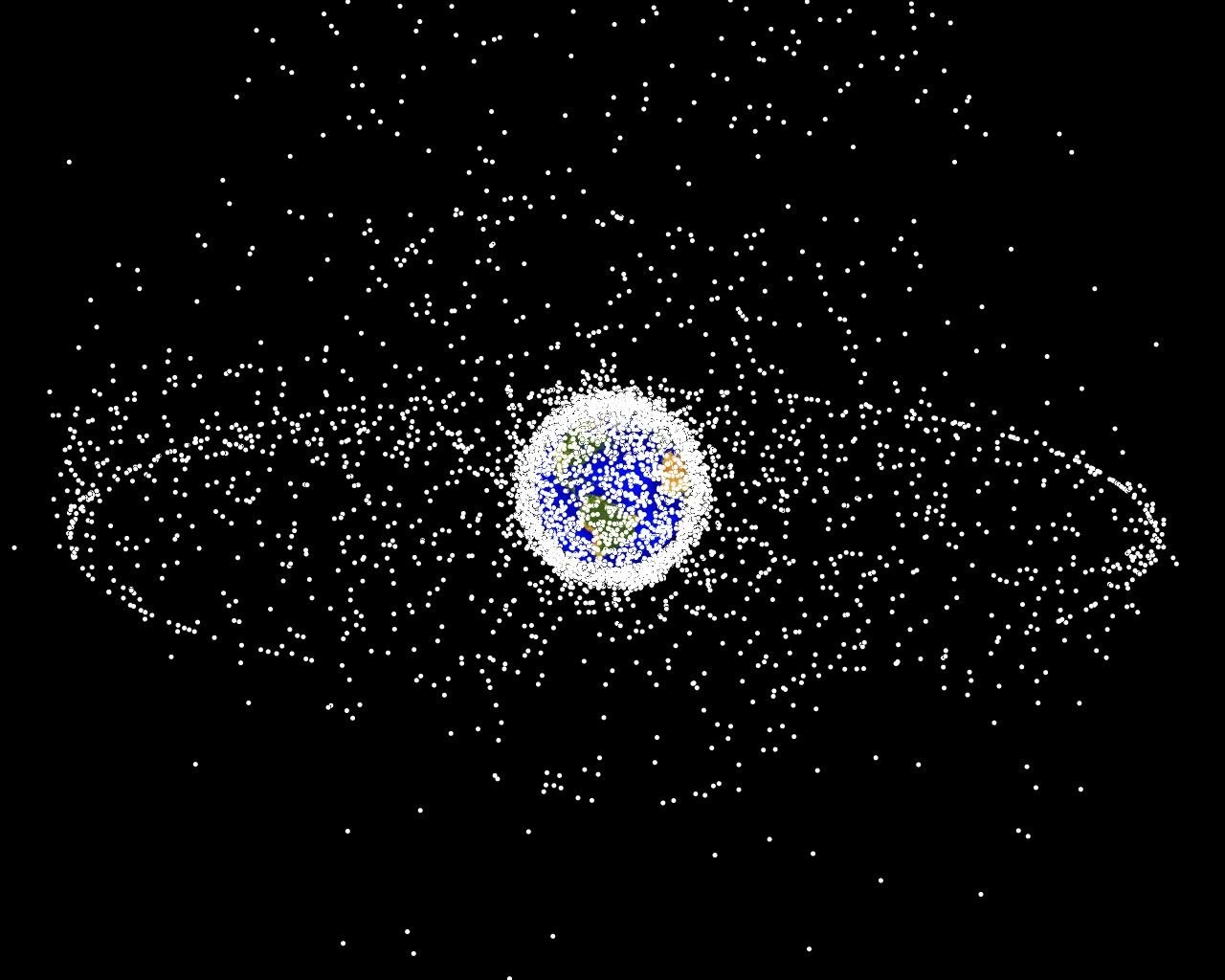
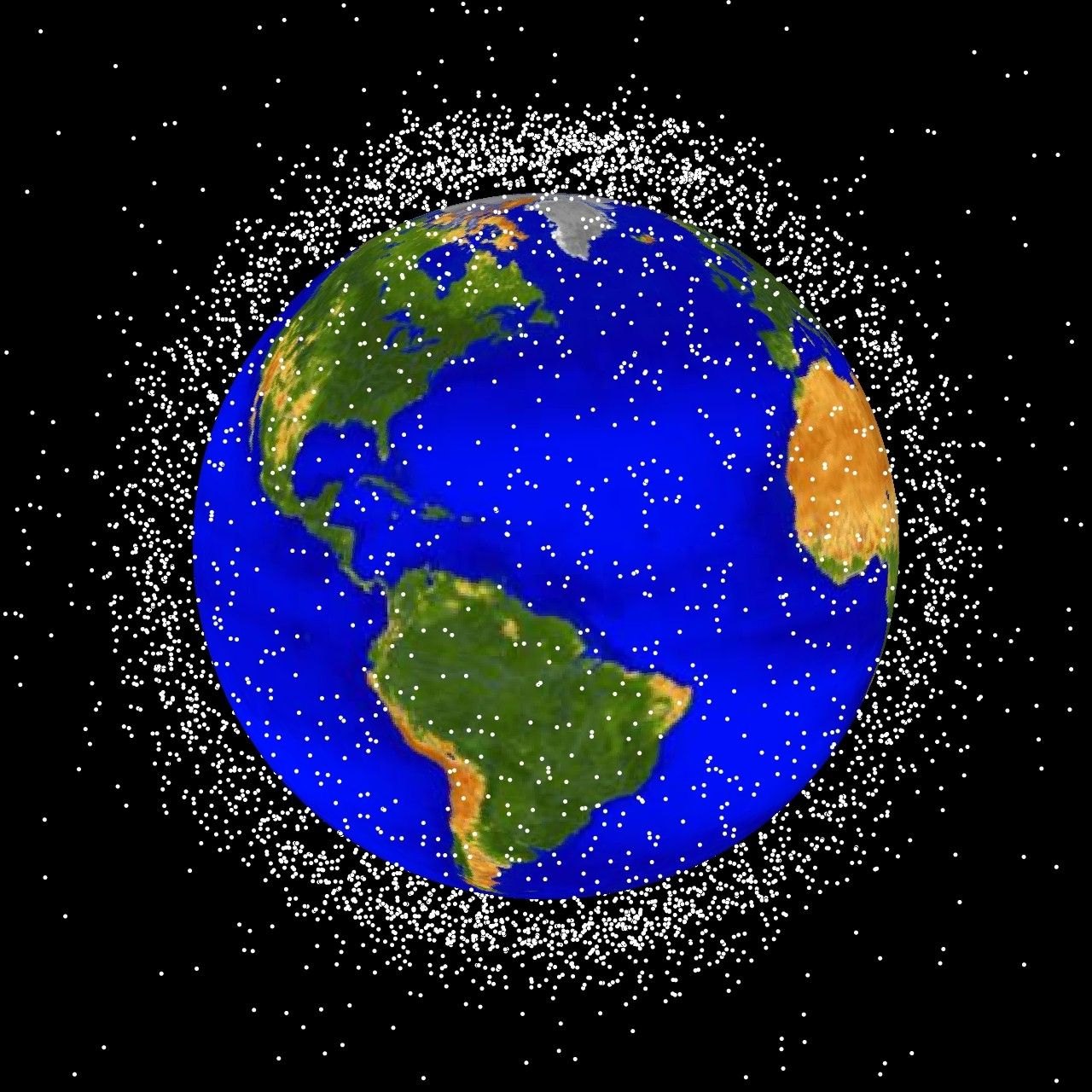
Everything on this site rests on the catalog. The on-orbit count, the altitude bands, the decay queue, the close-approach screenings: all of it is arithmetic performed on a list of numbered objects. The list is not a census of what is in orbit, but of what has been identified.
Two identifiers do the work, and they are not interchangeable. The international designator, the COSPAR number, says where an object came from: 1989-089A is the first piece from the 89th launch to reach orbit in 1989. The catalog number says only when it was recognised — Space-Track defines it as a "Sequential number assigned by the US Space Force as objects are cataloged" (Space-Track). GCAT's file this morning lists 70,731 objects catalogued ever, 34,009 of them still in orbit, and its highest catalog number is 101,400 (GCAT).
The designator: year, launch, piece letter
The launch half of a designator is simple: year, then the launch's sequence number within that year. The piece half is a letter suffix, and the letters run "from A to Z, then AA to AZ, BA ... to ZZ, AAA to AAZ", with I and O always omitted so they cannot be read as 1 and 0 (GCAT). It behaves like a base-24 counter: one launch has run to 1999-025EYS, the 3,449th catalogued piece of a single launch and the largest such count as of 2020.
Usually the early letters go to the payloads, then the rocket stages, then the debris, though GCAT warns that "there are frequent exceptions to this rule". Today's briefing is a clean example: COBE is 1989-089A, its Delta second stage is B, the sensor cover is C, the dewar cap is D, and the remaining 101 pieces of that launch are debris running out to DJ, skipping every I and O on the way.
Before 1963 the scheme was different again. Fred Whipple's Harvard system labelled launches with Greek letters — 1957 α 2 is the second object of the first launch of 1957 — and NORAD retro-fitted those into the modern format in the late 1990s, a move GCAT declines to follow, which is why one object is still listed as 1961 ο 300 rather than 1961-015MM (GCAT).
The three tests
A tracked object is not automatically a catalogued object. Space-Track names three primary considerations: whether the owner can be determined, whether the object can be correlated to a launch, and whether it can be tracked well (Space-Track). GCAT states the same gate more precisely: the object has to have stayed up for more than one full orbit, to have a well-determined orbit followed over many orbits — a "persistent object" — and to be tied to a specific launch so that it can be given an international designation (GCAT).
The second test is the one that bites. An orbit is a measurement; a parent launch is an inference. A fresh fragment at 800 kilometres has an orbit within days, but deciding which 1970s stage it came off can take years, or never resolve.
Size sets the floor under all three. The minimum an object typically has to be to stay in the catalog is "10 centimeter diameter or 'softball size'" (Space-Track), while NASA puts the trackable population at roughly 50,000 large objects against an estimated 100 million millimetre-sized pieces (NASA ODPO). The catalog is the top of a distribution, not the distribution.
The waiting room: analyst objects
Objects that are tracked but fail a test become analyst objects. They get working numbers rather than real ones: the 80000-89999 block, where, as Space-Track puts it, "analyst numbers can be constantly reused for different objects" (Space-Track). Space Fence detections start at 270000 (GCAT).
The scale is worth sitting with. Space-Track's scoreboard listed 17,600 analyst objects in February 2022, against roughly 700 GCAT considered persistent enough to carry in its derived catalog (GCAT). Some have confident parents; some belong to one of a handful of candidate launches, such as the high-inclination debris from three Delta stage explosions in 1973, 1975 and 1977; and many sun-synchronous, Molniya and geotransfer fragments could have come from so many launches that they get generic names like "Unknown SSO debris" and no designation.
Late arrivals and renumbering
Identification is not a one-off. Twenty-five pieces attributed to the Delta stage from the 1989 COBE launch carry catalog numbers in the 29683-29707 block, the range the Space Force was issuing in 2006 — seventeen years after the launch they are named for, and all logged down within weeks of appearing (GCAT). The designator records a parent, the catalog number a date of recognition, and the gap between them is sometimes most of a career.
The numbering is also running out of room. GCAT's S-series maps one-to-one onto US catalog numbers and already supports a nine-digit form, "not yet in use, but ... supported in anticipation" of nine-digit catalog numbers from the US Department of Defense (GCAT). The five-digit era that began with Sputnik is ending for arithmetic reasons.
Honest failure modes
Three things follow, and none is a complaint about the people doing the work. An object can be in orbit and absent from the public list — unnamed, unparented, or simply too small. It can be in the list with a parent assigned on a balance of probabilities rather than a certainty, which matters when the question is who is liable for a fragment. And it can be removed from the list on evidence that is itself an inference, which is how a decay gets confirmed days or weeks after the fact.
So "catalogued" and "in orbit" are different sets with a large overlap, and the counts on this site are always the first of the two — as is the age of the orbit behind any screening built from them.
ClearOrbit's view
A removal mission needs more than a catalog number. It needs to know what the object is, how massive it is, how it is tumbling, who owns it, and who may consent to its disposal — and the identifier chain described here is where every one of those answers starts. An object with a confident parent launch has a manufacturer, a mass, a drawing and a flag state. One labelled "Unknown SSO debris" has none of those, and no defensible path to anyone's permission.
That is why we treat catalog quality as removal infrastructure, not bookkeeping. The 17,600-object waiting room is not only a tracking gap; it is the part of the population no removal programme can be contracted to touch, because nobody can say whose it is.
ClearOrbit has flown nothing and holds no contracts. What we are arguing for is that the identification pipeline — parentage for analyst objects, published confidence levels on attribution, and designations for the debris clouds with none — be funded as seriously as the sensors. You cannot remove what you cannot name.
Reader mail
Have a better idea?Spotted something we got wrong?
We publish in public so the numbers can be checked. If a figure looks wrong, a source is missing, or you know something this piece should have said, send it over. One box, no sign-up.
Send an idea or correctionQuick question
If you could fund one thing first to cut collision risk in low Earth orbit, what would it be?
Anonymous. You will see how others answered after you vote.