How it works · · 5 min read
Electrodynamic Tethers and Plasma Brakes, Explained
A long wire moving through Earth's magnetic field can slow a satellite with no fuel at all. The physics is elegant. The flight record, so far, is not.
The problem class: high orbits where drag gives up
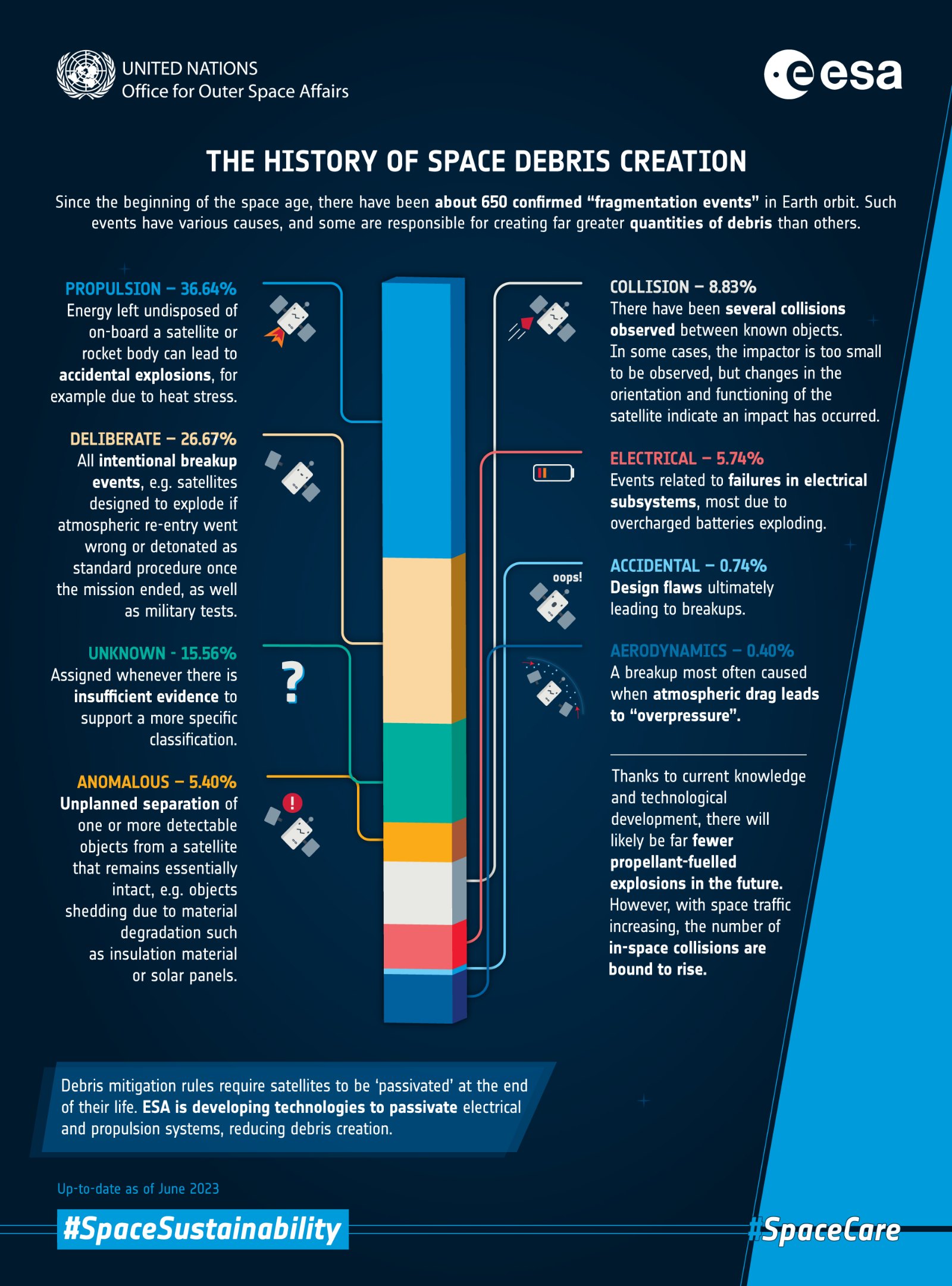
Drag sails work well below about 700 km, where there is still enough air to push against. Higher up, the atmosphere is too thin. A circular orbit at 700 km lasts around 100 years on average, and at 900 km around 1,000 years Space Academy. Yet some of the most crowded and dangerous debris shells sit right there: the derelicts ranked most concerning in a 2021 international study cluster at roughly 830-850 km and 950-1,000 km McKnight et al. (2021).
An object at those altitudes needs either propellant to come down or some other force. Electrodynamic tethers and plasma brakes offer "some other force" that does not run out: they use the electrical and magnetic environment of space itself.
The physics in plain language
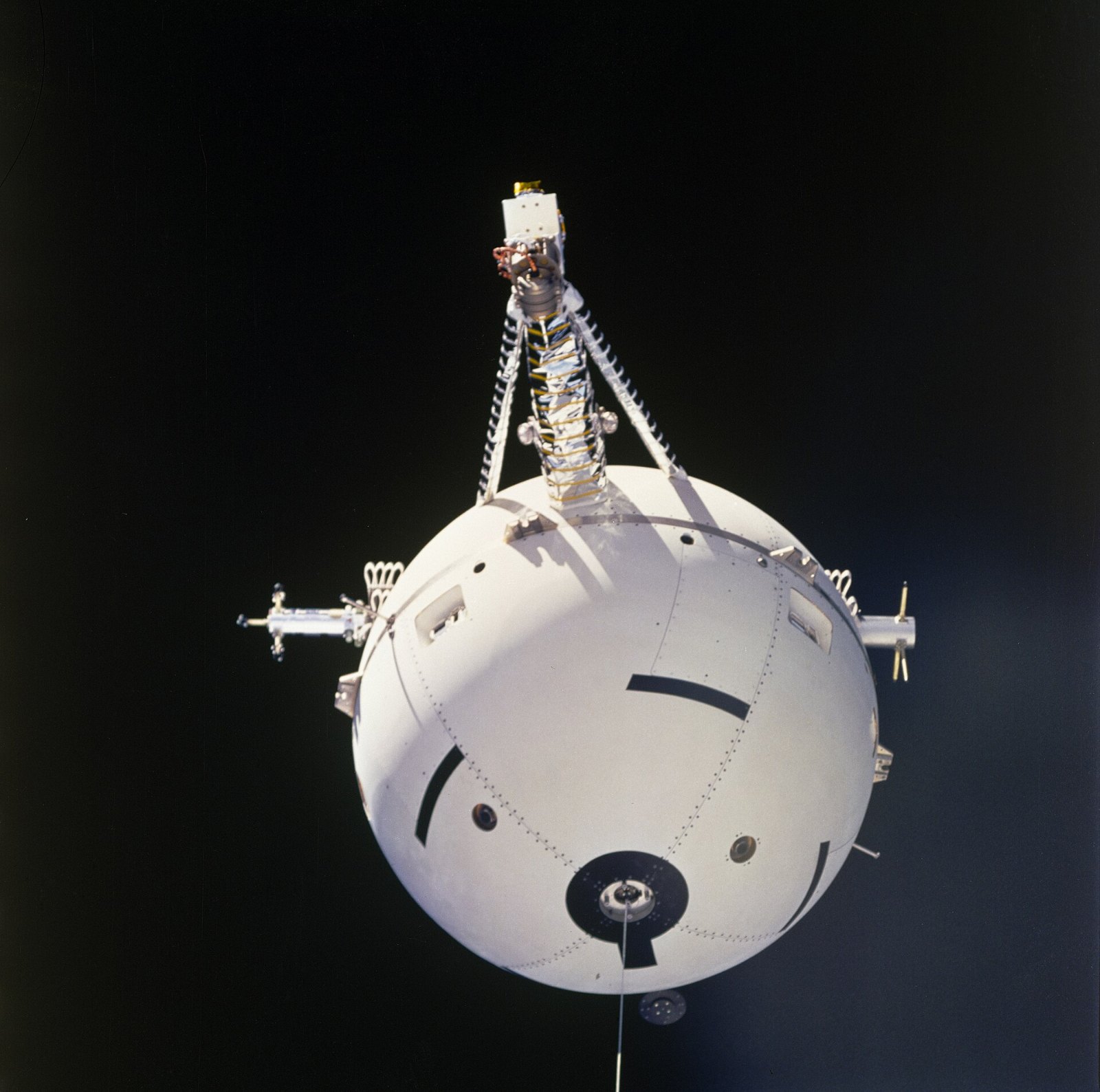
The electrodynamic tether. Start with a fact from school physics: when a wire moves through a magnetic field, a voltage appears along it. A satellite in low Earth orbit is moving through Earth's magnetic field at 7-8 km/s NASA ODPO FAQ. Unroll a long conductive tether from it, and that motion produces a voltage along the tether.
On its own, a voltage does nothing. To get a current flowing, the circuit has to be closed, and here the ionosphere helps. The space around the satellite is filled with thin plasma: charged particles. One end of the tether collects electrons from that plasma, and a device at the other end, such as an electron emitter or cathode, pushes them back out. The plasma completes the loop.
Now the second piece of school physics: a wire carrying current in a magnetic field feels a force, called the Lorentz force. For a tether moving in its orbit, that force points against the direction of travel. It acts as a brake. The satellite's orbital energy is slowly converted into electrical current, the orbit shrinks, and eventually the atmosphere takes over. No fuel is burned.
A useful mental image is a bicycle dynamo. Spinning the wheel makes electricity, and taking electricity out makes the wheel harder to turn. The tether is a dynamo, and the satellite's orbit is the wheel.
The plasma brake. A plasma brake, also called Coulomb drag, uses a related idea without needing a large current. A very thin tether is given a high electric charge. The charged wire repels or attracts ions in the surrounding plasma, and those particles bounce off the electric field around the wire as the satellite moves through them. That creates a drag force much larger than the thin wire's physical size would suggest.
What has flown
Flown, tether failed: Japan's KITE experiment rode on the HTV-6 cargo ship in early 2017. After HTV-6 left the ISS, it was meant to unroll a 700 m electrodynamic tether. The tether did not deploy during the mission window, which ran from 27 January to 6 February 2017. The field-emission cathode, the electron emitter needed to close the circuit, did work Spaceflight Now. So one essential component was validated in orbit, while the central act, getting a long wire out straight, was not.
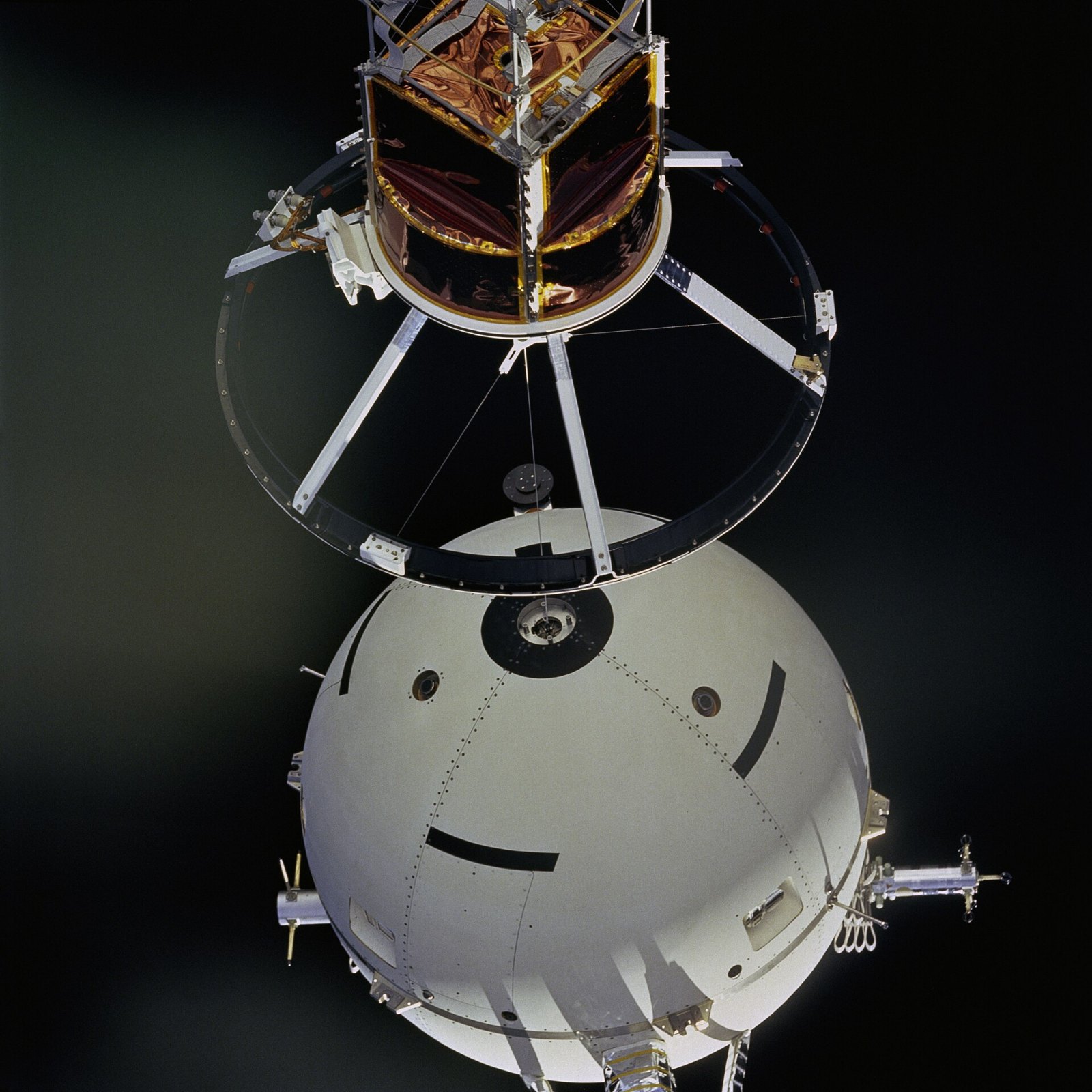
Flown, results unverified: Finland's Aurora Propulsion Technologies launched AuroraSat-1, a 1.5U CubeSat, on an Electron rocket on 2 May 2022. It carries a plasma brake deorbit tether alongside small water-fuelled resistojet thrusters Gunter's Space Page. Results for the plasma brake itself could not be confirmed from public sources, so this explainer makes no claim either way.
What is planned and proposed
Proposed: Beyond these experiments, no funded mission tracked by ClearOrbit plans to use an electrodynamic tether or plasma brake to remove a piece of debris. The concepts remain attractive on paper, particularly as small deorbit modules fitted to satellites before launch, or attached to a derelict by a servicer, but they are studied rather than scheduled.
Honest failure modes
- Deployment is the whole game. A tether is useless until it is fully extended. KITE's failure shows how hard it is to unroll hundreds of metres of wire reliably in orbit.
- Tethers are debris targets. A long thin line has a large swept area, and a cut tether can itself become debris. Designs typically try to tolerate small impacts, but it is a real concern.
- Dynamics. Long tethers can oscillate, swing and twist. Controlling that motion adds complexity.
- It depends on geometry. The force is strongest when the orbit cuts across magnetic field lines. For some orbits, including high-inclination ones, efficiency can drop.
- Slow and uncontrolled. Tethers lower an orbit gradually and cannot target a re-entry point, so they suit small satellites rather than large objects whose parts could reach the ground.
Cost and readiness
Both technologies sit at roughly TRL 4-5 based on the public flight record. Neither has a publicly documented, fully deployed deorbit. There are no public prices. The appeal is long-term economics: a device with no propellant tank could, in principle, be small and light enough to fit to many satellites. ESA reports that over the last decade only 5-35% of payloads and 30-80% of rocket bodies complied with the 5-year disposal standard ESA Space Environment Report 2026, so a lightweight, fuel-free disposal device would meet a genuine need.
ClearOrbit's view
Electrodynamic tethers are one of the most elegant ideas in the debris field: turn a satellite's own motion into the force that brings it home. They could matter most exactly where drag sails stop working, in the crowded shells above 700 km. But elegance is not evidence, and the flight record so far is a failed deployment and an unconfirmed result.
The next step should be a small, well-instrumented mission whose only job is to deploy a tether fully, measure the braking force, and publish the data openly. Until that happens, tethers belong in the Proposed column.
The ClearOrbit vision is a family of low-cost, propellant-free deorbit modules matched to altitude: sails for the lower band, tethers or plasma brakes for higher orbits, with standard mounting so any operator can add one before launch. We would rather see these mitigation tools proven early than discover in a decade that the higher shells have no affordable exit.
Reader mail
Have a better idea?Spotted something we got wrong?
We publish in public so the numbers can be checked. If a figure looks wrong, a source is missing, or you know something this piece should have said, send it over. One box, no sign-up.
Send an idea or correctionQuick question
If you could fund one thing first to cut collision risk in low Earth orbit, what would it be?
Anonymous. You will see how others answered after you vote.