How it works · · 5 min read
Ground-Based Lasers: Nudging Debris From Earth
A laser on the ground could push a piece of debris just enough to miss a collision. NASA's cost study rates nudging highly. Here is how it works, what exists, and why it makes people nervous.
The problem class: too many objects, too few spacecraft
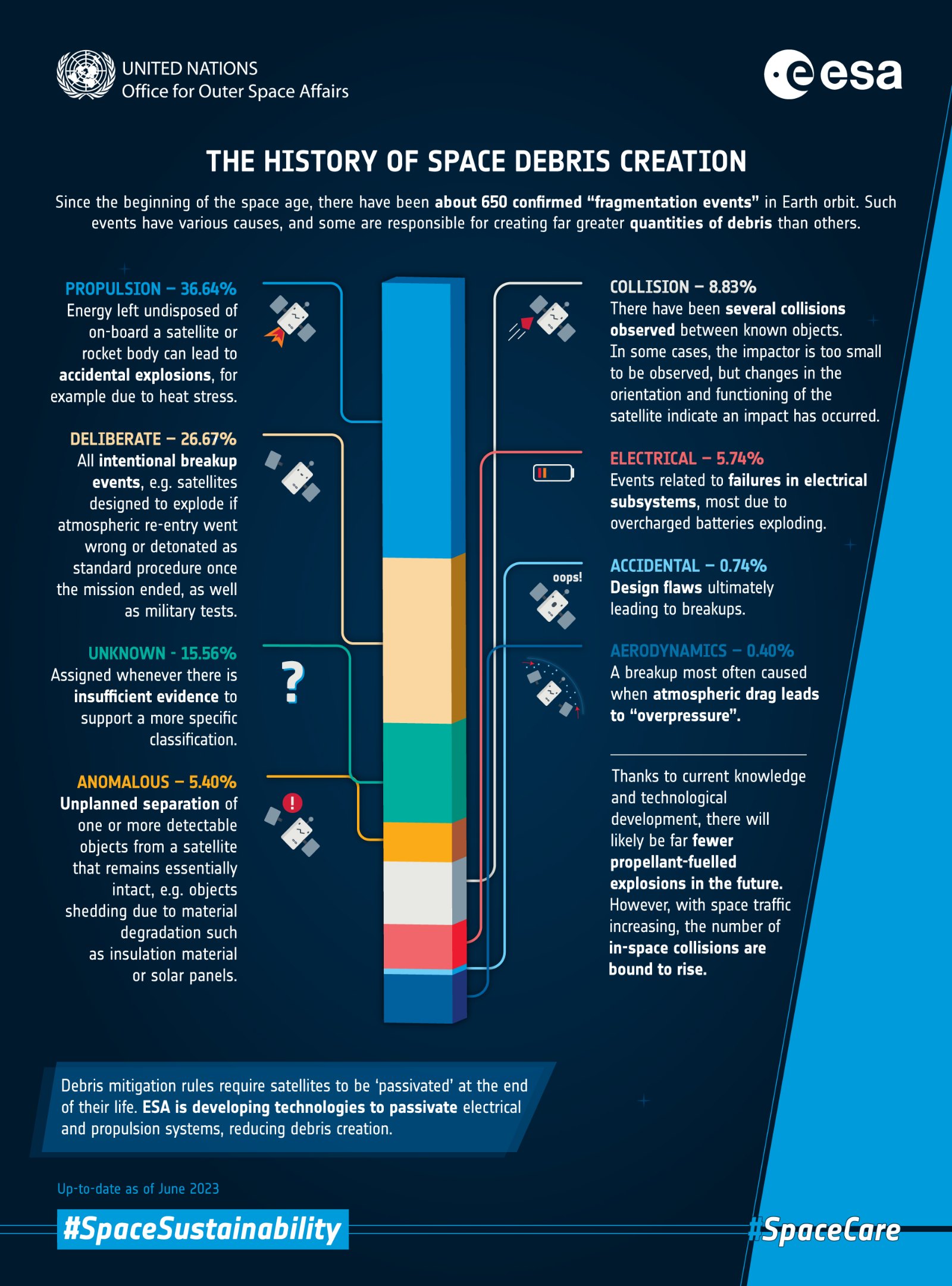
Every capture mission removes one object at a time. Yet ESA's MASTER-8 model estimates about 68,450 objects larger than 10 cm and around 1.5 million between 1 and 10 cm ESA MASTER-8. No fleet of servicers will ever visit all of them.
Ground-based lasers promise something different: a single facility that can act on many objects, one pass at a time, without launching anything. The idea is sometimes called a "laser broom". In practice, the near-term goal is more modest and more useful: nudge an object slightly so that a predicted collision does not happen.
The physics in plain language
There are two ways a laser can push on a piece of debris.
Photon pressure. Light carries momentum. When a beam hits a surface, it gives a tiny push. The force is extremely small, but in orbit, small pushes add up. Changing an object's speed by a tiny amount changes where it will be one orbit later, and more so a day later. If you know a close approach is coming, a small, early nudge can shift the object's position by enough to turn a near-hit into a clear miss. This works best on light objects with a large area, because the same push moves them more.
Ablation. A much more powerful pulsed laser can heat a thin layer of the object's surface so fast that material vaporises and jets away. That jet acts like a tiny rocket engine on the debris itself, producing far more thrust than photon pressure. Aimed correctly, it can slow an object and lower its perigee, the lowest point of its orbit, so that atmospheric drag pulls it down sooner. Because natural lifetime shrinks steeply with lower altitude and higher area-to-mass Bureau of Meteorology, even modest lowering helps.
Both approaches share the same engineering challenges. The atmosphere blurs a laser beam, so systems use a "guide star" laser to measure the distortion and adaptive optics to correct it. Debris moves across the sky at 7-8 km/s NASA ODPO FAQ, so the station must track precisely, and it only gets a few minutes each pass. Clouds, daylight and the object's tumbling surface all reduce what actually lands on target.
What has flown
Nothing has flown in the sense that matters: no laser system has yet publicly demonstrated moving a piece of debris. That is the most important sentence in this explainer.
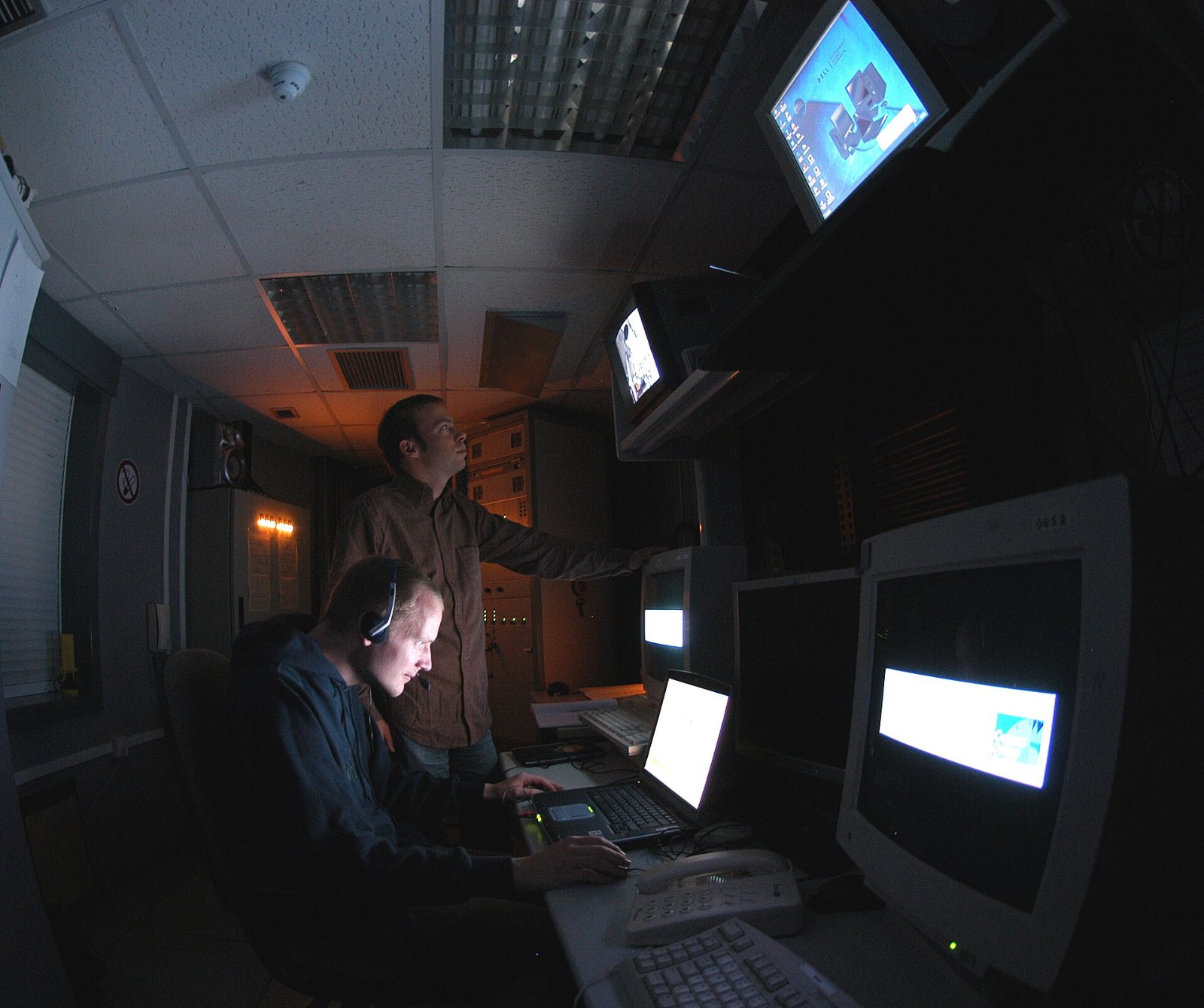
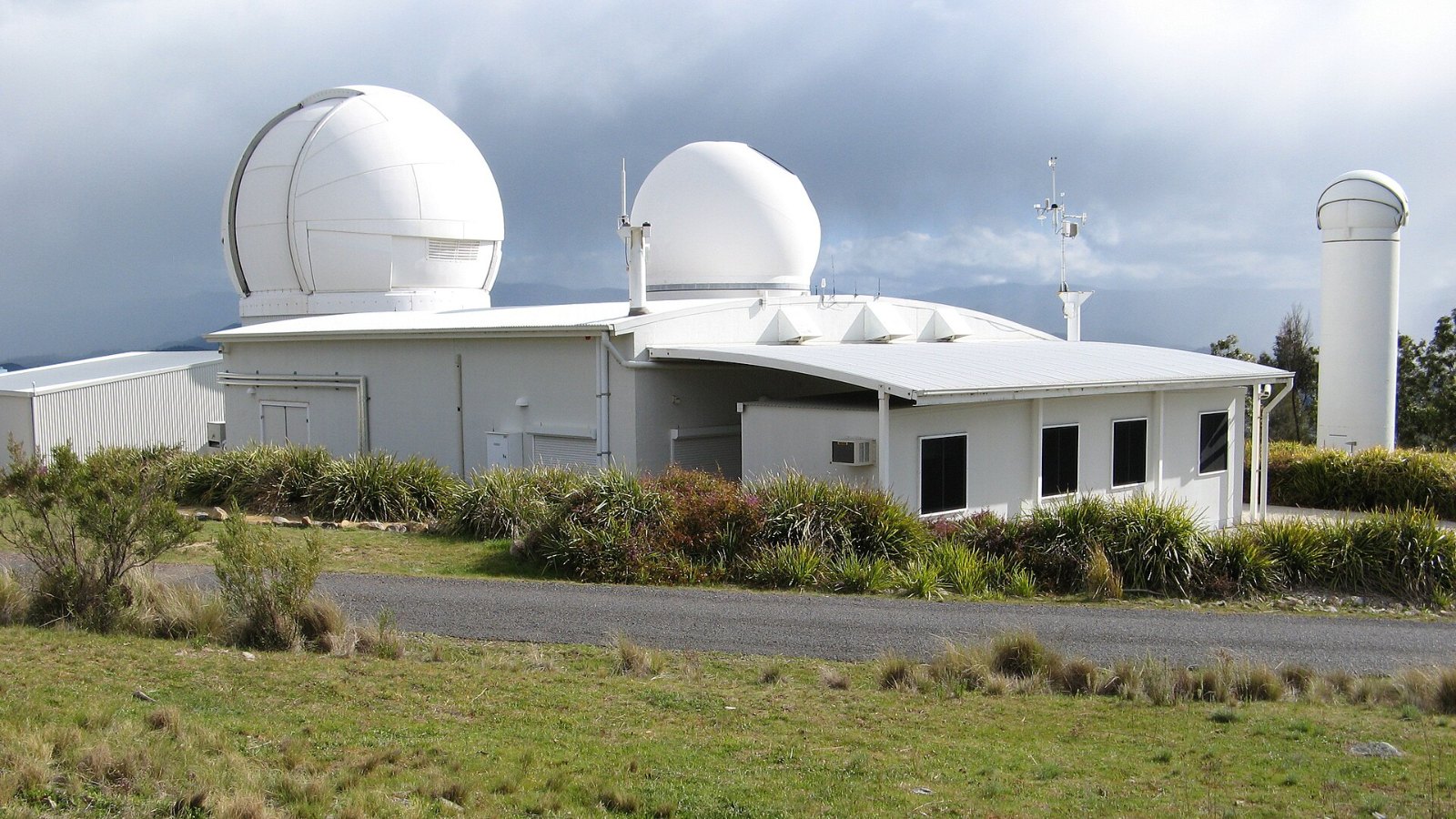
Proposed (ground capability announced): In April 2021, Electro Optic Systems (EOS) and the Space Environment Research Centre at Mount Stromlo in Australia announced a debris-manoeuvre laser capability. It combines a guide-star laser with an adaptive-optics "push" laser Space Connect. The technical approach is described in the research literature ScienceDirect. An announced capability is not the same as a documented manoeuvre of a real object, and none has been reported.
What NASA's analysis says
NASA's Office of Technology, Policy and Strategy published a cost-benefit study in March 2023. Its headline finding was that "the most effective remediation methods to reduce risks to operators are approaches for removing small debris and nudging large debris to avoid collisions." It found that just-in-time nudging of large debris could produce net benefits "almost immediately", while removing 1-10 cm debris could pay off in under a decade in the best cases NASA OTPS. The study calls its figures "order-of-magnitude estimates".
NASA followed up in March 2024 with a technical meeting on using ground-based pulsed lasers to remove small debris that threatens the ISS NASA NTRS. That is a signal of serious interest, but not a funded programme.
Honest failure modes
- Small forces, big uncertainty. A nudge only helps if the collision prediction is accurate. Public orbit data carries real error, so a nudge could, in a bad case, make a miss closer.
- Weather and geography. A single site sees only the objects that pass overhead at night or in clear conditions.
- Unknown targets. Shape, material and tumble change how much push an object actually receives.
- Fragments. Aggressive ablation of an unknown object could, in principle, break pieces off.
- Dual use. This is the hardest issue. A laser that can move a piece of debris can also affect a working satellite. Even a system built for safety can look like a weapon to other nations, and space-based versions raise sharper concerns still. Without transparency, notification and international agreement, a debris laser could increase tension rather than reduce risk.
Cost and readiness
Laser nudging is at roughly TRL 3-5: components exist and a ground capability has been announced, but no demonstration on debris is documented. Space-based lasers, which would ablate small debris from close range, are at roughly TRL 2-3 and exist only in studies such as the NASA OTPS analysis NASA OTPS. Public cost figures for an operational ground station are not available. The appeal is scalability: one station could, in principle, serve many objects over many years, and nudging is the approach NASA's analysis found could pay off fastest.
ClearOrbit's view
Laser nudging may be the fastest-paying tool in the entire debris toolbox, and it is almost entirely unproven. That combination deserves investment, not hype. We think the right next step is a transparent, internationally observed demonstration: pick a well-characterised, inert object, announce the plan in advance, nudge it, and publish the before-and-after orbit data for anyone to check.
Transparency is not optional here. The ClearOrbit vision is a civil, multinational network of laser stations operating under published rules of engagement, with every activation logged and shared, so that the capability builds trust instead of suspicion.
Lasers will not replace capture missions for the largest derelicts. But if nudging works as NASA's analysis suggests, it could buy the time that capture missions need.
Reader mail
Have a better idea?Spotted something we got wrong?
We publish in public so the numbers can be checked. If a figure looks wrong, a source is missing, or you know something this piece should have said, send it over. One box, no sign-up.
Send an idea or correctionQuick question
If you could fund one thing first to cut collision risk in low Earth orbit, what would it be?
Anonymous. You will see how others answered after you vote.
Sources
- NASA OTPS: Cost and Benefit Analysis of Orbital Debris Remediation (2023)
- NASA technical meeting on ground-based pulsed lasers (2024)
- Space Connect: EOS unveils new space debris threat mitigation laser
- ScienceDirect: laser debris manoeuvre paper
- ESA MASTER-8 by the numbers
- NASA ODPO FAQ
- Australian Bureau of Meteorology: satellite orbital decay