How it works · · 5 min read
How Space Debris Tracking Actually Works
Radar and telescopes follow tens of thousands of objects, but the most dangerous gap is the debris too small to track and too big to survive. Here is how the catalog works, and where it runs out.
The problem class: you cannot clear what you cannot see
Every method of dealing with debris, from dodging to nudging to capture, starts with knowing where things are. That job belongs to space surveillance: networks of sensors that detect objects, work out their orbits, and keep a catalog up to date as orbits change.
The physics in plain language
Radar sends out radio pulses and listens for echoes. It works day or night and through cloud, and it suits low Earth orbit, where objects are relatively close. NASA's HUSIR radar data from 2025, for example, revealed a debris cloud near 800 km plus a separate, unexplained cloud below 500 km NASA ODQN. LeoLabs runs a commercial LEO radar network and sells its catalog, conjunction alerts and data commercially LeoLabs.
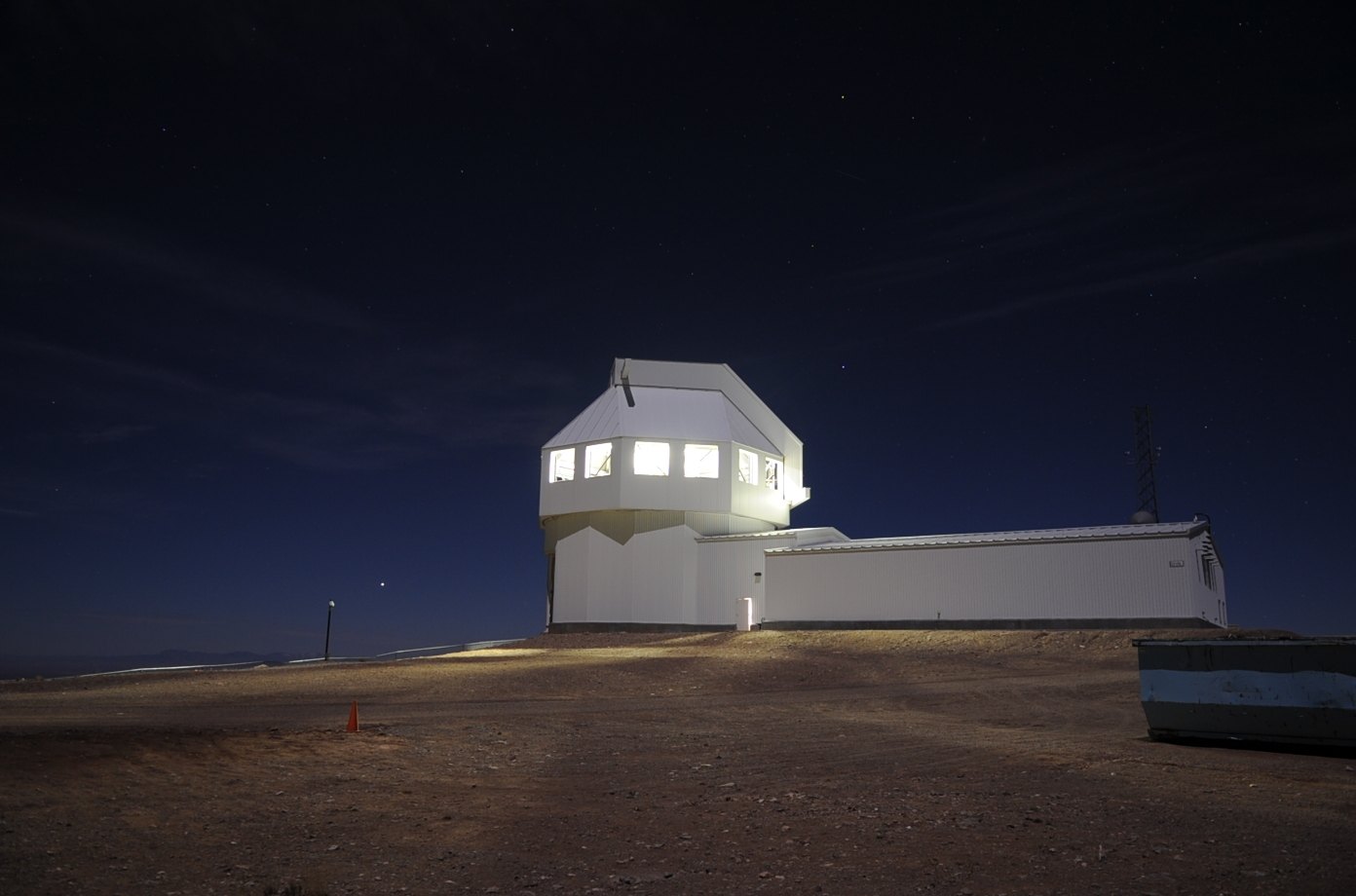
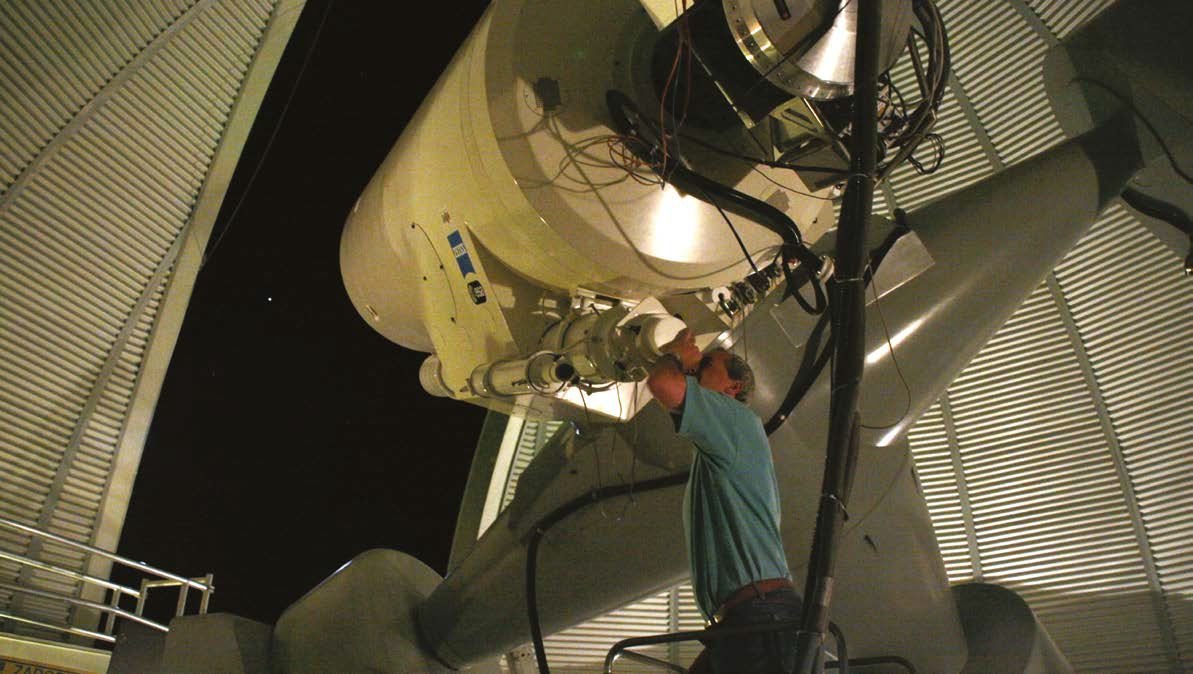
Optical telescopes see sunlight reflecting off objects. They are well suited to distant orbits such as geostationary orbit, but need dark skies and a sunlit target. After Intelsat 33e broke up in October 2024, the US Space Force tracked about 20 pieces while the commercial optical company ExoAnalytic Solutions counted 57 SpaceNews.
Each detection is a handful of measurements. Software fits them to an orbit, predicts where the object will be next, and checks the prediction on the next pass. Objects drift because of drag and other forces, so orbits must be refreshed constantly. At a typical impact speed of around 10 km/s NASA ODPO FAQ, small errors in position matter.
From sensor to catalog
The US Space Force maintains the main public catalog. Space-Track.org, run for its space surveillance squadrons, requires a free account and offers current orbits, more than 138 million historical element sets, re-entry predictions and public conjunction data messages, with limits of 30 requests a minute and 300 an hour Space-Track.
CelesTrak republishes that public data without an account, checks for updates once every two hours CelesTrak, and runs SOCRATES Plus, a screening service that three times a day checks active satellites against the whole catalog for approaches within 5 km over the next seven days CelesTrak SOCRATES. Public screening built on general orbit data is much less precise than the conjunction messages operators receive, so it is best treated as illustrative.
Counts differ depending on who is counting. On 15 September 2026, CelesTrak's boxscore listed 35,090 objects in orbit: 20,077 payloads and 15,013 pieces of debris and rocket bodies CelesTrak Boxscore. NASA counted 33,098 on 3 May 2026 NASA ODQN. ESA, which includes other surveillance networks, counts about 46,860 tracked objects ESA DISCOS.
Breakups show why multiple sensors matter. When a Long March 6A stage broke up in August 2024, US Space Command reported more than 300 trackable pieces while LeoLabs counted over 700 SpaceNews.
The catalog passes 100,000
For decades, objects were identified by five-digit catalog numbers in a text format called the two-line element set, or TLE. In July 2026 that ran out. CelesTrak reported: "We ran out of 5-digit catalog numbers with the addition of Saramago on 2026-07-11", and the catalog has reached 100691 CelesTrak. Because "TLE formats will not support objects with catalog numbers above 99999", users must switch to newer formats such as OMM, JSON or CSV CelesTrak. It is a small software problem that signals a big change in how crowded orbit has become.
What "10 cm" means
"10 cm" is often used as shorthand for the lower edge of routine tracking in low orbit. The real picture is fuzzier. Population numbers by size come from statistical models, not from counting objects one by one. ESA's MASTER-8 model estimates 68,450 objects larger than 10 cm, around 1.5 million between 1 and 10 cm, and about 230 million between 1 mm and 1 cm ESA MASTER-8. Even the modelled count above 10 cm is roughly double the public catalog, though the two figures are built differently and should not be compared too precisely.
Why 1-10 cm is the lethal gap
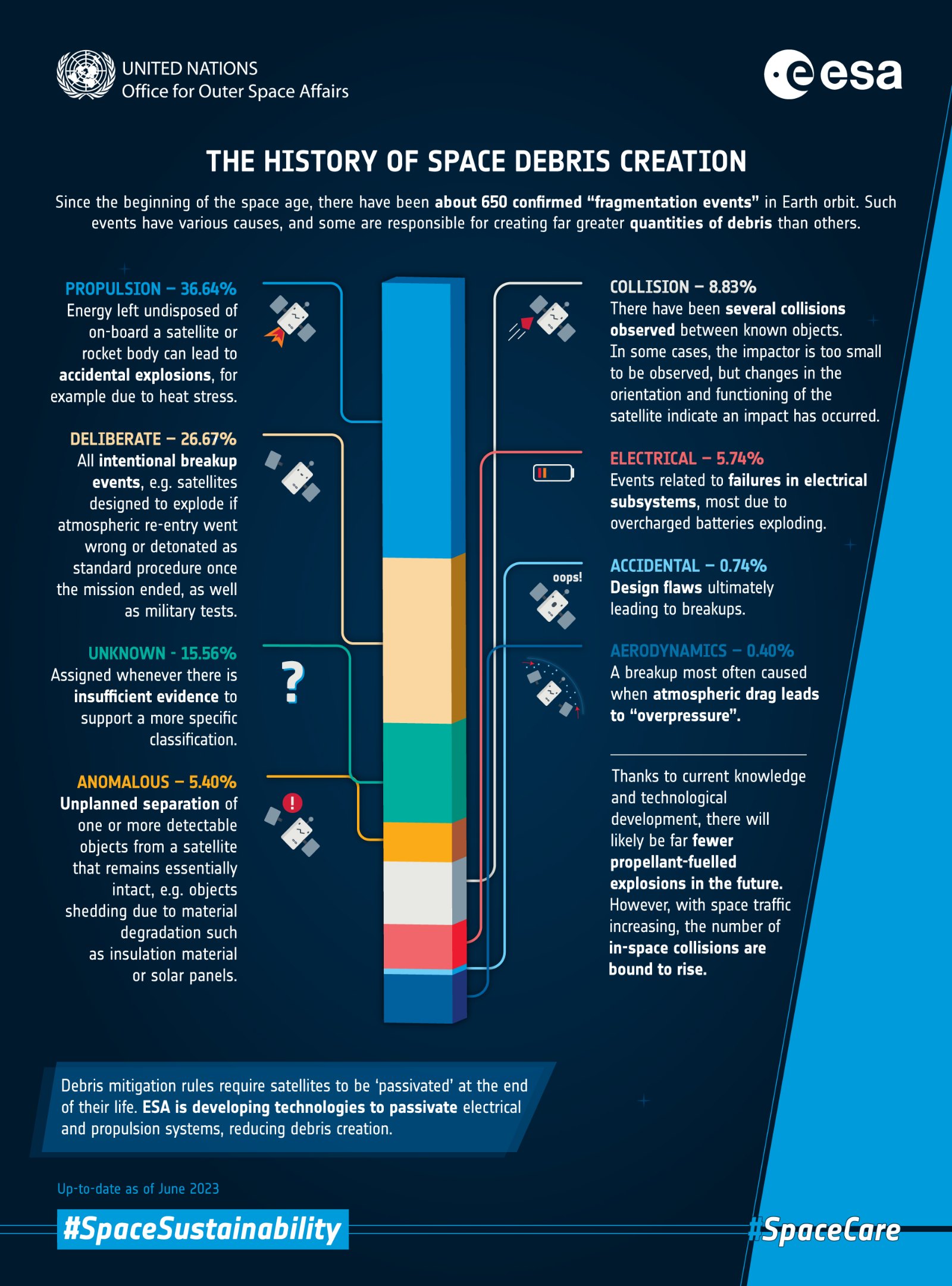
Many large objects are catalogued, so working satellites can dodge them. The smallest particles are vastly more numerous but carry far less energy each. The 1-10 cm band is the problem: at around 10 km/s, a centimetre-scale fragment carries enough energy to cripple a spacecraft, yet around 1.5 million of them are modelled ESA MASTER-8 and almost none can be avoided because almost none are tracked.
NASA's 2023 cost-benefit analysis reflects that: removing 100,000 small pieces yielded about $23M of first-year risk reduction, against about $3.5M for removing the top 50 large objects, in what it calls "order-of-magnitude estimates" NASA OTPS.
Planned: Better small-debris data is coming. The NASA-JAXA MACS millimetre-debris sensor is due to fly on HTV-X3 no earlier than September 2027 NASA ODQN.
Honest limits
- Public data is not operational data. Close-approach warnings built on public orbits are approximate.
- Coverage gaps. Radar and telescopes see only what passes over them, when conditions allow.
- Breakups outpace catalogs. Cataloguing new fragments takes time, and counts differ by sensor.
- Models, not censuses. Small-debris numbers are estimates and differ between models.
ClearOrbit's view
Tracking is the foundation every removal mission stands on, and it is improving fast: commercial radar, commercial telescopes and open data services now sit alongside government catalogs. That diversity is a strength, as the differing breakup counts show.
The biggest gap is the 1-10 cm band. We think closing it deserves the same urgency as removal itself, because an object nobody can see is an object nobody can avoid.
The ClearOrbit vision is an open, shared catalog that fuses government, commercial and academic data with published uncertainties, so every operator and every removal mission works from the same picture.
Reader mail
Have a better idea?Spotted something we got wrong?
We publish in public so the numbers can be checked. If a figure looks wrong, a source is missing, or you know something this piece should have said, send it over. One box, no sign-up.
Send an idea or correctionQuick question
If you could fund one thing first to cut collision risk in low Earth orbit, what would it be?
Anonymous. You will see how others answered after you vote.
Sources
- CelesTrak SATCAT Boxscore
- CelesTrak GP element sets
- CelesTrak GP data formats
- CelesTrak SOCRATES
- Space-Track.org documentation
- ESA DISCOS statistics
- ESA MASTER-8 by the numbers
- NASA ODQN vol. 30 iss. 1-2
- NASA ODPO FAQ
- LeoLabs
- SpaceNews: Chinese rocket stage breaks up into 700+ pieces
- SpaceNews: Intelsat 33e loses power in GEO
- NASA OTPS: Cost and Benefit Analysis of Orbital Debris Remediation (2023)