How it works · · 5 min read
Nets and Harpoons: Lessons From RemoveDEBRIS
A net and a harpoon both hit their targets in orbit in 2018-19. Here is how each works, why nets suit fragile tumbling debris better, and what the tests did not prove.
The problem class: grabbing what will not hold still
Most large debris was never meant to be touched again. Rocket stages and dead satellites often rotate, sometimes about more than one axis, and their surfaces are covered in thin panels, insulation blankets, antennas and solar arrays. A rigid clamp needs a strong, predictable feature to grab at the right moment. Nets and harpoons are attempts to avoid that precision problem: instead of matching the target's motion exactly, you reach it from a distance and connect a line.
Once connected, a tether lets the chaser tow the object down. That combination, flexible capture plus a towline, is attractive because it could work on objects of odd shapes and unknown condition.
The physics in plain language
A net is fired from a canister, often with small weights at its corners that carry the mesh outward as it flies. When it reaches the target, the weights keep travelling, so the net wraps around the object and a drawstring or closure mechanism cinches it shut. Crucially, the net does not need to hit a specific spot. It spreads the capture force over a large area, and because it is flexible, a slowly tumbling target can keep rotating inside the net for a while without tearing anything.
A harpoon does the opposite. It concentrates force on one point. A spike fired at high speed penetrates the skin of the target and deploys barbs to hold. A tether then connects it to the chaser. It works at range and does not care much about the target's shape, but it needs a surface solid enough to hold the barbs, and it punches a hole through whatever it hits.
That difference is why nets are generally better suited to fragile or unknown targets. A harpoon striking a thin panel may pass through, bounce off, or break off a fragment, and fragments are exactly what removal missions exist to prevent. Harpoons carry a recognised "risk of creating fragments" Wikipedia: RemoveDEBRIS. A net that misses simply drifts away as one more object.
Tumble matters for both. Once a net closes around a rotating object, or a harpoon line goes taut, the target's spin is transferred into the tether and the chaser. A long flexible line can wrap, snag or whip. Towing a tumbling mass down safely means damping that motion first, which neither method does on its own. Public, well-sourced tumble-rate measurements for the largest derelicts are scarce, so rotation is best treated as the central unknown rather than a known number.
What has flown
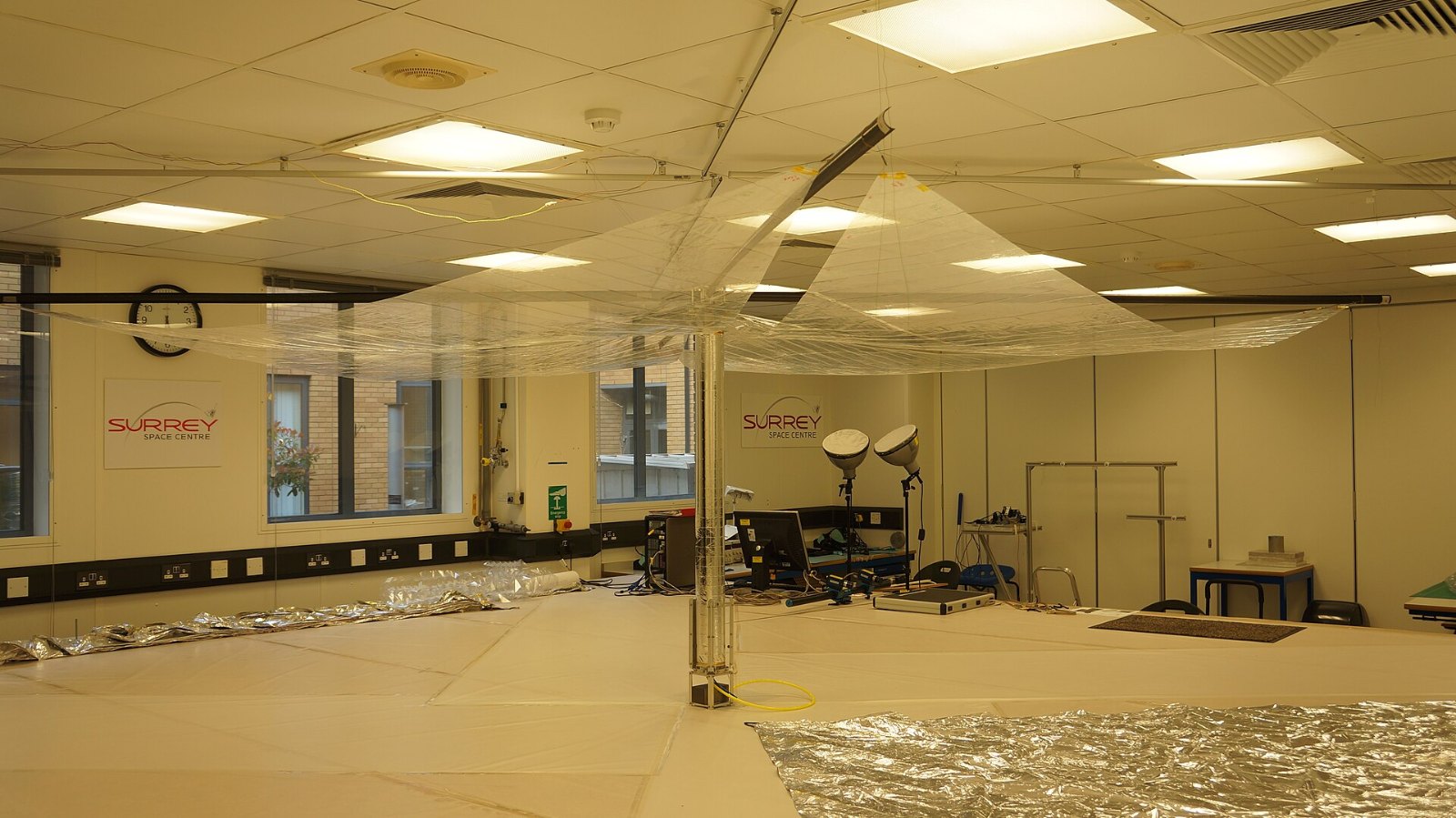
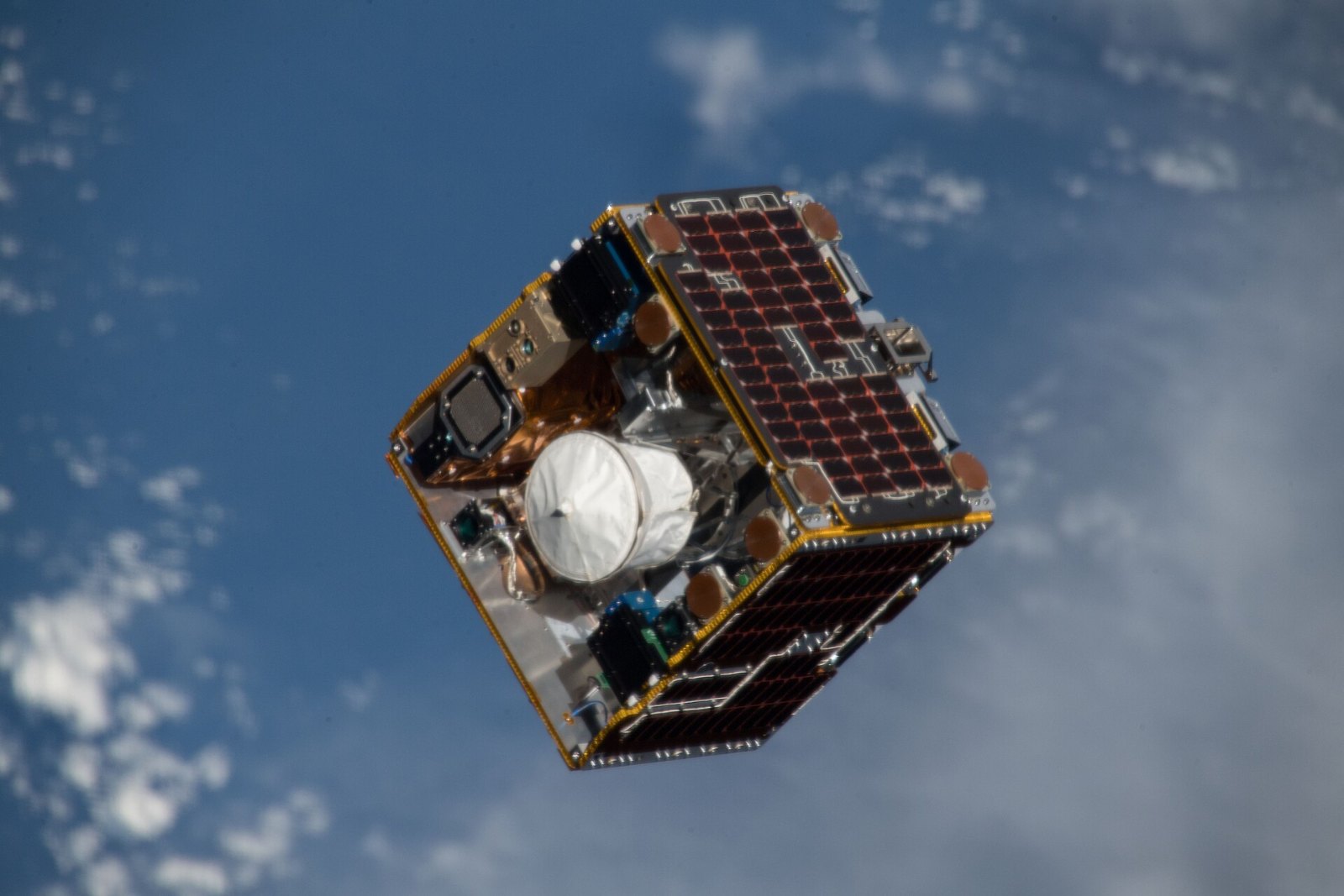
Flown: RemoveDEBRIS, led by the Surrey Space Centre with Airbus and SSTL and funded under the EU's FP7 programme, is still the most complete in-orbit test of these ideas Surrey Space Centre. The spacecraft was released from the ISS on 20 June 2018 and ran four experiments against targets it carried with it:
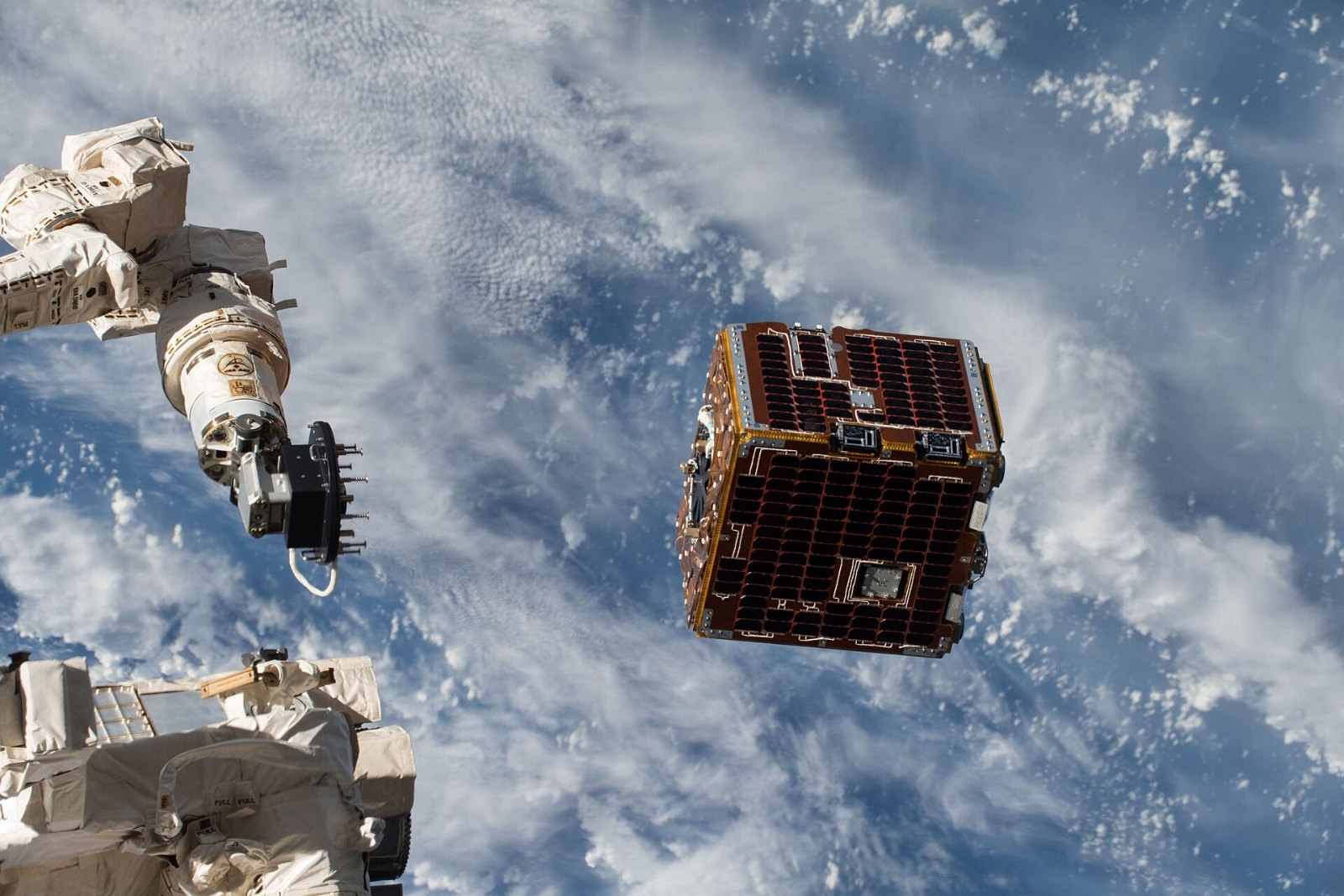
- 16 September 2018, net: the net captured a target that the spacecraft had released and inflated, at short range Wikipedia.
- 28 October 2018, vision-based navigation: the spacecraft tracked a released target, the sensing step any real capture needs Surrey Space Centre.
- 8 February 2019, harpoon: the harpoon struck a target panel held out on a 1.5 m boom, at 20 m/s Wikipedia.
- 4 March 2019, drag sail: the sail failed to deploy Surrey Space Centre.
The spacecraft re-entered on 4 December 2021 Wikipedia.
It is important to be precise about what these tests showed. The net target was released by the spacecraft itself and was close by. The harpoon target never left its boom. Neither was a real, uncooperative piece of debris, and nothing was towed out of orbit.
Flown (inside the ISS): Kall Morris Inc's REACCH mechanism, which wraps a target with multiple compliant arms, sits somewhere between a net and a rigid grapple. It captured free-floating dummy targets on Astrobee robots inside the station in 2024-25 Payload.
What is planned and proposed
Proposed: No funded mission currently plans to use a net or harpoon to remove a real piece of debris. The first capture attempts scheduled for 2027-28 use robotic arms and magnetic docking plates instead. Nets and harpoons remain proposed options, most often discussed for irregular targets where no grapple point exists.
Honest failure modes
- Missing, or wrapping the wrong thing. A net that snags an antenna rather than the main body may not hold.
- Tether dynamics. Towing a spinning object on a flexible line can make the chaser's own control unstable.
- Harpoon fragmentation. Punching through aged, unknown material could release pieces.
- Scale. RemoveDEBRIS captured small targets at short range. A multi-tonne stage is a very different load.
- The environment itself. Even waiting targets get hit: ClearSpace-1's original target shed new objects in 2023, probably after an impact by something untracked ESA. At an average impact speed of around 10 km/s NASA ODPO FAQ, aging targets only get harder to handle.
Cost and readiness
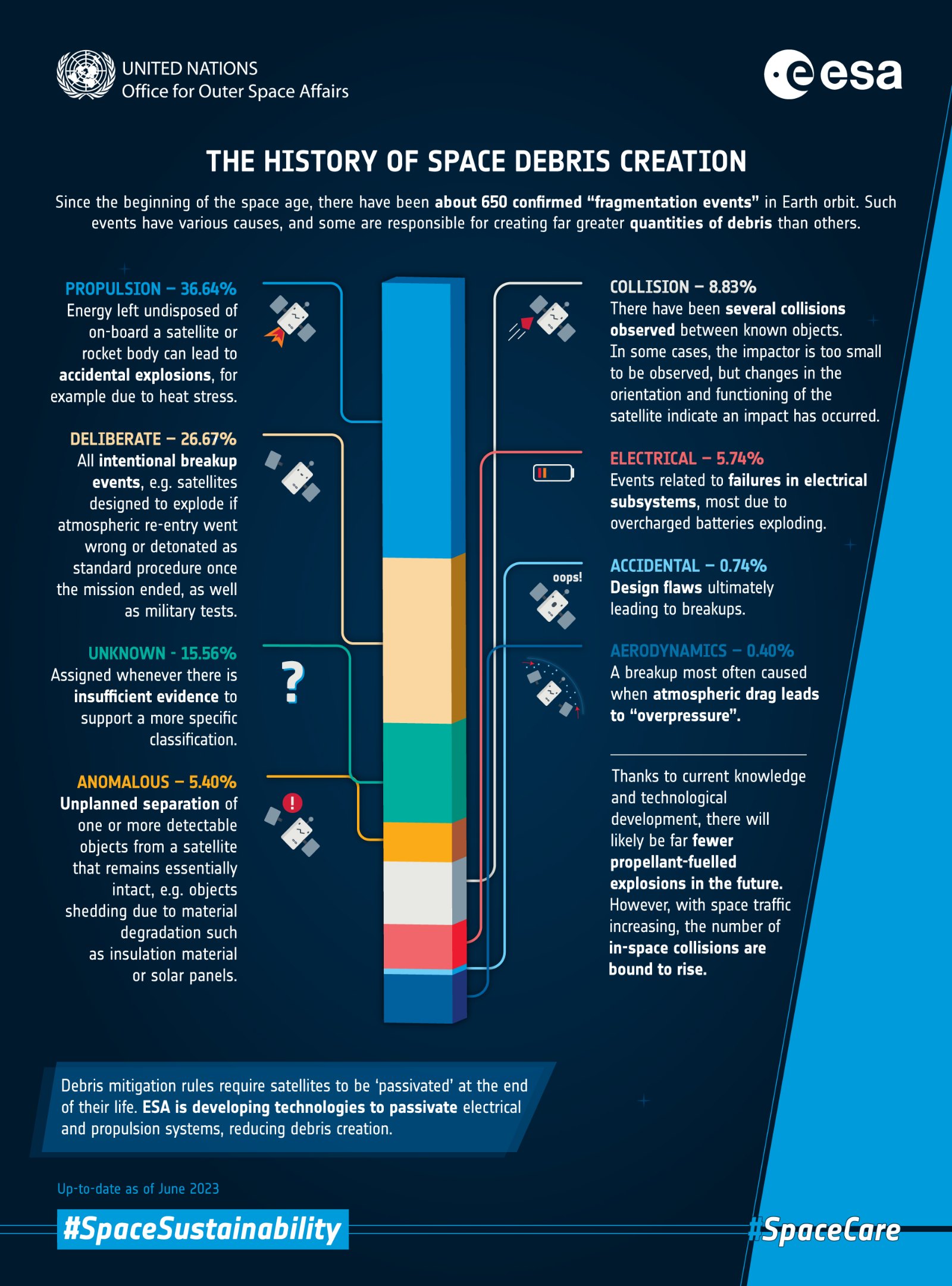
A reasonable readiness assessment puts nets at about TRL 6 and harpoons at TRL 5-6, both based on the RemoveDEBRIS flight Wikipedia. That is real progress, but not operational maturity. There are no published per-removal costs for either method because no operational mission has been bought. With more than 660 fragmentation events already on record ESA DISCOS, any technique that risks adding to that list faces a high bar.
ClearOrbit's view
RemoveDEBRIS was a genuine milestone and a bargain in lessons learned: in one small mission it showed that a net can close around a target in orbit, that a harpoon can hit where it is aimed, and that deployables can fail. That last result is as valuable as the first two.
We see nets as a serious candidate for the awkward cases, such as irregular or damaged objects with no safe grapple point. We are more cautious about harpoons for anything fragile, because a removal method that can create fragments has to prove it will not. The ClearOrbit vision is a toolkit rather than a single silver bullet, where the capture method is chosen after close inspection of each target.
The next step should be a free-flying net capture of a realistic, tumbling target at larger scale, followed by a controlled tow and deorbit. Until that flies, nets and harpoons remain promising, proven in part, and unproven where it matters most.
Reader mail
Have a better idea?Spotted something we got wrong?
We publish in public so the numbers can be checked. If a figure looks wrong, a source is missing, or you know something this piece should have said, send it over. One box, no sign-up.
Send an idea or correctionQuick question
If you could fund one thing first to cut collision risk in low Earth orbit, what would it be?
Anonymous. You will see how others answered after you vote.