How it works · · 6 min read
How Robotic Arms Could Grab a Tumbling Rocket Stage
Grappling a dead, uncooperative rocket stage with a robotic arm is the flagship method of debris removal. Nobody has done it yet. Here is how it works and who is about to try.
The problem class: big, dead and not built to be caught
The objects that worry analysts most are large intact derelicts: spent upper stages and dead satellites in long-lived orbits, where one collision would create thousands of fragments. A 2021 composite ranking of the most concerning derelicts in low Earth orbit weighted exactly those factors, mass, encounter rates, orbital lifetime and proximity to operational satellites, and its top entries are rocket bodies weighing up to 9,000 kg McKnight et al. (2021).
None of them were designed to be serviced: no handles, no docking targets, no radios. To remove one with a robotic arm, a servicer has to find it, match its orbit, study its motion, move in close, grab a structure strong enough to hold, stop the combined stack from spinning, and then fire its own engines to bring both down. Nobody has yet done all of these steps on real debris.
The physics in plain language
In orbit, "catching" something is mostly about matching. Two objects in almost the same orbit drift slowly relative to each other even though both travel at 7-8 km/s NASA ODPO FAQ. The servicer closes the gap in stages, holding at safe points to measure.
The hard part is rotation. A tumbling stage presents a moving target: its nozzle or adapter ring sweeps around, and the arm must meet that feature at nearly zero relative speed. Once the grapple closes, the stage's angular momentum does not disappear. It flows into the servicer, which must absorb and cancel it with its own attitude control. Grab a weak structure and it breaks, possibly creating debris.
That is why arm capture missions target structural features such as an engine nozzle or a launch adapter ring, which were built to carry heavy loads during launch Astroscale ADRAS-J2.
What has flown
Flown: Astroscale's ADRAS-J, the first phase of JAXA's commercial debris removal programme, launched in February 2024 and approached a real, uncooperative H-IIA upper stage roughly 11 m long and about 3 tonnes Astroscale. It came within 15 m of the stage and performed fly-arounds to observe its condition and motion JAXA. It did not attempt capture, and completed its own deorbit on 25 March 2026 Astroscale.
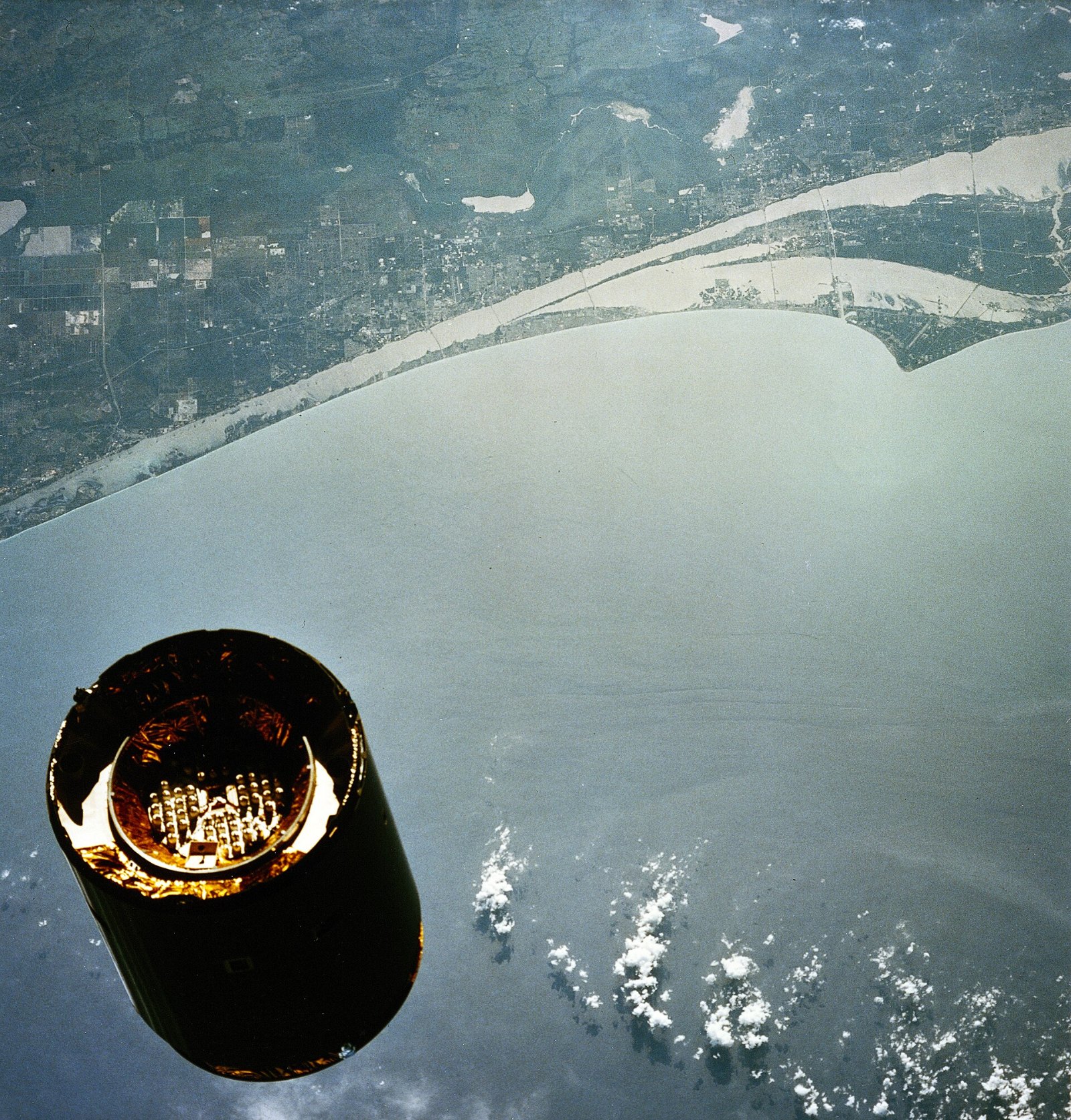
Flown: Docking with cooperative satellites is already operational in geostationary orbit. Northrop Grumman's MEV-1 docked to Intelsat 901 in February 2020 and undocked on 9 April 2025, leaving it in a graveyard orbit Northrop Grumman. Those clients were stable and controlled, a very different job.
Flown (in a lab setting): Kall Morris Inc tested its four-arm REACCH capture mechanism inside the ISS on Astrobee robots, capturing free-floating dummy targets in 2024-25 Payload.
Flown: Northrop Grumman's Mission Robotic Vehicle, with two robotic arms developed with DARPA and NRL, launched on 22 July 2026. Its first job is installing a propulsion pod on Optus D3, targeted for late 2027 Northrop Grumman.
What is planned
Planned: ADRAS-J2 is the follow-on: robotic-arm capture and deorbit of the same class of H-IIA stage. Astroscale Japan won the roughly ¥13.2 billion Phase II contract in August 2024 Astroscale and on 1 September 2026 announced a launch on Isar Aerospace's Spectrum in Japanese fiscal year 2027, which runs April 2027 to March 2028. The company says the mission aims to "become the world's first mission to capture and remove an existing piece of large orbital debris" Astroscale.
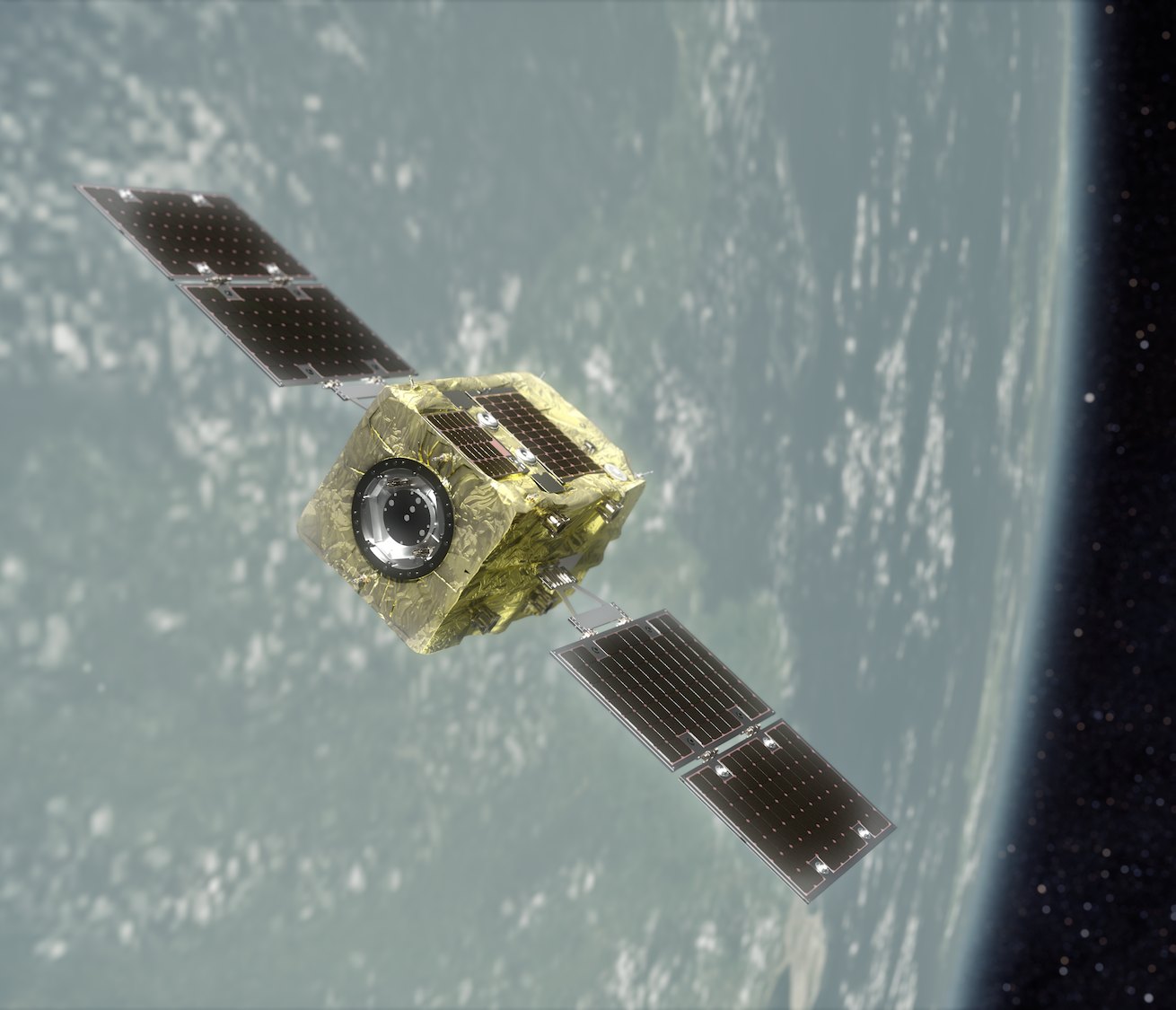
Planned: ESA's ClearSpace-1, under an €86M contract signed in November 2020, will capture and deorbit a small satellite Wikipedia. Its story shows how unforgiving this field is. The original target, a VESPA payload adapter, was apparently struck by an untracked object in August 2023, releasing new debris nearby ESA. The mission switched to ESA's PROBA-1 satellite in April 2024 ClearSpace, and launch has slipped to around 2028 on Vega-C, with some reporting pointing later Wikipedia.
Honest failure modes
- Unknown target state. Decades in orbit can weaken structures, and tumble can change over time. Inspection first, as ADRAS-J did, reduces but does not remove this risk.
- Grapple loads. A bad contact with a rotating mass can damage the servicer or the target.
- Creating the debris you came to remove. Knocking off a fragment, or colliding during approach, would be the worst outcome, which is why approaches proceed in slow, abortable steps.
- Schedule and target risk. ClearSpace-1 lost its first target to debris before launching, and has slipped several times Wikipedia.
Cost and readiness
Arm capture of uncooperative debris sits around TRL 6-7 by a reasonable assessment of the flight record, with the real test coming in 2027-28 Astroscale ADRAS-J2 mission page. Today's contract values put first-of-a-kind removals at roughly tens of millions to about a hundred million per object; that range is a synthesis from the ClearSpace-1 and ADRAS-J2 contracts, not a published estimate. NASA's cost-benefit study found that controlled re-entry of large debris "might provide net benefits within three decades" if servicers become reusable, and otherwise costs too much to be relevant within its time window NASA OTPS.
ClearOrbit's view
Robotic capture is the only approach that can pull a multi-tonne derelict out of the sky on purpose. The next two years will tell us whether it works on real debris. We want ADRAS-J2 and ClearSpace-1 to succeed, and their lessons shared widely.
The economics will not work one stage at a time. The ClearOrbit vision is a reusable servicer that captures a stage, hands it to a disposable deorbit kit, and moves on to the next target in the plane. The dense clusters of identical Zenit-2 stages near 830-850 km and 71 degrees McKnight et al. (2021) are exactly the kind of target set where that model could pay off.
What should happen next: fund inspection of the top-ranked derelicts now, standardise how capture data is published, and write multi-object removal into procurement.
Reader mail
Have a better idea?Spotted something we got wrong?
We publish in public so the numbers can be checked. If a figure looks wrong, a source is missing, or you know something this piece should have said, send it over. One box, no sign-up.
Send an idea or correctionQuick question
If you could fund one thing first to cut collision risk in low Earth orbit, what would it be?
Anonymous. You will see how others answered after you vote.
Sources
- Astroscale: ADRAS-J completes operations, begins deorbit
- JAXA press release on ADRAS-J (July 2024)
- Astroscale Japan secures contract for Phase II of JAXA's Commercial Removal of Debris Demonstration
- Astroscale Japan selects Isar Aerospace to launch ADRAS-J2
- Astroscale: ADRAS-J2 mission page
- ClearSpace: ClearSpace-1 mission changes
- ESA: Objects detected in the vicinity of ClearSpace-1 target
- Wikipedia: ClearSpace-1
- Northrop Grumman: Mission Robotic Vehicle launches
- Northrop Grumman: first-ever undocking between two commercial spacecraft in GEO
- Payload: Kall Morris Inc shares details of ISS demo
- NASA OTPS: Cost and Benefit Analysis of Orbital Debris Remediation (2023)
- NASA ODPO: Frequently Asked Questions
- McKnight et al. (2021), 50 statistically-most-concerning derelict objects in LEO