Scenario · · 6 min read
The 850-kilometre cascade
What happens, hour by hour and then century by century, if two nine-tonne Zenit upper stages collide in the most crowded derelict band in low Earth orbit.
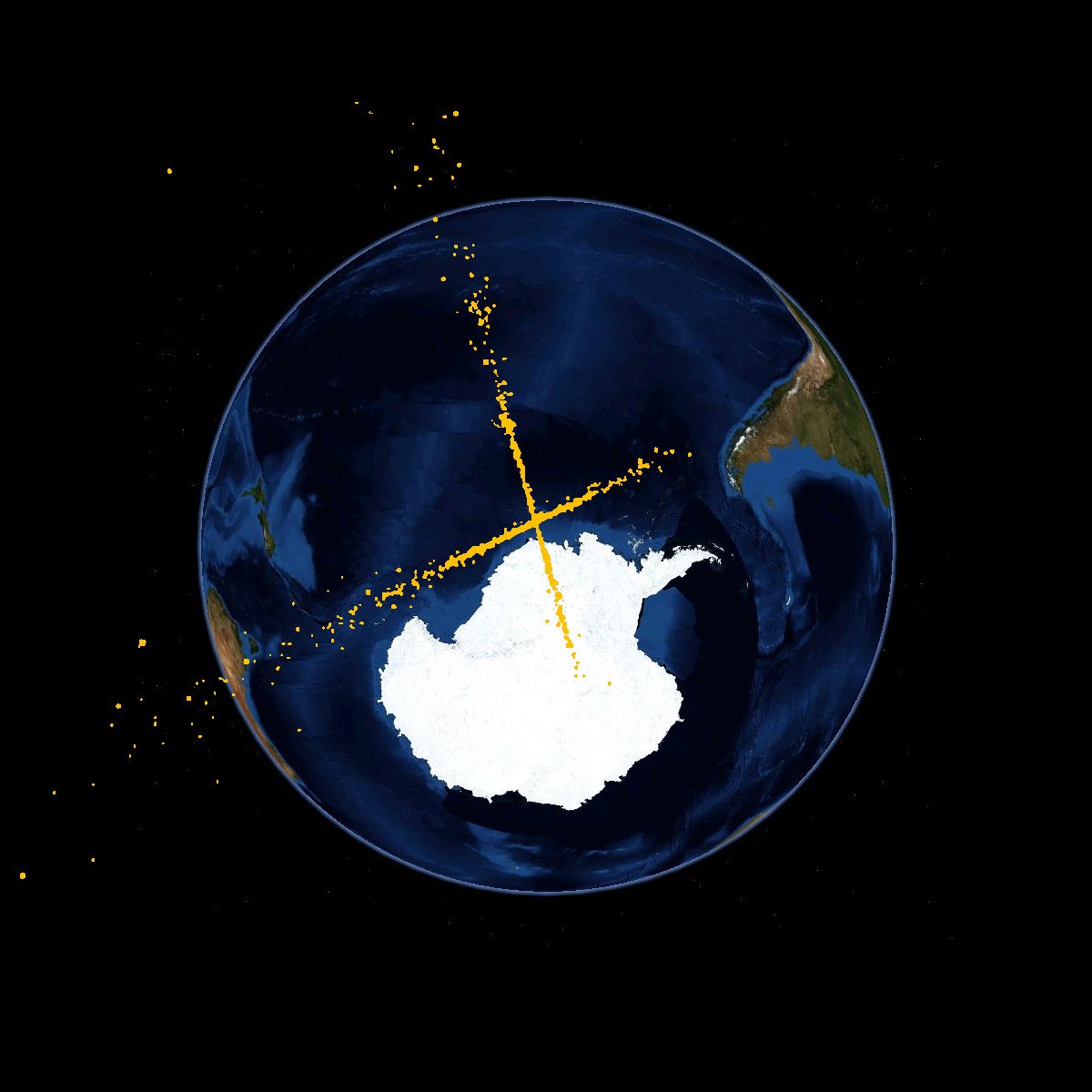
In this scenario, nothing is launched, nothing is tested, and nobody is at fault. Two rocket stages that have been dead for decades simply arrive at the same point at the same moment. That is the uncomfortable thing about the band around 850 kilometres: the worst accident it can produce needs no human decision at all.
The setting
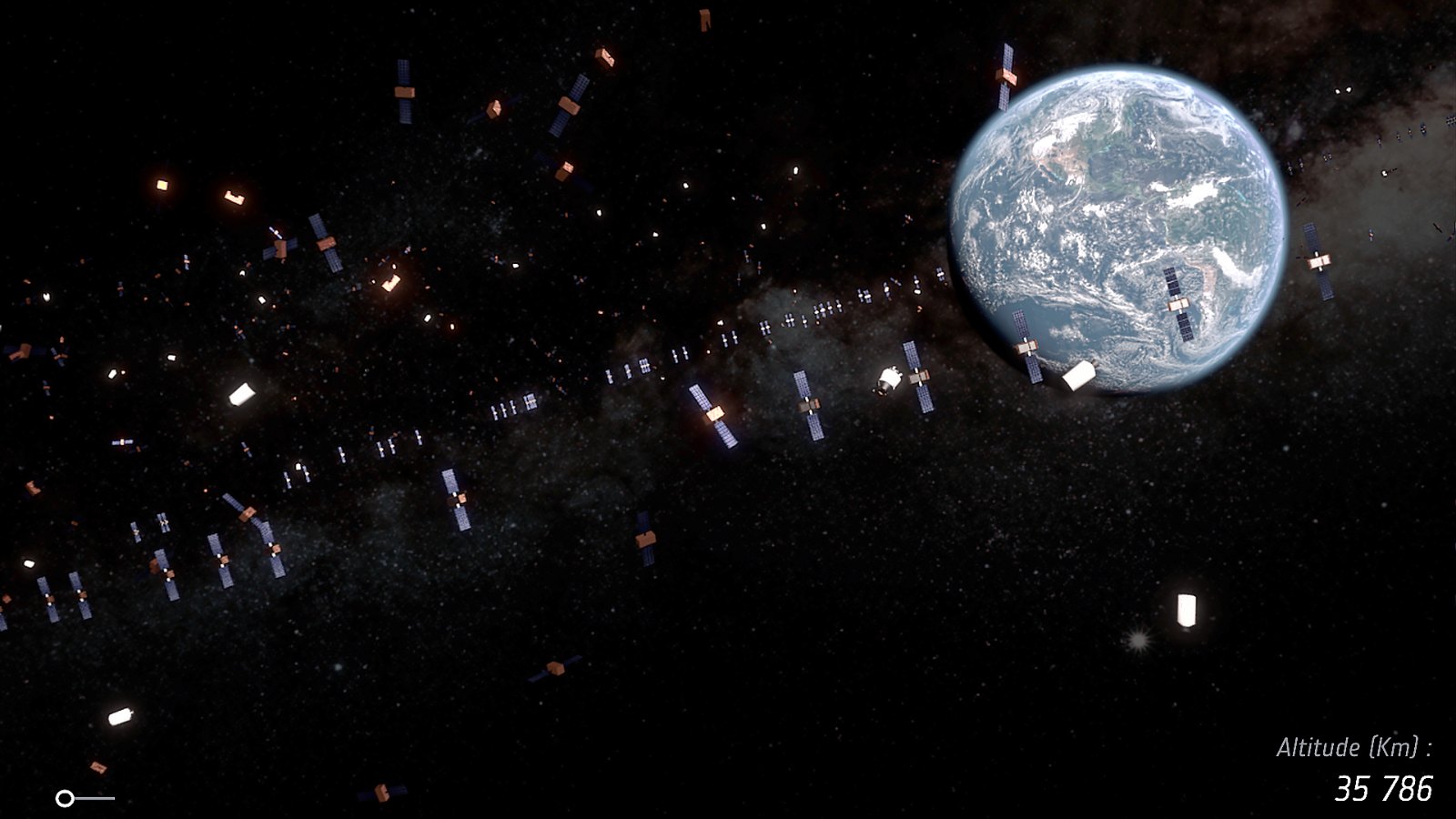
When eleven international teams merged their lists of the most dangerous derelict objects in low Earth orbit, the top twenty were all the same kind of object: the SL-16, the second stage of the Soviet and Russian Zenit-2 rocket, about 9,000 kg each McKnight et al.. Most of them sit in a tight cluster, with perigees and apogees between roughly 823 and 863 km and inclinations of 71.0 degrees McKnight et al.. The ranking weighed mass, encounter rates, orbital lifetime and proximity to working satellites McKnight et al.. Several of the Zenit payloads, such as Cosmos 2322, even share orbits with their own spent stages McKnight et al..
Because the stages share an inclination but not an orbital plane, their paths cross at an angle. The typical impact speed in low Earth orbit is about 10 km/s NASA ODPO FAQ. In this scenario we assume two of the ranked stages meet near 845 km, a little lower than the 790 km where Iridium 33 and Cosmos 2251 collided in 2009 NASA ODQN.
Hour 0 to hour 24: the flash nobody sees
- T+0. Eighteen tonnes of aluminium and steel collide. No telescope is watching and no alarm sounds. The first sign is that tracking radars fail to match two well-known objects to their predicted positions.
- T+2 h. Surveillance sites report multiple uncorrelated returns along both original orbits. Analysts suspect a breakup but cannot yet tell a collision from an explosion.
- T+6 h. A sheet of fragments has begun to spread around the orbit. Pieces thrown forward climb into higher, elliptical orbits. Pieces thrown backward drop their perigees toward lower altitudes.
- T+12 h. The debris is being handed new catalogue numbers. The public catalogue ran out of five-digit numbers in July 2026 CelesTrak, and objects numbered above 99999 cannot be expressed in the legacy TLE format CelesTrak GP documentation. Every new fragment in this scenario is invisible to any operator still using old software.
- T+24 h. The first public screening runs pick up the new objects. CelesTrak's SOCRATES Plus runs three times a day and reports every approach within 5 km over the next seven days CelesTrak SOCRATES. Its conjunction tables start to fill with objects that have no history and poorly known orbits.
How big is the cloud? History gives us bounds rather than a number. The 900 kg Cosmos 2251 alone produced 1,603 catalogued fragments by 2013 NASA NTRS. The 960 kg Fengyun-1C, destroyed at 845-865 km in 2007, produced more than 1,200 catalogued fragments in two months and an estimated 35,000 pieces of 1 cm or larger NASA ODQN. The mass in this scenario is nearly twenty times either of those. We do not claim a precise count. It is reasonable to expect a cloud measured in thousands of trackable pieces and far more lethal fragments too small to track.
Day 2 to week 6: the alert storm
- Day 3. Operators at nearby altitudes start receiving conjunction warnings they cannot act on well, because the fragment orbits have large uncertainty. A warning with a wide error ellipse leaves an operator two bad choices: burn fuel for a threat that may not be real, or ignore one that is.
- Week 2. The cloud has spread into a shell. Differences in orbital period pull fragments ahead of and behind one another, so the debris no longer sits in one clump.
- Week 6. Catalogue growth slows as radars finish sorting the larger pieces. After the 2009 collision, 823 pieces had been catalogued by the end of the following March NASA ODQN. In this scenario the count at the same point is several times higher.
The objects at most risk are those that share the band. Weather and Earth-observation satellites use these altitudes, as Fengyun-1C did NASA ODQN, and the nearby derelicts are exactly the ones on the McKnight list: ENVISAT at 764-766 km, ADEOS at 793 km, and sixteen more ranked SL-16 stages at 71 degrees McKnight et al.. Fragments with lowered perigees also dip into the busier shells below, where the megaconstellations fly, so a collision at 845 km is not only an 845 km problem.
Year 1 to year 10: the second collision
Fragments do not stay put, but at this altitude they do not leave either. The atmosphere at 850 km is thin enough that natural decay barely acts. For the first decade the cloud is almost as large as on day one.
The real danger now is not any single fragment striking a working satellite. It is a fragment hitting one of the other SL-16 stages still in the band. Each of those is another 9,000 kg of fuel for a cascade McKnight et al.. This is the mechanism Kessler described in 1978 Kessler & Cour-Palais, and ESA's 2026 report now speaks of collisions in LEO "skyrocketing in a runaway effect" ESA Space Environment Report 2026. Even before our scenario, ESA's health index for the business-as-usual future stood at about 50 times its first sustainability threshold ESA Space Environment Report 2026.
Decade to centuries: the long tail
Rough lifetimes for circular orbits run to about 100 years at 700 km and about 1,000 years at 900 km Space Academy. NASA puts decay at around 800 km as "often measured in centuries" NASA ODPO FAQ. The Fengyun-1C cloud is a live example: 3,076 of its 3,378 catalogued fragments were still in orbit six years after the test NASA NTRS.
The light, flat fragments with low mass-to-area ratios come down first, over decades. The dense chunks of engine and tank stay. In this scenario, the people who would have watched the collision are not yet born when the last of its larger fragments re-enter.
What could have changed the outcome
Two ideas could have prevented this scenario. Neither is operating today.
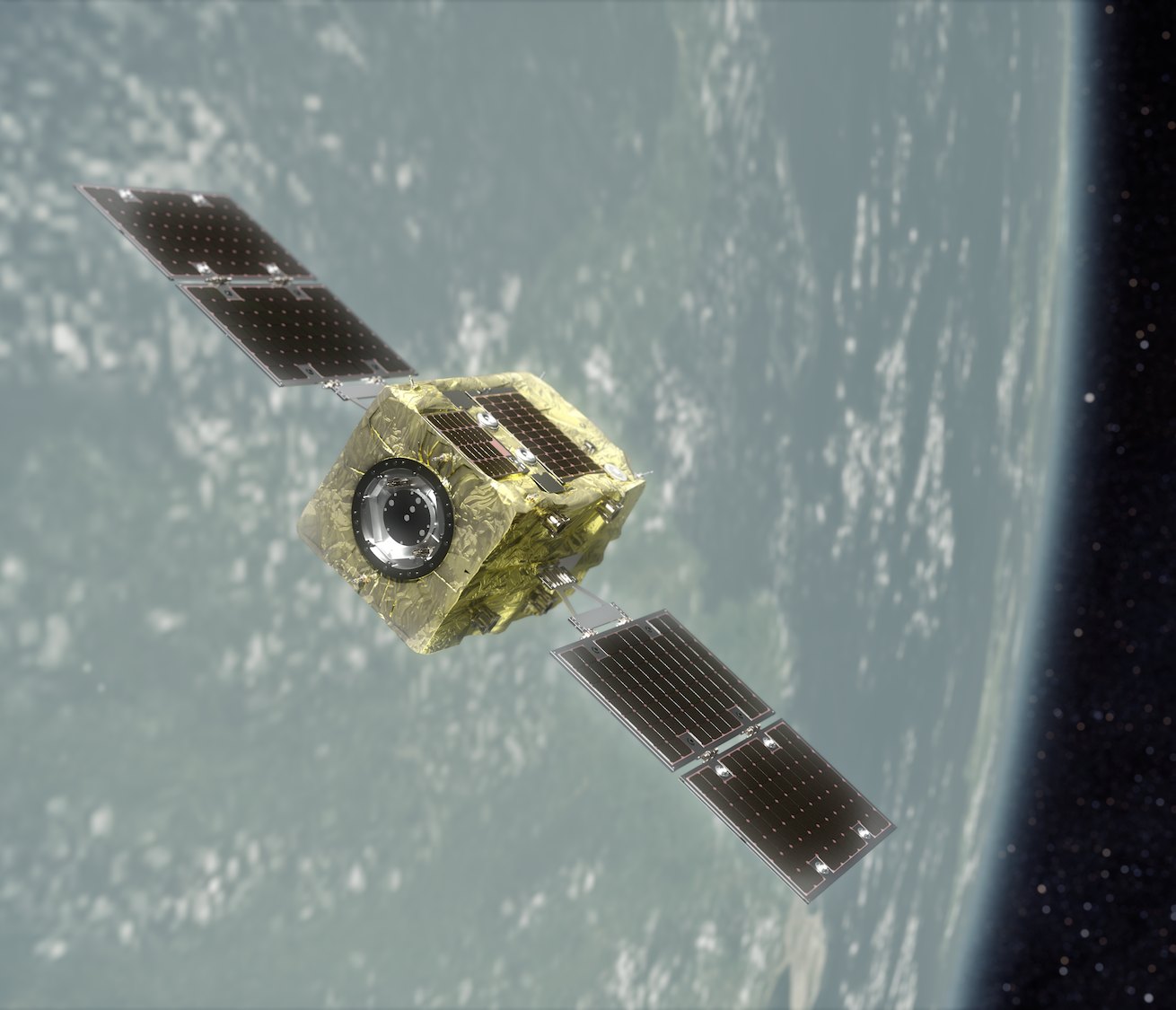
The first is removal before the collision. NASA's modelling found that removing about five high-mass, high-risk objects per year could keep the LEO population stable, under older assumptions of high disposal compliance NASA NTRS. The SL-16 cluster is the obvious first target list. No mission to remove one has been funded, so SL-16 removal is still Proposed at best.
The second is last-minute prevention. Just-in-time collision avoidance, a Proposed concept from CNES and CT Ingénierie, would nudge one of two derelicts hours before a predicted collision. One study estimated that 3 g of particles released 12 hours ahead could shift a 1.4-tonne object by about 1 km JCA paper. Scaling that to a 9-tonne stage is untested.
ClearOrbit's view
We think the 850 km band is the single clearest case for active debris removal on Earth's doorstep. The targets are known by catalogue number and they have been ranked, weighed and measured. The consequences of doing nothing are counted in centuries. There is no mystery left to research here, only a decision to take.
Our ClearOrbit vision is a standing campaign against the SL-16 cluster: the ranked stages removed or moved first, paired with a just-in-time nudging capability for the conjunctions that cannot wait for a removal slot. We are building the roadmap and the coalition to make that happen, including the international agreements that removing a Russian-owned stage will require.
The next step is not technical. Owners, insurers, space agencies and operators need to treat these twenty objects as shared infrastructure risk rather than someone else's legacy. A 9-tonne stage costs nothing to ignore until the day it costs everyone.
Reader mail
Have a better idea?Spotted something we got wrong?
We publish in public so the numbers can be checked. If a figure looks wrong, a source is missing, or you know something this piece should have said, send it over. One box, no sign-up.
Send an idea or correctionQuick question
If you could fund one thing first to cut collision risk in low Earth orbit, what would it be?
Anonymous. You will see how others answered after you vote.
Sources
- McKnight et al., Identifying the 50 statistically-most-concerning derelict objects in LEO (open PDF)
- NASA ODQN vol. 13 iss. 2 (Iridium 33 / Cosmos 2251 collision)
- NASA ODQN vol. 11 iss. 2 (Fengyun-1C)
- NASA NTRS 20150003820 (fragment counts, 2013)
- NASA ODPO FAQ
- CelesTrak SOCRATES Plus
- CelesTrak GP data formats documentation
- CelesTrak NORAD elements
- Space Academy: orbital lifetimes
- Kessler & Cour-Palais (1978), full text
- ESA Space Environment Report 2026
- Just-in-time collision avoidance (CNES / CT Ingénierie, 2019)
- NASA ODPO: removal of about five objects per year (Liou)