Scenario · · 6 min read
The month the warnings stopped: a hypothetical blackout in public conjunction data
In this scenario the public conjunction feed goes dark for thirty days. The sensors keep working, the screening keeps running, and the people who cannot pay stop being told.
In this scenario nothing breaks in orbit. No satellite fails, no fragmentation happens, no radar goes offline. What stops is the distribution of a file. On a Tuesday morning the public conjunction data message service that most of the world's satellite operators depend on is suspended — a legal review, a redistribution dispute, a contracting gap, the reason barely matters — and for thirty days the warnings do not come out. The sky is exactly as crowded as it was on Monday. The difference is who knows where the crowding is.
This is a hypothetical, but the shape of it is not invented. The screening that underpins civil collision avoidance in low Earth orbit is performed by the US Space Force and published through Space-Track.org, and ClearOrbit's own close-approach pages have been frozen on an 8 October screening file for thirty-two days while a redistribution question about that same class of data is settled. Our gap is a publishing decision of ours and affects nobody but our readers. The scenario asks what the same month would look like if it happened to everyone at once.
Day one: the people who do not notice
The largest operator in orbit barely flinches, because it is not really a consumer of the public feed. In its semi-annual report to the FCC, filed on 1 July 2026 for the six months to 31 May, SpaceX records 65,137 propulsive manoeuvres by its Gen 1 satellites and 142,015 by Gen 2 — about 36 and 46 per satellite per year — and says its satellites manoeuvre when the probability of collision exceeds 3 in 10,000,000, a threshold more than two orders of magnitude tighter than the industry-standard 1 in 10,000 (SpaceX to FCC, 1 July 2026). A fleet that screens against its own ephemerides and those exchanged directly with other large operators keeps doing so on day one of the blackout, and on day thirty.
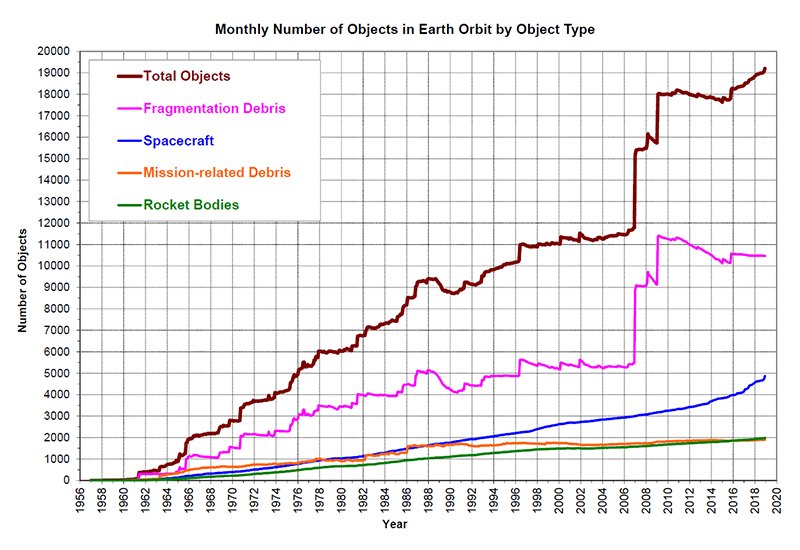
Everybody else divides into two groups. The operators who have bought a commercial space-situational-awareness service carry on with a different vendor's warnings and a different error budget. The operators who have not — universities, small Earth-observation companies, national agencies with one spacecraft, cubesat teams of the kind that flew HYPSO-1 — are now flying on a catalog without a screening service attached to it. They can still download element sets. What they have lost is somebody else's dedicated computation of which of the 33,941 objects on orbit is coming at them and when (GCAT).
Day three: doing it yourself, badly
In this scenario a dozen small teams do the obvious thing and write their own screening. It is not hard to propagate public element sets and look for close passes; we do exactly that, every day, to build our own event pages. It is very hard to do it well. Public two-line elements are a fitted summary, not a measurement, and their accuracy degrades with age in ways that matter precisely at the distances that trigger a manoeuvre — which is why the uncertainty, not the miss distance, is the quantity that decides anything (how a close-approach warning becomes a manoeuvre, how old a catalogued orbit is).
The predictable failure mode is not that the home-made screening misses encounters. It is that it finds far too many. Our last published screening file, from 8 October, contained 174,512 screened pairs, of which 7,834 passed within a kilometre and 111 within 100 metres. Without covariance data, a team with a thruster and a conscience either manoeuvres on dozens of alerts it should have ignored — spending propellant, breaking its own ground track, and moving into orbits that were themselves never screened — or sets its threshold so loose that the alerts stop meaning anything. Both happen in week one.
Day nine: the objects that cannot be told anything
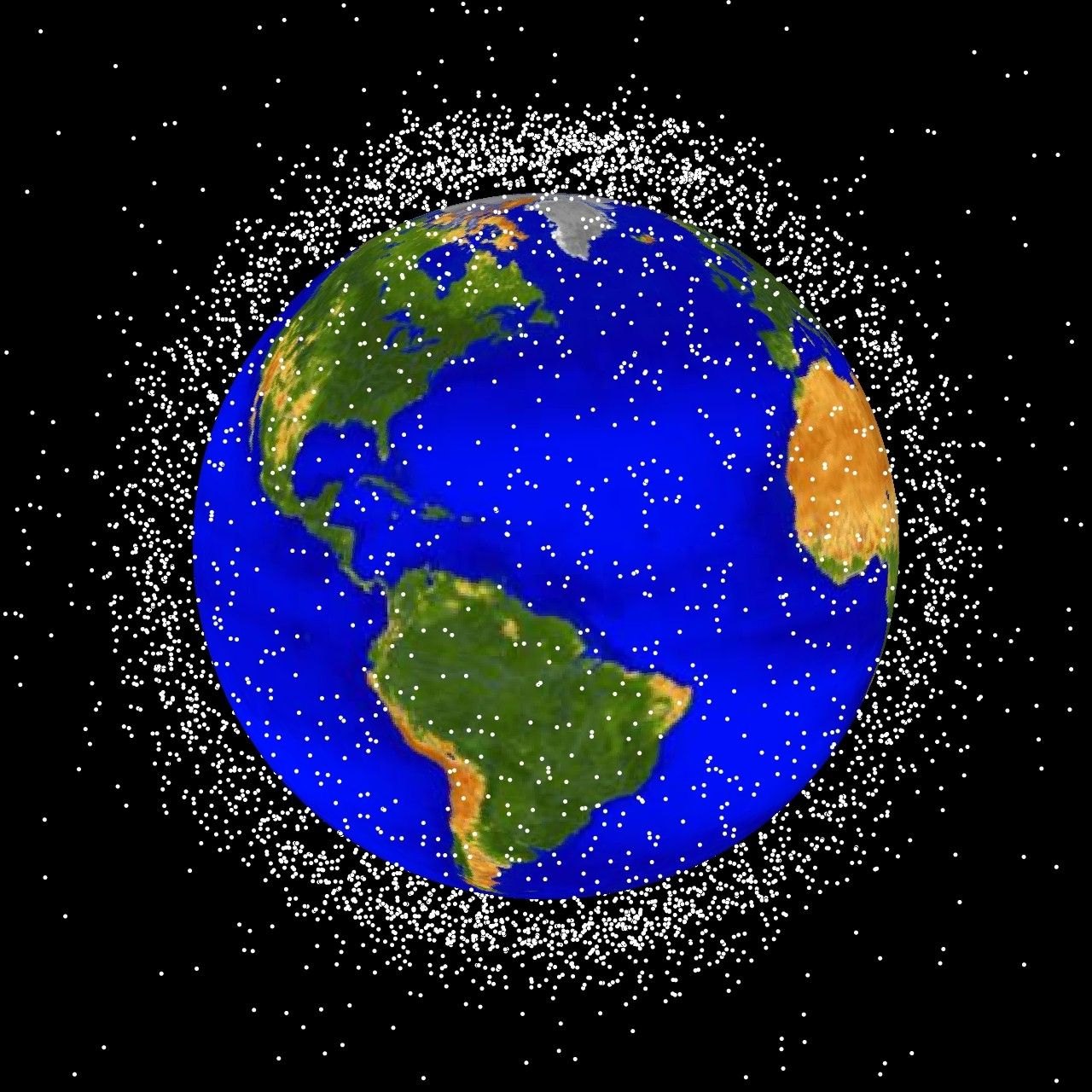
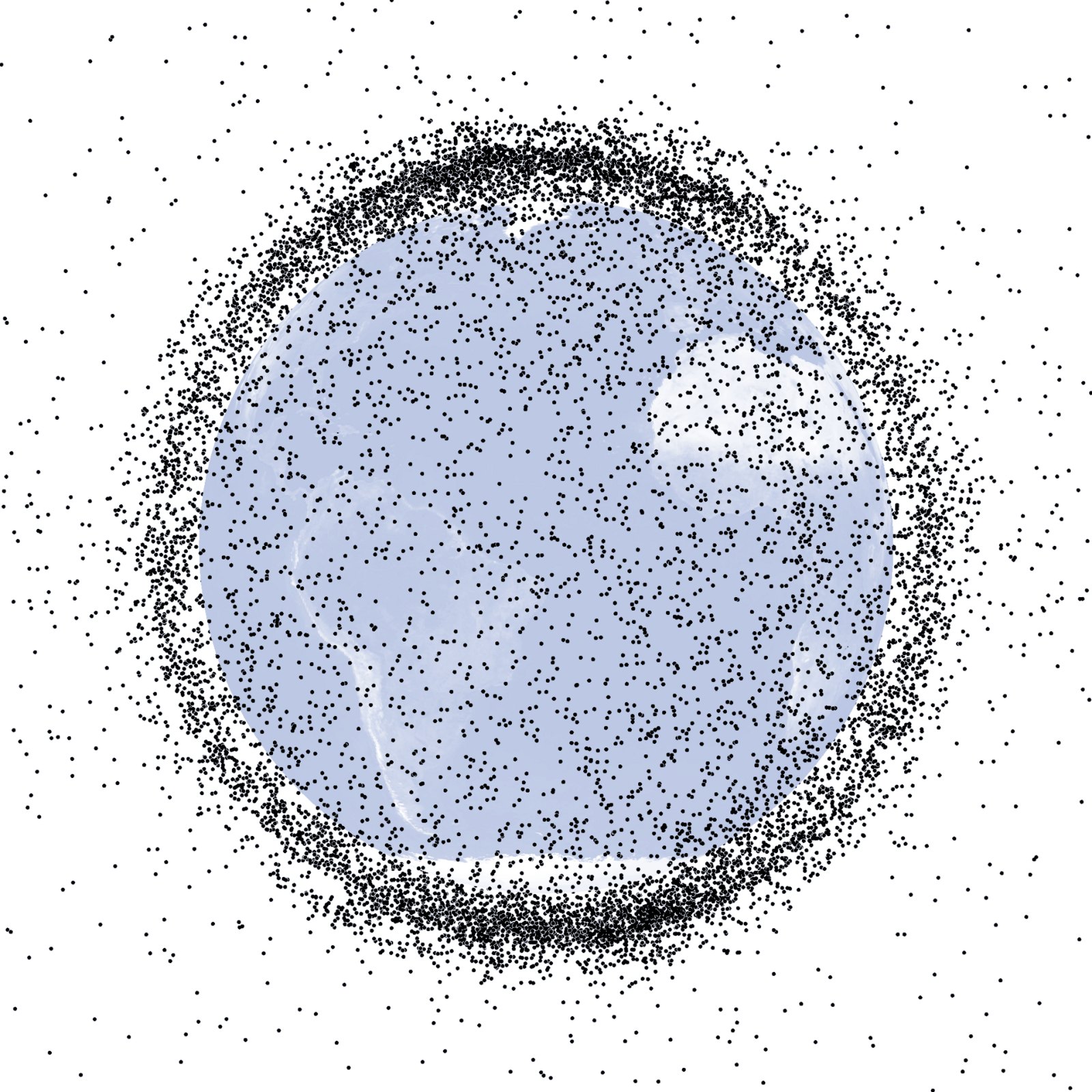
The part of the blackout that changes nothing is the part that should worry us most. Of the 33,941 objects in orbit, 14,085 are spent stages and debris (GCAT), and between 800 and 900 kilometres the catalog holds 2,751 objects of which 2,501 are debris. None of them was ever going to read a warning. Conjunction screening has worked for twenty-five years because, in almost every dangerous pair, at least one object had a thruster and an operator at the other end of an email address; the pairs where neither does are the ones nobody can act on even on a good day (nobody to call at 840 kilometres).
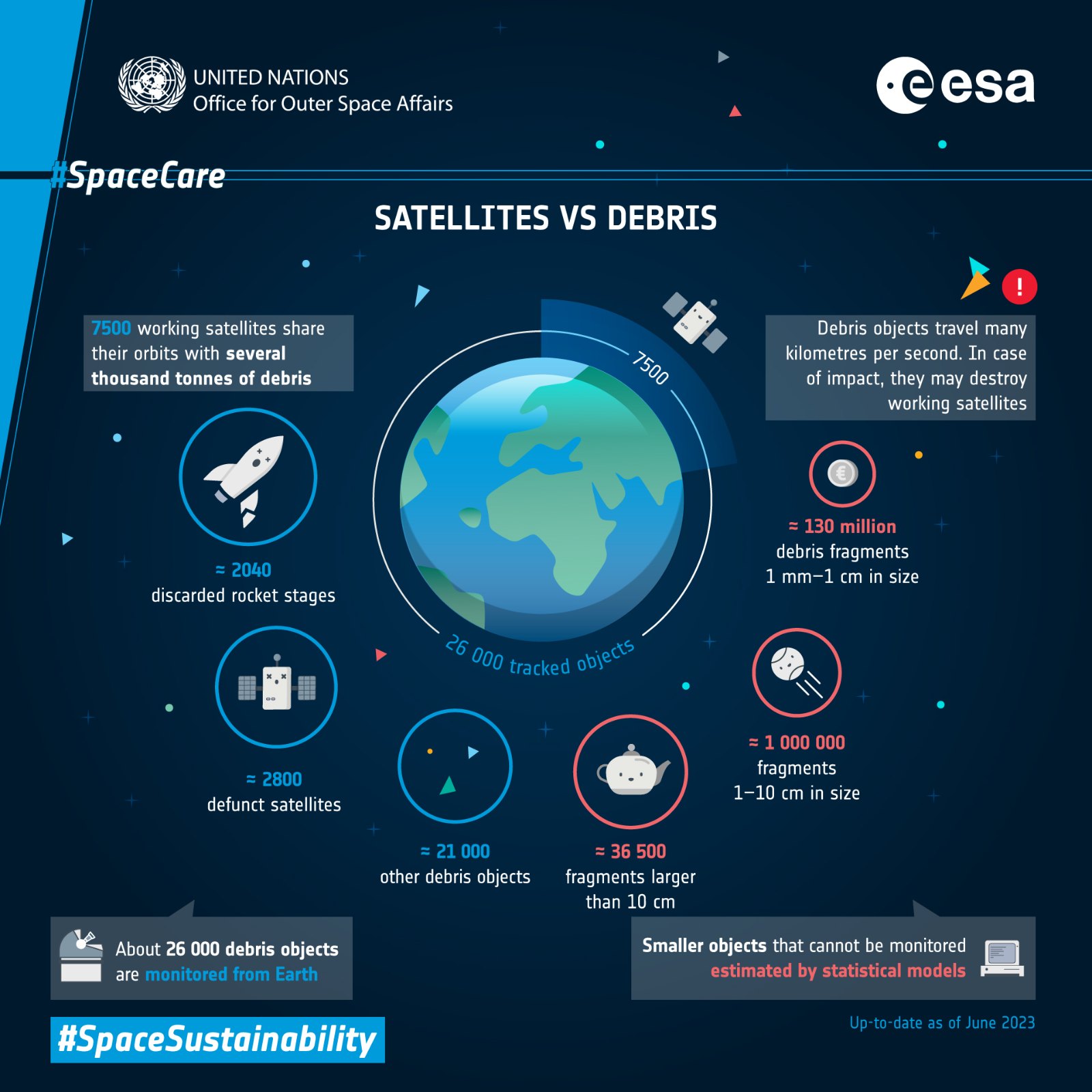
So the blackout is not uniform. It degrades the response to exactly the encounters that were already being handled, and it leaves untouched the encounters that were never being handled at all. ESA counts about 47,340 objects tracked and catalogued, models 68,450 larger than ten centimetres and 1.5 million between one and ten, and puts more than 17,500 tonnes in orbit (ESA DISCOS, 2 November 2026). The warning system covers the thin, steerable top layer of that population. A month without it is a month in which the steerable layer behaves worse and the unsteerable layer behaves exactly as before.
Day thirty: what the month would have taught
In this scenario the blackout ends with no collision. That is the most likely outcome, and the most dangerous conclusion to draw from it, because a quiet month proves only that the base rate is low — not that the dependency is safe. Two things would be measurably different afterwards. Propellant budgets on small satellites would show a month of avoidable burns, visible as orbit changes in the public catalog for anyone who cared to look. And at least one operator would have spent the month unable to distinguish an encounter at 100 metres from one at ten kilometres, and would have guessed.
ClearOrbit's view
The useful lesson from a hypothetical month without warnings is about dependency, not about outages. Civil collision avoidance in low Earth orbit rests on one government's screening, published at that government's discretion, consumed by thousands of operators who have no second source and in many cases no way to act on a warning anyway. That arrangement has held so far. It is not a design.
ClearOrbit has flown nothing and holds no contracts, and we are not proposing to run a screening service. What we argue is that the measure of a space-traffic system is what it can do for the objects that cannot respond — and by that measure the current one scores zero, blackout or no blackout. Better data makes a manoeuvrable satellite safer. It does nothing for 2,501 pieces of debris at 800 kilometres, and the alerts about them are a record of risk rather than a means of reducing it.
That is why we read a scenario like this as an argument for removal rather than for redundancy. Multiple independent screening sources are worth having, and so are public covariances, operator ephemeris exchange and conjunction data that anyone may redistribute. But the objects at the top of every concerning-derelict list will still be there, still unsteerable, under any of those improvements. Warnings are how a crowded orbit is survived. Taking mass out is how it stops being crowded.
Reader mail
Have a better idea?Spotted something we got wrong?
We publish in public so the numbers can be checked. If a figure looks wrong, a source is missing, or you know something this piece should have said, send it over. One box, no sign-up.
Send an idea or correctionQuick question
If you could fund one thing first to cut collision risk in low Earth orbit, what would it be?
Anonymous. You will see how others answered after you vote.