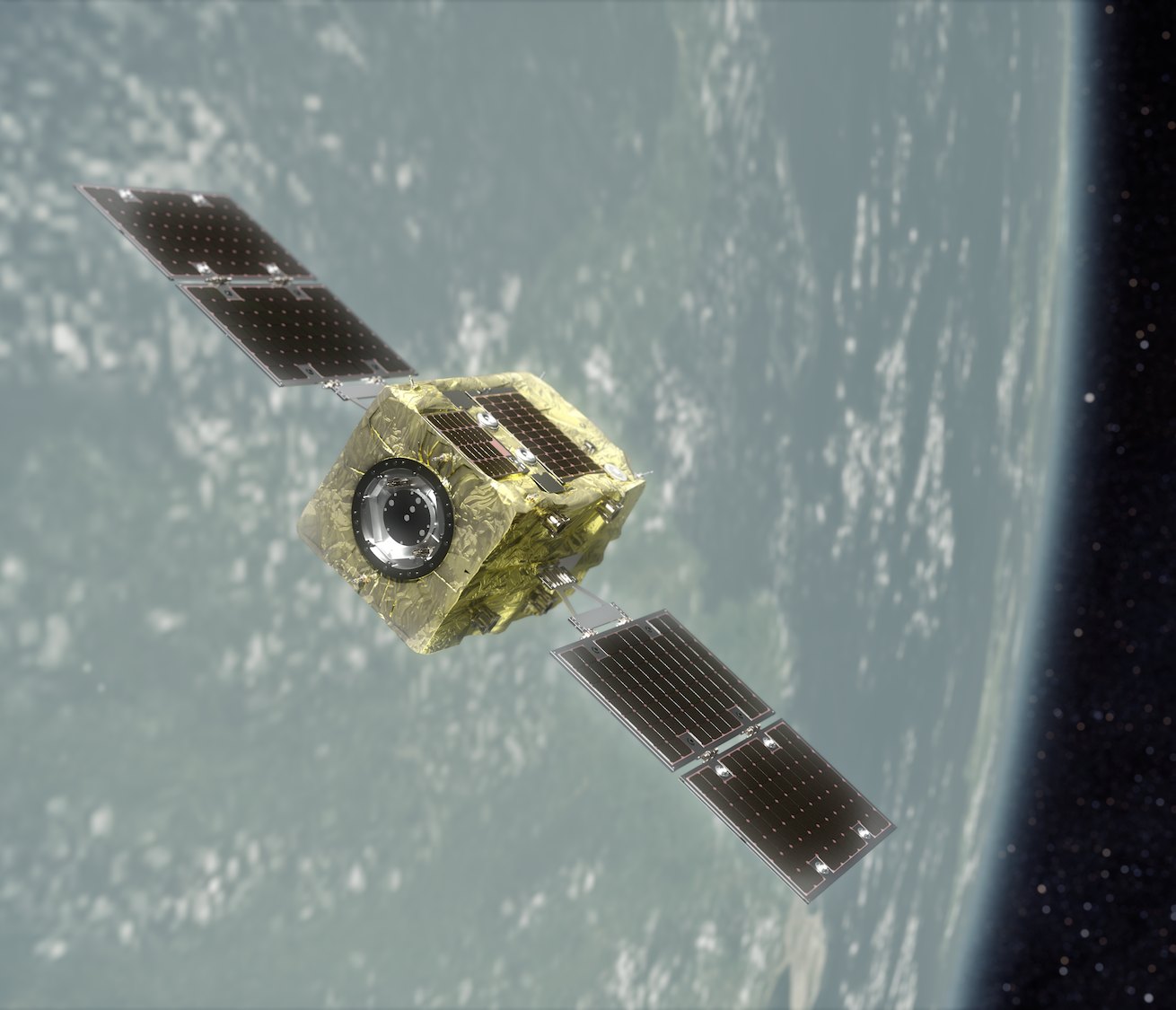
Scenario · · 6 min read
The graveyard that doesn't stay buried
A derelict above the geostationary belt fragments. Nothing up there ever falls back to Earth, and an uninsured satellite below has to live with it.
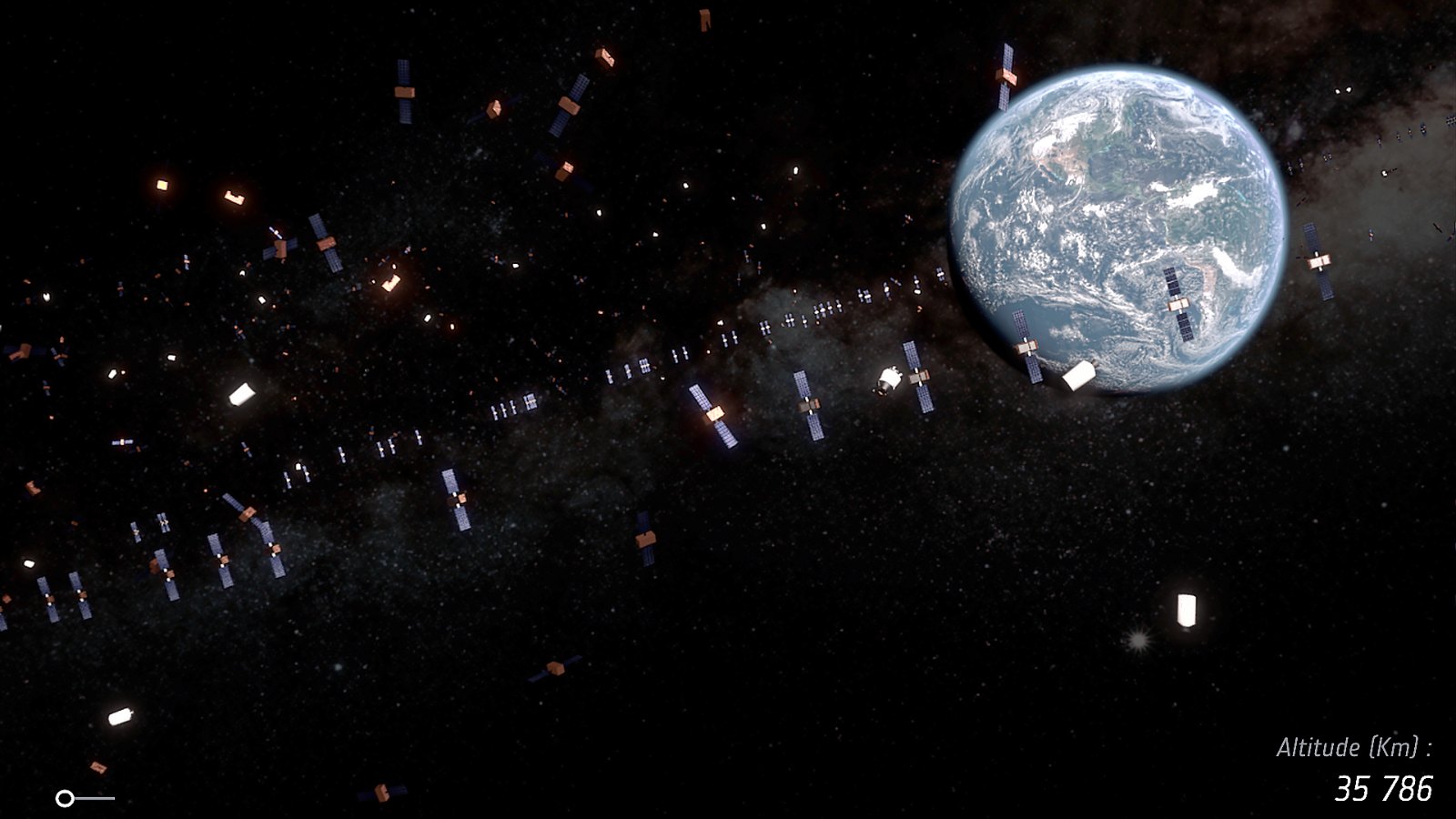
The geostationary belt is the most valuable ring of real estate in space. Satellites there match Earth's rotation and hang over one spot, which is why broadcasters, weather agencies and militaries pay so much to be there. When a GEO satellite retires, the accepted practice is to lift it into a "graveyard" orbit above the belt and switch it off. The assumption is that it will stay out of the way forever.
This scenario asks what happens when forever turns out to include a breakup.
Two real warnings
This is not an invented risk. On 19 October 2024, at about 04:30 UTC, the Boeing-built Intelsat 33e broke up at 60°E in the geostationary belt itself. The US Space Force tracked about 20 pieces, and ExoAnalytic Solutions counted 57 by 21 October. The satellite, launched in August 2016, was uninsured SpaceNews.
On 30 January 2026, the retired Russian inspector satellite Luch/Olymp-K (NORAD 40258), already parked in a graveyard orbit above GEO, appeared to fragment in optical images from s2a systems. Jonathan McDowell suggested an external debris impact might be the cause Space.com.
If McDowell is right, that second event is the more worrying one. It suggests that retired objects in the graveyard can be struck by things nobody is tracking.
The scenario
In this scenario, a large communications satellite retired in the 2000s sits in the graveyard region. It was not fully passivated: some residual propellant remained in its tanks. Our fictional operator, a regional broadcaster, flies an active satellite in the belt below. That satellite is worth several hundred million dollars in replacement cost and, like Intelsat 33e, carries no in-orbit insurance.
- Day 0. The derelict fragments, either from a tank failure or a small impact. No radar sees it happen; at these distances, most surveillance relies on optical telescopes that need dark skies and clear weather.
- Day 2. Commercial optical trackers report a cluster of faint new objects near the derelict's position. Public reports follow.
- Day 5. Government trackers catalogue a first handful of pieces, fewer than the commercial count, as happened with Intelsat 33e SpaceNews.
- Week 3. The fragments have spread along the graveyard orbit. Pieces that received a downward kick now travel on slightly eccentric paths whose lowest points dip into the protected geostationary region.
- Month 2. The broadcaster's flight-dynamics team receives its first close-approach notice for a fragment. Its orbit is poorly known. The team burns a small amount of station-keeping propellant to widen the miss, which is propellant the satellite will not have at the end of its life.
- Year 1 onward. Close approaches recur on a rhythm set by orbital geometry. Each is individually improbable. Collectively, they become a permanent line item in the satellite's operations.
Why nothing comes down
In low Earth orbit, the atmosphere is a slow but reliable cleaner. At GEO altitudes there is no meaningful atmosphere to help. NASA notes that objects above 1,000 km "will normally continue circling the Earth for a thousand years or more" NASA ODPO FAQ, and geostationary altitude is far higher than that. For practical purposes, a fragment created in the graveyard is permanent.
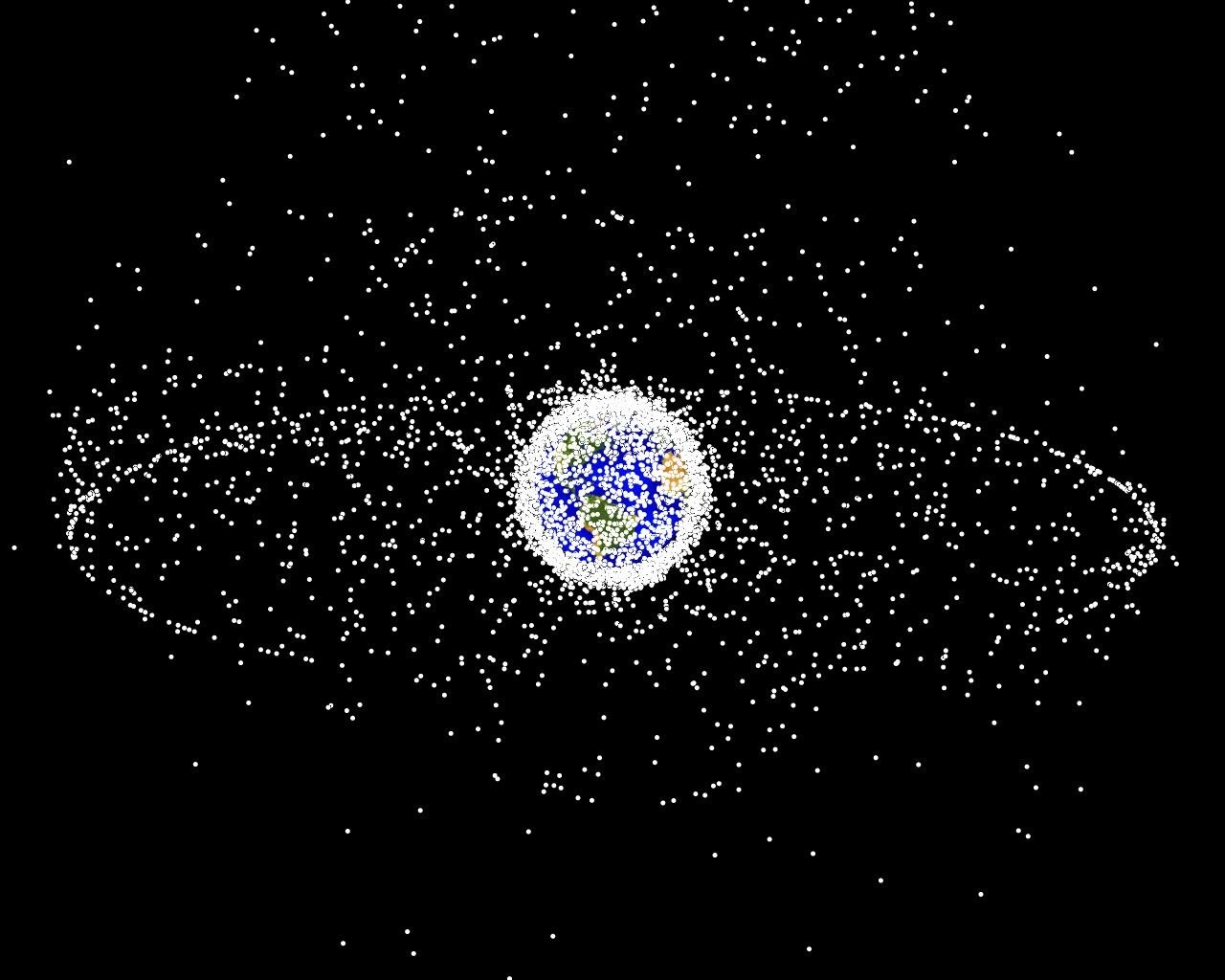
That is why international guidelines protect the belt. The IADC defines a GEO protected region extending 200 km above and below geostationary altitude and 15 degrees north and south in latitude, and asks operators to passivate spacecraft at end of life by removing stored energy IADC Guidelines Rev. 4. The graveyard orbit is designed to sit above that protected region. A fragmentation shows the design's weak point: the graveyard keeps derelicts away from the belt only as long as they stay intact.
Speeds at GEO are gentler than in low orbit, because satellites in and near the belt move in roughly the same direction at roughly the same speed. But gentle is relative. The number of objects in the region is small enough that each new fragment is a noticeable share of the risk, and none of them will ever leave.
What the uninsured operator faces
The broadcaster in this scenario is not unusual. Trade press reports that only about 300 of roughly 13,000 active satellites are insured, that 2023 losses were about $500 million, and that several major insurers, including Allianz, AIG, Swiss Re and Brit, have left the market Insurance Business. Gallagher described 2023 losses as the worst "in over 20 years" and said in-orbit third-party liability cover is "rare" Gallagher.
That leaves the operator with three unattractive options. It can buy insurance in a hardening market where a known nearby fragmentation will not make the quote cheaper. It can self-insure and accept that one impact could end a revenue stream expected to run for many years. Or it can spend extra propellant on caution and shorten the satellite's life on purpose. None of those options makes the owner of the derelict pay anything.
What servicing already shows
GEO is where in-orbit servicing is most mature, which is why this scenario has a hopeful alternative. Northrop Grumman's MEV-1 docked with Intelsat 901 in 2020 and later left it in a graveyard orbit, a Flown demonstration that a servicer can move a large GEO satellite Northrop Grumman. MEV-1 then served Optus D3 and undocked in August 2026 Satnews. Northrop's Mission Robotic Vehicle, with two robotic arms intended in part for relocation and debris removal, launched in July 2026 Northrop Grumman. Starfish Space is also developing its Otter servicer for GEO life extension, which is Planned Starfish Space.
These missions all serviced cooperative, working satellites. None has yet captured a tumbling, non-cooperative derelict in the graveyard. That remains Proposed.
ClearOrbit's view
We think the graveyard orbit should be treated as a waiting room, not a final resting place. A derelict that is intact today can be moved, drained or captured. A derelict that has fragmented cannot. The cheapest time to deal with a graveyard object is before anything happens to it.
Our ClearOrbit vision starts with a census: which graveyard objects still carry stored energy, which are largest, and which sit closest to the protected region. Robotic servicers with arms are now in GEO. The next step is to point that capability at the riskiest derelicts, not only at paying life-extension customers.
We also think operators should pass on what they learn. ESA's Zero Debris approach already calls for break-up prevention ESA Zero Debris. Making passivation checks and graveyard monitoring a shared, published practice would help every GEO operator, insured or not.
Reader mail
Have a better idea?Spotted something we got wrong?
We publish in public so the numbers can be checked. If a figure looks wrong, a source is missing, or you know something this piece should have said, send it over. One box, no sign-up.
Send an idea or correctionQuick question
If you could fund one thing first to cut collision risk in low Earth orbit, what would it be?
Anonymous. You will see how others answered after you vote.
Sources
- Space.com: Russian inspector satellite appears to break apart
- SpaceNews: Intelsat 33e loses power in geostationary orbit
- IADC Space Debris Mitigation Guidelines, Revision 4 (2025)
- NASA ODPO FAQ
- Northrop Grumman: first undocking between two commercial spacecraft in GEO
- Northrop Grumman: Mission Robotic Vehicle launches
- Satnews: Optus completes first phase of Project Aurora
- Insurance Business: Satellite insurance in freefall
- Gallagher: Space insurance update Q2 2025
- Starfish Space missions
- ESA Zero Debris approach