Scenario · · 6 min read
Shelter in place: a crew, a fragment, and ninety minutes
Based on the real 2021 and 2024 shelter events: how a debris warning reaches a space station crew, why it often comes late, and what nudging debris could change.
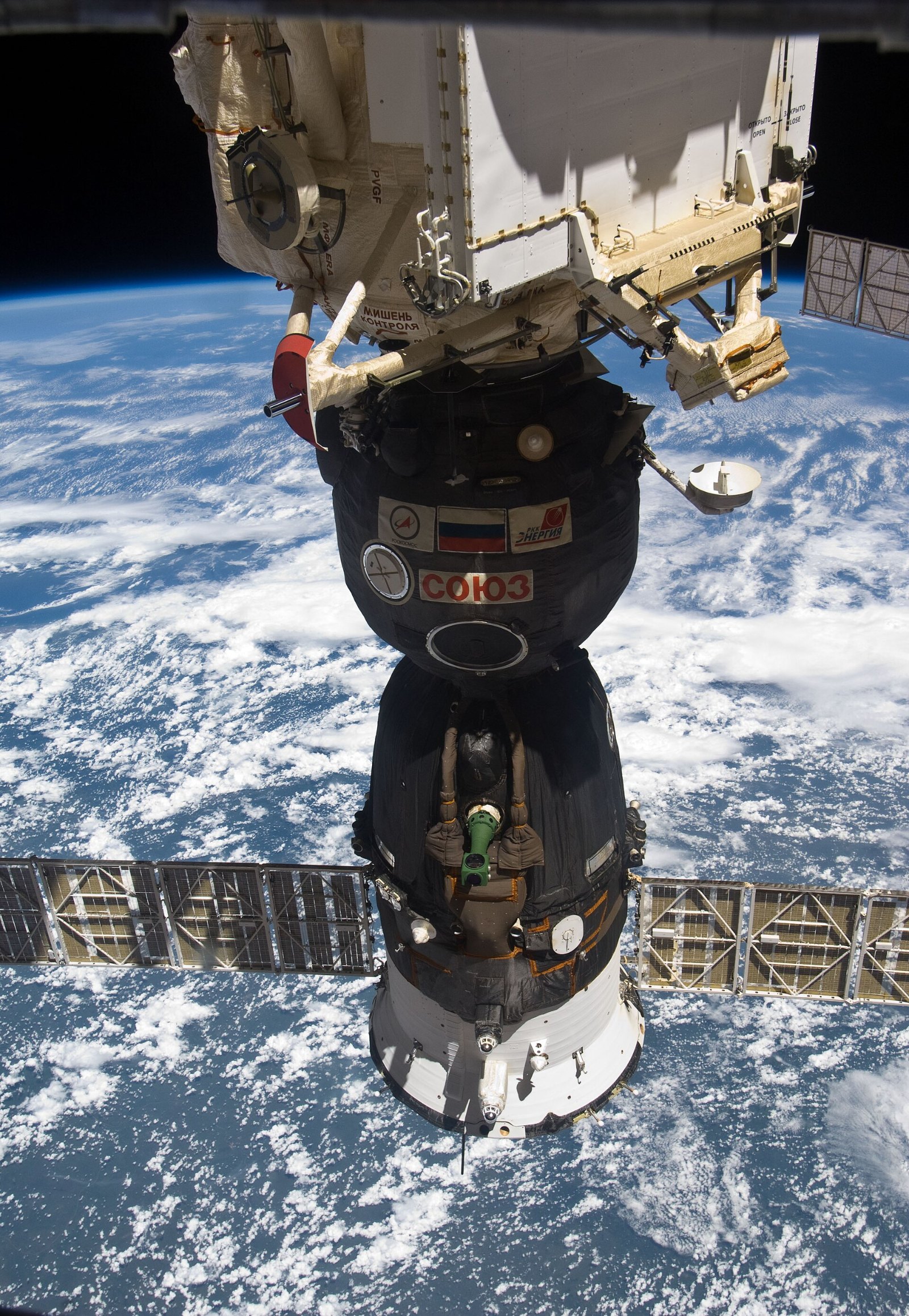
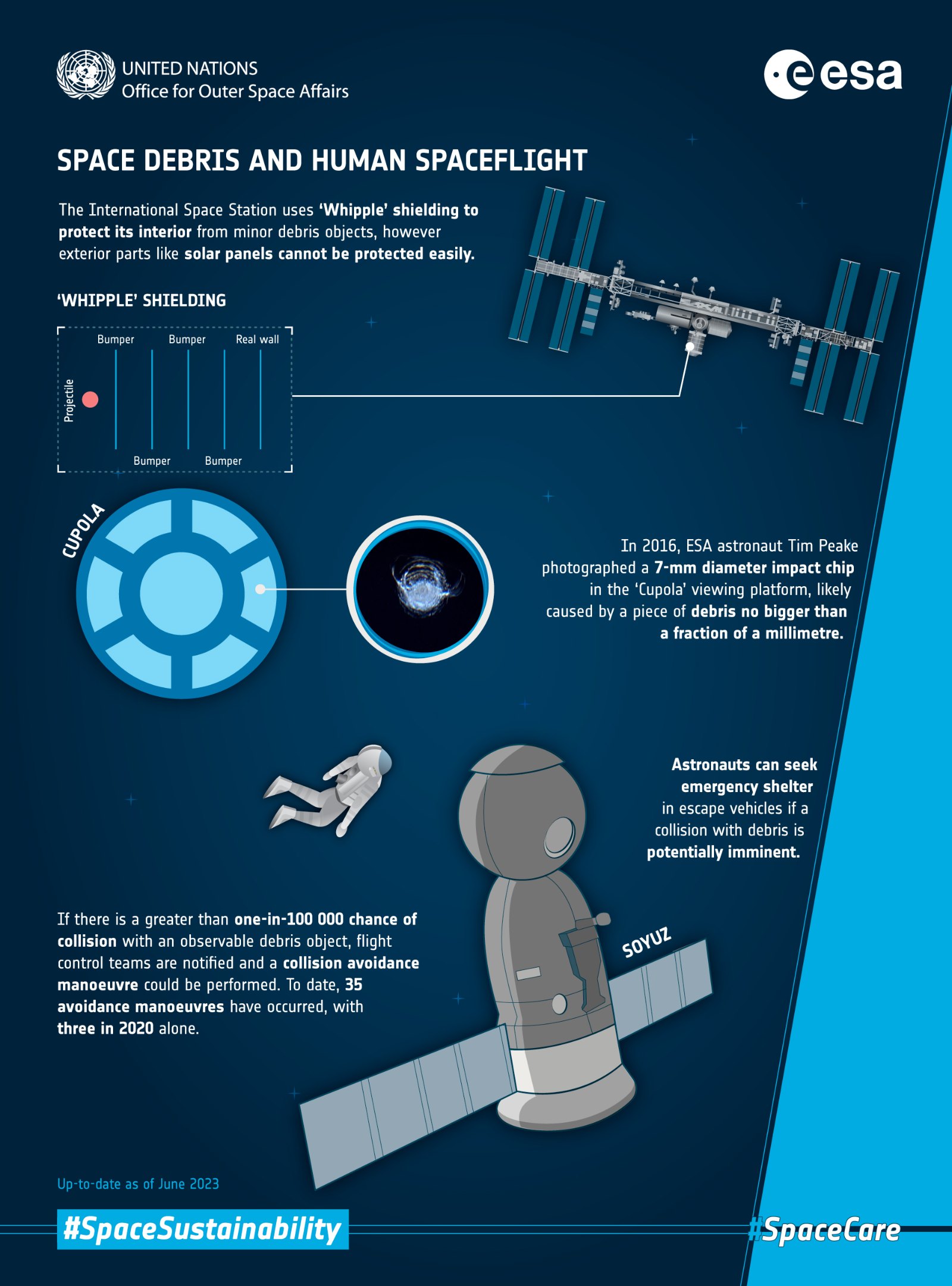
Twice in three years, astronauts on the International Space Station have been told to stop work, close hatches and climb into the spacecraft that would carry them home. Neither time did anything hit. Both times, the reason was the same: something had broken apart nearby, and nobody could yet say exactly where its pieces were going.
This scenario takes those real events and runs a plausible next one.
What has already happened
On 15 November 2021, Russia destroyed its own derelict Cosmos 1408 satellite, a 1,750 kg spacecraft that had decayed to 490 × 465 km NASA ODQN. The US government counted more than 1,500 trackable pieces and "hundreds of thousands" of smaller ones US Department of Commerce. The station crew sheltered in their docked spacecraft for about two hours KeepTrack.
On 26 June 2024, the Russian RESURS-P1 satellite broke up at about 355 km. More than 100 pieces were tracked at first, and LeoLabs later counted at least 180. The crew sheltered for about an hour SpaceNews.
Those two breakups bracketed the station's own orbit, one above and one below. That is what made them dangerous: fragments thrown up from below and down from above both cross the altitude where people live.
Breakups at crew-relevant altitudes have not stopped. In June 2026, a Zhuque-2E upper stage reportedly broke up at 335-424 km, with an estimated 100-150 fragments; that count comes from secondary reporting Daily Galaxy.
The scenario
In this scenario, a spent upper stage in a slightly lower orbit than the station suffers a propellant-tank rupture. The pieces fly in every direction. Some are pushed into orbits whose highest point sits right at the station's altitude.
- Day 0, 03:10 UTC. The stage breaks up. No one notices for several hours.
- Day 0, 09:00. Radars report uncorrelated objects near the stage's last known position. Analysts confirm a breakup. Fragments begin receiving catalogue entries, but their orbits are based on only a few radar passes.
- Day 0, 14:00. Screening against the station produces its first alerts. The uncertainties are large. A fragment with a poorly known orbit produces a big error ellipse, and a big ellipse that overlaps the station produces a probability of collision that is alarming precisely because nobody knows where the object is.
- Day 0, 18:00. Flight controllers review the options. A debris avoidance manoeuvre needs time to plan and a well-defined target. Several of tonight's threats have neither. The next close pass falls in the middle of the crew's sleep period.
- Day 0, 21:30. Controllers wake the crew about an hour before the first high-uncertainty pass. Hatches to outlying modules are closed. Crew members move to their docked spacecraft, the vehicles that could separate and return to Earth if the station were hit hard.
- Day 0, 23:00. The pass occurs. The station's sensors report nothing. Crew stay in place through a second pass on the next orbit.
- Day 1, 00:40. With improved tracking of the fragments, controllers clear the crew to return. Total time in shelter: about ninety minutes, between the two real events.
- Day 1 to week 6. The station passes through the fragment cloud's altitude twice per orbit. The team screens continuously and, when a fragment's orbit is known well enough, plans a proper avoidance burn instead of a shelter.
Why warnings arrive late and fuzzy
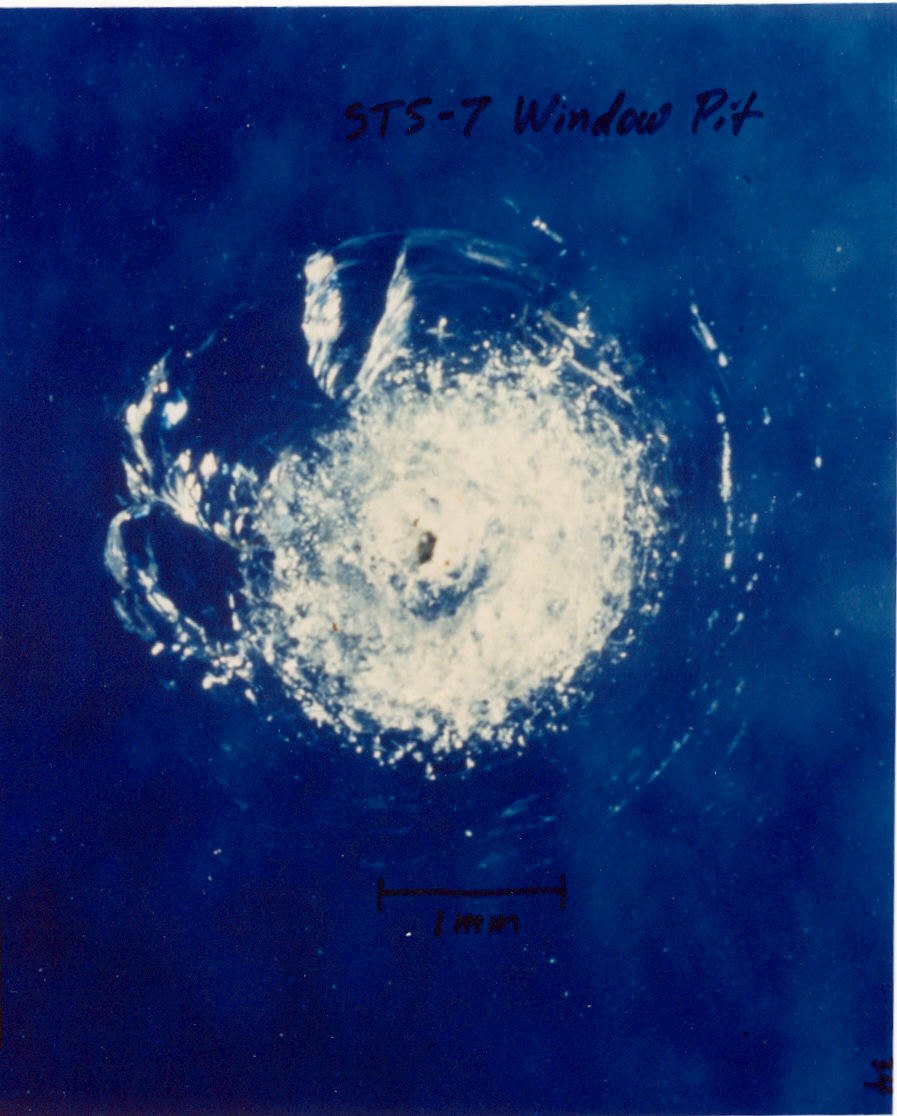
Tracking has limits that no operator can plan around. ESA's MASTER-8 model estimates about 1.5 million objects between 1 and 10 cm in orbit ESA DISCOS. Most are too small to track. At an average impact speed of about 10 km/s, and up to about 15 km/s NASA ODPO FAQ, even a centimetre-scale fragment carries enough energy to do serious damage.
For the pieces that are tracked, the data flow has built-in pauses. Space-Track distributes public conjunction data messages and recommends querying them no more than three times a day Space-Track. CelesTrak's public SOCRATES Plus screening also runs three times a day CelesTrak SOCRATES. Station operators have much better data than the public, but they face the same physics: a new fragment has to be seen several times before its orbit is useful.
The good news is that low breakups are short-lived. NASA projected more than 90% of Cosmos 1408's catalogued fragments would re-enter within five years NASA ODQN. Rough lifetimes at 300 km are about a month and at 400 km about a year Space Academy. The bad news is that "short-lived" still means months of elevated risk for a crewed vehicle.
What just-in-time collision avoidance could change
Today, the only object that can move in a station conjunction is the station. Just-in-time collision avoidance (JCA) would add a second option: move the debris.
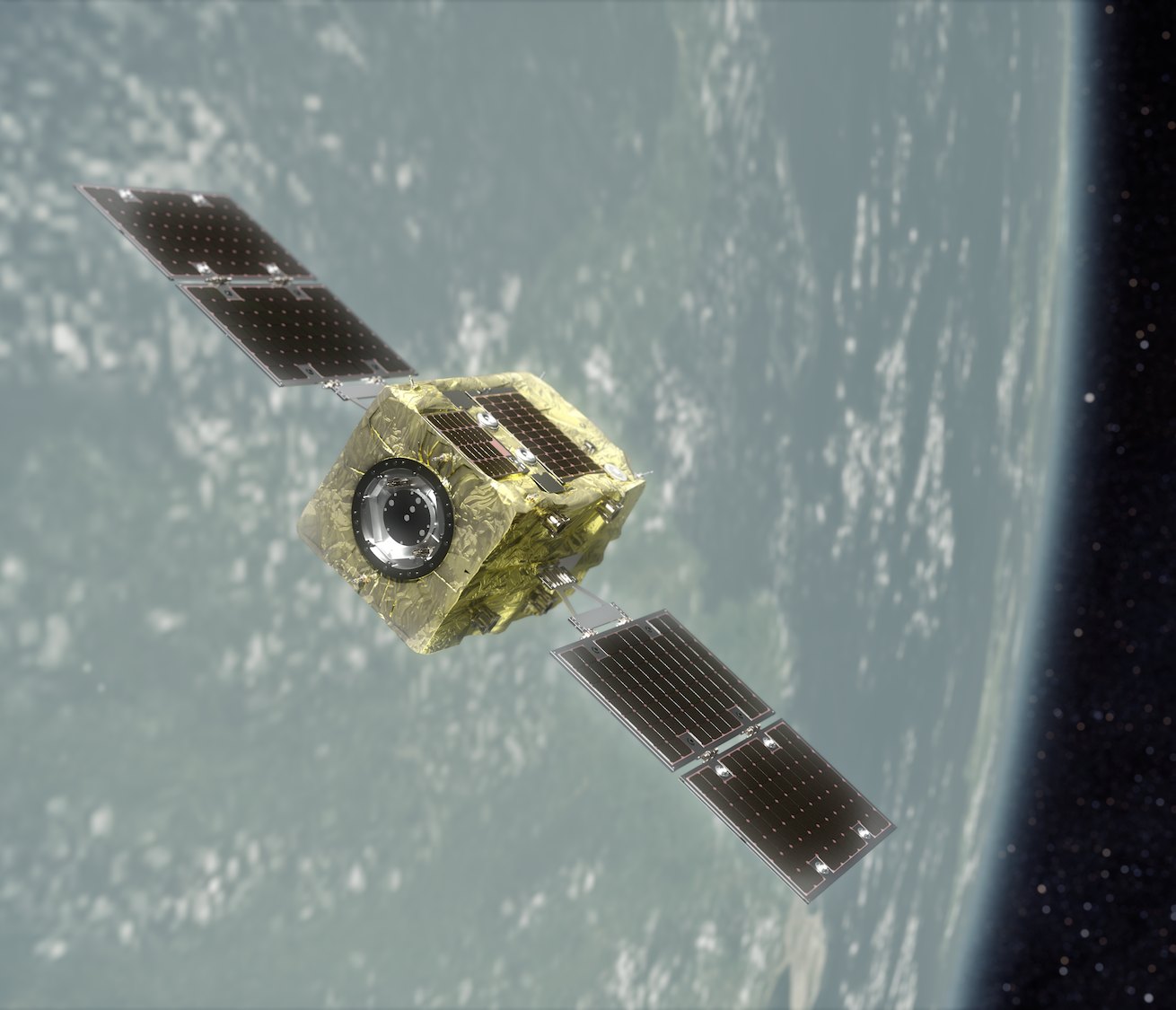
The idea as studied by CNES and CT Ingénierie is Proposed, not flown. It was designed for conjunctions between two derelicts: shortly before a predicted collision, a sounding rocket releases a small particle cloud in one object's path, or a laser applies a gentle push. The study estimated 3 g of particles released 12 hours ahead could shift a 1.4-tonne object by about 1 km JCA paper.
For small fragments threatening a station, ground-based lasers are the more natural fit. NASA held a technical meeting in March 2024 on using ground-based pulsed lasers to remove small debris threatening the ISS NASA NTRS. EOS and SERC in Australia announced a debris-manoeuvre laser capability in 2021, although no public demonstration of actually moving a debris object has been documented, so we label it Proposed Space Connect. NASA's cost-benefit study found that just-in-time nudging of large debris could produce net benefits "almost immediately" NASA OTPS.
In this scenario's alternative timeline, the 18:00 decision looks different. Rather than waking the crew for a pass nobody can predict, controllers request a nudge of the one fragment whose orbit is best known, and use the station's own thrusters for another. Shelter becomes a fallback rather than the default.
Better measurement is also coming. The NASA-JAXA MACS millimetre-debris sensor is planned to fly on HTV-X3 no earlier than September 2027, which makes it Planned NASA ODQN. Knowing the small-debris environment better does not dodge anything, but it sharpens every risk estimate a flight controller makes.
ClearOrbit's view
We think shelter-in-place events should be treated as near misses, and near misses should drive investment. Every time a crew climbs into a lifeboat, the system has told us it has run out of better options.
Our ClearOrbit vision pairs two capabilities that do not exist operationally today: faster, shared characterisation of new fragments in the first hours after a breakup, and a ground-based nudging service that can act on the few objects that matter most for a crewed vehicle. Neither replaces the station's own avoidance manoeuvres. Both give flight controllers more choices at 18:00.
The next step is policy as much as engineering. Nudging an object you do not own needs rules on consent, liability and notification, and those rules are much easier to write before the next breakup than during it.
Reader mail
Have a better idea?Spotted something we got wrong?
We publish in public so the numbers can be checked. If a figure looks wrong, a source is missing, or you know something this piece should have said, send it over. One box, no sign-up.
Send an idea or correctionQuick question
If you could fund one thing first to cut collision risk in low Earth orbit, what would it be?
Anonymous. You will see how others answered after you vote.
Sources
- NASA ODQN vol. 26 iss. 1 (Cosmos 1408)
- US Department of Commerce: response to Russian ASAT test
- KeepTrack: Cosmos 1408 ASAT test
- SpaceNews: Russian satellite breaks up (RESURS-P1)
- Daily Galaxy: Zhuque-2E upper stage breakup
- ESA DISCOS: By the numbers
- NASA ODPO FAQ
- Space-Track.org documentation
- CelesTrak SOCRATES Plus
- Just-in-time collision avoidance (CNES / CT Ingénierie, 2019)
- NASA OTPS: Cost and Benefit Analysis of Orbital Debris Remediation (2023)
- NASA NTRS: ground-based pulsed laser technical meeting (2024)
- Space Connect: EOS debris-manoeuvre laser
- NASA ODQN vol. 30 iss. 1-2
- Space Academy: orbital lifetimes