Scenario · · 6 min read
When a whole shell goes dark
A few hundred megaconstellation satellites near 550 km fail at once. Natural decay will clear them within years, but those years are the dangerous part.
Low orbits are often described as "self-cleaning", and in the long run that is true. This scenario is about the short run. In this scenario, a single event (a severe geomagnetic storm, or a bad software update pushed to one batch of satellites) leaves 300 spacecraft in a shell near 550 km unable to manoeuvre. Nobody is hurt and nothing explodes. The question is what the next few years look like.
The baseline we start from
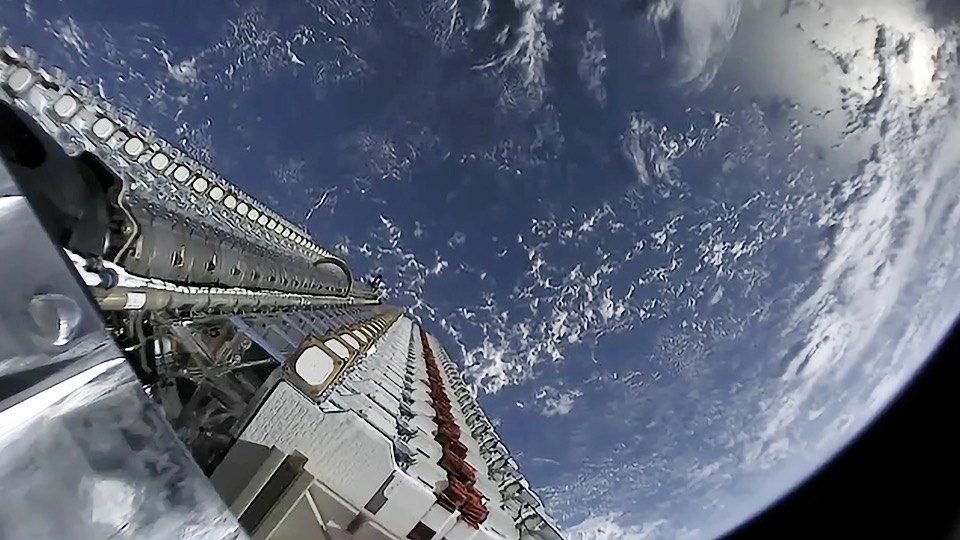
Megaconstellations are no longer a forecast. Jonathan McDowell counts 11,127 Starlink satellites in orbit and 9,713 in operational orbits as of September 2026 McDowell, Starlink statistics. Other systems are growing behind it: 636 operational OneWeb satellites, 320 Amazon Leo (Kuiper), and more than 380 across China's Qianfan and Guowang networks McDowell, constellation list.

Failures already happen one at a time. In March 2026, Starlink 34343 broke up at about 560 km, and LeoLabs detected tens of objects and pointed to an internal cause EarthSky. In December 2025, Starlink 35956 vented its propulsion tank at 418 km and released "a small number of trackable" objects Space.com. This scenario asks what happens when a failure hits hundreds of satellites instead of one.
Hour 0 to day 3: silence
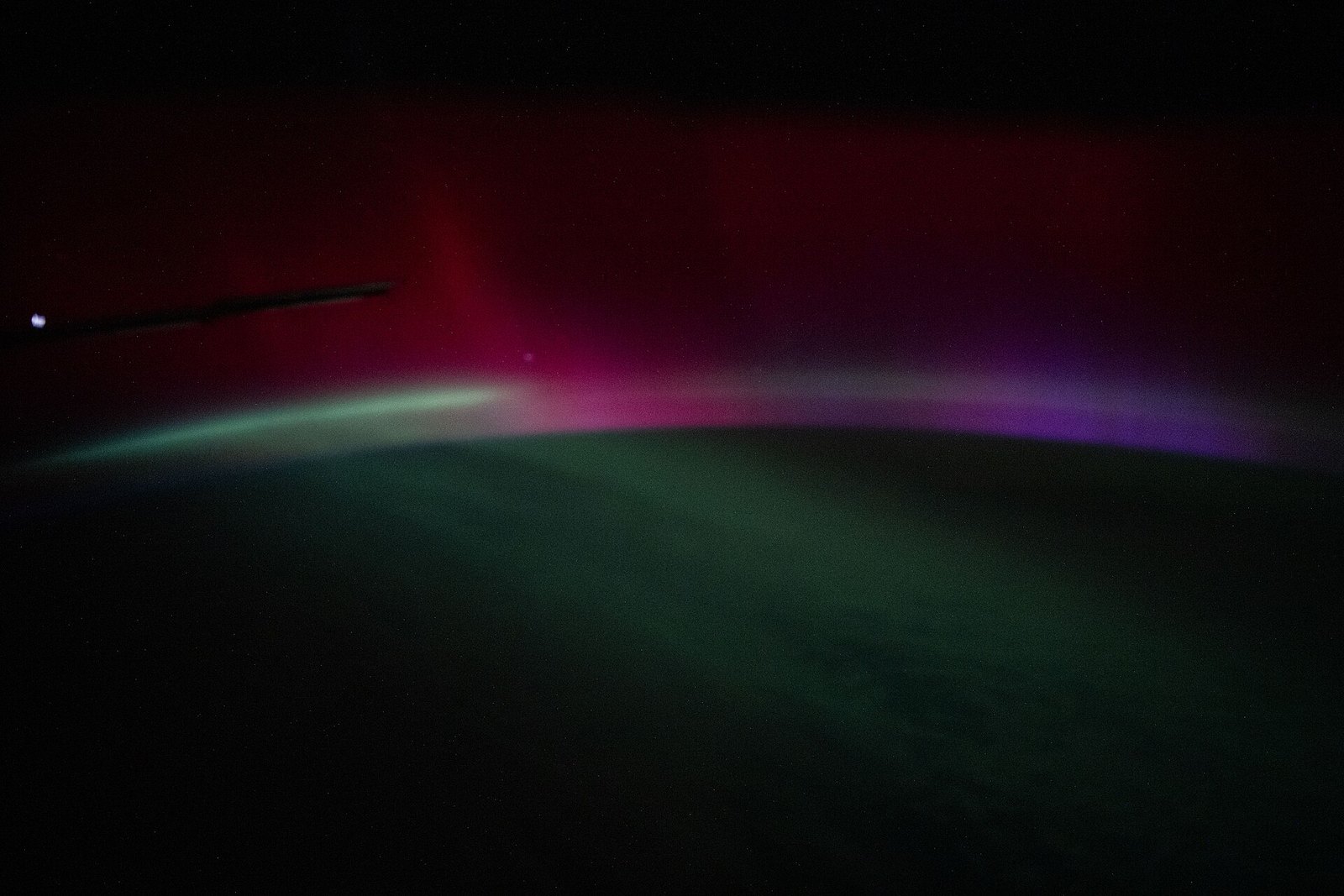
- Hour 0. The fault hits. In the storm version, the upper atmosphere heats and expands, drag rises sharply, and some satellites fall into safe mode. In the software version, a batch loses attitude control. Either way, 300 satellites stop answering manoeuvre commands.
- Hour 6. The operator's flight-dynamics team confirms which satellites are unresponsive. Those satellites keep broadcasting position data only as long as their power and attitude allow. After that, other operators must rely on radar tracking alone.
- Day 1. Every other operator's screening software now treats 300 objects as passive. A working satellite that meets a working satellite can split the manoeuvre or coordinate. A working satellite that meets a dead one has to do all the dodging itself.
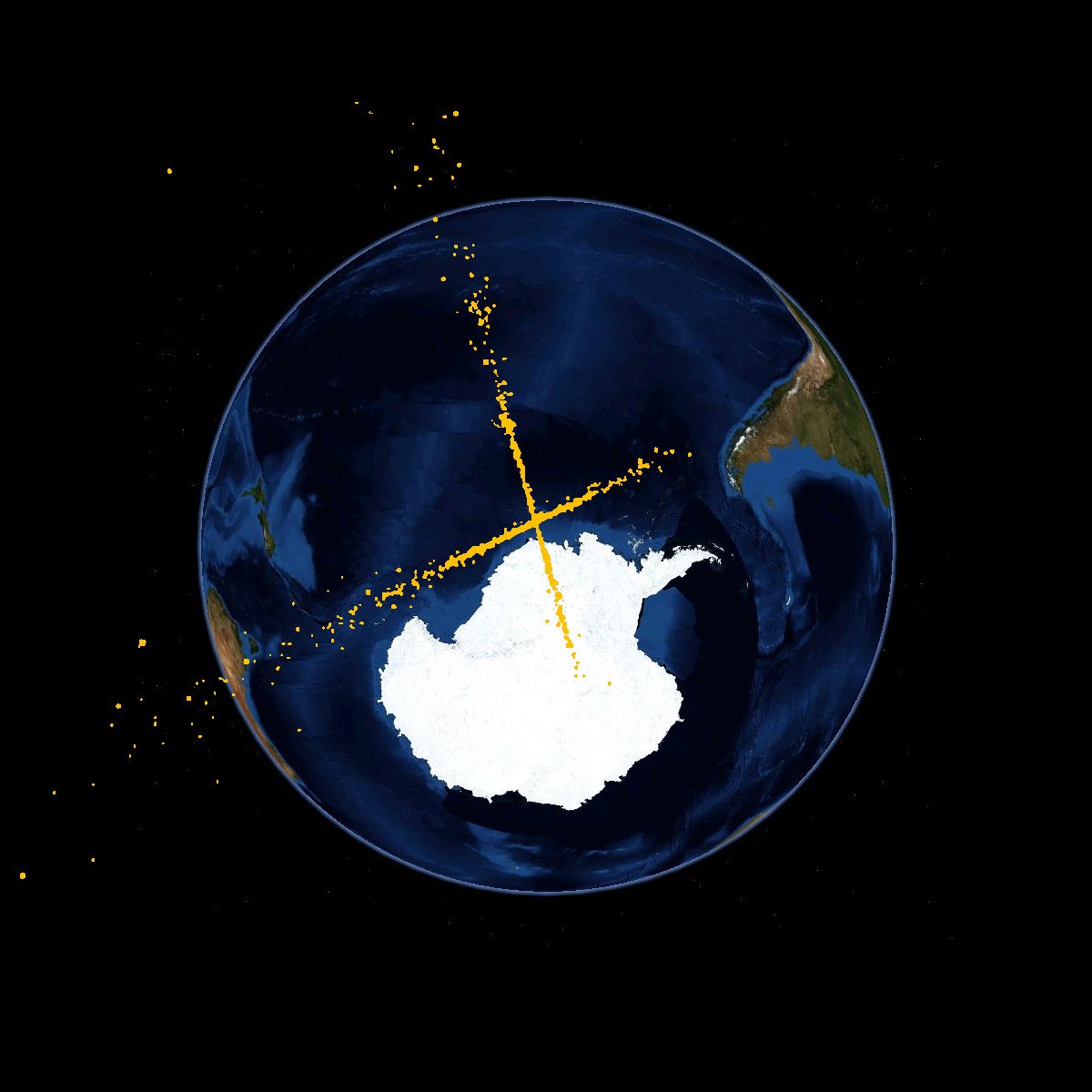
- Day 3. Public screening tools such as CelesTrak's SOCRATES Plus, which reports approaches within 5 km over the next seven days, show the same objects over and over CelesTrak SOCRATES. The picture is only illustrative: public data is far less precise than the operator's own ephemerides.
Month 1 to year 1: the conjunction tax
The workload was already heavy before this scenario. A secondary report of ESA's 2026 findings says Starlink performed about 300,000 collision-avoidance manoeuvres in 2025; that figure has not been confirmed in ESA's primary text FOD News. Adding 300 passive objects to the densest shell in orbit raises that tax for everyone who shares the altitude, including other constellations crossing the shell on their way up or down.
The satellites are not yet debris in the fragment sense, but they are now high-risk intact derelicts. A satellite that cannot manoeuvre is also a satellite that cannot be passivated. Any stored energy in its batteries or propellant tanks stays aboard, and the Starlink 35956 event shows what a tank anomaly can do Space.com. If even one of the 300 fragments, the scenario stops being about 300 objects.
The operator's commercial exposure is smaller than you might expect, and that is its own warning sign. LEO constellations mostly skip insurance and rely on spare satellites in orbit, and in-orbit third-party liability cover is "rare" Gallagher. The operator replaces its lost capacity with the next few launches. The collision risk its dead satellites create for everyone else is not priced anywhere.
Year 1 to year 6: the slow fall
This is where 550 km earns its reputation. Averaged over the solar cycle, a circular orbit at 500 km lasts roughly 10 years, at 400 km about a year, and at 700 km about a century Space Academy. NASA says objects below 600 km re-enter "within several years" NASA ODPO FAQ.
Two variables decide where in that range our 300 satellites fall. Lifetime scales roughly linearly with mass-to-area ratio, and solar maximum can shorten lifetimes by several times compared with solar minimum Bureau of Meteorology. Flat, light satellites with large solar arrays descend faster than dense rocket stages. A satellite that tumbles presents its average cross-section rather than a knife edge, which also speeds decay. We estimate, and it is only an estimate, that most of the 300 would re-enter within about five years. A few in unlucky attitudes or higher starting orbits could linger longer.
- Year 1. The shell's passive objects have lost only modest altitude. Conjunction load is close to its peak.
- Year 2-3. Decay accelerates as the satellites sink into denser air. Each dead satellite now crosses the lower shells on its way down, spreading its risk to those altitudes too, including the region used by crewed stations.
- Year 4-6. Most have re-entered. Each re-entry is uncontrolled.
Why "self-cleaning" is not "safe"
The phrase "self-cleaning" hides three problems.
First, several years is a long time at today's traffic density. Ten new payloads were being launched per day in 2025 ESA Space Environment Report 2026. Every one of those years of decay happens in a busier sky than the last.
Second, a collision during the decay window is not self-cleaning. Fragments are kicked into a spread of orbits, and those thrown upward can land at altitudes where lifetimes are counted in decades or more Space Academy.
Third, the rules assume the fall is the plan. The FCC's 5-year rule requires disposal within five years of mission end for satellites in or passing through LEO FCC 22-74. A mass failure that decays in five years might technically meet the timeline while doing nothing about the risk during it.
What could shorten the window
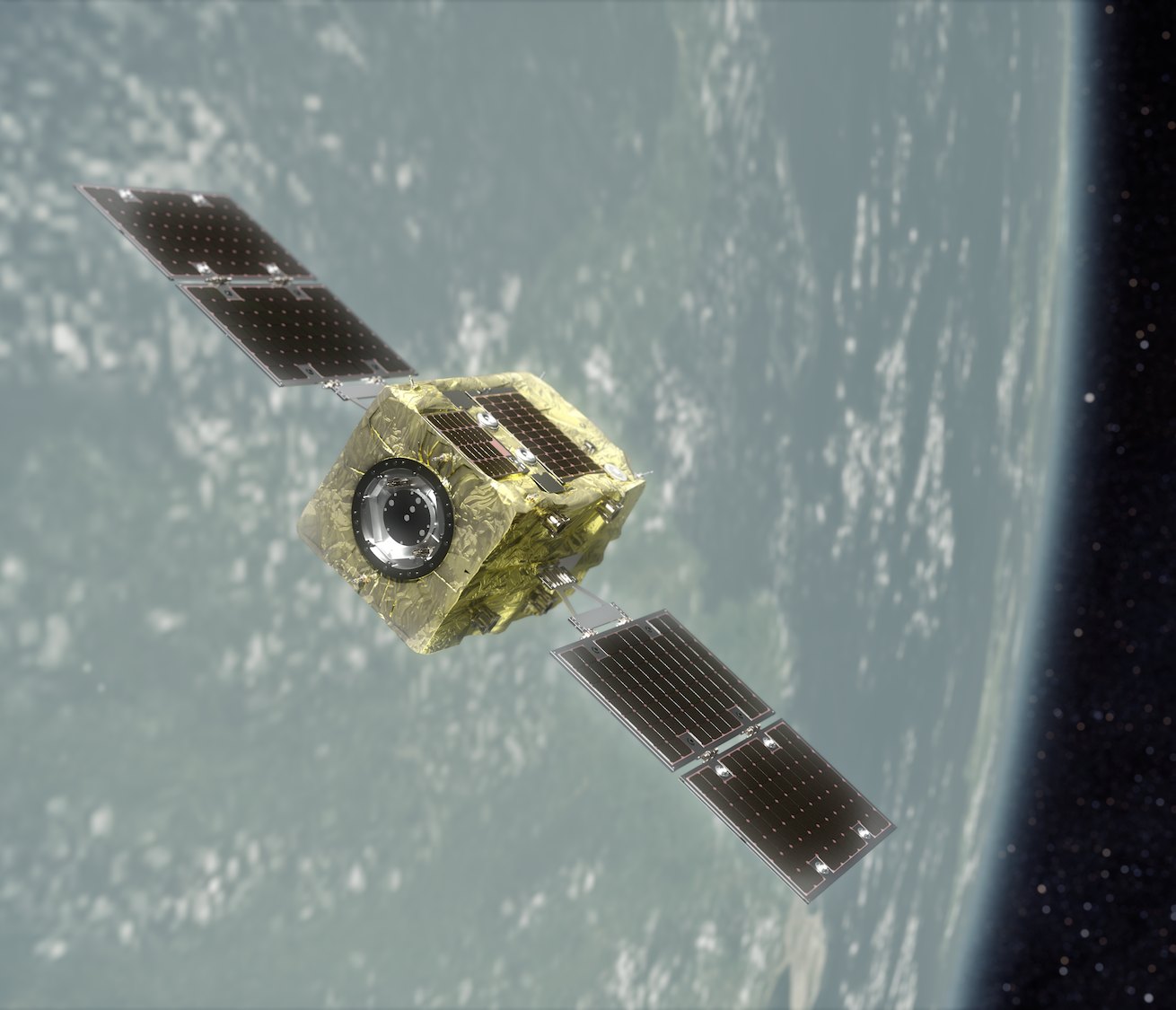
There are early answers, none yet at scale. The US Space Development Agency awarded Starfish Space $52.5 million in January 2026 for an end-of-life disposal service, with launch in 2027; that service is Planned Breaking Defense. Astroscale's ELSA-M, also Planned, aims to remove a defunct Eutelsat OneWeb satellite fitted with a docking plate, "FY2028 or later" Astroscale. Neither could service 300 satellites in a year. They show that removal as a contracted service is possible, not that it is ready for a mass-failure event.
ClearOrbit's view
We think megaconstellation operators should plan for correlated failure, not just individual failure. A shell is a single system, and a single cause can take out a meaningful fraction of it. Disposal plans that only work satellite by satellite are not enough.
Our ClearOrbit vision is a "rapid response" disposal reserve for LEO: servicers pre-positioned or quickly launchable, and satellites built with standard capture interfaces so a dead one can be grabbed and lowered in months rather than left to fall for years. Magnetic capture with docking plates is Flown: Astroscale's ELSA-d demonstrated it in 2021 Astroscale, which makes this credible rather than speculative.
The next step is for regulators and operators to agree on what a correlated-failure response looks like before the first one happens: who is notified, who pays, and which objects are removed first. The atmosphere will eventually finish the job. The goal is to make sure nothing else breaks while it does.
Reader mail
Have a better idea?Spotted something we got wrong?
We publish in public so the numbers can be checked. If a figure looks wrong, a source is missing, or you know something this piece should have said, send it over. One box, no sign-up.
Send an idea or correctionQuick question
If you could fund one thing first to cut collision risk in low Earth orbit, what would it be?
Anonymous. You will see how others answered after you vote.
Sources
- Jonathan McDowell, Starlink statistics
- Jonathan McDowell, constellation list
- EarthSky: Starlink 34343 breakup
- Space.com: Starlink 35956 partial breakup
- Space Academy: orbital lifetimes
- Australian Bureau of Meteorology Space Weather Services: satellite orbital decay
- NASA ODPO FAQ
- FOD News on the ESA Space Environment Report 2026
- CelesTrak SOCRATES Plus
- Gallagher: Space insurance update Q2 2025
- FCC Second Report and Order 22-74 (5-year rule)
- Breaking Defense: SDA taps Starfish for satellite disposal
- Astroscale: ELSA-M launch contract
- ESA Space Environment Report 2026
- Astroscale: ELSA-d demonstrates repeated magnetic capture