Scenario · · 6 min read
Orbit 2035: business as usual
Extend today's launch rates, compliance gaps and breakup frequency to 2035, then spend one working day with a satellite operator living in the result.
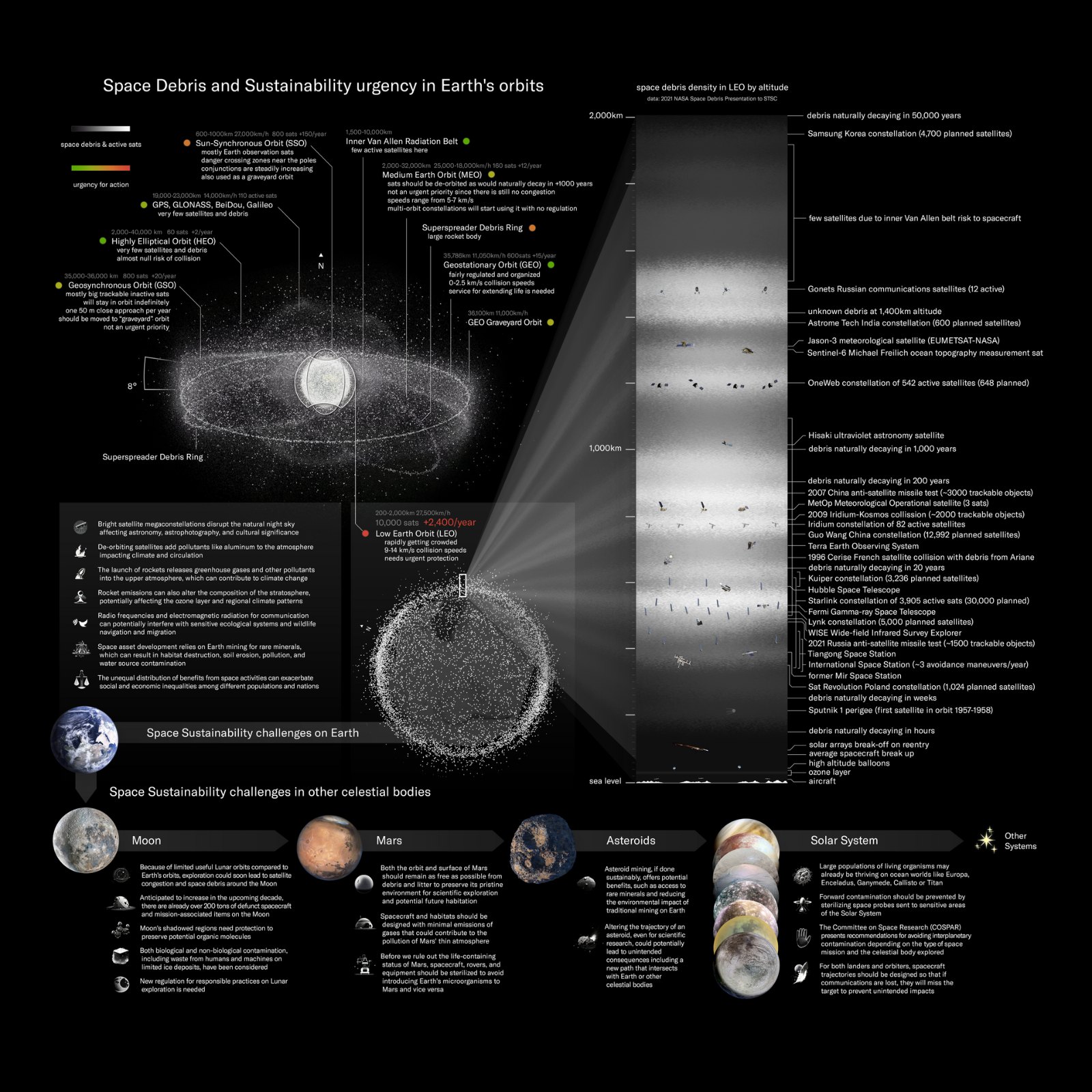
Forecasts about orbit usually arrive as charts. This one arrives as a Tuesday. In this scenario it is 2035, the trends ESA measured in its 2026 report have simply continued, and we follow the flight-dynamics lead at a fictional Earth-observation company that operates forty satellites in low Earth orbit. Nothing dramatic happens on her shift. That is the point.
How we got here: the trend lines
Everything in this section is a real 2026 measurement. Everything after it is extrapolation.
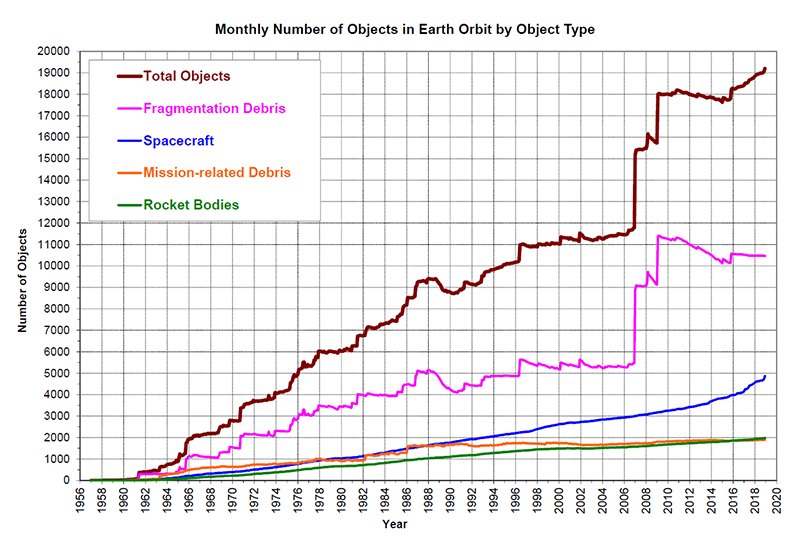
In 2025 there were more than 300 launches and more than 4,000 new payloads, about ten new payloads a day ESA Space Environment Report 2026. Over the last two decades, an average of 9.8 non-deliberate fragmentations happened each year ESA Report PDF. Over the last decade, only 5-35% of payloads and 30-80% of rocket bodies complied with the 5-year disposal standard ESA Report PDF.
ESA's environment health index for the business-as-usual future stands at about 50 times its first acceptable threshold, and it got "an entire order of magnitude" worse in a single year, from about 4 to 50 ESA Space Environment Report 2026.
The pipeline is larger than anything flown so far. SpaceX has filed for 100,000 Gen3 satellites, Starcloud for 88,000, and Sunrise for 51,600, on top of 34,864 planned Starlinks, 16,000 Qianfan and 13,952 Guowang satellites McDowell, constellation list. Filings are not launches, and many will never fly. But even a fraction of those numbers dwarfs the 35,090 objects in the public catalogue in September 2026 CelesTrak Boxscore.
Policy has moved slowly. In January 2026 the FAA withdrew its proposed rule requiring commercial upper stages to leave orbit within 25 years Federal Register. The EU Space Act remained in trilogue through late 2026, with member states and Parliament split The European Post.
Year by year to 2035
Here is what simple extrapolation gives, with no new policy and no removal.
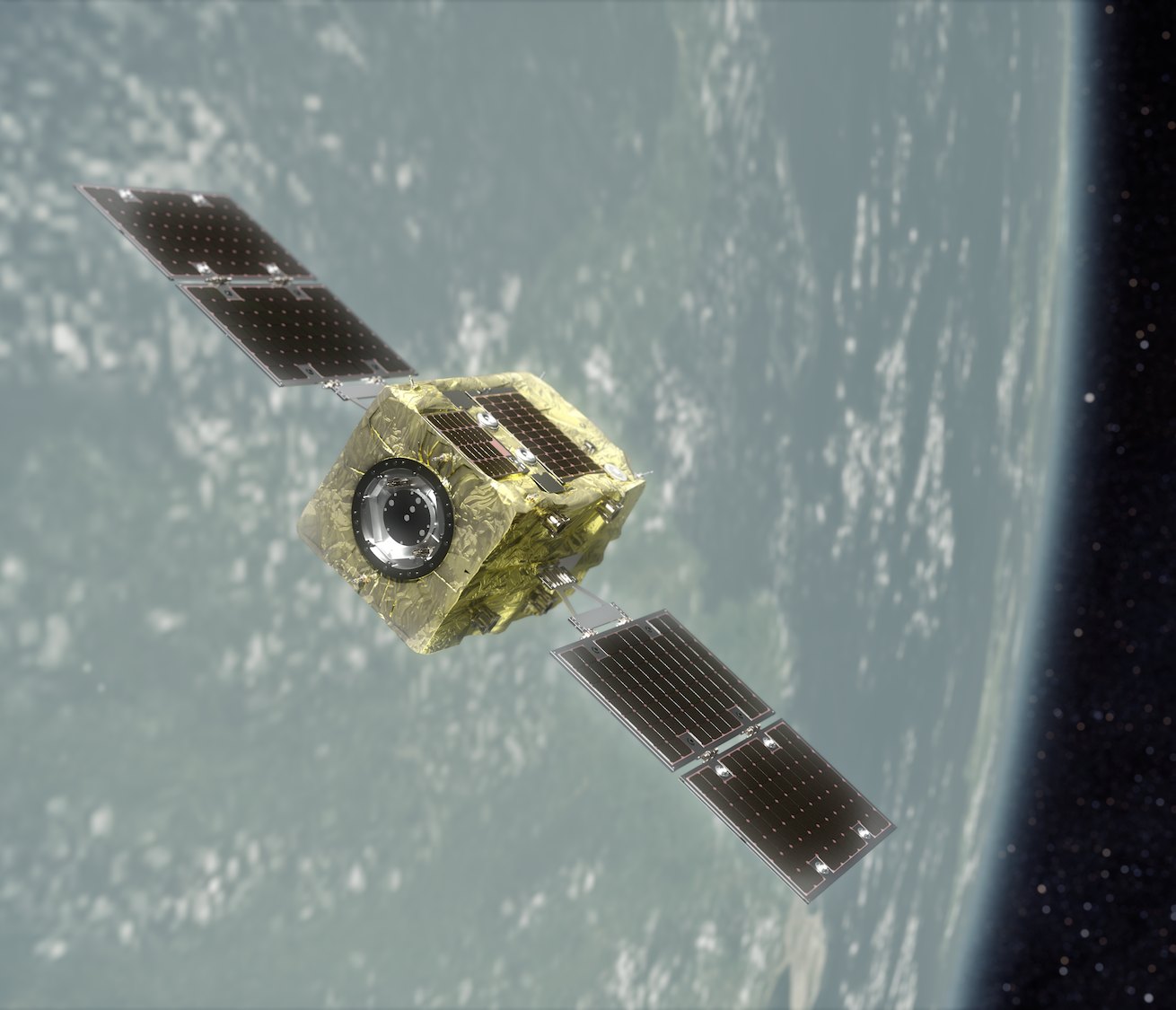
- 2027-2028. Launch cadence holds at roughly ten payloads a day. Over nine years, that adds on the order of 33,000 payloads, before any growth in rate. The first removal demonstrations, which are Planned today for 2027-2028 Astroscale, fly as one-off tests with no follow-on campaign.
- 2029-2030. At the historical rate of about ten non-deliberate fragmentations a year, around forty more breakups have occurred since 2026. Several are at altitudes where debris lasts decades or more.
- 2031-2032. Compliance rises for the big constellation operators, who have strong self-interest in keeping their shells clean. It does not rise for the long tail of smaller operators, abandoned rocket stages and older derelicts.
- 2033-2035. Around ninety breakups have been added since 2026 at the historical rate. The derelict population around 800 km and above has barely changed, because natural decay there "is often measured in centuries" NASA ODPO FAQ. Kessler's 1978 warning that debris flux "could exceed the natural meteoroid flux" is no longer a thought experiment for the busiest altitudes Kessler & Cour-Palais.
We are not projecting a runaway cascade by 2035. ESA's modelling looks further ahead than that. We are projecting a sky where the cost of operating has risen year after year, and where the index measuring that cost is still getting worse.
A Tuesday in 2035
- 06:00. Maya, our fictional flight-dynamics lead, opens the overnight queue. Her forty satellites have received several hundred conjunction notices in twenty-four hours. Automated screening has already dismissed most of them.
- 06:30. Eleven remain above her company's action threshold. Four involve fragments from breakups she has never heard of, with orbit data only days old. Uncertainty on those is so large that the collision probabilities are almost meaningless. She plans burns for two anyway.
- 07:15. One conjunction involves a large constellation satellite. The two operators exchange ephemerides automatically through a shared space-safety service, as the FCC's Part 100 rules began requiring in 2026 Akin Gump. The other operator agrees to move. This is the easy kind.
- 09:00. The hard kind: a derelict rocket stage versus one of her imaging satellites. The stage cannot move. Her satellite must, and the burn will interrupt a paying customer's imaging pass.
- 11:00. Planning notes that the constellation has spent roughly a fifth more propellant on avoidance this year than its design assumed. The finance team reforecasts each satellite's working life downward by months.
- 14:00. A call with the insurance broker. LEO operators mostly still self-insure by keeping spares, and in-orbit third-party liability cover remains "rare" Gallagher. The broker has nothing new to offer.
- 16:30. A new fragmentation is announced in a sun-synchronous orbit two shells above hers. Tomorrow's queue will be longer.
- 18:00. Maya hands off to the night shift. None of today's decisions made space safer. They only kept her satellites alive for one more day.
Some of Maya's numbers are invented for this scenario: the notice counts, the propellant overrun, the shift times. The pressures behind them are real. Starlink's collision-avoidance workload in 2025 was reported at about 300,000 manoeuvres, although that figure comes from secondary reporting of ESA's findings FOD News. The catalogue itself already ran out of five-digit numbers in July 2026 CelesTrak. A sky that outgrows its own numbering system is a sky outgrowing its tools.
What business as usual really costs
The cost of business as usual is not one catastrophe. It is a tax that grows every year and is paid in propellant, lost imaging time, shorter satellite lives and staff hours. Nobody sends an invoice for it, so nobody budgets to reduce it. Meanwhile, the objects that drive the most long-term risk (the massive derelicts that cannot move) stay exactly where they are.
ClearOrbit's view
We think 2035 is close enough to plan for and far enough away to change. The satellites that will fly in 2035 are being designed now. The derelicts that will threaten them are already in orbit. Both facts point the same way: decisions made in the next three years set the shape of the next decade.
The ClearOrbit vision for avoiding this Tuesday has two halves. First, prevention: disposal compliance that rises for everyone, not just the largest operators. Second, remediation: a steady removal campaign against the most massive derelicts, starting before the end of this decade. ESA's 2026 report put it plainly: "Active debris removal must become part of the solution and soon" ESA Space Environment Report 2026.
To see what that alternative Tuesday could look like, read our companion scenario, "Orbit 2035: with removal".
Reader mail
Have a better idea?Spotted something we got wrong?
We publish in public so the numbers can be checked. If a figure looks wrong, a source is missing, or you know something this piece should have said, send it over. One box, no sign-up.
Send an idea or correctionQuick question
If you could fund one thing first to cut collision risk in low Earth orbit, what would it be?
Anonymous. You will see how others answered after you vote.
Sources
- ESA Space Environment Report 2026
- ESA Space Environment Report 2026 (Issue 10 Rev 1 PDF)
- Jonathan McDowell, constellation list
- CelesTrak SATCAT Boxscore
- CelesTrak NORAD elements
- FOD News on the ESA Space Environment Report 2026
- Federal Register: FAA withdrawal of upper-stage debris rule
- Akin Gump: FCC adopts Part 100
- The European Post: space debris rules split the EU
- Kessler & Cour-Palais (1978), full text
- Gallagher: Space insurance update Q2 2025
- NASA ODPO FAQ
- Astroscale Japan selects Isar Aerospace to launch ADRAS-J2