Scenario · · 6 min read
Going the wrong way: the Yaogan-50 (02) debris
A satellite broke up in a rare 142-degree retrograde orbit in September 2026. Its fragments meet everything else head-on, and they may stay for centuries.
Almost everything in Earth orbit travels roughly the same way the planet turns. Launching eastward borrows speed from Earth's rotation, so that is what most rockets do. A retrograde orbit, one tilted more than 90 degrees, runs against that traffic. Very few objects fly there, which is why one breakup there deserves its own scenario.
What actually happened
On 4 September 2026, the Chinese satellite Yaogan-50 (02) broke apart in a retrograde orbit inclined at about 142 degrees. Citing Jonathan McDowell, Gizmodo reported that the US Space Force had catalogued 43 debris objects, and described the orbit as one that "could hold debris for centuries" Gizmodo.
The cause has not been publicly explained in our sources, and the full fragment count is not yet known. Everything after this section is a forecast. In this scenario, we assume the breakup behaves like other well-documented fragmentations, and we follow its debris forward in time.
Why retrograde debris hits harder
A satellite in low Earth orbit moves at about 7-8 km/s. The average impact speed between objects is about 10 km/s, and the most extreme impacts reach about 15 km/s NASA ODPO FAQ.
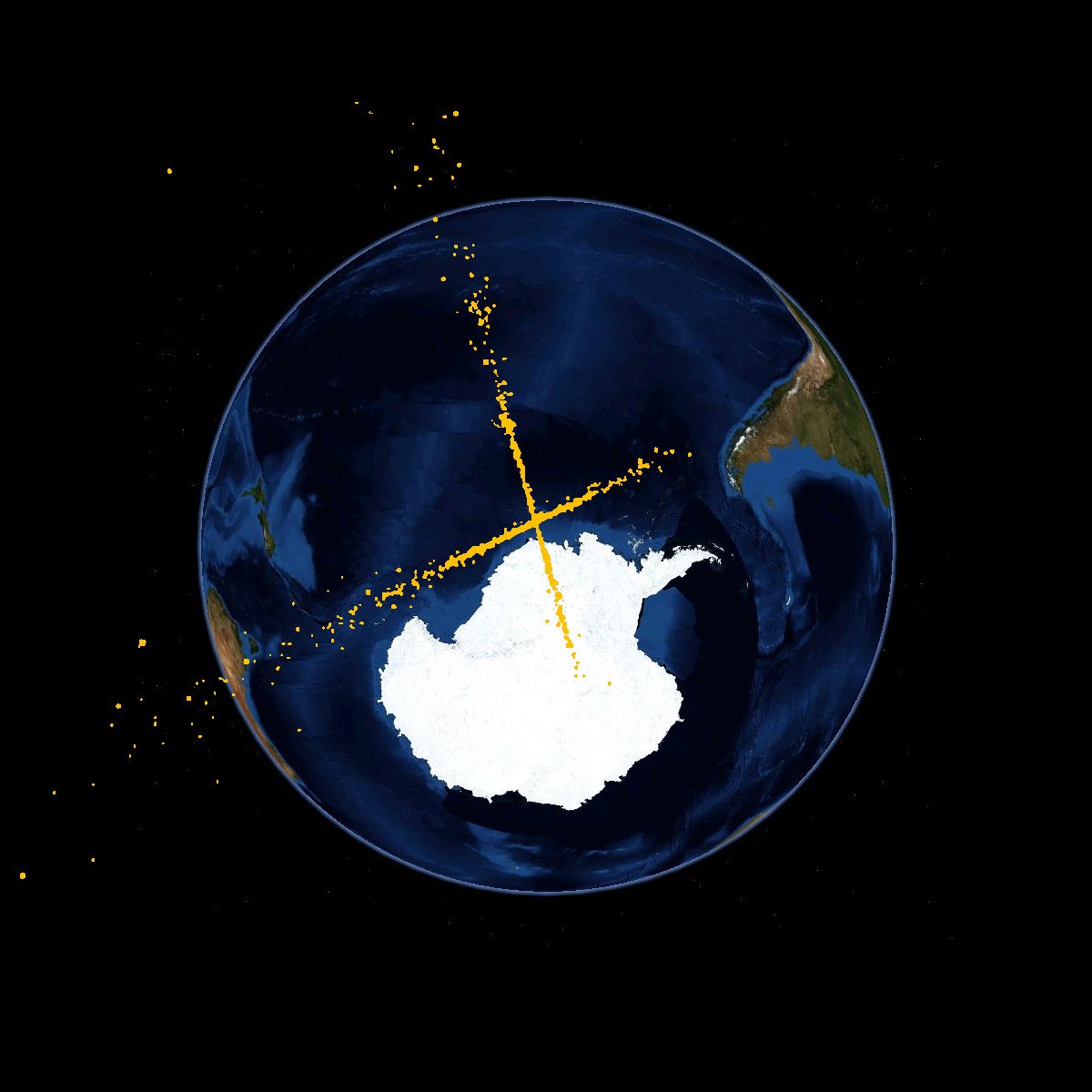
Those extremes come from geometry. When two objects orbit in roughly the same direction, their paths cross at an angle and their closing speed is lower. When one travels against the flow, it can meet the other almost head-on, with closing speeds near the sum of the two orbital speeds: about 14-15 km/s. A 142-degree orbit crosses the paths of objects at 71 degrees, where the ranked SL-16 stages cluster, and at 98-99 degrees, where derelicts such as ENVISAT fly McKnight et al.. Wherever those paths cross at steep angles, closing speeds are pushed toward the upper end of the range.
Speed matters more than it seems. The energy of an impact rises with the square of velocity. A fragment arriving at 15 km/s carries about 2.25 times the energy of the same fragment at the 10 km/s average. For comparison, Iridium 33 and Cosmos 2251 collided at more than 11 km/s and left 823 catalogued pieces within weeks NASA ODQN.
Higher speed also shortens warning time. At 15 km/s, a fragment covers a kilometre in less than a tenth of a second. Public screening tools such as CelesTrak's SOCRATES Plus report approaches within 5 km and log the relative speed of each CelesTrak SOCRATES; retrograde conjunctions will sit at the top of that column.
Hour to month: the cloud takes shape
- Day 0. The satellite fragments. The first handful of pieces are detected within hours.
- By publication (day 12). 43 debris objects have been publicly reported as catalogued Gizmodo.
- Month 2. In this scenario the catalogue count climbs. That is normal. After the 2007 Fengyun-1C test, more than 1,200 fragments were catalogued within two months NASA ODQN, and by 2013 the total had reached 3,378 NASA NTRS. An accidental breakup is usually less violent than a missile strike, so we do not expect numbers on that scale. We do expect the count to grow as radars find smaller pieces.
- Month 6. The fragments have spread around the orbit into a thin retrograde shell. Every prograde object crossing that altitude now meets the shell twice per orbit, at high closing speed.
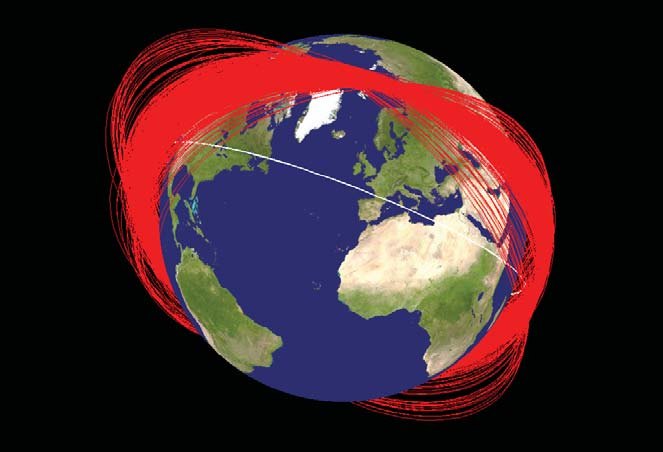
The pieces that matter most are the ones no one catalogues. ESA's MASTER-8 model estimates around 1.5 million objects of 1-10 cm in orbit ESA DISCOS. Each breakup adds to that untracked population, and in a retrograde shell each of those small pieces strikes harder than its prograde twin.
Year to century: why it stays
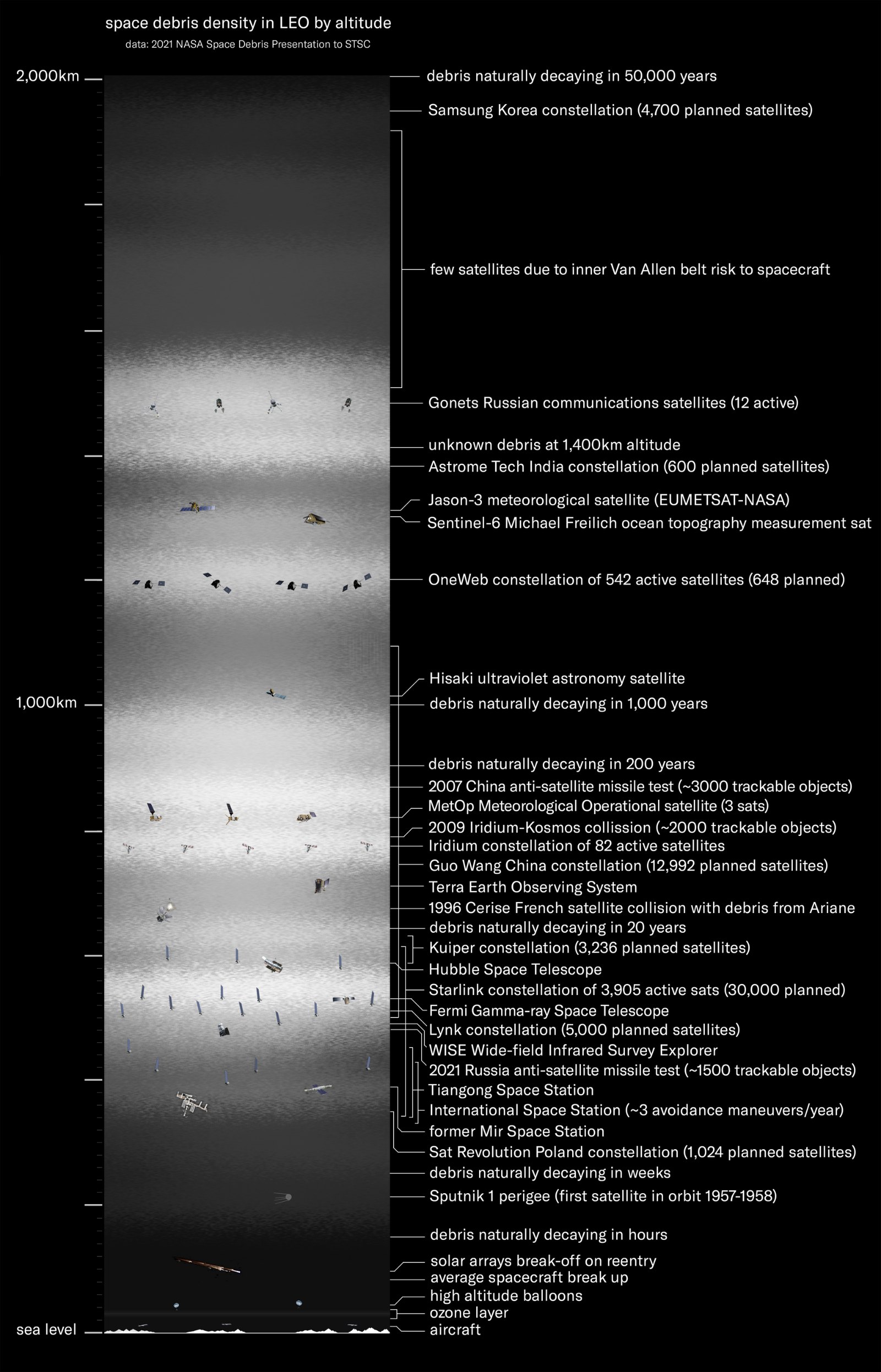
How long the debris lasts depends mainly on altitude and on each fragment's mass-to-area ratio. The Yaogan-50 (02) orbit has been described as one where debris could remain for centuries Gizmodo. For reference, rough lifetimes for circular orbits are about 10 years at 500 km, about 100 years at 700 km and about 1,000 years at 900 km Space Academy. NASA says decay at around 800 km "is often measured in centuries" NASA ODPO FAQ.
- Years 1-10. Light, flat fragments with a low mass-to-area ratio sink first. Lifetime scales roughly with that ratio, and solar maximum can shorten lifetimes several-fold Bureau of Meteorology, so the next solar maximum will pull some pieces down early.
- Years 10-50. The dense fragments remain: tank fittings, structural nodes, electronics boxes. In this scenario the shell has thinned but not disappeared.
- Years 50-200+. The retrograde shell is still a hazard. The Fengyun-1C cloud shows the pattern: six years after that test, 3,076 of 3,378 catalogued fragments were still in orbit NASA NTRS.
Retrograde fragments also cannot "hide" in the traffic. A prograde fragment near a prograde satellite may drift alongside it at modest relative speed for long stretches. A retrograde fragment can only ever meet traffic at speed.
Why removal is harder here
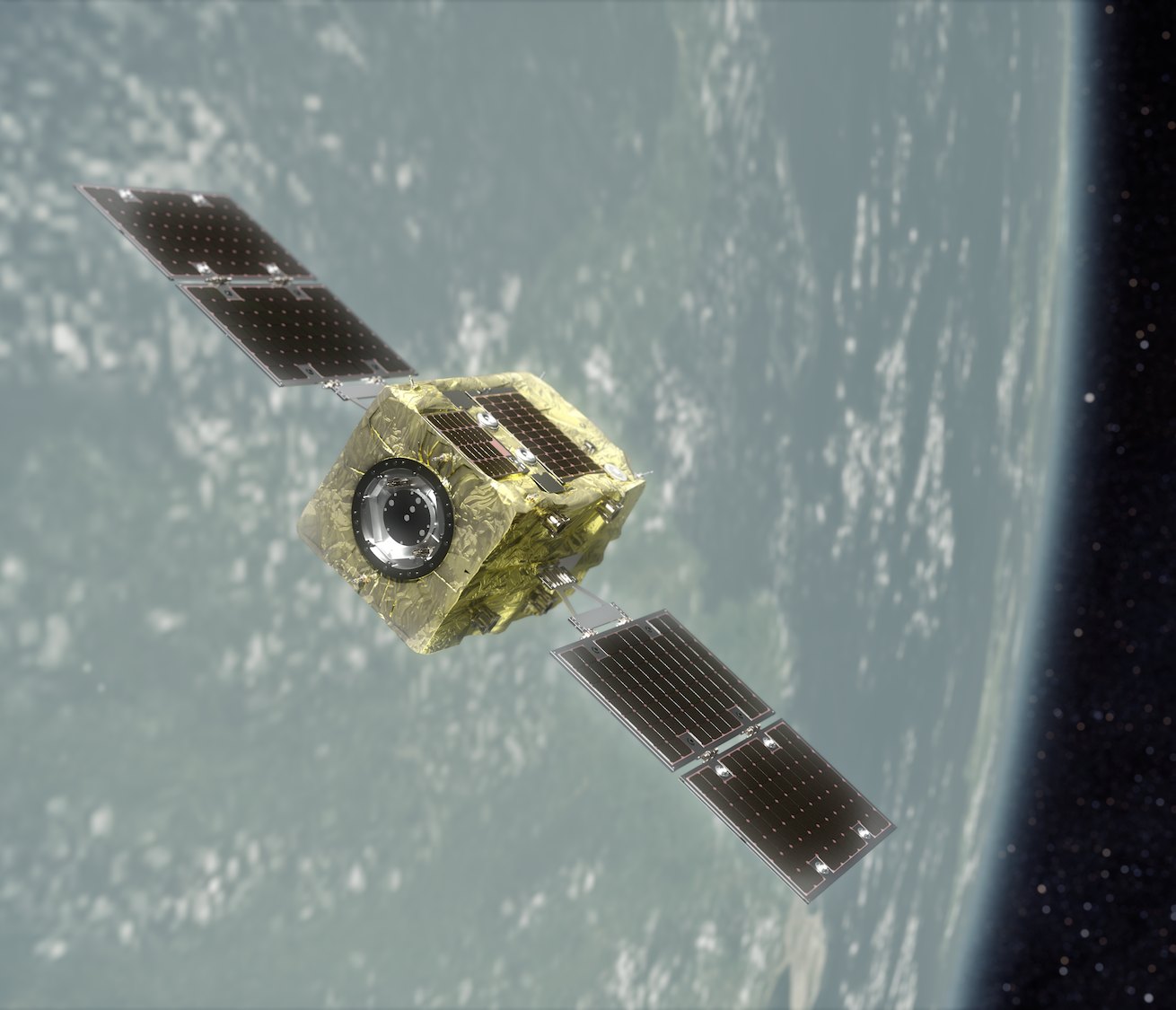
The unusual orbit makes cleanup unusually costly. Changing an orbit's inclination takes a great deal of propellant. A servicer launched to a common prograde orbit could not simply switch to 142 degrees to collect a piece of this debris; it would need to be launched into that retrograde plane from the start, and launching against Earth's rotation costs extra performance. Any removal here, which today is at most Proposed, would be a dedicated mission.
That makes prevention the main tool. The IADC guidelines call for passivation, removing stored energy, at end of life, and for limiting collision probability IADC Guidelines Rev. 4. ESA counts an average of 9.8 non-deliberate fragmentations per year over the past two decades ESA Space Environment Report 2026, and each one in an unusual orbit carries a longer tail than its number suggests.
ClearOrbit's view
We think retrograde and other unusual orbits deserve stricter scrutiny, not the same rules as everyone else. Their debris meets traffic at the highest speeds in low Earth orbit and is the most expensive to reach. An operator choosing such an orbit is choosing a higher share of long-term risk.
Our ClearOrbit vision for cases like this favours tools that do not depend on matching orbits. NASA's cost-benefit study found that removing small debris and nudging large debris to avoid collisions were the most effective ways to reduce risk to operators NASA OTPS. Ground-based nudging, which does not care which way a fragment is going, fits a retrograde shell far better than a chaser spacecraft does.
The next step is transparency. The Yaogan-50 (02) breakup has a public fragment count but, in our sources, no public cause. Every fragmentation investigation that is shared makes the next one less likely, and in a retrograde orbit that matters for centuries.
Reader mail
Have a better idea?Spotted something we got wrong?
We publish in public so the numbers can be checked. If a figure looks wrong, a source is missing, or you know something this piece should have said, send it over. One box, no sign-up.
Send an idea or correctionQuick question
If you could fund one thing first to cut collision risk in low Earth orbit, what would it be?
Anonymous. You will see how others answered after you vote.
Sources
- Gizmodo: Chinese satellite breaks apart in rare orbit that could hold debris for centuries
- NASA ODPO FAQ
- NASA ODQN vol. 13 iss. 2 (Iridium 33 / Cosmos 2251 collision)
- NASA ODQN vol. 11 iss. 2 (Fengyun-1C)
- NASA NTRS 20150003820 (fragment counts, 2013)
- ESA DISCOS: By the numbers
- Space Academy: orbital lifetimes
- Australian Bureau of Meteorology Space Weather Services: satellite orbital decay
- McKnight et al., Identifying the 50 statistically-most-concerning derelict objects in LEO (open PDF)
- CelesTrak SOCRATES Plus
- IADC Space Debris Mitigation Guidelines, Revision 4 (2025)
- ESA Space Environment Report 2026
- NASA OTPS: Cost and Benefit Analysis of Orbital Debris Remediation (2023)