Article · · 7 min read
Four in Five Close Approaches Involve a Starlink
In the last whole-catalog screening, 136,297 of 174,512 predicted close approaches involved a Starlink. That number says less about risk than it looks, and the 21 that involved no operator at all say far more.

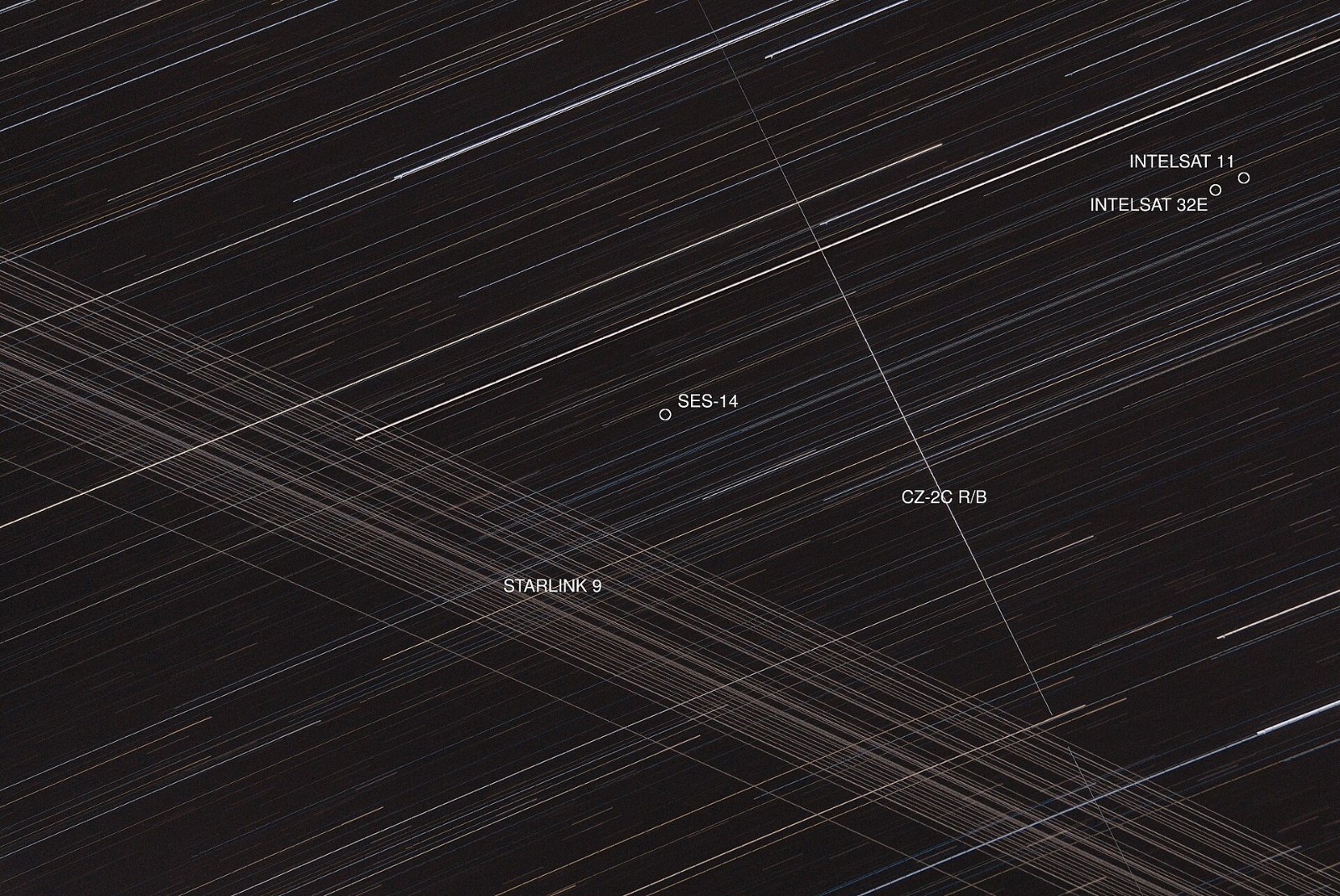
The last time the whole public catalog was screened for pairs of objects due to pass within five kilometres of each other, it returned 174,512 predicted encounters for a single week. One hundred and thirty-six thousand, two hundred and ninety-seven of them — 78 per cent — involved a Starlink satellite CelesTrak SOCRATES Plus. Every one of those predictions is on our close approaches page, and the arithmetic behind the share is not subtle: there are 11,152 Starlinks in orbit out of 33,734 catalogued objects, so a third of everything up there is one company's hardware GCAT.
That statistic gets quoted as a verdict. It is not one. What the 78 per cent actually measures is worth taking apart carefully, because the conclusion at the end of it is not the one the number suggests, and the 21 encounters at the bottom of the same screening matter more than the 136,297 at the top.
Why one constellation dominates the list
Close approaches are not distributed evenly through orbit. They happen where things are, and the number of pairs in a shell grows roughly as the square of the number of objects in it. Fill a band and you do not double the encounters, you quadruple them.
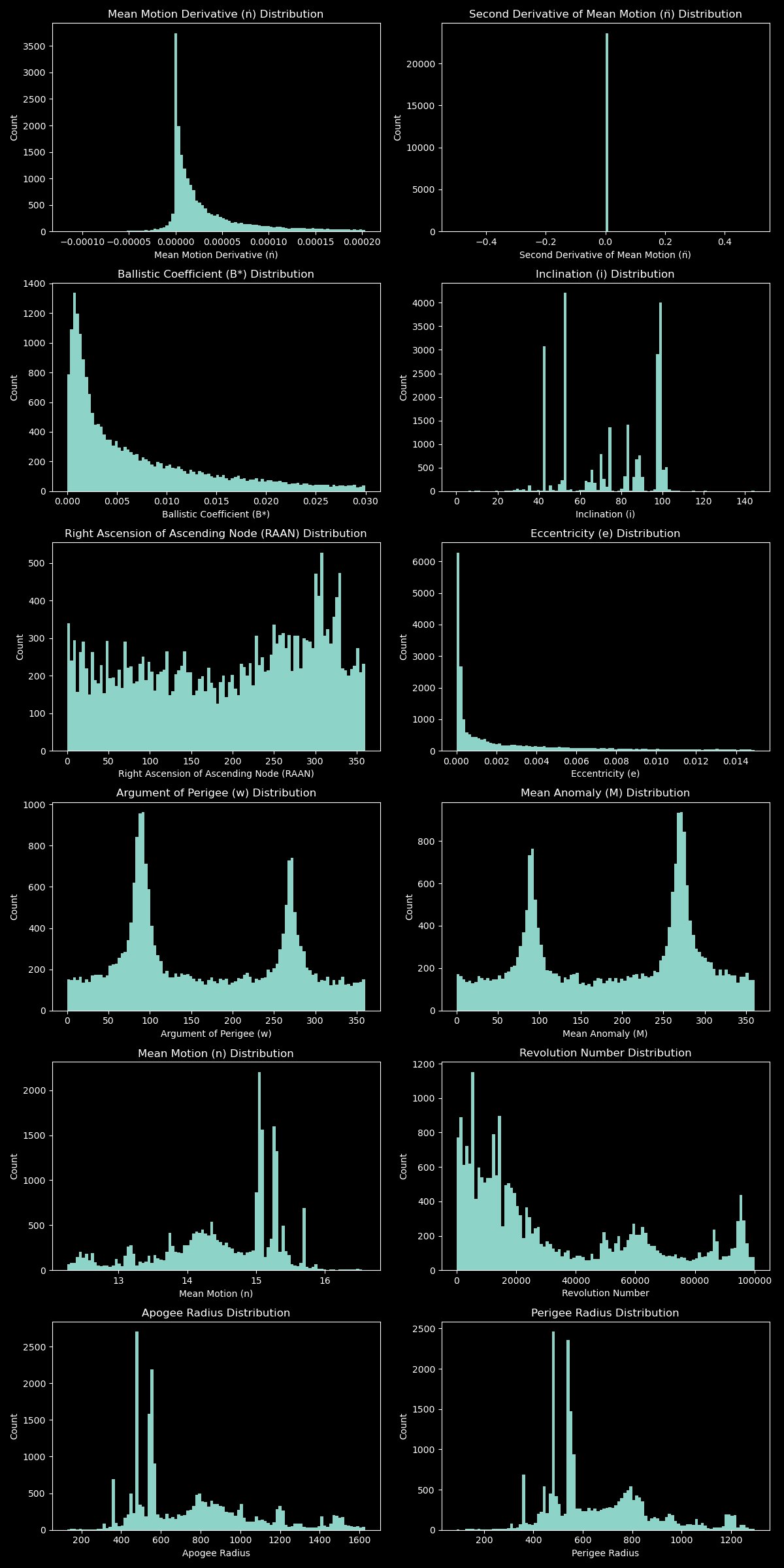
Starlink has filled a band. Of the 11,152 satellites on orbit, 9,392 sit between 400 and 500 kilometres, with a mean altitude of 456 kilometres across the constellation GCAT. That 100-kilometre slice now holds 10,361 catalogued objects, and 10,178 of them are working payloads — it is the one part of low orbit where functioning satellites vastly outnumber junk. A further 1,306 Starlinks are below 400 kilometres, most of them either climbing to station or on the way down.
So the screening is behaving exactly as physics requires. Put a third of the catalog into one shell, and that shell produces most of the pairs. A screening threshold of five kilometres is also generous by design: it is set wide to catch everything worth a second look, which means the overwhelming majority of the 174,512 are not near-misses in any meaningful sense. The site's own numbers show the funnel: 7,834 of them under one kilometre, 111 under 100 metres, and one pair predicted to pass eight metres apart CelesTrak SOCRATES Plus.
What the share does not tell you
Three things are missing from the headline figure, and each of them cuts the same way.
The first is ownership of both objects. The screening counts a pair if either object is a Starlink, so a large share of those 136,297 are Starlink-on-Starlink, inside a constellation whose satellites fly in coordinated planes and are all commanded by one operator. An encounter between two satellites that answer to the same flight dynamics team is an internal scheduling problem, not a conjunction event in the sense that matters.
The second is that these satellites can move. Every Starlink carries an ion thruster and an onboard collision-avoidance system, which is Flown technology with years of operations behind it. In its own semi-annual report to the US Federal Communications Commission, covering 1 December 2025 to 31 May 2026, SpaceX reported that its first-generation satellites performed 65,137 propulsive manoeuvres in those six months and its second-generation satellites 142,015, for a total of 207,152 SpaceX status report to the FCC. Read that figure carefully: the filing says "propulsive manoeuvres" and does not separate collision avoidance from station-keeping, so it is not 207,152 dodges. It is the total thruster activity of a constellation that is constantly adjusting.
The third is the threshold. The same filing states that SpaceX satellites manoeuvre when the probability of collision exceeds 3 in 10 million, which it describes as approximately two orders of magnitude more sensitive than the industry standard of 1 in 10,000 SpaceX status report to the FCC. A fleet that moves at one ten-thousandth of the usual trigger will generate an enormous number of manoeuvres whether or not it is in any real danger. The high count is partly a measure of caution, and a cautious operator looks worse in this statistic than a careless one.
None of that makes a dense shell safe. It does mean the 78 per cent is a measure of where the traffic is and how finely one operator screens it, not a ranking of who is most likely to cause the next fragmentation.
The twenty-one that nobody can steer
At the other end of the same screening sit 21 encounters in which both objects were dead: debris against debris, spent stage against spent stage. Nobody can move either one, no threshold applies, no manoeuvre is possible at any probability, and no warning goes anywhere because there is no one to warn.
That is the category to watch, and it is the category that is growing. There are 14,087 pieces of debris and dead rocket hardware in orbit now GCAT. Between 800 and 900 kilometres, where the air is too thin to clear anything for centuries, the catalog holds 2,764 objects and 2,502 of them are debris — the exact inverse of the Starlink shell. ESA's modelled population puts 68,450 objects larger than 10 centimetres in orbit, against roughly 47,040 that are actually tracked and maintained in a catalogue, and more than 17,400 tonnes of material in total, the product of more than 660 break-ups, explosions and collisions since 1957 ESA DISCOS.
The asymmetry showed up on this site two days ago. On 14 October the Chinese radar satellite Yaogan 40-02-03 and a fragment of Cosmos 2251 were predicted to pass 142 metres apart at 844 kilometres, with a worst-case probability of 1 in 1,283 CelesTrak SOCRATES Plus. One of those two objects has an operator who could have been told. The other has been a free-flying fragment since 2009, when the satellite it came from was destroyed by an Iridium spacecraft, and it will keep making encounters like that one for another century. The 3D view of the pass shows how little the geometry cares which of the two was alive.
Who actually gets told
The warning system was built around operators, and it works well for them. The 18th and 19th Space Defense Squadrons screen catalogued trajectories and send conjunction data messages to owner-operators; NASA's Conjunction Assessment Risk Analysis programme performs the risk analysis and helps plan manoeuvres on behalf of the operators it supports NASA CARA. The US civil successor, the Department of Commerce's Traffic Coordination System for Space, is designed the same way: a conjunction data message goes "to the owner/operator of the spacecraft, or to the group performing the analysis" NOAA Office of Space Commerce. That is Planned infrastructure, and it is a real improvement.
It also has a structural blind spot, and it is not a software problem. A message addressed to an owner-operator cannot be delivered to a 1993 rocket stage. For the 14,087 objects with no one at the other end, the only published screening is the public kind — which is how this site builds its pages, and which is a courtesy rather than a utility. The screening behind our own close-approach page is from 8 October, because the service has not been reachable from here since the ninth, and 58 passed encounters are still waiting on orbit data to say what happened to them.
ClearOrbit's view
The 78 per cent is the wrong number to argue about. One operator flying a third of the catalog in one shell, screening at a threshold a hundred times finer than anyone else and publishing its manoeuvre counts twice a year, is the most observable actor in orbit — and observability is what makes it look dominant in a list of close approaches. We would rather have more operators like that, reporting more, not fewer.
The number we would argue about is 21. Twenty-one encounters in one week's screening where both objects were beyond anyone's reach, drawn from 14,087 candidates that are all still accumulating, in the shells that will not self-clear. ESA's own 2026 assessment is that the debris population is growing in net terms even as mitigation improves, that the long-term projection worsened again despite the horizon being shortened from 200 years to 100, and that the disposal target has had to move from 25 years to five ESA Space Environment Report 2026. Those three facts describe a problem that better screening cannot solve, because screening only helps objects that can act on it.
ClearOrbit has flown nothing and has no customers. What we think the public record needs is a second column next to every conjunction statistic: not just how close, but whether anyone could have done anything. The encounters where the answer is no are the removal backlog, and they are the ones nobody is counting as a priority. Our list of the most dangerous objects is an attempt at that column, and just-in-time collision avoidance is the one idea that would let somebody act on a dead-versus-dead warning at all. Until one of those exists, the 21 are simply waiting.
Reader mail
Have a better idea?Spotted something we got wrong?
We publish in public so the numbers can be checked. If a figure looks wrong, a source is missing, or you know something this piece should have said, send it over. One box, no sign-up.
Send an idea or correctionQuick question
Who should pay for cleaning up orbit?
Anonymous. You will see how others answered after you vote.