Article · · 6 min read
The 140 Tonnes Nobody Meant to Launch
ESA's catalogue holds 1,163 objects that are neither payloads nor rockets — adapters, dispensers, covers, clamp bands — weighing about 140 tonnes. No removal mission has ever gone after one.
A category with no constituency
The debris problem is usually told with two nouns and a consequence: dead satellites, spent rocket stages, and the fragment clouds they make when they hit each other. There is a third category in every serious catalogue, and almost nobody argues about it, because almost nobody mentions it.
NASA's Orbital Debris Program Office defines it plainly. Alongside derelict spacecraft and upper stages, the debris population includes "debris intentionally released during spacecraft separation from its launch vehicle or during mission operations" NASA ODPO. Hardware, in other words, that did its job and was designed to be let go.
Count it and the number is not small. The GCAT catalogue lists 1,325 mission-related components on orbit this morning, out of 33,670 objects in total GCAT. ESA's DISCOS database, which splits the class by what released it, counts 775 rocket mission-related objects weighing about 115.2 tonnes and 388 payload mission-related objects weighing about 24.9 tonnes ESA DISCOS. That is roughly 1,163 objects and 140 tonnes of hardware that was never a satellite and never a rocket.
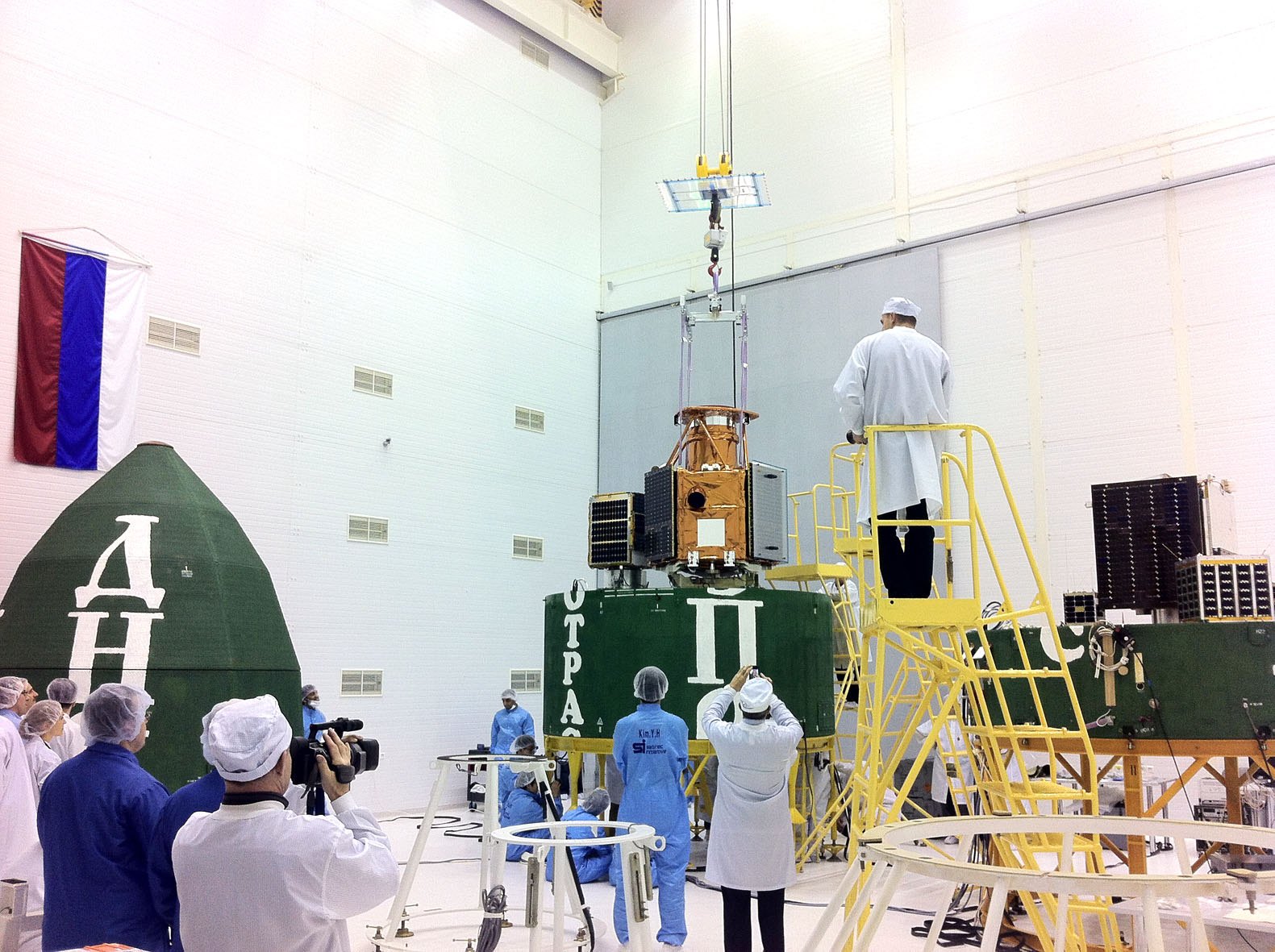
The mass is the part worth sitting with. Divide it out and the average rocket-released mission object comes to about 150 kilograms and the average payload-released one to about 60 kilograms. For comparison, the same ESA table lists 5,774 catalogued payload fragmentation debris objects with a combined mass of about 3.0 tonnes ESA DISCOS — roughly half a kilogram each. Five times as many fragments weigh one forty-seventh as much. The objects nobody discusses are, individually, two orders of magnitude heavier than the objects everybody discusses.
What is actually in it
The class is made of interfaces. Payload adapters and attach fittings, the cones and rings that hold a satellite to the stage below it. Dispensers, which hold several satellites and release them in sequence. Clamp bands and separation springs. Instrument and sensor covers. Yo-yo despin weights, which are spooled out on cables to slow a spinning stage and then cut loose on purpose. Every one of them is rigid, compact, and left exactly where the payload was dropped off, which is to say in the operational orbit it was aimed at.
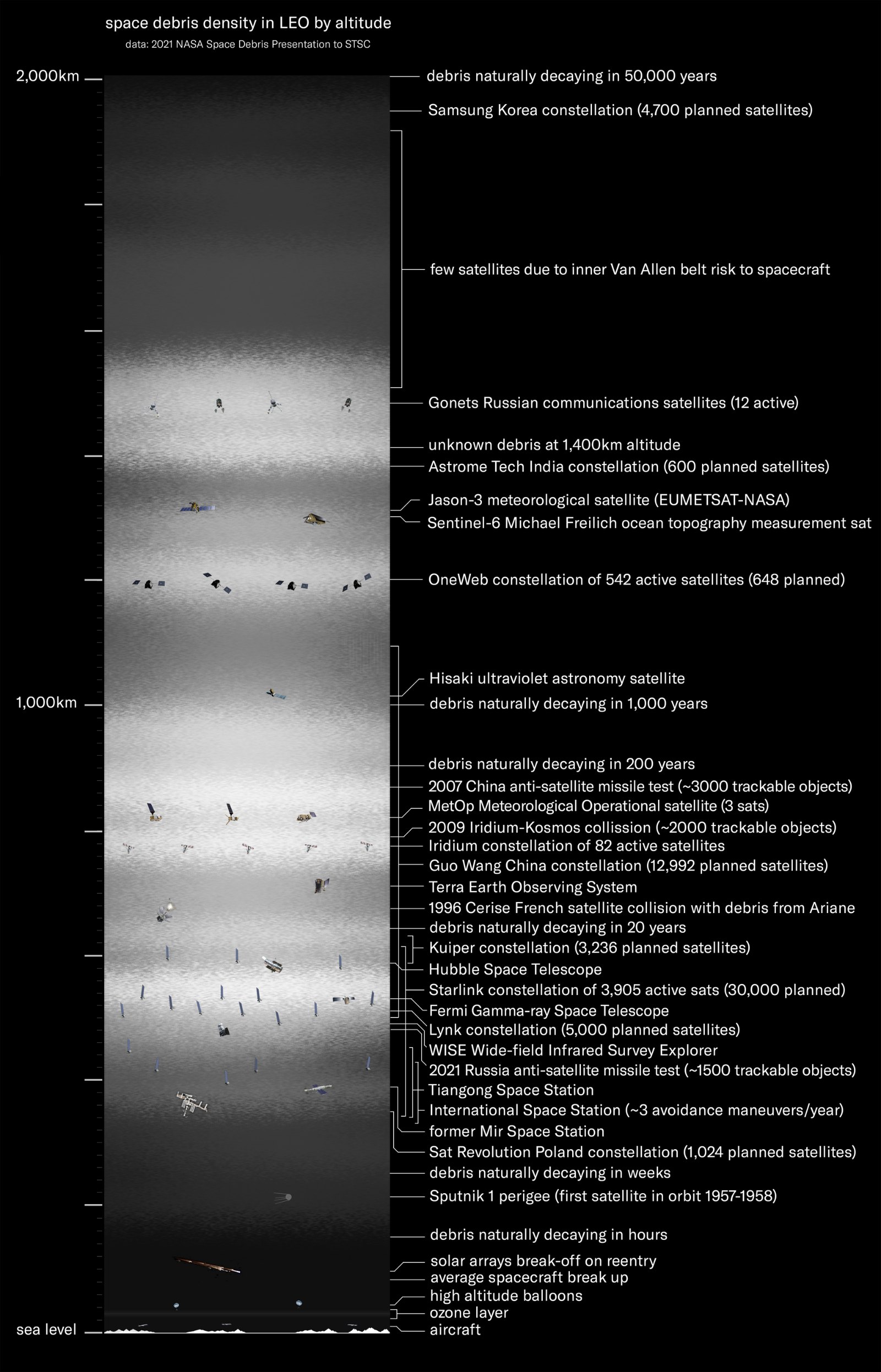
This site's briefing for 9 October happens to contain a textbook case. One of today's predicted close approaches involves catalogue object 25160, the final stage of the Taurus that launched the Geosat Follow-On in February 1998. The catalogue does not list it under the rocket's name. It lists it as CELESTIS-02 & TAURUS R/B, because the stage still carries the Celestis payload attach container that was bolted to it for the flight Jonathan's Space Report 349. Stage and mission hardware are one object now, tumbling through the most fragment-rich shells in low orbit at 790 kilometres.
ESA's own assessment of the trend is careful and not reassuring. Its Annual Space Environment Report says that "the release of mission related objects as part of their operations is going down", but adds that releasing large mission-related objects "is unfortunately not a relic of the past (yet)" ESA Annual Space Environment Report, Issue 10.0. The practice is in decline, not ended, and the 140 tonnes already up there is not in decline at all above the altitudes where drag works.
There is a smaller version of the same story that the models cannot agree on. Solid rocket motors shed aluminium oxide as dust and as larger slag particles when they fire. In ESA's MASTER model, "the SRM dust and slag rival the sum of all other debris in the critical size range and below", the range from one centimetre down to one millimetre; in NASA's ORDEM model, by contrast, "there is no SRM slag population" at all Krisko et al., IADC 2015. Two of the field's principal engineering models disagree about whether the largest population in the most dangerous small-debris band exists. Solid motor use has been declining since the 1990s, which bounds the problem but does not settle the question.
The part that comes back
The clearest public lesson about mission-related hardware did not arrive in orbit. It arrived through a roof.
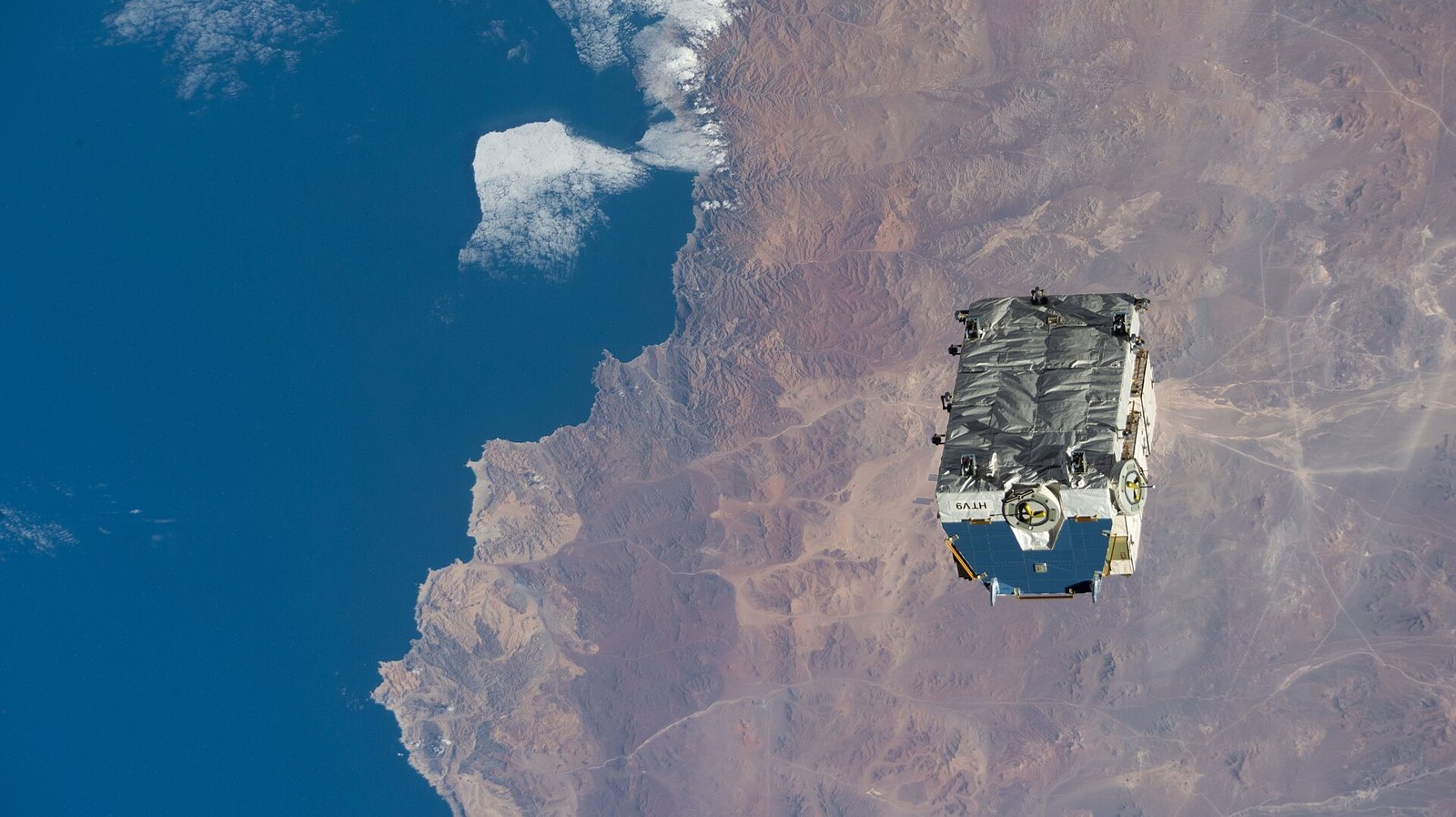
In March 2021, controllers in Houston used the International Space Station's robotic arm to release a cargo pallet loaded with aging nickel-hydrogen batteries, a package with a total mass of about 5,800 pounds. It was expected to burn up on 8 March 2024. Part of it did not. NASA later confirmed that a piece recovered from a house in Naples, Florida was "a stanchion from the NASA flight support equipment used to mount the batteries on the cargo pallet" — Inconel, 1.6 pounds, four inches tall and 1.6 inches across NASA.
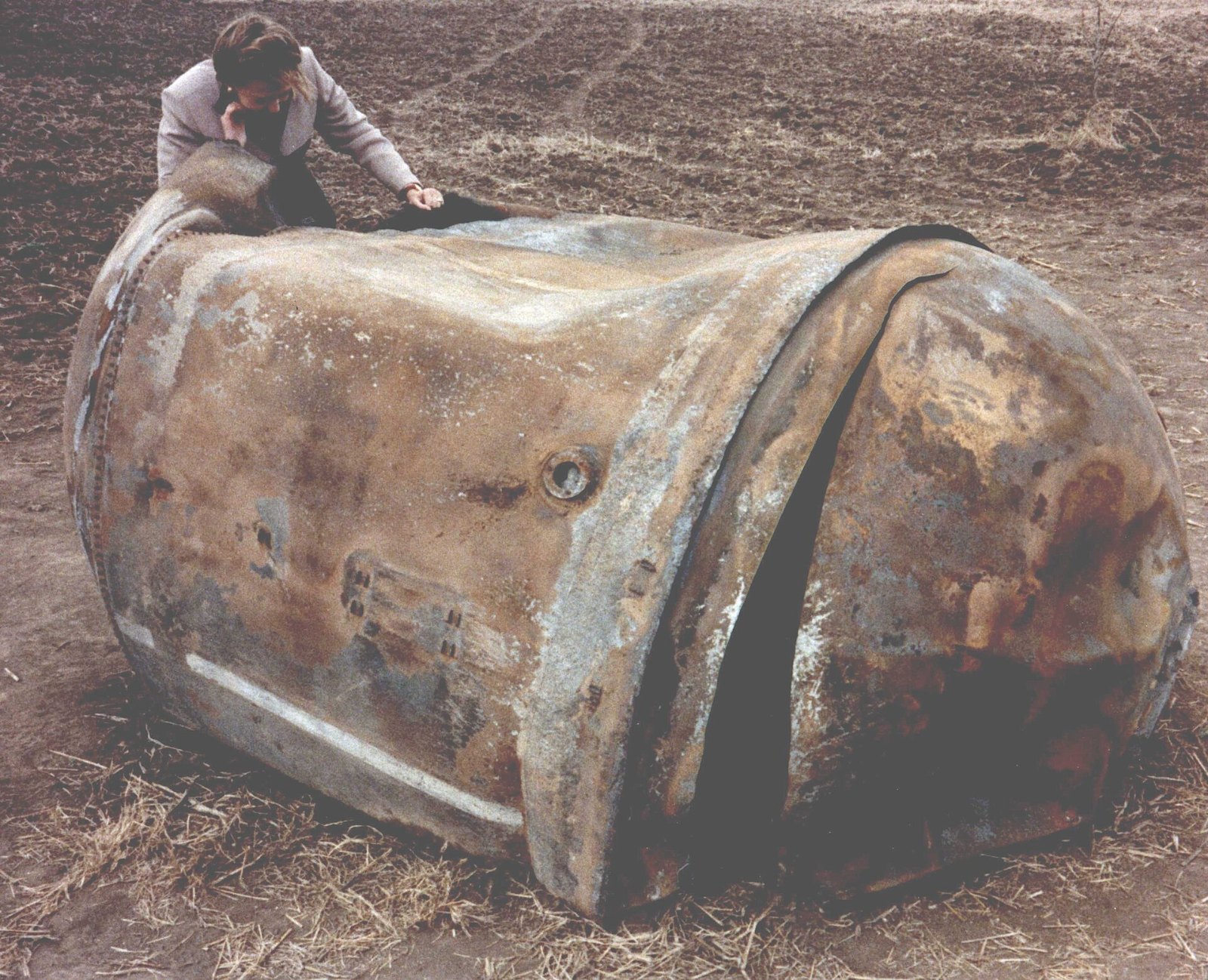
Nothing about that object was a satellite or a rocket. It was a bracket. It was released deliberately, catalogued as mission-related hardware, tracked for three years, forecast to vanish, and it survived to the ground. The on-orbit risk and the on-ground risk from this class of object run on the same ledger, and both are routinely rounded down because the pieces are small relative to a stage and because, by construction, nobody is flying them.
Why this is the easy end of removal
Here is the part that should change how the category is treated. Mission-related objects are, in engineering terms, among the most tractable removal targets in orbit.
A derelict satellite has solar arrays, antennas, and residual momentum from years of uncontrolled tumbling. A spent upper stage is large, may hold residual propellant, and often spins. An adapter or a dispenser is a rigid, compact, usually symmetric structure, and its defining feature is a machined circular interface — the ring that held the satellite. That is close to the ideal grapple point: a known geometry, published dimensions, and no fragile hardware to shear off.
The world's first commissioned debris removal mission understood this. When ESA commissioned ClearSpace-1 in December 2019, the target it named was not a satellite and not a rocket: it was the Vespa, the Vega Secondary Payload Adapter upper part left in an orbit of approximately 800 by 660 kilometres by the second Vega flight in 2013, with a mass of 100 kilograms ESA. The first object Europe contracted to remove (Planned) was a piece of mission-related debris, chosen precisely because it is simple, isolated, and the right size for a first attempt.
The only uncooperative rendezvous actually performed so far in this family was Astroscale's ADRAS-J, which approached and inspected a spent H-IIA upper stage (Flown). Capture interfaces designed into hardware before launch, which would make the adapters and dispensers of the 2030s trivially removable, remain studied and unfunded (Proposed) — see magnetic docking plates and passivation of spent stages for how far that thinking has got.
ClearOrbit's view
The debris conversation has organised itself around the biggest and the most numerous: the nine-tonne upper stages in the 800-kilometre shells, and the fragment clouds from 2007 and 2009. That focus is correct on mass and on count, and we have written about it at length in the fifty most dangerous objects. But it has left a category of 1,163 objects and 140 tonnes sitting in exactly the orbits that matter, with no removal programme, no mitigation deadline that applies retroactively, and no advocate.
We think mission-related debris is where a removal industry should learn to walk. The objects are heavy enough to matter, simple enough to grab, numerous enough to give a servicer repeat business in a single shell, and uncontroversial enough that no operator will object to their removal — their owners finished with them at separation, by design. A programme that can clear the adapters and dispensers out of a band has, by the end of it, built and flown everything needed to go after the stages.
That is our priority for the first decade of removal (ClearOrbit vision): not the hardest target, and not the most famous one, but the one that teaches the most per attempt. The 140 tonnes is already up there. It was never meant to stay.
Reader mail
Have a better idea?Spotted something we got wrong?
We publish in public so the numbers can be checked. If a figure looks wrong, a source is missing, or you know something this piece should have said, send it over. One box, no sign-up.
Send an idea or correctionQuick question
Who should pay for cleaning up orbit?
Anonymous. You will see how others answered after you vote.
Sources
- ESA DISCOS space environment statistics
- GCAT, J. McDowell
- NASA Orbital Debris Program Office FAQ
- ESA Annual Space Environment Report, Issue 10.0 (1 May 2026)
- NASA: Completes Analysis of Recovered Space Object (15 April 2024)
- Krisko et al., ORDEM 3.0 and MASTER-2009 Populations Comparison, IADC 2015
- ESA commissions world's first space debris removal (9 December 2019)
- Jonathan's Space Report 349