Article · · 7 min read
The Other End of the Problem: What Reentry Actually Does
Reentry is the disposal plan for almost everything in low orbit. It is not a disappearance: it is a transfer of several thousand tonnes a year into the upper atmosphere.
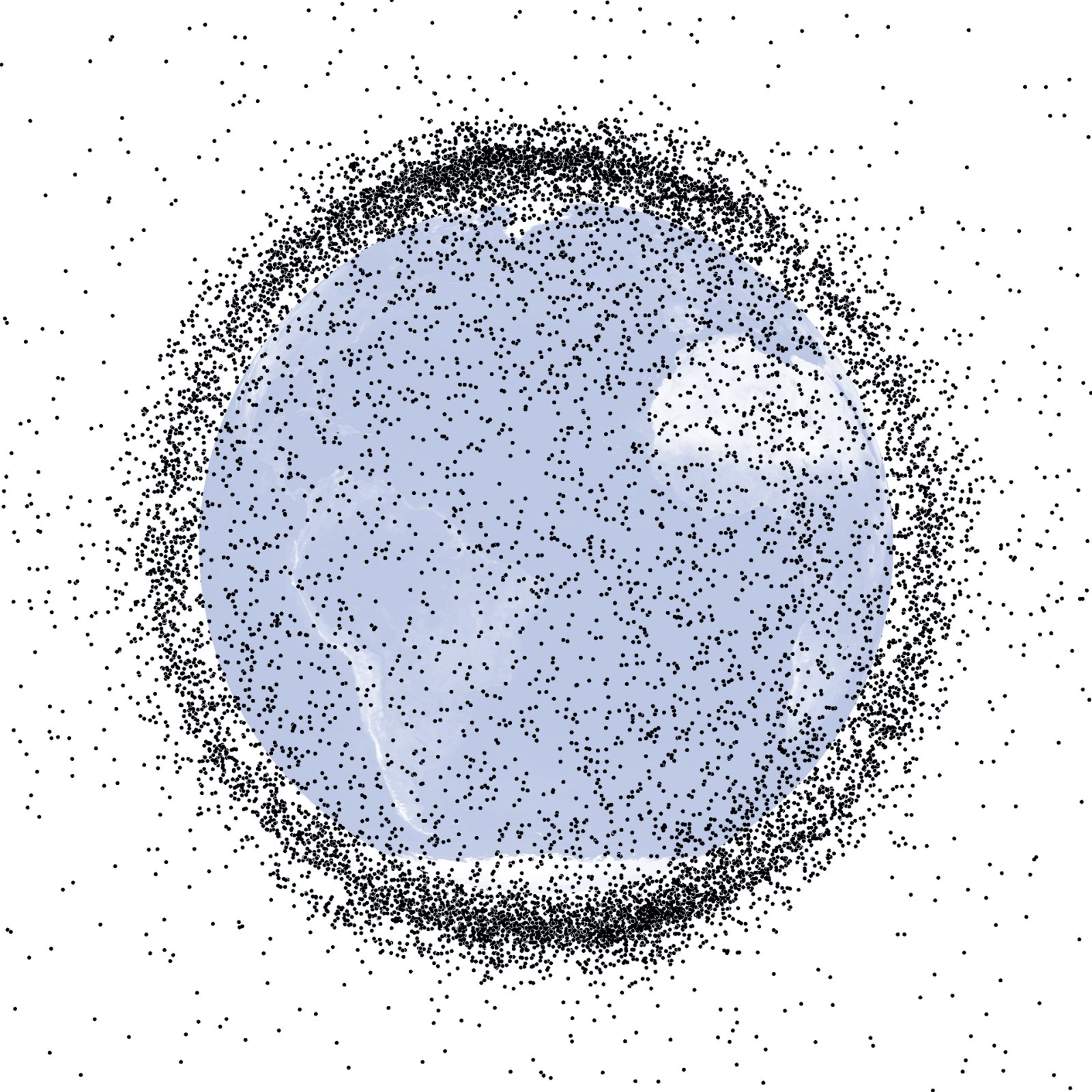
Almost every conversation about orbital debris ends in the same place: eventually it comes down. The atmosphere is the disposal system of record for low Earth orbit, it works without being paid, and it is the reason the 400-kilometre shell does not accumulate wreckage the way the 800-kilometre shell does.
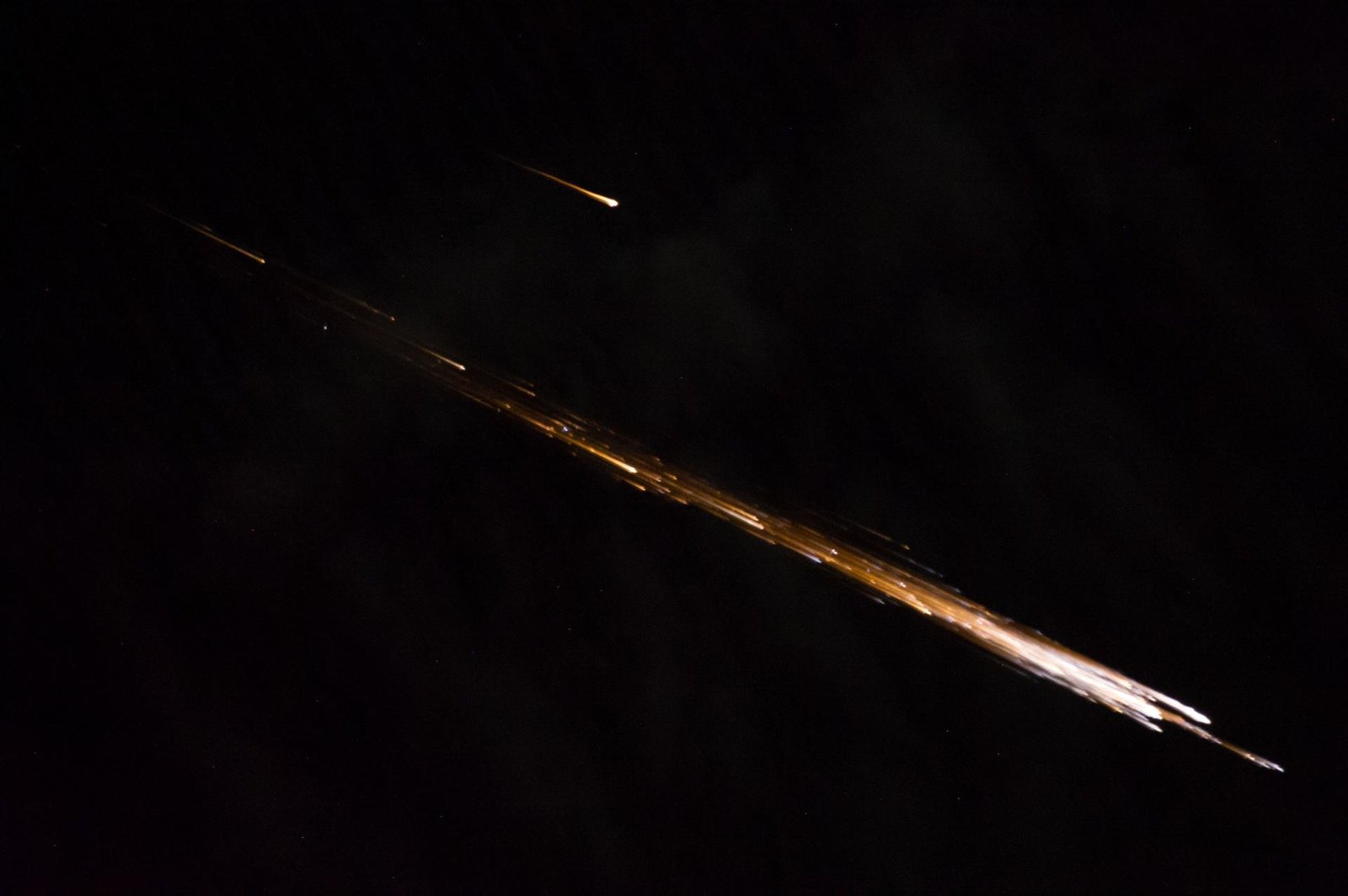
It is worth being precise about what "comes down" means. Eighty-seven catalogued objects re-entered in the last 30 days, and 179 in the last 60, 49 of them Starlink spacecraft (GCAT). ESA's 2026 environment report puts the sustained rate at more than three intact satellites or rocket bodies every day, against about ten new payloads launched daily (ESA). Nothing is destroyed in that process. Hardware is converted into gas, dust and, sometimes, objects on the ground.
What survives
Reentry is an ablation problem, and the outcome depends almost entirely on melting point. Components made of low melting-point materials, aluminium above all, generally break up and vaporise at high altitude; titanium, stainless steel, beryllium and carbon-carbon can make it to the surface, and some parts do not demise at all (NASA ODPO).
The canonical example is still the one photographed in a Texas field. On 22 January 1997 a Delta 2 second stage propellant tank of roughly 250 kg, primarily stainless steel, survived reentry relatively intact and came down near Georgetown, Texas; a 30 kg titanium pressurant tank from the same stage was recovered farther downrange near Seguin (NASA ODPO).
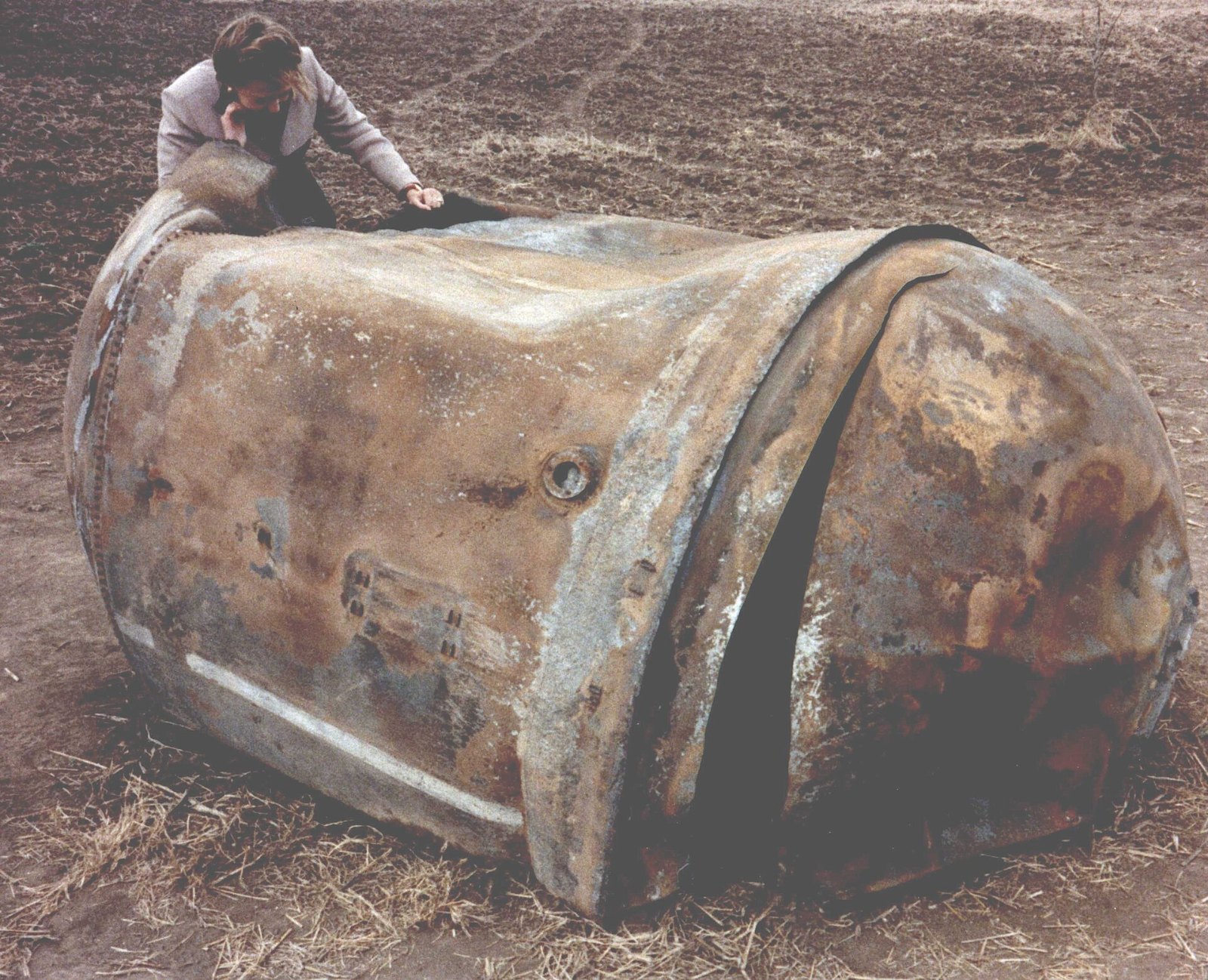
Four years later the pattern repeated with a different alloy: on 21 January 2001 a titanium PAM-D motor casing of about 70 kg landed in Saudi Arabia, some 240 km from Riyadh (NASA ODPO). Neither event hurt anyone. Both are the reason ground risk is regulated at all.
The rule that governs it
The governing number in the United States is small and specific. The 2019 U.S. Government Orbital Debris Mitigation Standard Practices require less than 7 square metres of total reentry debris casualty area, or a human casualty risk below 0.0001 — one in 10,000 — for surviving components (ODMSP, 2019). The same document makes immediate removal from Earth orbit the preferred disposal option, treating the familiar 25-year rule as an acceptable balance rather than a goal.
That framework has worked on its own terms. ESA reports that controlled reentries of rocket bodies outpaced uncontrolled ones for the second consecutive year (ESA). What the framework does not regulate is the fraction that does vaporise — which is to say, almost all of it.
Watching one come apart
Until recently, models of how a satellite breaks up were calibrated against very little observed data. That changed with ESA's Cluster mission, four identical spacecraft deliberately brought down one at a time. Salsa re-entered in September 2024 over a sparsely populated stretch of the South Pacific after four orbit-lowering manoeuvres, which ESA describes as the first time anyone had targeted the reentry of a satellite on an eccentric orbit in that way (Flown) (ESA).
The final two followed this month. Samba re-entered on 31 August 2026 and Tango on 1 September 2026, and both were watched from the air: a Dassault Falcon 900 operating out of Tonga carried 30 instruments across six observation stations, of which 29 recorded Samba's roughly 50-second fragmentation sequence — high-speed cameras, infrared detectors and spectrometers tuned to the atomic lines emitted as aluminium alloys melt and vaporise (Flown, as reported) (SatNews). The point of pointing spectrometers at a breakup is not the spectacle. It is to measure how much aluminium oxide a satellite actually injects into the stratosphere, because until now that number has been inferred rather than observed.
What the stratosphere is getting
There is a reason to want it observed. In 2023 a team led by Daniel Murphy sampled the high-latitude stratosphere near Fairbanks, Alaska, up to 19 km altitude, analysing more than 500,000 individual particles with an airborne laser mass spectrometer. About 10 per cent of stratospheric sulfuric acid particles larger than 120 nanometres contained aluminium and other elements in ratios matching spacecraft alloys; over twenty elements were identified, including lithium, copper, lead, silver, tin, hafnium and niobium, the last of these in roughly 0.1 per cent of particles (Murphy et al., PNAS, 2023).
Two figures from that paper matter more than the rest. The authors estimate that about 210 tonnes of aluminium ablates from reentering spacecraft each year, exceeding the natural cosmic dust influx of those metals, and they project that within a few decades the share of stratospheric sulfuric acid particles carrying satellite metals will be comparable to the roughly 50 per cent that now carry meteoric metals (Murphy et al., PNAS, 2023).
What that does to ozone or to stratospheric aerosol chemistry is not settled. Alumina is a known catalytic surface and the modelling community is actively working the question, but the honest summary is that the measurements of the input are newer than the measurements of the effect.
The trend line
The input is growing fast. A 2025 survey of anthropogenic matter injection puts reentry mass at roughly 0.9 kilotonnes a year over 2015 to 2020, 1.6 kilotonnes in 2024, and more than 2.3 kilotonnes projected for 2025 — more than double the 2020 figure in four years. Its forward scenarios span 2.7 to 8.1 kilotonnes a year, and it counts 24 elements whose spacecraft-derived injection now exceeds the meteoric supply, against 18 in 2015 (Schulz et al., 2025).
None of this is an argument against reentry, and it is emphatically not an argument for leaving hardware in orbit. It is an argument that the bill is itemised in two places. A constellation satellite designed to demise completely scores well on ground casualty risk and contributes its full mass to the stratosphere; a stainless steel tank does the reverse. Those are engineering trade-offs, and at present only one side of them is written into a standard.
ClearOrbit's view
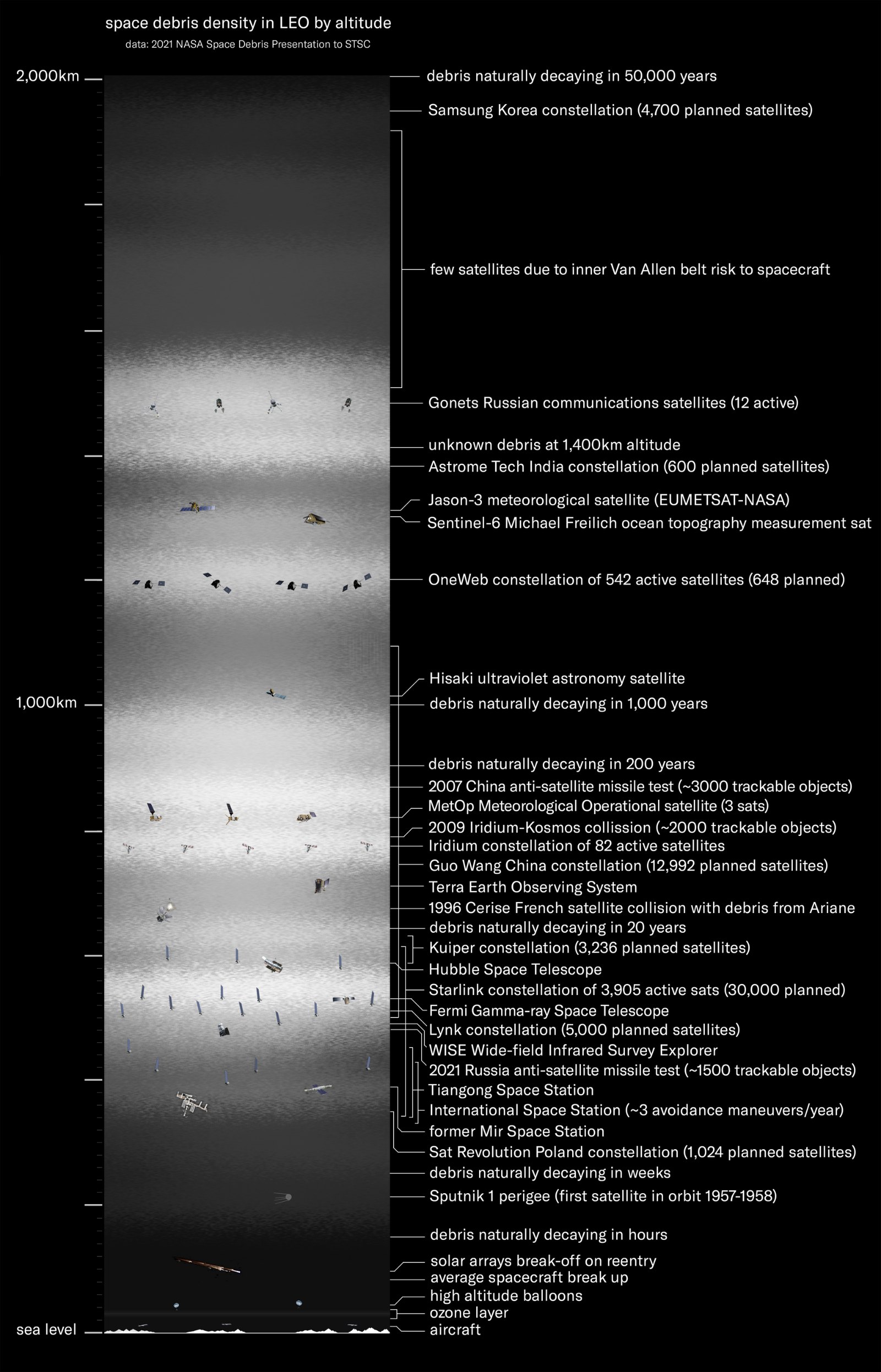
Reentry is the best disposal route available for the great majority of what is in low orbit, and we would not want a single reader to conclude otherwise. Designing hardware to come down on its own remains the cheapest intervention in this field, and drag sails remain the cheapest way to do it. The objects that genuinely need capture and removal are the ones the atmosphere will never reach, which the orbital clock sets out altitude by altitude.
But "it burns up" has been doing too much work in this industry's arguments, ours included. It is the end of an orbital problem and the beginning of an atmospheric one, and the second has been measured for about three years while the first has been measured for sixty. We think the reentry flux belongs in the same public dashboards as the catalog: tonnes per year by material, published alongside object counts, with the uncertainties attached (ClearOrbit vision).
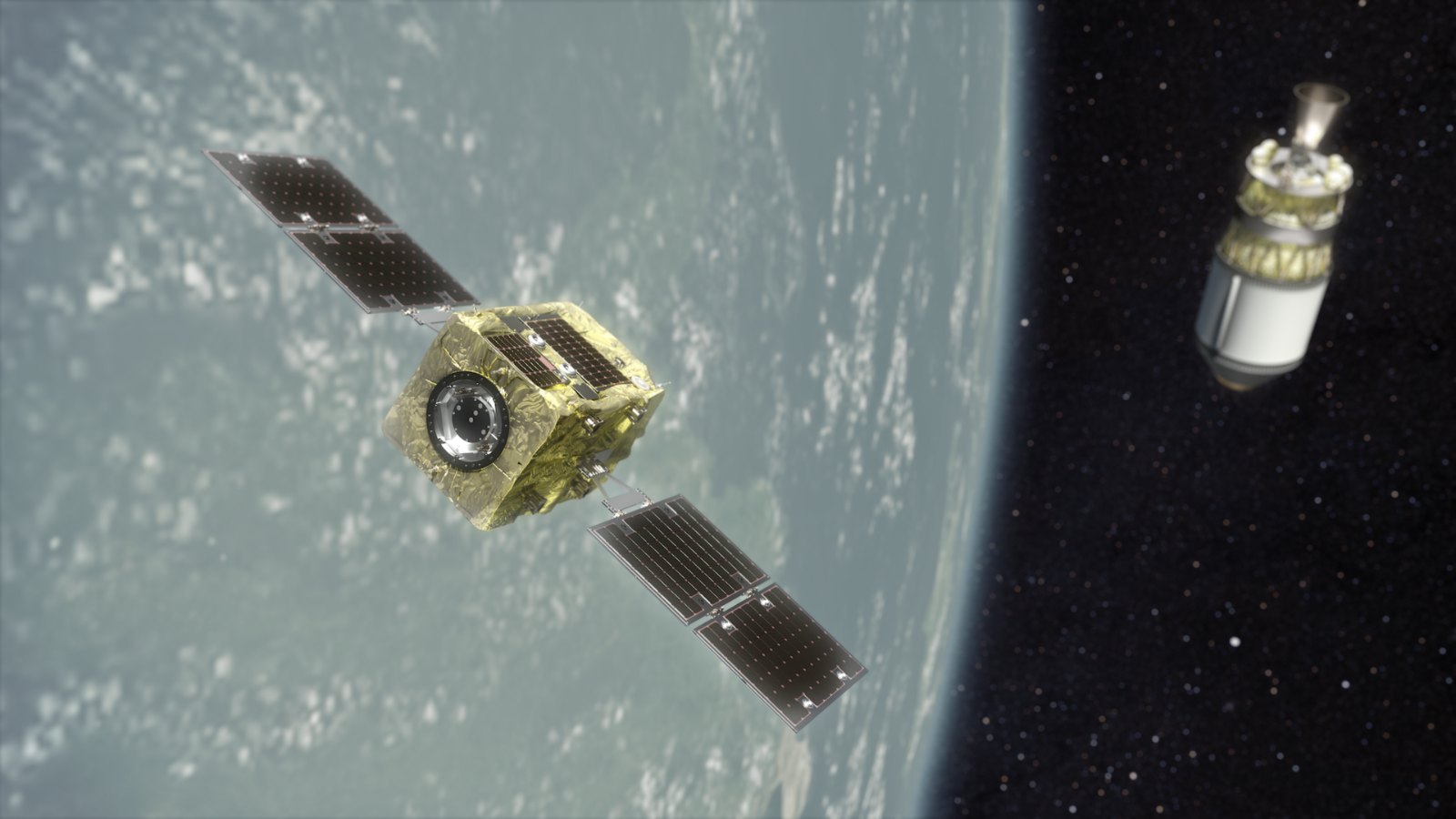
We would also like the trade-off written down honestly. Design-for-demise and design-for-removal pull in opposite directions, and the industry currently has a standard for one and a slogan for the other. A serious removal programme should be able to say which objects it intends to deorbit into the atmosphere, which it intends to move, and why — and the economics of that choice should include the atmosphere as a line item rather than as a free disposal site. ESA pointed thirty instruments at two satellites this month to find out what one reentry really costs. That is the standard of evidence the rest of us should be arguing from.
Reader mail
Have a better idea?Spotted something we got wrong?
We publish in public so the numbers can be checked. If a figure looks wrong, a source is missing, or you know something this piece should have said, send it over. One box, no sign-up.
Send an idea or correctionQuick question
Who should pay for cleaning up orbit?
Anonymous. You will see how others answered after you vote.
Sources
- GCAT, General Catalog of Artificial Space Objects, J. McDowell (currentcat)
- ESA Space Environment Report 2026
- NASA Orbital Debris Program Office, recovered reentry objects
- NASA Orbital Debris Program Office, reentry and demise
- 2019 U.S. Government Orbital Debris Mitigation Standard Practices (COPUOS presentation)
- Murphy et al., Metals from spacecraft reentry in stratospheric aerosol particles, PNAS 120(43), 2023
- Schulz et al., Space waste: an update of the anthropogenic matter injection into Earth atmosphere, arXiv:2510.21328
- ESA, Salsa's last dance targets reentry over the South Pacific
- SatNews, ESA and ROSIE consortium track Cluster satellite reentries
- ESA DISCOS space environment statistics