Article · · 6 min read
The Soviet Union's 2,790 Objects, and Who Is Allowed to Touch Them
GCAT still lists 2,790 objects in orbit whose owner is a state that dissolved in 1991. Space law says jurisdiction never lapses, which makes consent, not capture, the hard part of removing them.
Sort the catalog of objects currently in Earth orbit by owner and the fourth entry is a country that has not existed since 1991. GCAT lists 2,790 objects on orbit whose recorded owner is the Soviet Union, against 3,339 for the Russian Federation, 18,446 for the United States and 5,761 for China GCAT. Together those two columns describe a single engineering legacy split across a political discontinuity: more Soviet-era hardware is still up there than the entire on-orbit holdings of the United Kingdom, France, Japan, India, Canada and Germany combined, which come to 2,129 objects GCAT.
This matters for removal, and not for the reason most people assume. The hard part of taking a nine-tonne derelict out of orbit is not grabbing it. It is getting permission.
Jurisdiction does not expire
Article VIII of the Outer Space Treaty is three lines long and it is the whole problem: "A State Party to the Treaty on whose registry an object launched into outer space is carried shall retain jurisdiction and control over such object, and over any personnel thereof, while in outer space or on a celestial body" UNOOSA. There is no clause about dereliction, no expiry, and no equivalent of the maritime law of salvage. A dead satellite is not ownerless property; it is a thing over which some state retains jurisdiction and control, indefinitely.
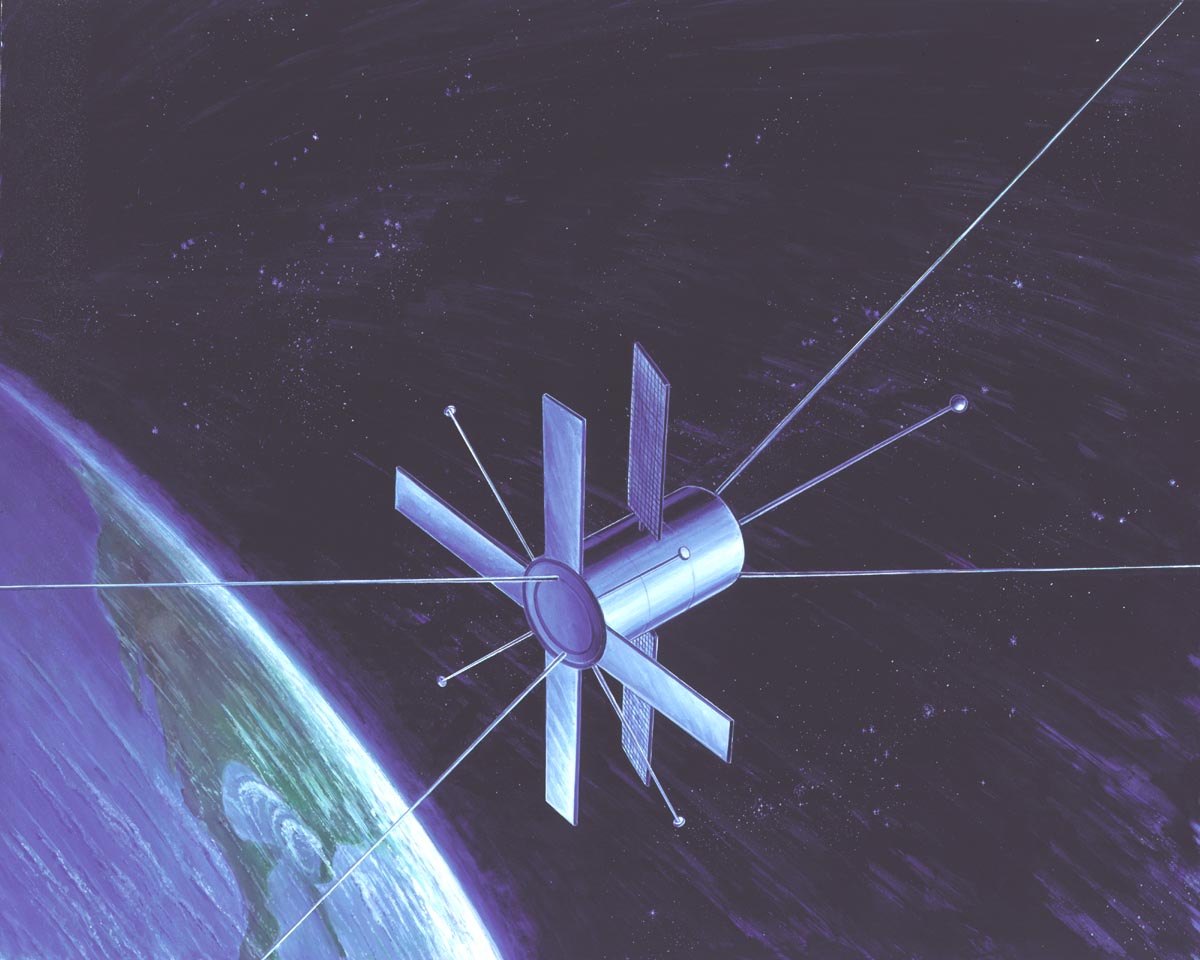
Legal scholarship has been clear about what that implies. In a 2026 review of the legal challenges around debris, Kumar and Yadav write that "any other state or party is not legally allowed to touch, move, de-orbit, or otherwise interact with such space debris without the express, prior consent of its owner," and that "the general consensus is that the clause of the OST on permanent jurisdiction excludes abandonment" Kumar and Yadav 2026. Unlike a wreck at sea, they note, "an object in space does not lose its status as property of the launching state, unless the state expressly renounces possession."
So the first question any removal mission has to answer is not technical. It is: whose object is this, and will they say yes?
Who inherited the obligation
For the Soviet column the answer, in law, is reasonably settled, and it is Russia. On 24 December 1991 Boris Yeltsin wrote to the United Nations stating that Russia would maintain full responsibility for all the rights and obligations of the USSR under the Charter, and the Soviet seat was treated as continuing rather than vacated; the Russian ambassador simply transferred his credentials EJIL. Space law reflects the same continuity in a very concrete way: Russia is one of the three depositary governments for the Outer Space Treaty itself US Department of State.
So "nobody owns it" is the wrong description of the Soviet derelicts. The obligation has an address. What it does not have is a mechanism.
The paperwork from that era is thin
Consent requires identification, and identification requires records. The Registration Convention, in force since 15 September 1976 UNOOSA, requires a launching state to enter each space object in a national registry and to tell the UN Secretary-General the name of the launching state, a designator, the date and location of launch, basic orbital parameters and the object's general function UNOOSA.
Compliance has never been complete, and it was weakest for exactly the hardware that is now the problem. A study of the registration record found that of 7,113 payloads launched through December 2014, only 6,728 had been registered by July 2017, leaving 385 unregistered McDowell et al.. The same work records that the Soviet Union registered roughly 1,100 space objects between 1962 and 1978, and that its filings described military satellites with formulas such as "investigation of the upper atmosphere and outer space" rather than their actual function — a practice the Russian Federation later improved on by stating when a satellite serves the Ministry of Defence McDowell et al..
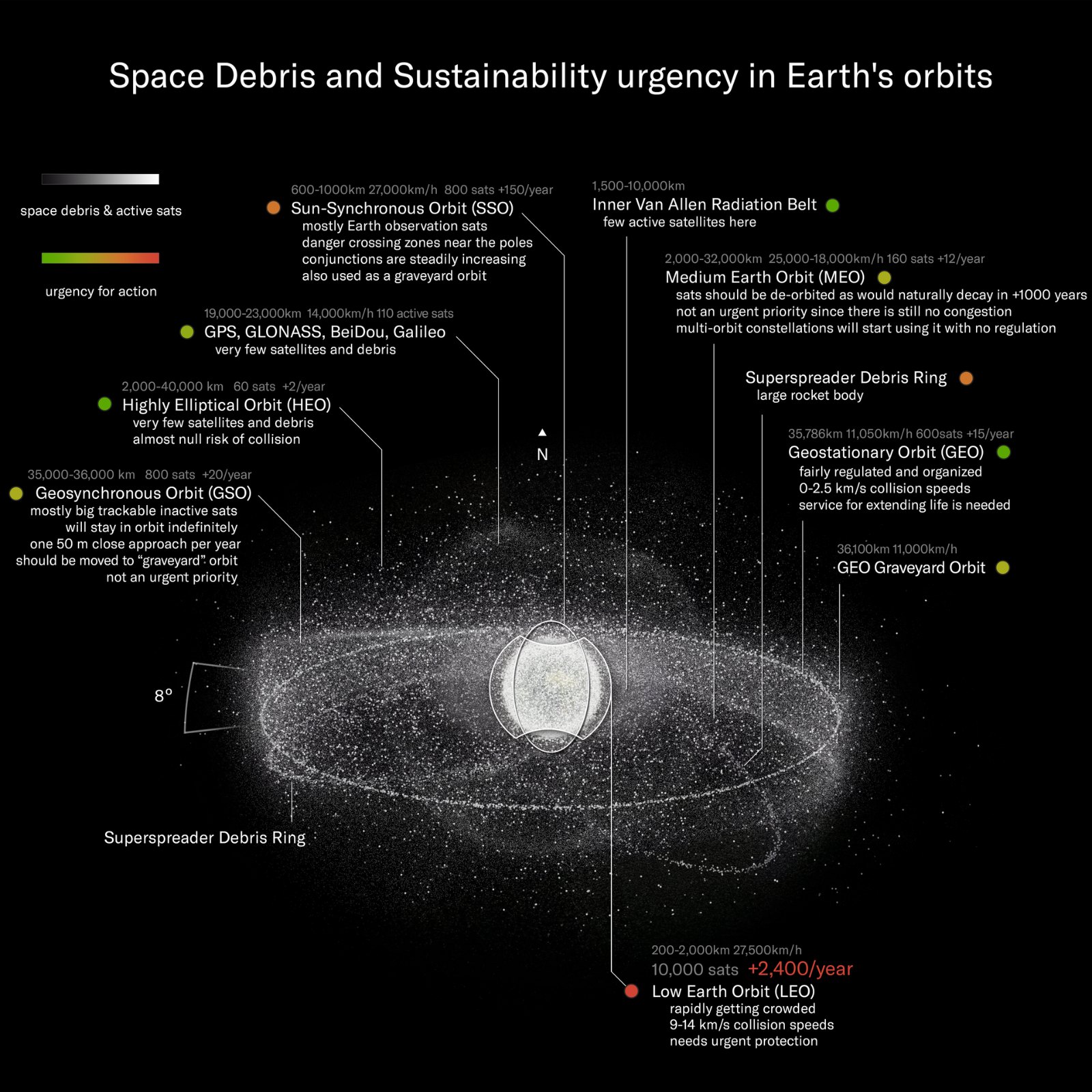
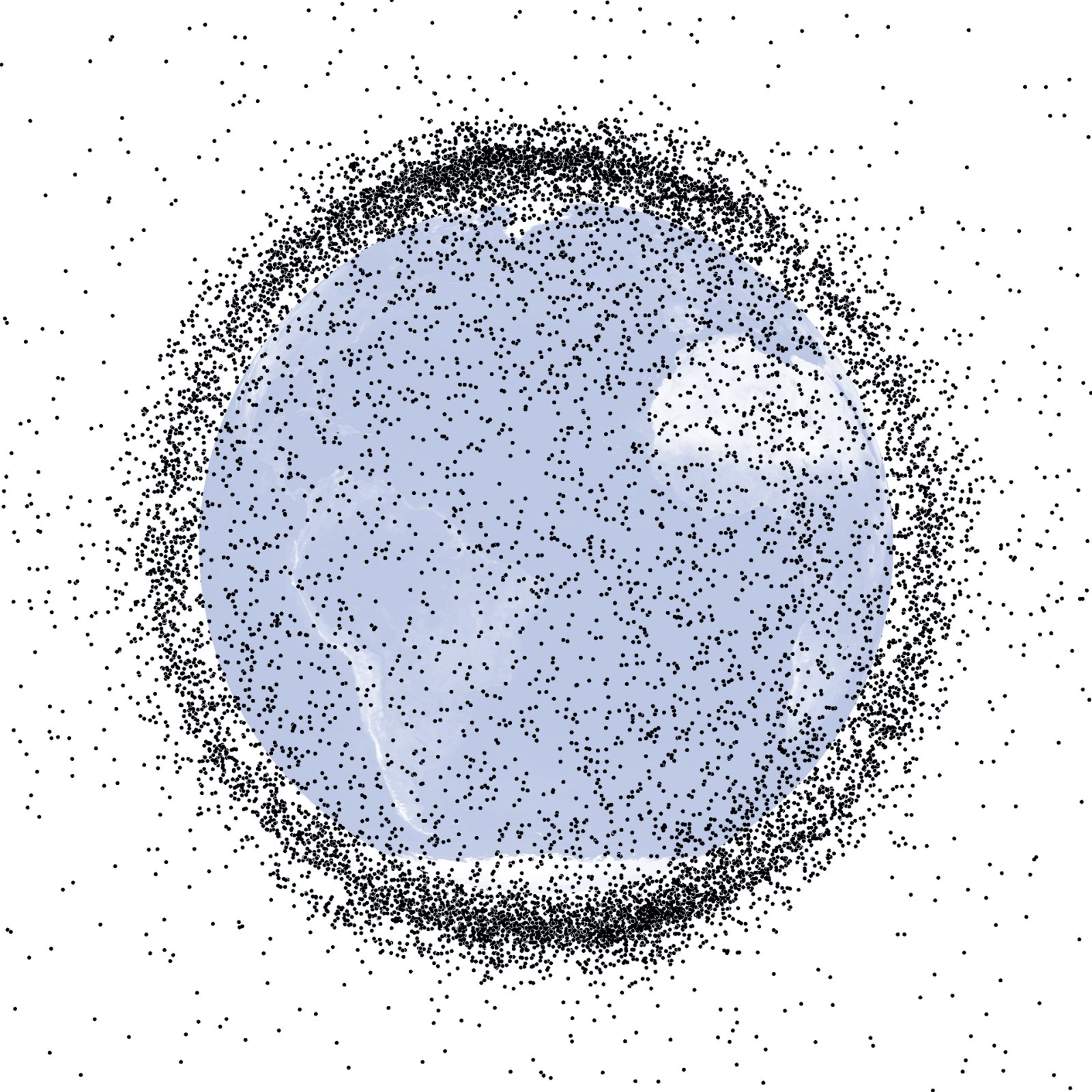
Registration also only ever covered payloads and never the fragments. Of the more than 660 break-ups, explosions and collisions estimated since 1957, the resulting pieces appear in no registry at all, and ESA's modelling puts about 1.5 million debris objects between 1 and 10 centimetres in orbit alongside more than 17,000 tonnes of material in total ESA DISCOS. Jurisdiction over a fragment is a question with no filed answer.
Why this decides which object goes first
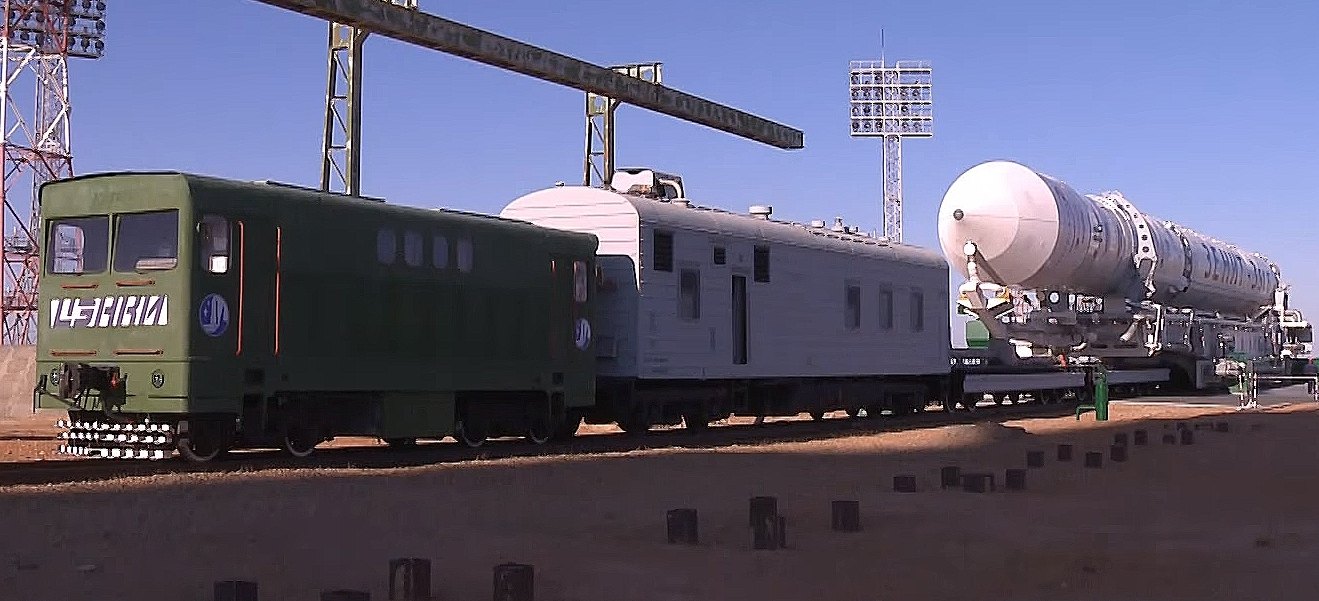
The practical consequence is visible in every target list. When eleven research teams ranked the derelicts most likely to seed future debris, all twenty of the top-ranked objects turned out to be the same Soviet and later Russian upper stage, each about nine tonnes, parked in a narrow shell near 830 to 850 kilometres, as covered in the fifty most dangerous objects. The objects that matter most physically are the ones that are hardest to get permission for.
Liability sharpens it further. Under the Liability Convention a launching state is absolutely liable for damage its space object causes on the surface of the Earth, and liable for damage caused in orbit only where fault is shown UNOOSA. A removal attempt that fragments its target, or drops it somewhere unintended, moves the fault squarely onto whoever authorised the mission. Kumar and Yadav call this the liability trap, and note that states tend to resolve it by indemnifying the operator — that is, by absorbing the risk themselves Kumar and Yadav 2026.
That is why the first serviced targets have been, and will be, hardware whose owner is in the room: a state or company removing its own object, under its own authorisation. It is also why no rule currently on the books reaches the legacy population at all, a gap we mapped in rules of the road, 2026.
ClearOrbit's view
We think the consent problem is treated as a footnote when it is the main obstacle, and that the sequence most people imagine is backwards. The engineering for an uncooperative capture is Proposed and advancing; nothing has yet removed a derelict, as we set out in nobody has removed a piece of debris yet. But a working capture vehicle with no legal pathway to the 2,790 objects in the Soviet column is a demonstration, not a cleanup.
What would change this is narrow and achievable: a standing instrument by which a state of registry can consent in advance to the removal of a specified, identified derelict, with liability allocated before the mission flies rather than litigated after it fails. That is a diplomatic document, not a spacecraft, and it could exist years before the hardware does.
The ClearOrbit vision is to treat the legal clearance for a target as part of the mission design, filed and agreed at the same time as the capture interface. The list of objects most worth removing has been published for five years. The list of objects anyone is actually permitted to remove is, for now, almost empty, and closing that gap is the cheapest work available in this field.
Reader mail
Have a better idea?Spotted something we got wrong?
We publish in public so the numbers can be checked. If a figure looks wrong, a source is missing, or you know something this piece should have said, send it over. One box, no sign-up.
Send an idea or correctionQuick question
Who should pay for cleaning up orbit?
Anonymous. You will see how others answered after you vote.
Sources
- GCAT, J. McDowell
- UN Treaties and Principles on Outer Space (UNOOSA)
- Registration Convention, UNOOSA overview
- McDowell et al., Critical issues related to registration of space objects (PDF)
- Kumar and Yadav (2026), Space debris and outer space sustainability: legal challenges
- EJIL, Russia Takes Over the Soviet Union's Seat at the United Nations
- US Department of State, Outer Space Treaty
- ESA DISCOS space environment statistics