Daily briefing · · 3 min read
Orbit on 3 October 2026: 27 decays booked in a day, and the queue below 250 kilometres lost 45 objects
The exit column caught up hard: on-orbit fell 24 overnight, the thirty-day reentry count went from 73 to 90, and the sub-250-kilometre queue thinned from 139 to 94.
What changed
The catalog shrank by 24 objects overnight, the largest single-day fall in a fortnight of these briefings. There are 33,670 objects on orbit: 19,595 payloads and 14,075 debris and spent rocket bodies, with the debris column losing 13 and the rocket-body column holding flat at 2,113 GCAT. Four objects were added, taking the catalogued-ever total to 70,235, and 27 were moved into the decayed column, which now reads 37,407 GCAT.
Twenty-seven decay records in a day is a bookkeeping event, not a sky event. Seventeen of them fall inside the rolling thirty-day window, which moved from 73 to 90; the seven-day count went from 10 to 16 and the sixty-day total from 171 to 193 GCAT. The other ten are older reentries only now written down. The newest dates on the books are 1 October, for Starlink 1453, launched 4 June 2020, and 30 September, for Starlink 4446, launched 12 August 2022 GCAT. Yesterday's briefing read a five-decay batch as the catch-up for a blank exit column. It was not. This is.
Launch activity moved the other way for an equally dull reason: the rolling thirty-day launch count fell from 255 to 226 as late-August batches aged out of the window, while the highest catalog number rose to 100,960, the top of it belonging to USA 708, launched 2 October GCAT. Today's conjunction figures are stale in the pipeline and are not quoted here.
The queue emptied
There are now 94 catalogued objects with a perigee below 250 kilometres, down from 139 yesterday, against a range of 114 to 139 across the previous week GCAT. The front of the queue is thinner but familiar: the third stage of Kuaizhou-11 flight Y3 at 133 by 1,823 kilometres on an element set dated 17 September, the payload Tianfu Dongpo 07 at 143 by 156 kilometres from 1 October, and iSat at 150 by 162 kilometres from 29 September GCAT.
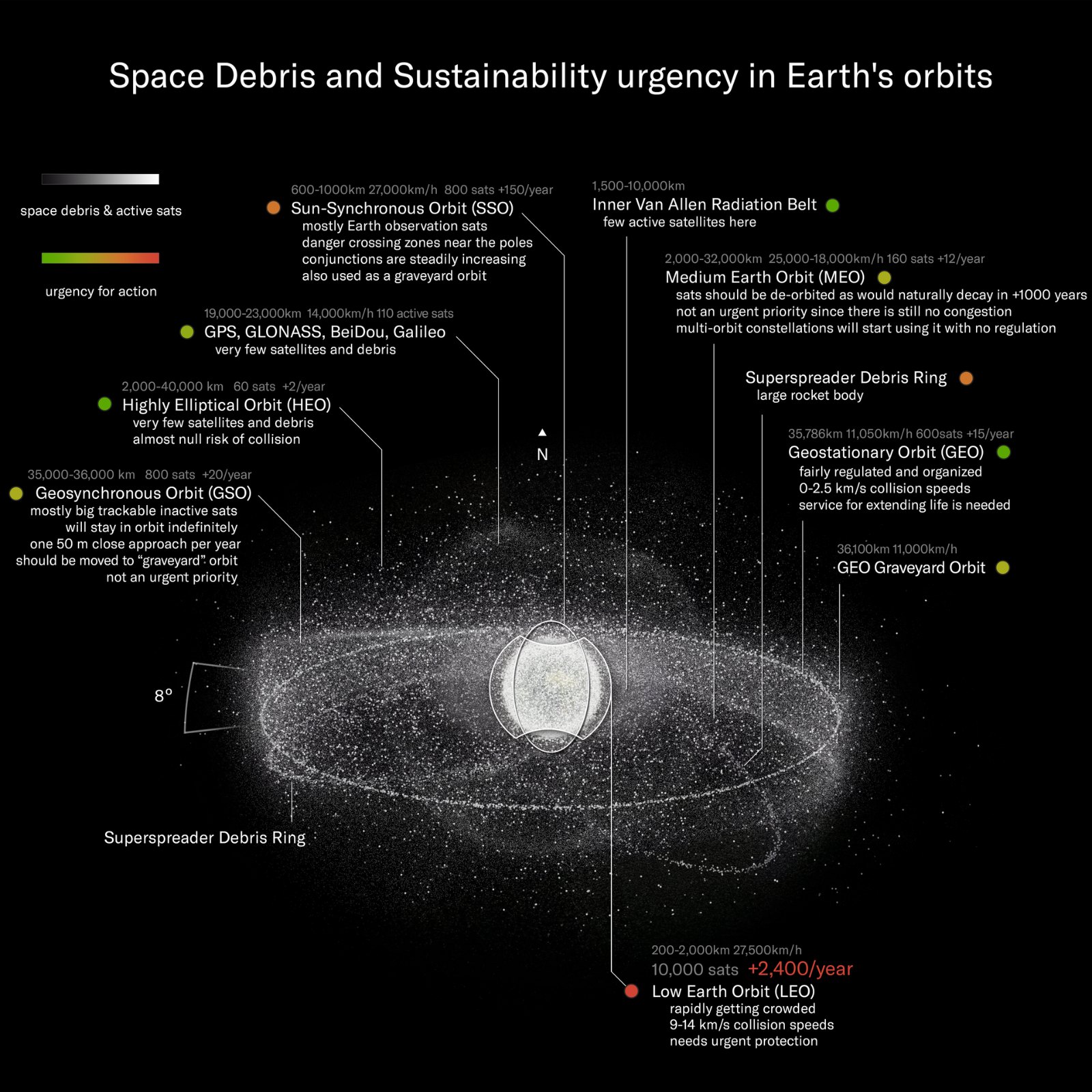
Crowding barely noticed. The 400 to 500 kilometre band gained five to reach 10,235, of which 10,055 are working payloads and only 180 are debris; the 800 to 900 kilometre band fell by five to 2,764, of which 2,499 are debris GCAT. Starlink alone accounts for 11,152 objects, 1,293 of them already below 400 kilometres GCAT. The band that empties itself is full of satellites; the band that does not is full of fragments, as The Orbital Clock sets out.
Object of the day: deb Ariane V26
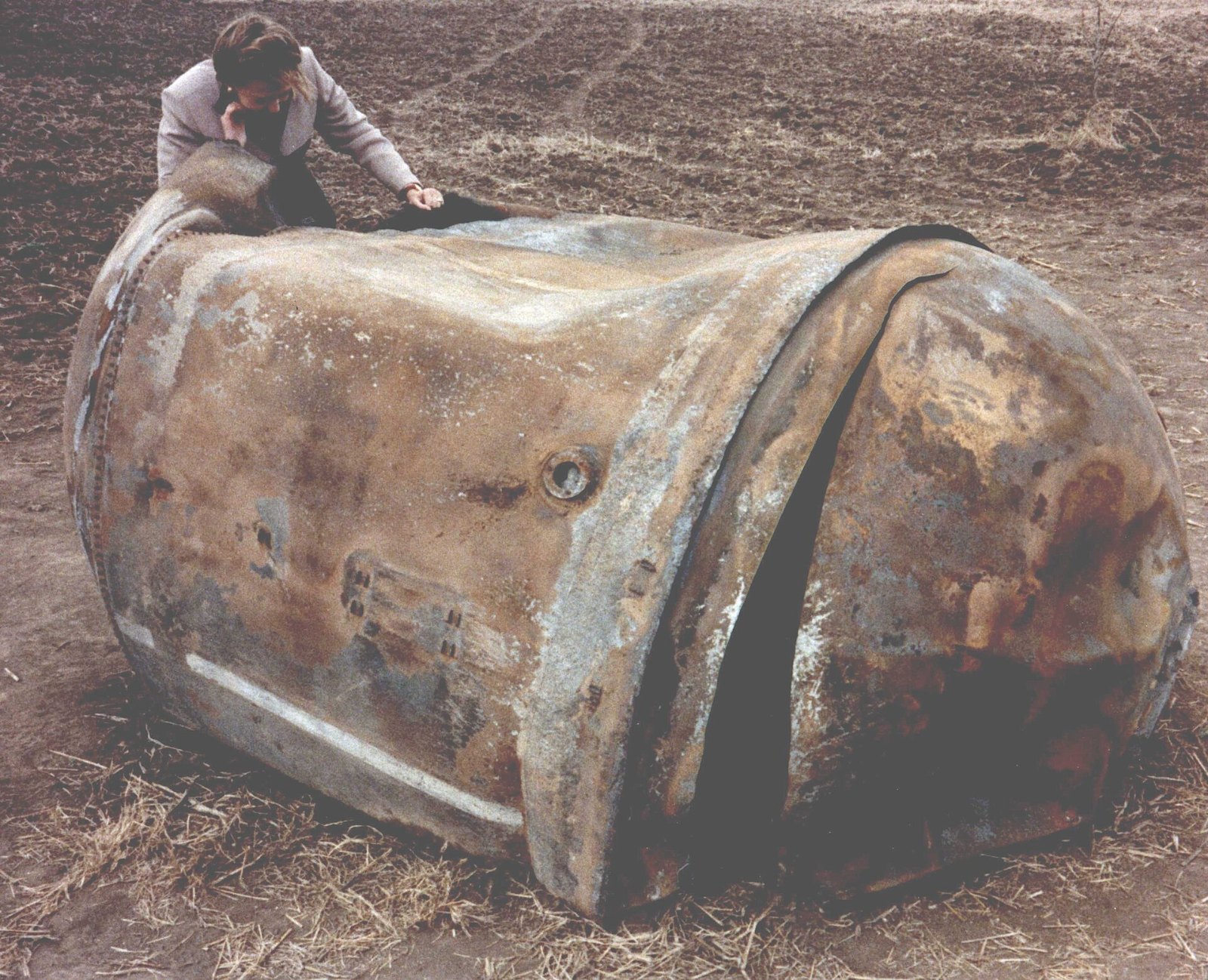
Not everything in today's batch was a recent satellite. GCAT lists catalog number 23966, "deb Ariane V26", a fragment associated with the Ariane flight V26 launch of 28 October 1988, with a decay date of 29 September 2026 GCAT. It spent a little under 38 years in orbit before the atmosphere finished with it.
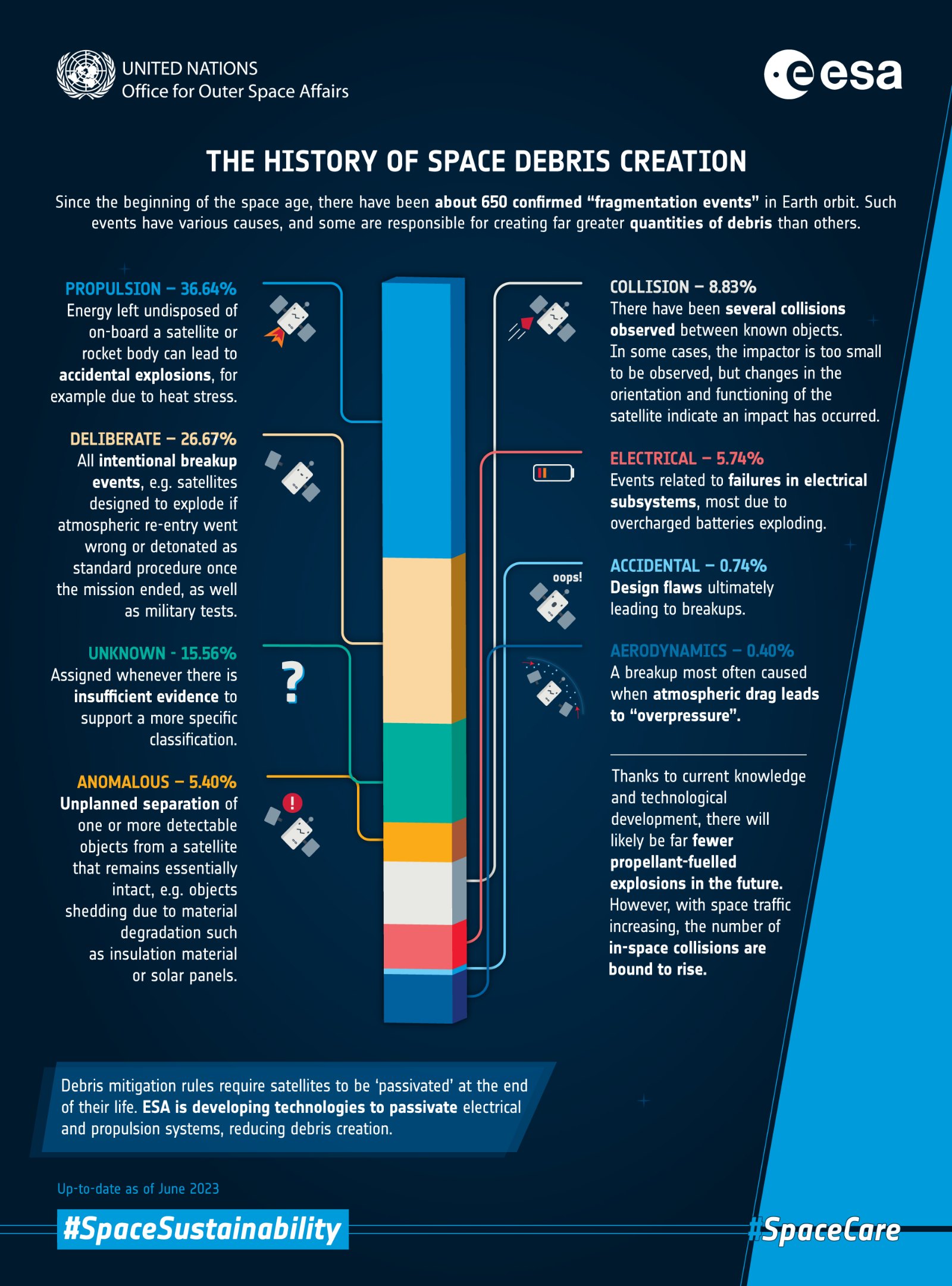
That is the timescale the exit column is actually working on. Fragments of this kind come overwhelmingly from break-ups, of which more than 660 have been recorded since 1957; ESA's modelling puts over 17,000 tonnes of material in Earth orbit and an estimated 1.5 million fragments between 1 and 10 centimetres across, almost none of them tracked ESA DISCOS. Atmospheric decay is the only removal mechanism Flown at scale, and it took four decades on this one object. Active removal of a derelict remains Proposed.
ClearOrbit's view
A 45-object drop in the decay queue and 27 new decay records look like the system working. They mostly describe objects that were already doomed, parked below 250 kilometres where the air finishes the job in weeks. Today's good news came entirely from the altitude band that needs no help.
The fragment from 1988 is the part worth keeping. It fell because its perigee eventually came to it, not because anyone acted, and the comparable objects at 800 kilometres will not get that favour inside a human career. Those 2,499 debris objects are the backlog, and the exit column has nothing to say about them.
We think the measure to hold the industry to is not the daily delta but the share of removals that were chosen rather than waited for. Today that share is zero, as it has been every day this site has published.
Reader mail
Have a better idea?Spotted something we got wrong?
We publish in public so the numbers can be checked. If a figure looks wrong, a source is missing, or you know something this piece should have said, send it over. One box, no sign-up.
Send an idea or correctionQuick question
Who should pay for cleaning up orbit?
Anonymous. You will see how others answered after you vote.