Daily briefing · · 3 min read
Orbit on 5 October 2026: nothing entered or left the catalog, and the week's reentry count fell from 13 to 7
Every column held exactly where it was yesterday. The only figures that moved were the rolling windows, and they moved because the calendar did.
What changed
Nothing did. There are 33,670 objects on orbit this morning, the same number as yesterday: 19,595 payloads, 2,113 spent rocket bodies and 11,962 catalogued fragments, with 1,325 mission-related components making up the rest GCAT. The catalogued-ever total holds at 70,235 and the decayed column at 37,407, both unmoved GCAT. No object was added, none was written off, and the highest catalog number is still 100,960, belonging to USA 708, launched 2 October GCAT.
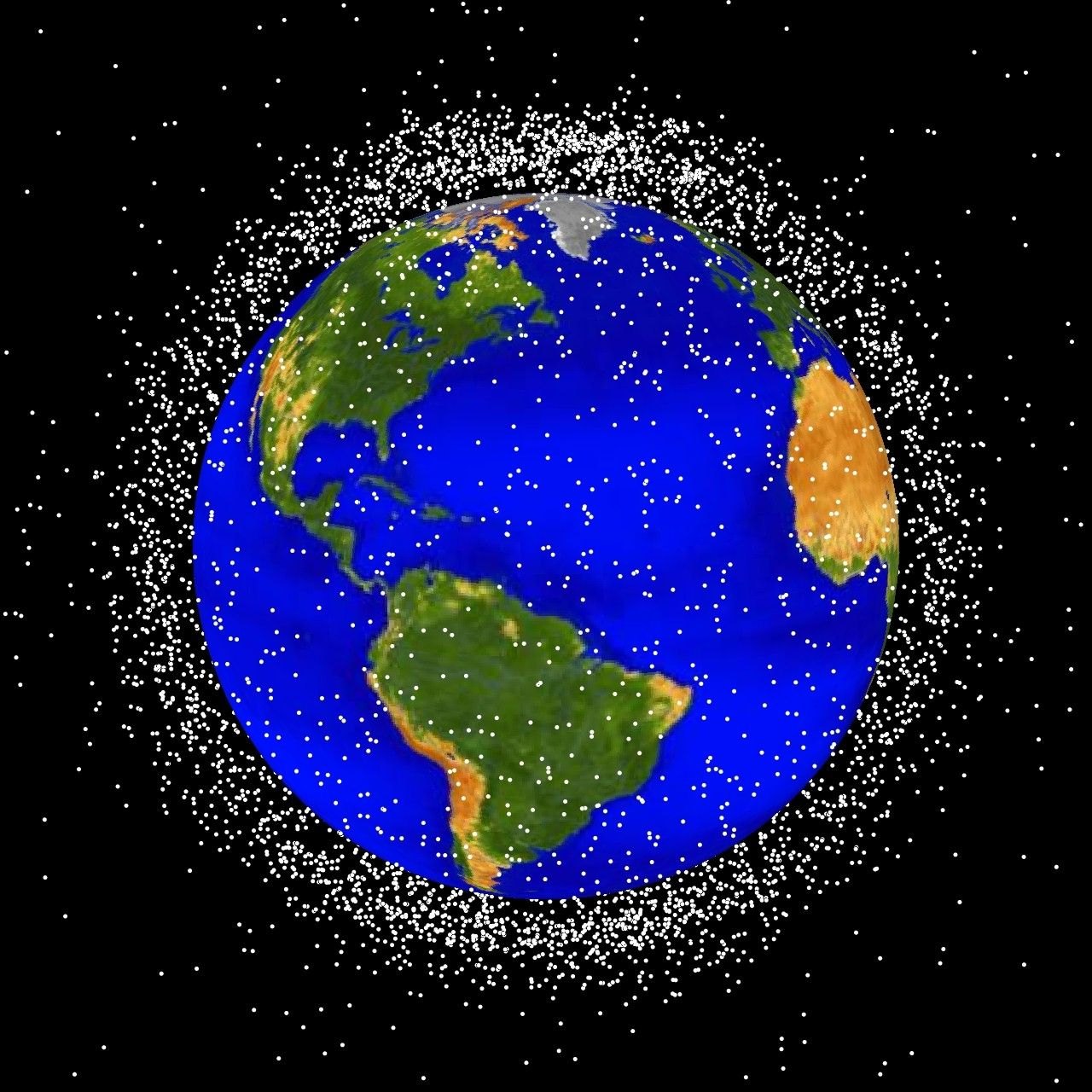
The figures that did change are the rolling windows, and they changed because the calendar advanced rather than because anything happened in the sky. The seven-day reentry count fell from 13 to 7 and the thirty-day count from 87 to 85 as the late-September decays passed out of the window behind them GCAT. The sixty-day total stands at 187 reentries, 46 of them Starlink satellites GCAT. The newest decay date on the books is still 1 October, for Starlink 1453, launched 4 June 2020 — a fourth consecutive day with nothing new in the exit column GCAT. The thirty-day launch count is unchanged at 224.
It is worth saying plainly what a day like this is. The catalog is a ledger kept by people, and a flat ledger means the bookkeeping paused, not that orbit did. Objects were still losing altitude all day; 94 of them are sitting below a 250-kilometre perigee right now, where the remaining air strips kilometres off them every orbit GCAT. None of that work gets a line in the table until someone writes the decay down.
The standing picture
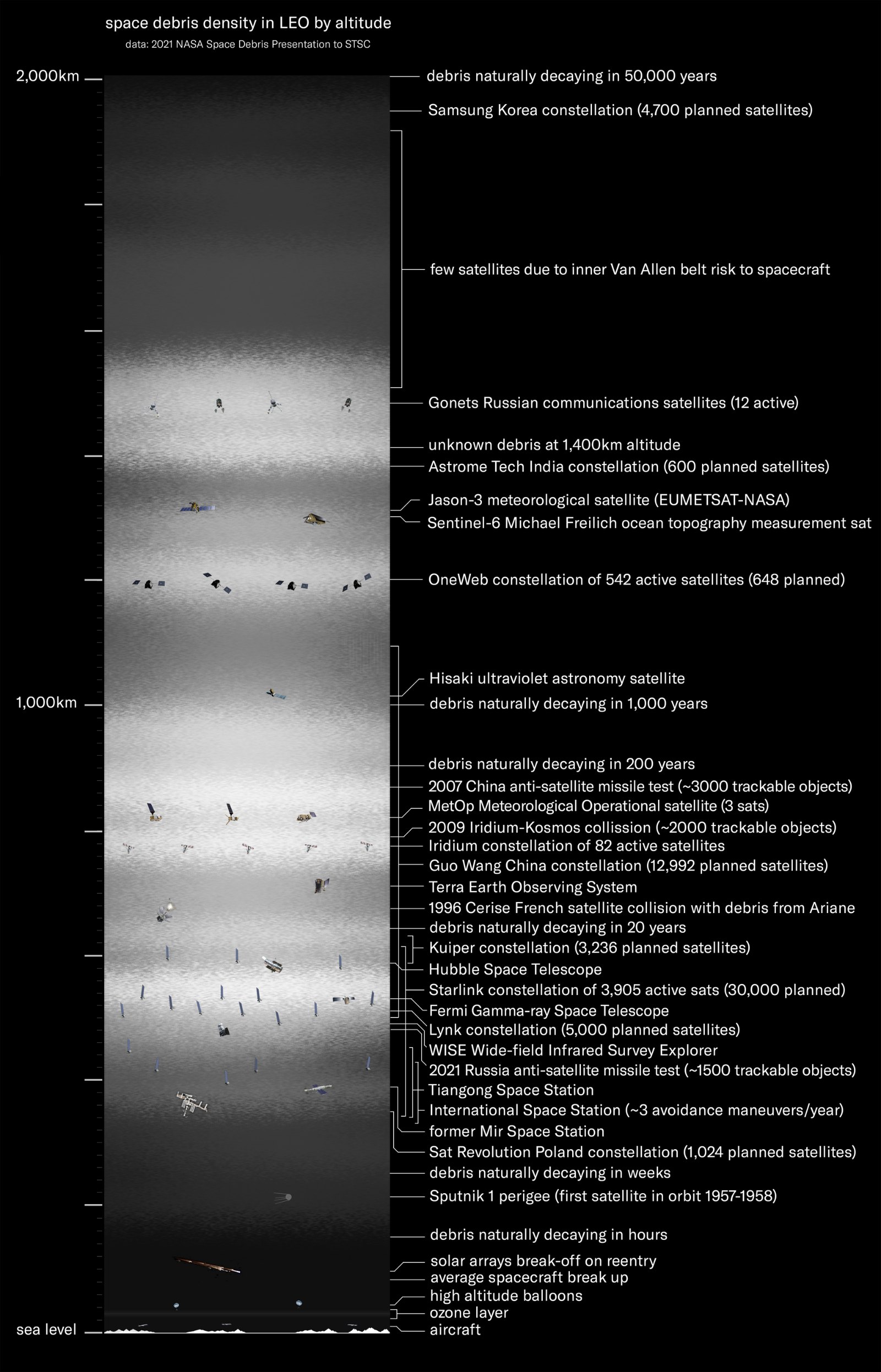
The distribution underneath is the part that never moves much anyway. The 400 to 500 kilometre band holds 10,235 objects, of which 10,055 are working payloads and only 180 are debris; the 800 to 900 kilometre band holds 2,764, of which 2,499 are debris and 265 are payloads GCAT. Starlink alone accounts for 11,152 objects at a mean altitude of 457 kilometres, 1,293 of them already below 400 GCAT. The crowded band cleans itself in years; the dirty band does not clean itself at all on any timescale that matters to the people who built it, which is the point The Orbital Clock makes at length.
Object of the day: Tianfu Dongpo 07
Catalog number 53444, the Chinese payload Tianfu Dongpo 07, is at 143 by 156 kilometres on an element set dated 1 October — the second-lowest object in the catalog and, unlike the Kuaizhou-11 stage above it, in a genuinely circular orbit with nowhere left to fall from GCAT. At that altitude the remaining atmosphere is doing tens of kilometres of work a week.

It is not going alone. Tianfu Dongpo 01, catalog number 53453 from the same block, was launched on 10 August 2022 and decayed on 27 September 2026 GCAT. A batch put up together four years ago is coming down within weeks of itself, which is what a shared orbit and a shared ballistic coefficient produce. These satellites are the easy case: low enough that physics finishes the job unprompted. The 2,499 fragments at 800 to 900 kilometres have the same physics and a few centuries of it, against ESA's modelled population of more than 17,000 tonnes in orbit and an estimated 1.5 million objects between 1 and 10 centimetres across, almost none of them tracked ESA DISCOS.
ClearOrbit's view
A day where the catalog does not move is a useful reminder that the catalog is not the environment. Nothing was removed today because nothing was recorded, and on the days something is recorded, nothing was removed either — it fell.
The number we would like to see on a flat day is the one that does not exist yet: objects taken out of a congested orbit on purpose. Deliberate removal of a derelict remains Proposed, with nothing Flown. Until that changes, every reentry in these briefings is weather, not policy, and a quiet day is simply weather that did not report in.
Reader mail
Have a better idea?Spotted something we got wrong?
We publish in public so the numbers can be checked. If a figure looks wrong, a source is missing, or you know something this piece should have said, send it over. One box, no sign-up.
Send an idea or correctionQuick question
Who should pay for cleaning up orbit?
Anonymous. You will see how others answered after you vote.