Daily briefing · · 3 min read
Orbit on 13 October 2026: a Delta stage from 1990 came down, and the satellite it carried is still up
GCAT has booked five reentries on 11, 12 and 13 October, among them a Delta second stage that had been in orbit since January 1990.

What changed
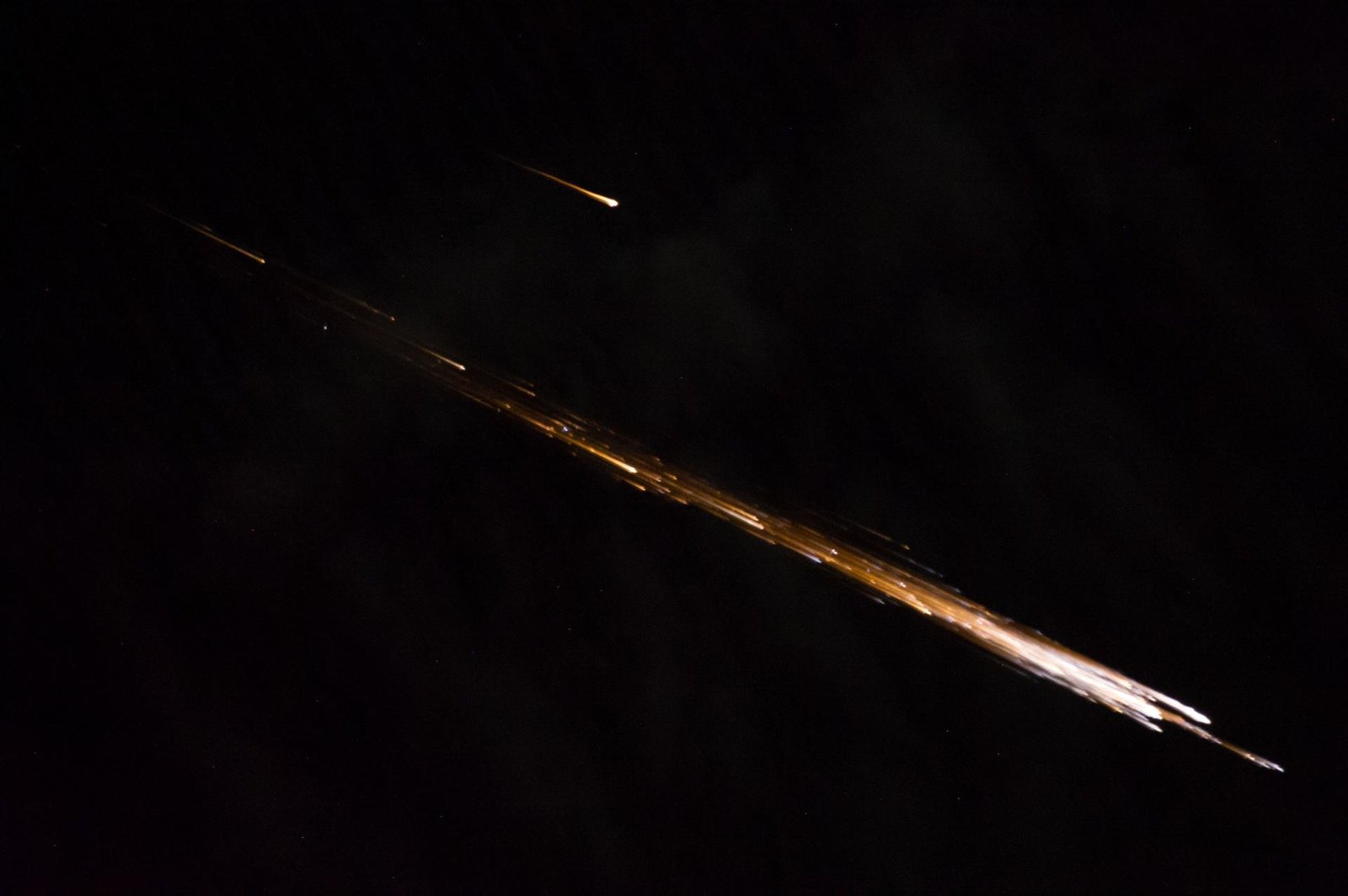
A Delta second stage that reached orbit on 24 January 1990 reentered the atmosphere on 11 October 2026, thirty-six years and eight months after it was left there GCAT. It is one of five objects the catalog has booked as reentered on 11, 12 and 13 October, and none of the five appears in the overnight snapshot the rest of this briefing's figures come from: that snapshot was taken at 00:20 UTC today, and the catalog file was updated after it.
As of that snapshot, 33,681 objects are tracked in Earth orbit, unchanged from yesterday, of which 19,614 are payloads and 14,067 are debris and spent rocket stages GCAT. The catalog has absorbed 212 new objects in thirty days and booked 101 reentries over the same period; the seven-day count stood at 14, down from 22 a day earlier, and the five bookings above all post-date it. Fifty-eight objects are now circling with a perigee below 250 kilometres, the altitude at which a decay becomes a matter of days.
Four of the fifteen lowest are already gone: Starlink 4464, at 149 by 159 kilometres, reentered on 11 October; Starlink 1337, at 194 by 201, on 12 October; ISRO's SPADEX-A, at 204 by 213, hours after it; and the Delta stage, at 154 by 160, before all three GCAT. The lowest still listed is a Kuaizhou-11 third stage with a perigee of 133 kilometres and an apogee of 1,823, on element data from 17 September. Higher up nothing is clearing: 400 to 500 kilometres holds 10,324 objects, 10,143 of them working payloads and 9,356 of those Starlink, while 800 to 900 kilometres holds 2,755 objects of which 2,493 are debris.
Close approach of the day
On 14 October at 10:29 UTC, the active Chinese payload Yunhai-2 02D and a Zenit-2 second stage, catalogue object 25400, are predicted to pass 1.726 kilometres apart at a closing speed of 13.09 kilometres per second CelesTrak SOCRATES Plus. The figure is predicted from public orbit data, re-propagated from the whole-catalog screening CelesTrak published on 8 October, the most recent available for this run; the 3D view of the encounter and the rest of today's list are on the close approaches page. The stage is nine tonnes of hardware launched on 10 July 1998 GCAT, with no propellant, no transmitter and no operator, one of the family of Zenit upper stages this briefing counted in the 830-kilometre shell two days ago. Only the Chinese satellite can move.
Object of the day: Delta 191
The stage that came down on 11 October was the second stage of a Delta 6925, an Aerojet AJ10-118K burned once to deliver GPS II-6 and then abandoned in a 449-by-1,304-kilometre orbit inclined 35.64 degrees. It weighed 919 kilograms empty, seven metres long and 2.4 metres across GCAT.
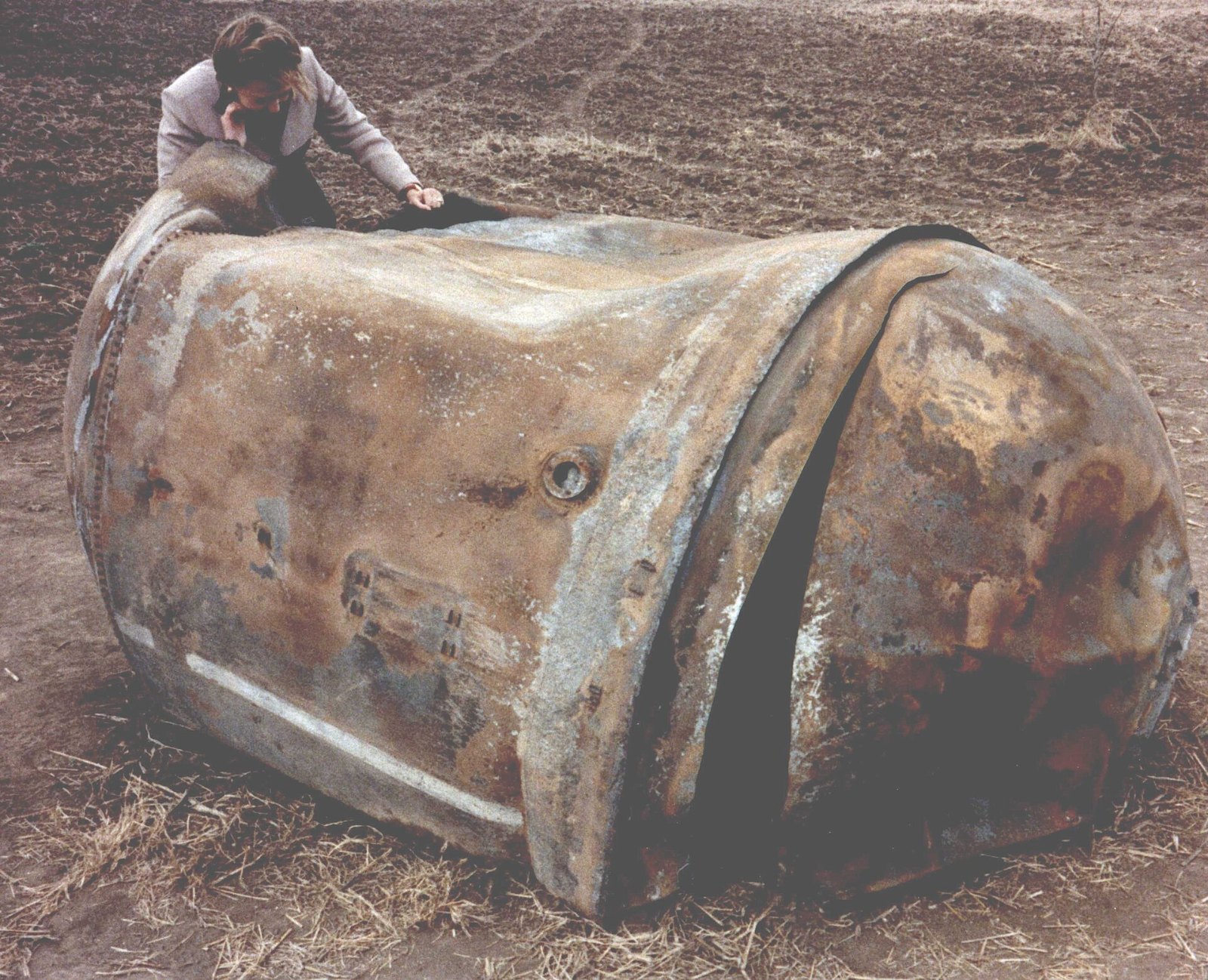
GPS II-6 itself is still up, in a 20,087-by-20,275-kilometre orbit where there is no measurable drag GCAT. The stage stayed low and the atmosphere did the work, taking thirty-six years over it. That is the shape of the problem in one launch: below about 500 kilometres patience is a disposal strategy, and above it the 17,400 tonnes ESA counts in Earth orbit ESA DISCOS keep accumulating where drag has stopped helping.
ClearOrbit's view
Five reentries in three days is a good week for the atmosphere and tells us almost nothing about the objects that matter: every one was below 250 kilometres, and so was going to come down whatever anyone did. The 2,493 fragments at 800 to 900 kilometres, and the nine-tonne stage that will pass a working satellite tomorrow, are in the part of orbit where the air gave up.
That is the gap removal has to close, and nobody has: no spacecraft has captured and deorbited a derelict, and the closest anyone has come is an inspection — **Flown**, once. The honest reading of today's catalog is that the reentry column will keep looking healthy while the real inventory sits untouched a few hundred kilometres higher. We think the first removal targets should be chosen where drag has no effect: large, intact, uncontrolled, in a band that is already full.
Reader mail
Have a better idea?Spotted something we got wrong?
We publish in public so the numbers can be checked. If a figure looks wrong, a source is missing, or you know something this piece should have said, send it over. One box, no sign-up.
Send an idea or correctionQuick question
Who should pay for cleaning up orbit?
Anonymous. You will see how others answered after you vote.