Daily briefing · · 3 min read
Orbit on 11 October 2026: nothing moved, and eighteen Zenit stages share one 830-kilometre shell
Every line in the catalog held still overnight. The movement was in the derelict watch, where three of five encounters involve the same class of nine-tonne Soviet upper stage.
What changed
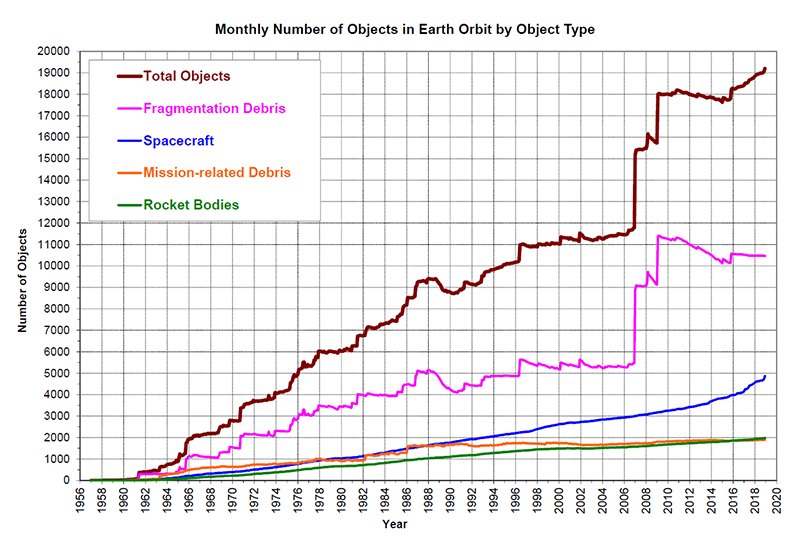
Nothing entered or left the catalog overnight. There are 33,640 objects on orbit this morning, the same number as yesterday: 19,573 payloads, 2,113 spent rocket bodies, 10,629 catalogued fragments and 1,325 mission-related components. Of the 70,244 objects catalogued since 1957, 37,436 have come down, and that figure did not move either GCAT.
What moved were the rolling windows. The thirty-day launch count fell from 199 to 169: thirty objects dropped off the back of the window as its trailing edge passed 10 September, and nothing was added at the front. The thirty-day reentry count slipped from 102 to 100 and the seven-day count from 25 to 22 by the same arithmetic, not because anything came down. Fifty-seven objects are queued below 250 kilometres, the lowest of them Starlink 4387 at 128 by 146 kilometres on element data from 8 October GCAT.
Close approach of the day
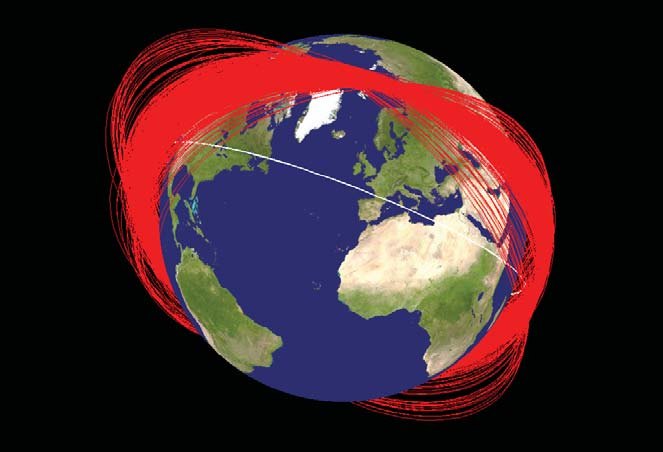
On 12 October at 13:31 UTC the Chinese weather satellite Fengyun 3H, launched on 26 September 2025, is predicted to pass 1.38 kilometres from a derelict Zenit-2 second stage at about 833 kilometres over Antarctica, crossing at 107.8 degrees and closing at 12.0 kilometres per second, with a worst-case probability of 1 in 47,687. The stage is catalogue object 19120, the second stage of Zenit-2 No. 12L, launched on 15 May 1988 and still circling at 810 by 842 kilometres GCAT. The figures are propagated from public orbit data and CelesTrak's screening file, both dated 8 October, because this morning's refresh could not reach CelesTrak; they are kilometre-accurate estimates, not warnings CelesTrak SOCRATES Plus. See the 3D view.
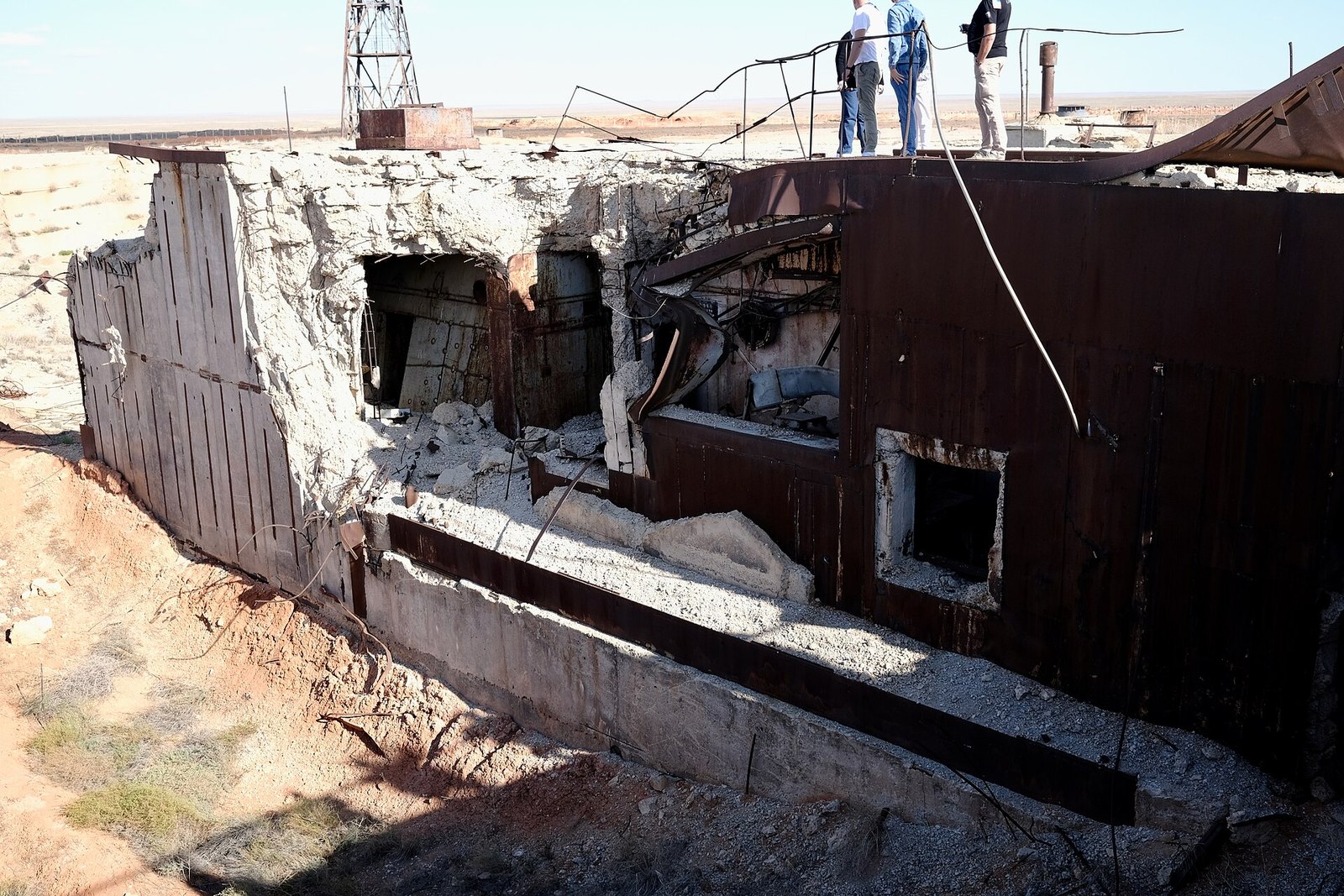
Three of the five encounters on this week's derelict watch involve a Zenit-2 second stage: object 26070, launched 3 February 2000, passes the Chinese remote-sensing satellite Yaogan-40 01C at 2.31 kilometres on 13 October, and object 25400, launched 10 July 1998, passes Yunhai-2 02D at 1.73 kilometres on 14 October CelesTrak SOCRATES Plus. One class of rocket accounts for most of the traffic worth watching this week.
Object of the day
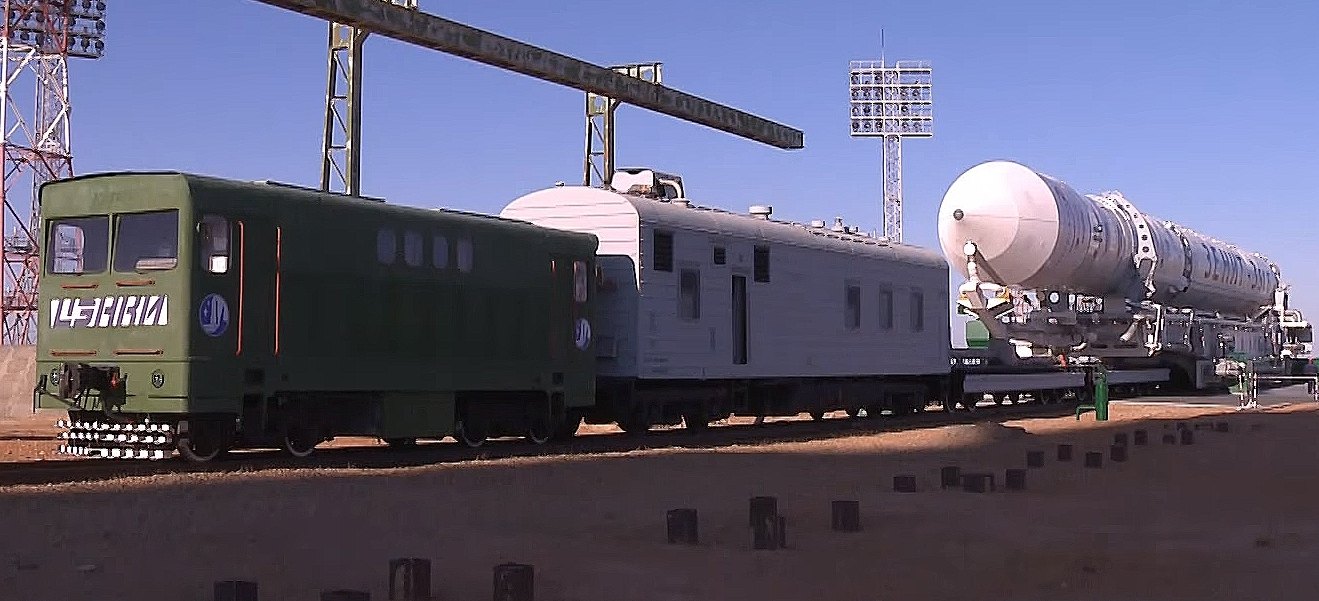
Thirty-five Zenit-2 second stages are still in orbit, and eighteen sit in effectively one shell: inclinations all within a quarter of a degree of 71.0, perigees from 810 to 841 kilometres, apogees from 838 to 863 kilometres. They were launched between 22 October 1985 and 29 June 2007, built by Yuzhmash in Dnipro and registered to Soviet and Russian military space forces, and each is 11.1 metres long, 3.9 metres across and 9,000 kilograms dry GCAT.
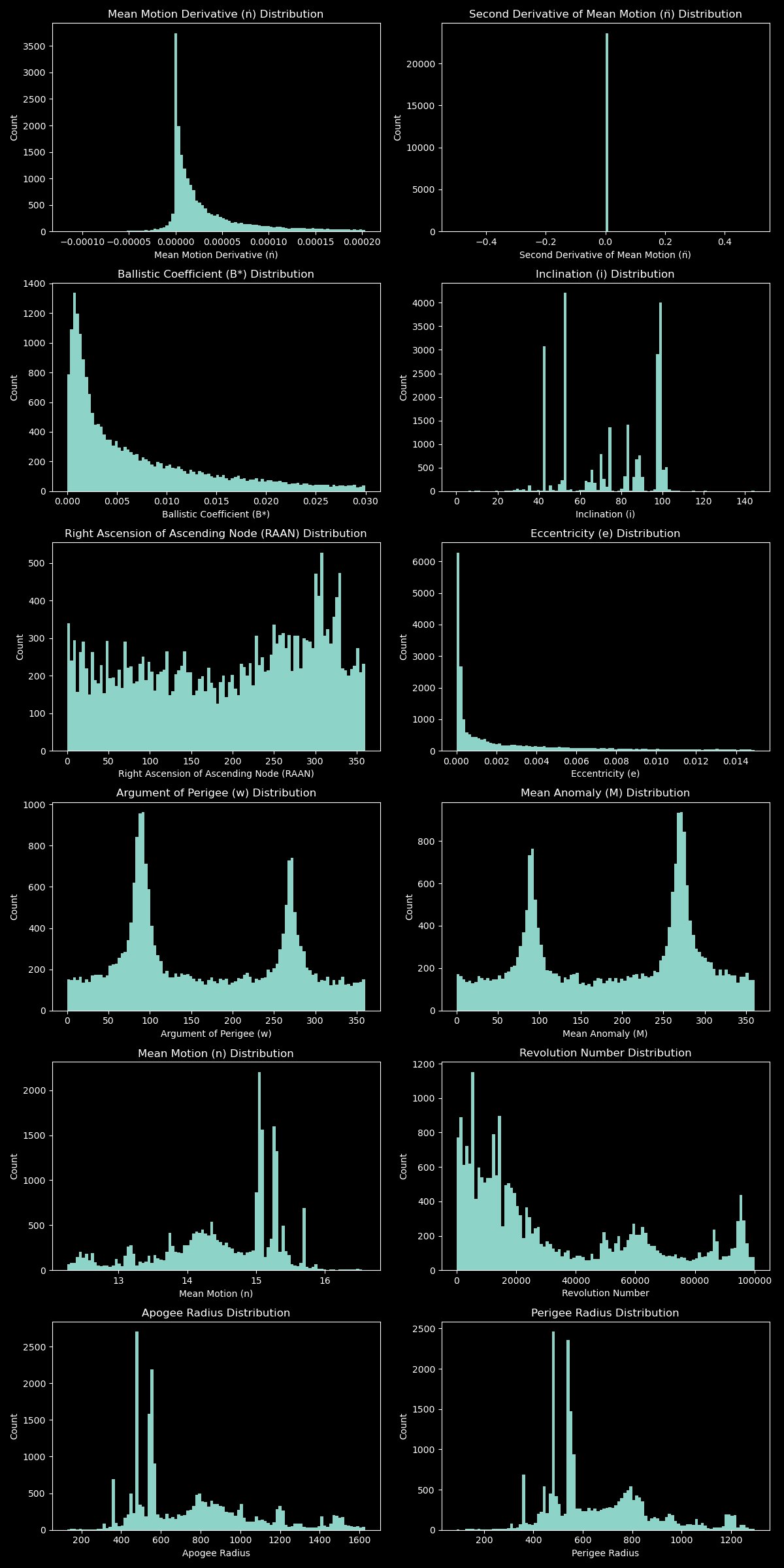
That is 162 tonnes in eighteen objects, in one plane, in the band that already holds 2,490 tracked fragments against 263 working payloads GCAT — just under one per cent of all the mass ESA counts in Earth orbit ESA DISCOS. None of them has propellant, a transmitter or an operator. At 830 kilometres drag will not clear them for centuries, and each is large enough that one hit would produce thousands of new pieces.
ClearOrbit's view
A cluster like this is the clearest argument for removal the catalog offers, because the economics are not hopeless. Changing orbital plane is the expensive manoeuvre in spaceflight; changing altitude within a plane is cheap by comparison, which is why a target list that shares an inclination is worth far more than the same number of objects scattered across the sky see how planes constrain removal. One vehicle launched into 71 degrees could in principle work down these stages one after another. That remains Proposed: no derelict upper stage has ever been removed, as we have set out.
The obstacle is not only propulsion. These stages were built in Ukraine and registered to the Soviet Union and Russia, and under Article VIII of the Outer Space Treaty jurisdiction does not lapse because a state or a factory does — the problem we described in the Soviet Union's 2,790 objects. Permission is the long-lead item, longer than the hardware.
The first removal mission should be chosen because its target is massive, clustered and uncontroversial in physics, not because it is dramatic. Eighteen nine-tonne stages in one shell are that target, and the work that has to start now is the legal work.
Reader mail
Have a better idea?Spotted something we got wrong?
We publish in public so the numbers can be checked. If a figure looks wrong, a source is missing, or you know something this piece should have said, send it over. One box, no sign-up.
Send an idea or correctionQuick question
Who should pay for cleaning up orbit?
Anonymous. You will see how others answered after you vote.