Daily briefing · · 3 min read
Orbit on 18 October 2026: the catalog stood still, and two Zhuque-2E stages cross the busiest shell 31 times a day
One payload in, one fragment down, 33,759 objects on orbit. Two LandSpace second stages climb from 133 and 191 kilometres to 540 and back, through the shell where 10,193 satellites work.
What changed
The on-orbit total did not move overnight: 33,759 objects this morning, the same as yesterday. One payload was added and one fragment came down, leaving 19,681 payloads against 14,078 pieces of debris and spent hardware, and taking the all-time catalog up by one to 70,402 GCAT. The highest catalog number is unchanged at 101,091, still held by the USSF-481 batch of 16 October, so yesterday's addition sat below it rather than at the top: an object identified, not one launched.
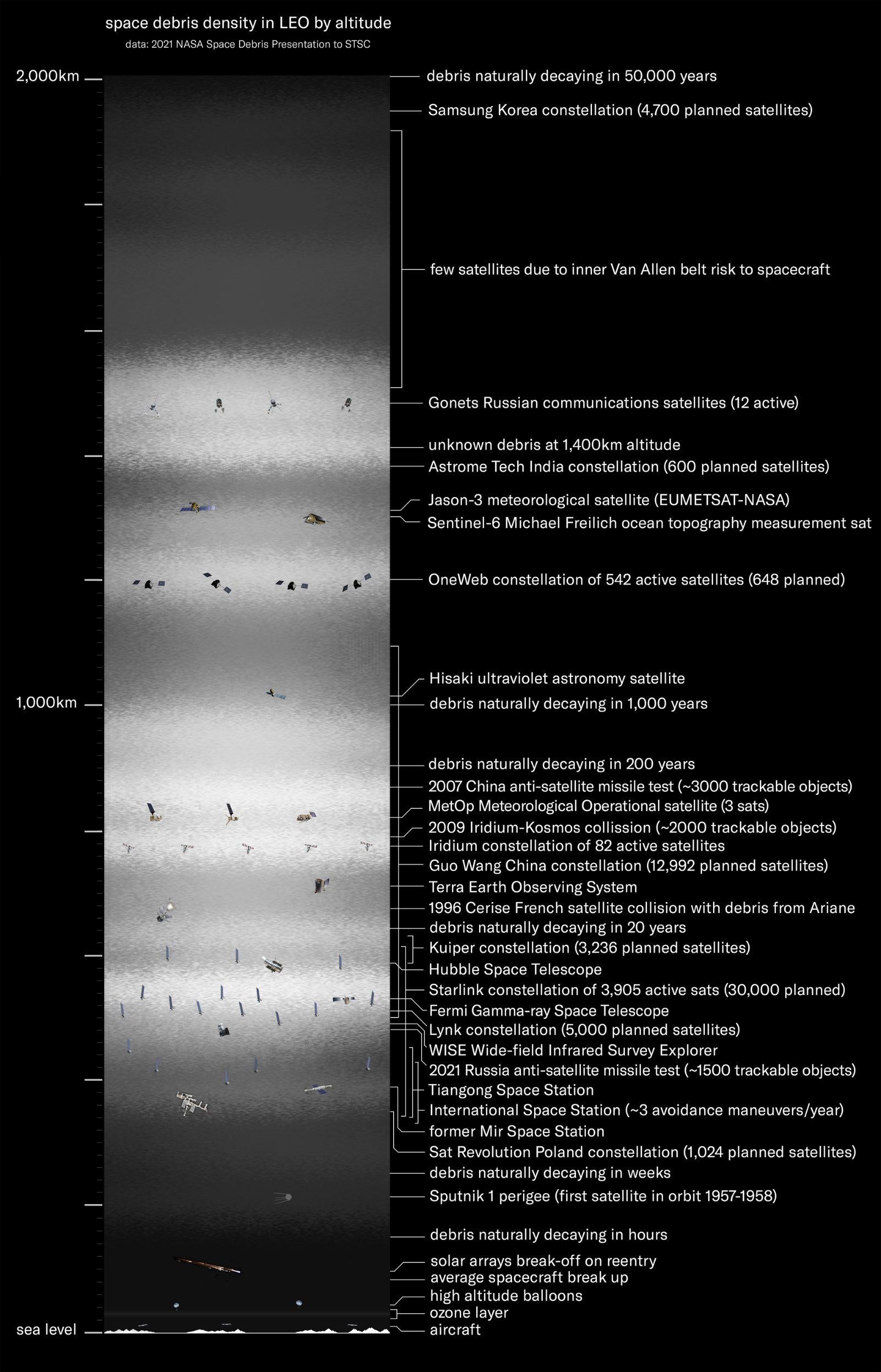
The altitude picture matters more than the headcount, and it is stable. Between 400 and 500 kilometres the catalog holds 10,375 objects and 10,193 of them are working payloads, 9,406 of those Starlinks; between 800 and 900 kilometres it holds 2,761, of which 2,499 are debris GCAT. Those are the trackable ones only: ESA's modelled population, updated on 14 October, puts 68,450 objects larger than 10 centimetres in orbit against roughly 47,140 regularly tracked ESA DISCOS.
Today's movement is in the rolling windows. Launches over thirty days fell from 269 to 239 as the mid-September batches aged out, and the seven-day reentry count from 22 to 17, the last object down being Starlink 5470 on 16 October GCAT. Sixty-four objects are circling with a perigee below 250 kilometres, one fewer than yesterday.
Close approach of the day
There is no forecast encounter today, for the third day running. The screening behind the close approaches page is still CelesTrak's run of 8 October, and its seven-day window expired on 15 October; today's single request was refused at the connection, after which our client paused further requests for six hours as CelesTrak's usage policy requires CelesTrak SOCRATES Plus. Sixty-seven passed encounters stay marked as being checked, and nothing is listed in the next 48 hours.
Object of the day: Zhuque-2E Y5 Stage 2, five months of crossing traffic
On 14 May 2026 at 03:06 UTC a LandSpace Zhuque-2E put its second stage into a 209 by 872 kilometre polar orbit and left it there. Five months on it is still up, measured at 191 by 540 kilometres: the apogee has come down 332 kilometres, the perigee has barely moved, and the object is a 5,000-kilogram empty tank 12 metres long and 3.4 metres across GCAT.
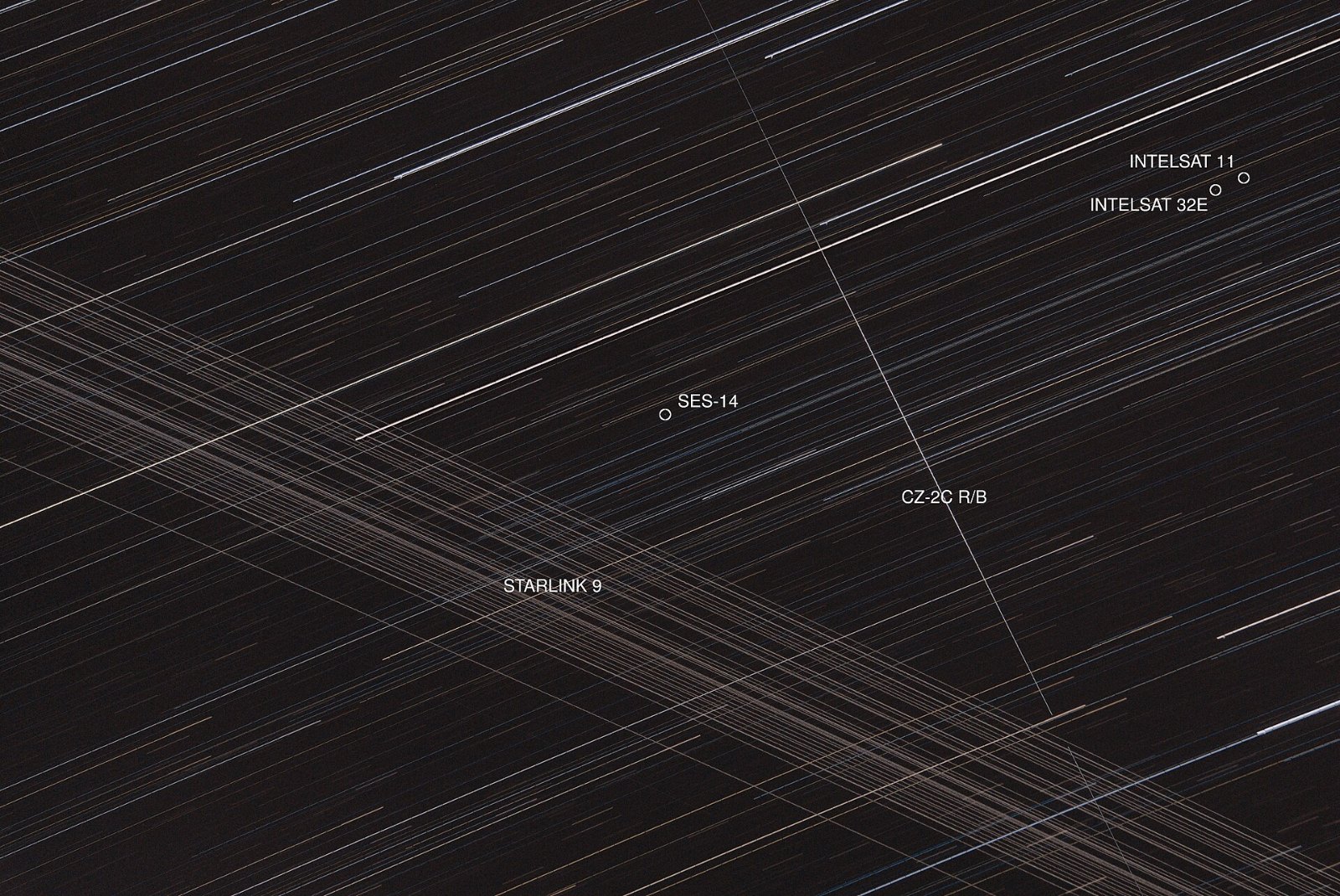
Its period is 91.9 minutes, so it climbs into the 400-to-500-kilometre shell and back out about 31 times a day, through the band where those 10,193 working satellites fly. Zhuque-2E Y4's stage, launched on 14 October, is doing the same lower down, at 133 by 537 kilometres and the lowest perigee in the catalog GCAT. Neither can manoeuvre.
The same operator also does it the other way. The Zhuque-2E Y7 stage lifted off on 15 September at 06:32 UTC and was back in the atmosphere about 75 minutes later, and a Zhuque-3 second stage was deorbited within an hour of launch on 19 August — Flown disposal burns, twice in two months GCAT. The Y6 flight of 9 June shows the other end: seven pieces of debris catalogued from it, six reentered, one still at 335 by 427 kilometres. Disposal is a per-flight decision, and one rocket family's record over five months holds both answers. Our explainer on passivation covers what the burn involves.
ClearOrbit's view
A stage at 191 by 540 kilometres is not a century-scale problem; the air will take it. What it is, for the months that takes, is uncontrollable traffic crossing the most densely occupied shell in orbit about 31 times a day, where everything working below it has to do the avoiding.
The fix here is not removal, and we should say so plainly: it is the deorbit burn LandSpace has already flown twice this autumn. A stage that reenters 75 minutes after launch never enters anyone's conjunction list, and making that the default on every flight needs no new hardware.
Removal is for what is beyond the air's reach — the 140 tonnes of spent stages above 700 kilometres, where drag is not a plan. ClearOrbit has flown nothing. What we are building is the case that these are two separate problems, and that the one with a known answer should stop being optional.
Reader mail
Have a better idea?Spotted something we got wrong?
We publish in public so the numbers can be checked. If a figure looks wrong, a source is missing, or you know something this piece should have said, send it over. One box, no sign-up.
Send an idea or correctionQuick question
Who should pay for cleaning up orbit?
Anonymous. You will see how others answered after you vote.