Daily briefing · · 3 min read
Orbit on 19 October 2026: an Ariane stage left at 36,868 kilometres in 1993 now tops out at 1,894
Nothing entered or left the catalog. A 2,260-kilogram Ariane 4 third stage from 1993 has lost nearly 35,000 kilometres of apogee to the air, and crosses every crowded shell on its way down.
What changed
Nothing entered or left the catalog in the twenty-four hours to this morning: 33,759 objects on orbit, 19,681 of them payloads and 14,078 debris or spent hardware, the all-time total unchanged at 70,402 GCAT. The day's real movement is in one 33-year-old object, and the atmosphere made it: an Ariane 4 third stage whose apogee has come down from 36,868 kilometres to 1,894 GCAT.
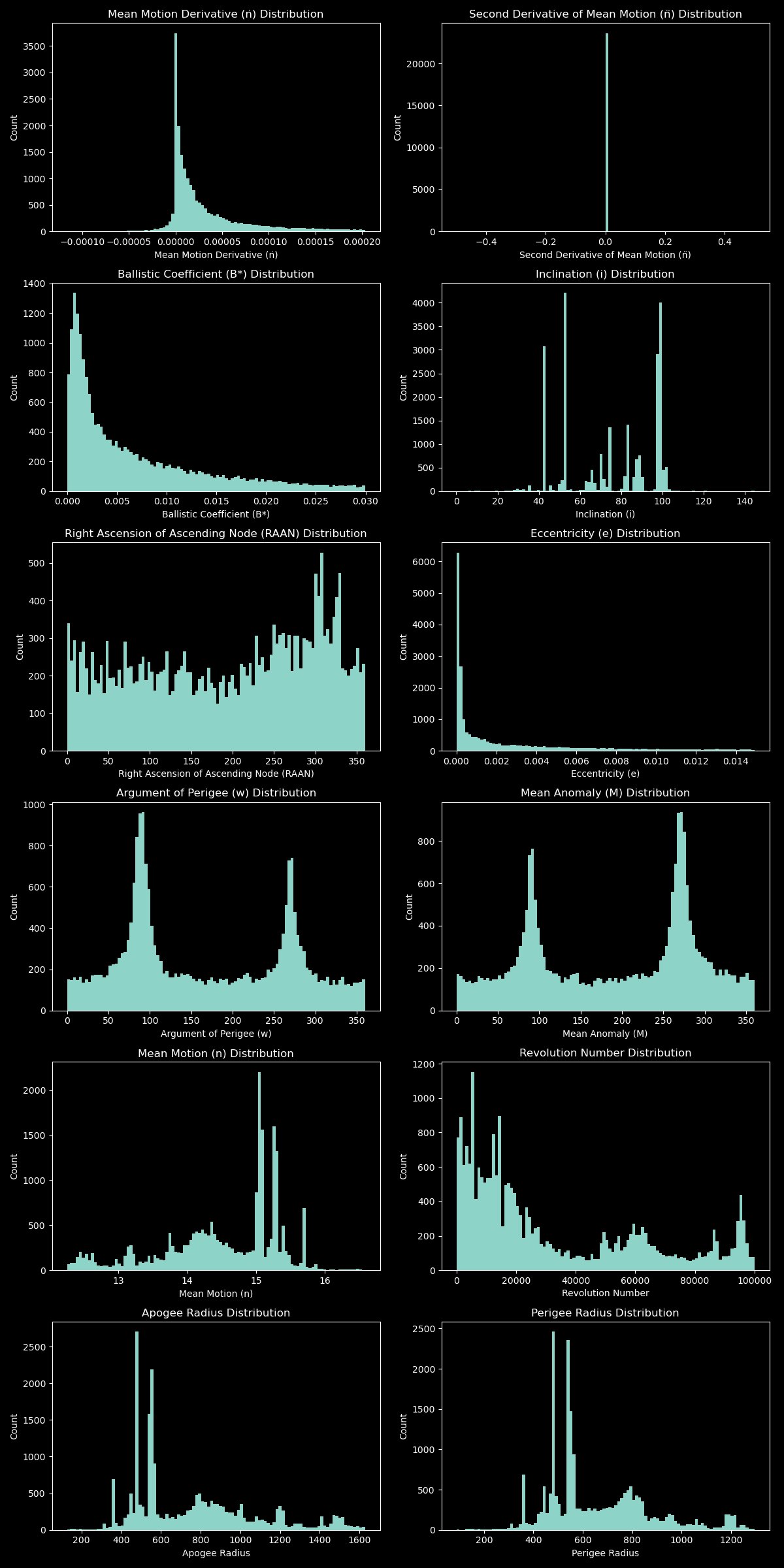
The rolling windows fell without anything happening. Reentries over thirty days dropped from 111 to 103 and over seven days from 17 to 12, but the last object down was Starlink 5470 on 16 October: earlier decays ageing out of the back of the window, not anything new coming home GCAT. Launches over thirty days held at 239, and 64 objects circle with a perigee below 250 kilometres.
The altitude picture is unchanged and remains the thing to watch: 10,375 objects between 400 and 500 kilometres, 10,193 of them working payloads, and 2,761 between 800 and 900, of which 2,499 are debris GCAT. Those are the tracked ones only: ESA's model puts 68,450 objects larger than 10 centimetres in orbit against roughly 47,140 regularly tracked ESA DISCOS.
Close approach of the day
There is no forecast encounter today, for the fourth day running, and the reason is on our side of the wire. The screening behind the close approaches page is still CelesTrak's run of 8 October 2026, whose seven-day window expired on 15 October; today's single request was refused at the connection, after which our client paused for six hours as CelesTrak's usage policy requires CelesTrak SOCRATES Plus. A conjunction forecast ages in hours, so read that board as blank, not as quiet.
Object of the day: Ariane H10+ V61, and 35,000 kilometres of apogee
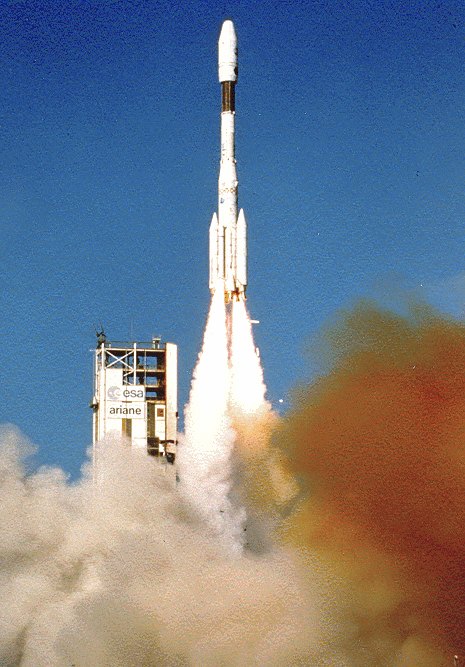
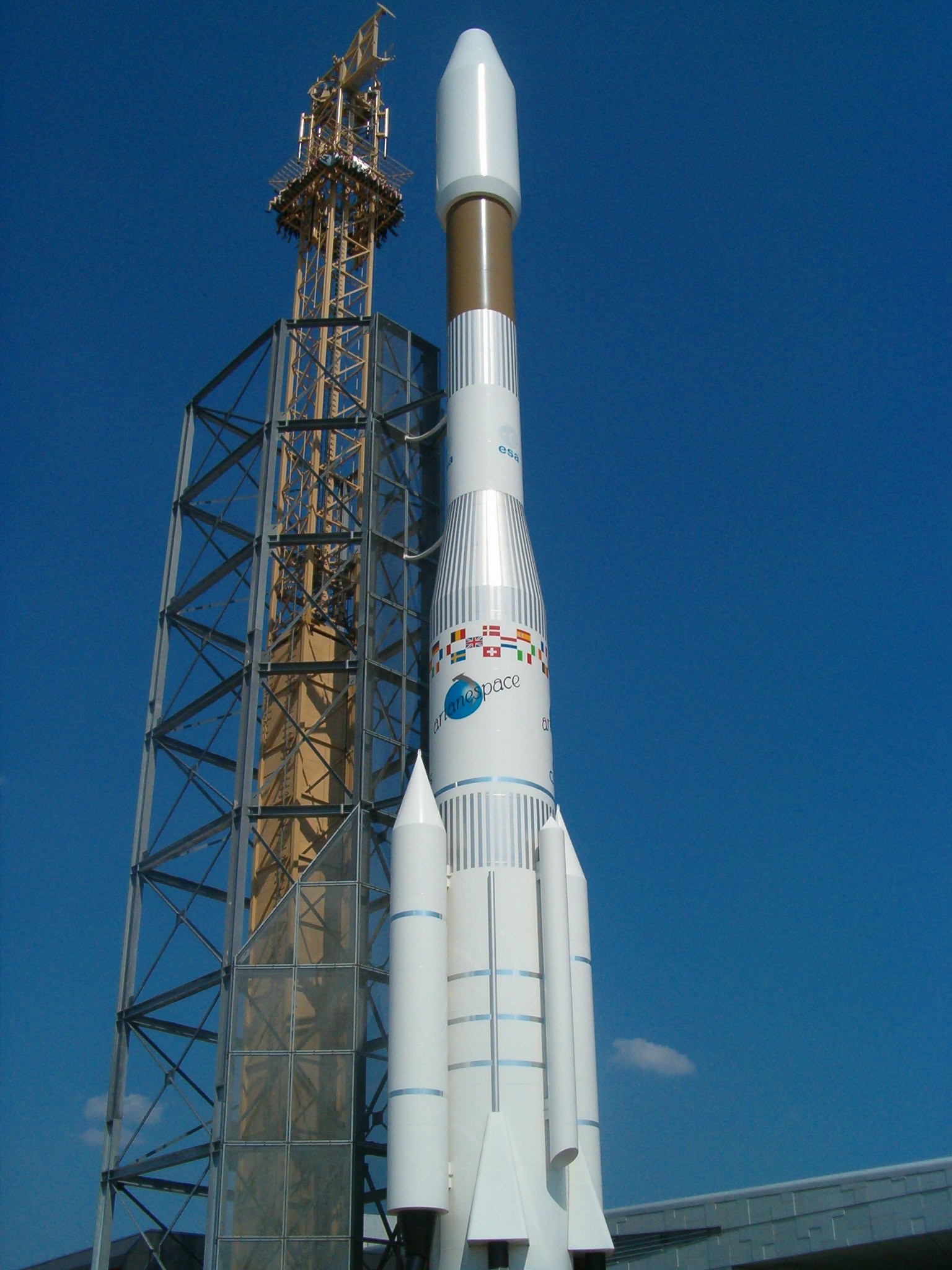
At 01:17 UTC on 20 November 1993 an Ariane 44LP lifted off from Kourou carrying Solidaridad 1 and Meteosat 6 into a transfer orbit reaching 36,868 kilometres GCAT. The H10+ third stage was left in that orbit: 2,260 kilograms fuelled, 2,080 empty, a stepped cylinder 14.1 metres long and 2.6 across GCAT. The Spelda structure that held the two satellites apart came down in July 1998; the stage is still up.
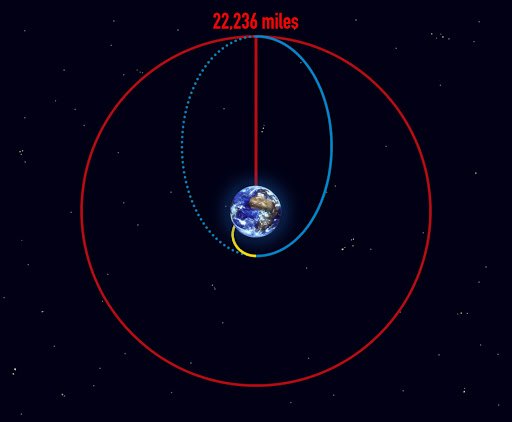
On elements of 17 October it measures 215 by 1,894 kilometres at 6.7 degrees, period 106.3 minutes GCAT. That is the signature of three decades of drag working at one end of an orbit: each perigee pass takes out a little energy, and it comes off the far side, so the apogee falls while the perigee barely moves.
What is left is less comfortable. At 106.3 minutes the stage goes round 13.5 times a day, climbing from 215 kilometres past 1,894 and back, through the 400-to-500-kilometre shell where those 10,193 satellites work and the 800-to-900 band holding 2,499 fragments — about 27 passages through every crowded shell in low orbit each day, by something that cannot manoeuvre. A survey of two million simulated transfer orbits found perigee altitude the strongest predictor of whether such a stage ever reenters; at 215 kilometres this one will, which makes it fortunate, since the same work gives large, low-area-to-mass objects in transfer orbits a mean lifetime near 170 years Skoulidou et al..
ClearOrbit's view
The catalog did not move today. What moved was one stage's apogee, because the atmosphere has worked on it without pause since 1993 — the only removal mechanism ever to operate at scale, and the slowest available.
The lesson is not that drag will handle this. Drag handles what dips into the air, and this stage qualifies only because a 1993 mission profile left its perigee a couple of hundred kilometres up. The 2,499 fragments in near-circular orbits between 800 and 900 kilometres never touch air worth the name, and none of the physics above applies to them.
ClearOrbit has flown nothing. We argue for splitting the problem along that line: make the disposal burn standard on every new upper stage so nothing joins the queue, and build removal for the population drag will never reach — the 140 tonnes of spent stages above 700 kilometres. One object crossing every working shell 27 times a day for a few more years is a tolerable inheritance. A thousand would not be.
Reader mail
Have a better idea?Spotted something we got wrong?
We publish in public so the numbers can be checked. If a figure looks wrong, a source is missing, or you know something this piece should have said, send it over. One box, no sign-up.
Send an idea or correctionQuick question
Who should pay for cleaning up orbit?
Anonymous. You will see how others answered after you vote.