Daily briefing · · 3 min read
Orbit on 28 October 2026: a satellite launched in 1973 is down to 146 kilometres
The on-orbit count did not move. Aureole 2, a Soviet-French satellite that stopped working in April 1974, now has a 146-kilometre perigee: the lowest and oldest thing in the decay queue.
What changed
Nothing, in the headcount. The catalog still shows 33,814 objects in orbit this morning, the same figure as yesterday, split into 19,734 payloads and 14,080 rocket bodies and debris fragments (GCAT). What moved was the rolling windows behind it: the thirty-day reentry count fell from 97 to 91 and the seven-day count from 16 to 9 (GCAT), which is what happens when the window's trailing edge passes a busy week and nothing arrives to replace it. Over the same thirty days, 240 objects were added by launch.
The shells are where they were. The 400-to-500-kilometre band holds 10,433 objects, 10,248 of them working payloads and 9,458 of them Starlinks (GCAT); the 800-to-900-kilometre band holds 2,757, of which 2,494 are debris. That contrast is the problem in two lines: the crowded band is crowded with things that can move, the dirty band with things that cannot. ESA's model puts 1.5 million fragments between one and ten centimetres, against 68,450 objects larger than ten centimetres and more than 17,400 tonnes of material in orbit (ESA DISCOS, 23 October 2026).
Close approach of the day
There is no close approach of the day from current data, and that is worth saying plainly. The screening behind our close-approach pages is still the CelesTrak SOCRATES Plus run of 8 October 2026; today's refresh could not reach CelesTrak and the tool paused its own requests, which is correct under CelesTrak's usage policy. That screening found 174,512 conjunction pairs, 7,834 inside one kilometre, 111 inside 100 metres, 21 of them debris against debris, closest eight metres (CelesTrak SOCRATES Plus). Those figures are twenty days old. Conjunction predictions go stale fast; read them as a record of that morning and nothing more.
The object of the day
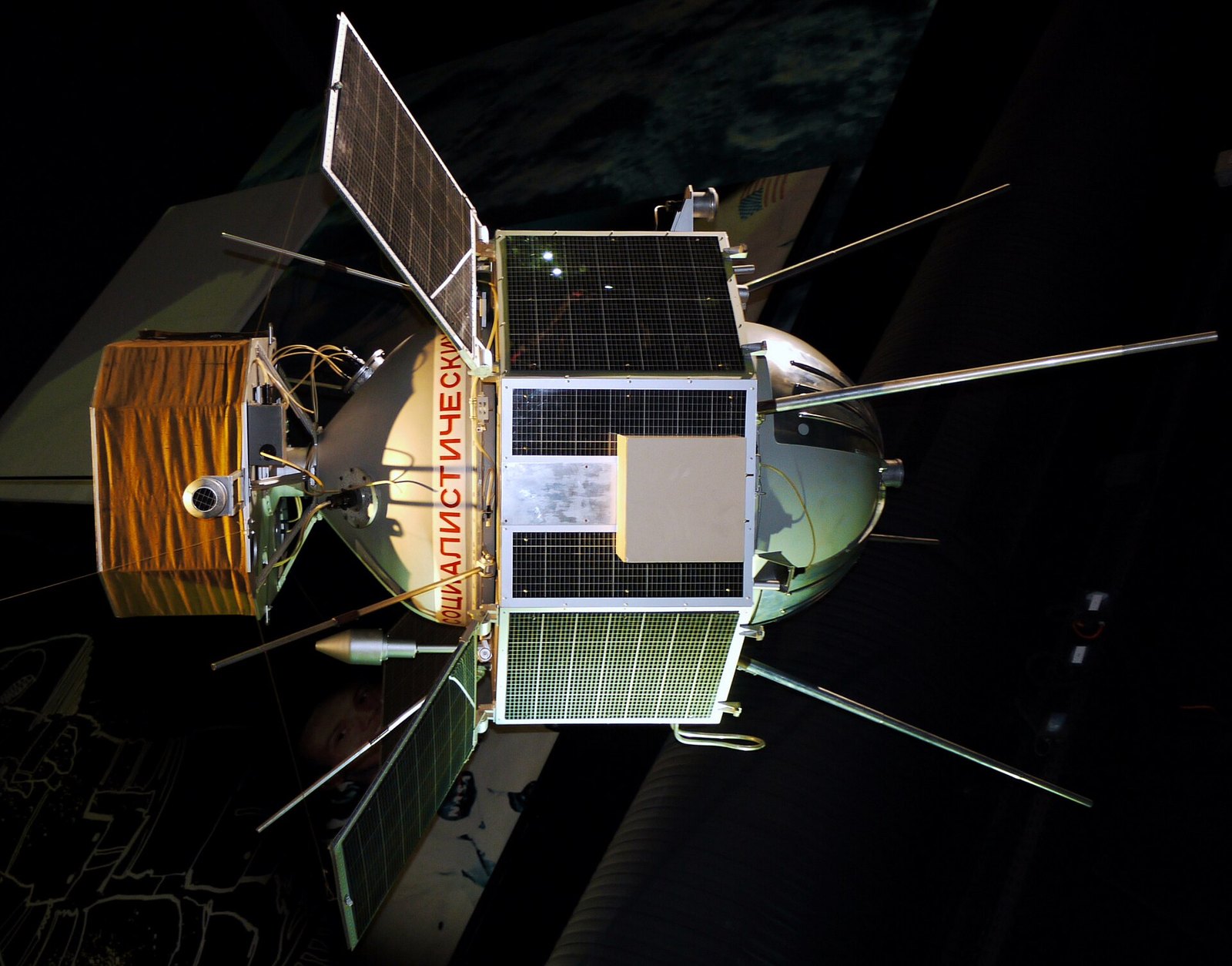
In GCAT's 28 October element file, Aureole 2's orbit is 146 by 159 kilometres, measured on 27 October: the lowest object in the decay queue, and the only one in it launched before 1982 (GCAT). Eighty-two catalogued objects sit below 250 kilometres with an apogee under 2,000 kilometres and fresh elements; the next oldest was launched in 1993.

It was launched on 26 December 1973 as 1973-107A, a 348-kilogram Yuzhnoye-built spacecraft on the DS-U2 bus, two metres long and 1.3 metres across, flown jointly by the Soviet ministry and CNES into a 399-by-1,971-kilometre orbit at 74 degrees (GCAT). It belonged to ARCAD, a Soviet-French programme studying auroras and the upper atmosphere at high latitudes (Gunter's Space Page). It worked until 30 April 1974 (GCAT) and has been derelict for fifty-two years since, shedding 1,812 kilometres of apogee to drag it had no way to resist.
The Kosmos-3M second stage that put it there, 1973-107B, came down on 24 July 2021 (GCAT) — forty-eight years after launch, and more than five years before the satellite it carried. That ordering is the usual one; we wrote about the mirror case on 13 October. A 348-kilogram object is also large enough to earn a reentry prediction rather than a bare decay confirmation, which is the subject of today's explainer on how a decay gets dated. At 146 kilometres the remaining life is days, and the exact date will be written into the catalog after the fact. The rest of the queue is on the derelict watch.
ClearOrbit's view
Aureole 2 is the good case. It is coming down because a 1973 launcher with no disposal plan happened to leave it low and round, and the atmosphere has spent fifty-two years finishing a job nobody designed. That is luck, not stewardship: the 2,494 debris objects in the 800-to-900-kilometre band will not be cleared by air on any useful timescale.
The objects worth removing are the ones drag will never reach, and the groundwork for removing them is unglamorous — catalog hygiene, published elements with honest epochs, and reentry records precise enough to check a prediction against. ClearOrbit has flown nothing. What we are building is the case that the derelicts above 700 kilometres have to be taken down deliberately, object by object, starting with the heaviest and the most crossed, in numbers anyone can pull from the same public files we use.
Reader mail
Have a better idea?Spotted something we got wrong?
We publish in public so the numbers can be checked. If a figure looks wrong, a source is missing, or you know something this piece should have said, send it over. One box, no sign-up.
Send an idea or correctionQuick question
Who should pay for cleaning up orbit?
Anonymous. You will see how others answered after you vote.