Scenario · · 7 min read
Seventy kilometres each side: the morning a stage closes the sky
In this scenario a 20-tonne core stage comes down across northern Europe at breakfast time. Nobody is hurt, nobody is at fault, and 1,100 flights are late.
In this scenario
A heavy-lift core stage of about twenty tonnes is left in a low, elliptical parking orbit after delivering its payload. It was never meant to come back under control; it has no restartable engine and no propellant reserve, and the mission profile has it decaying naturally within a fortnight. This is a hypothetical event. Nothing here has happened, and no real vehicle, operator or agency is named. Everything around the hypothetical is real, including the rules the controllers follow and the arithmetic they do.
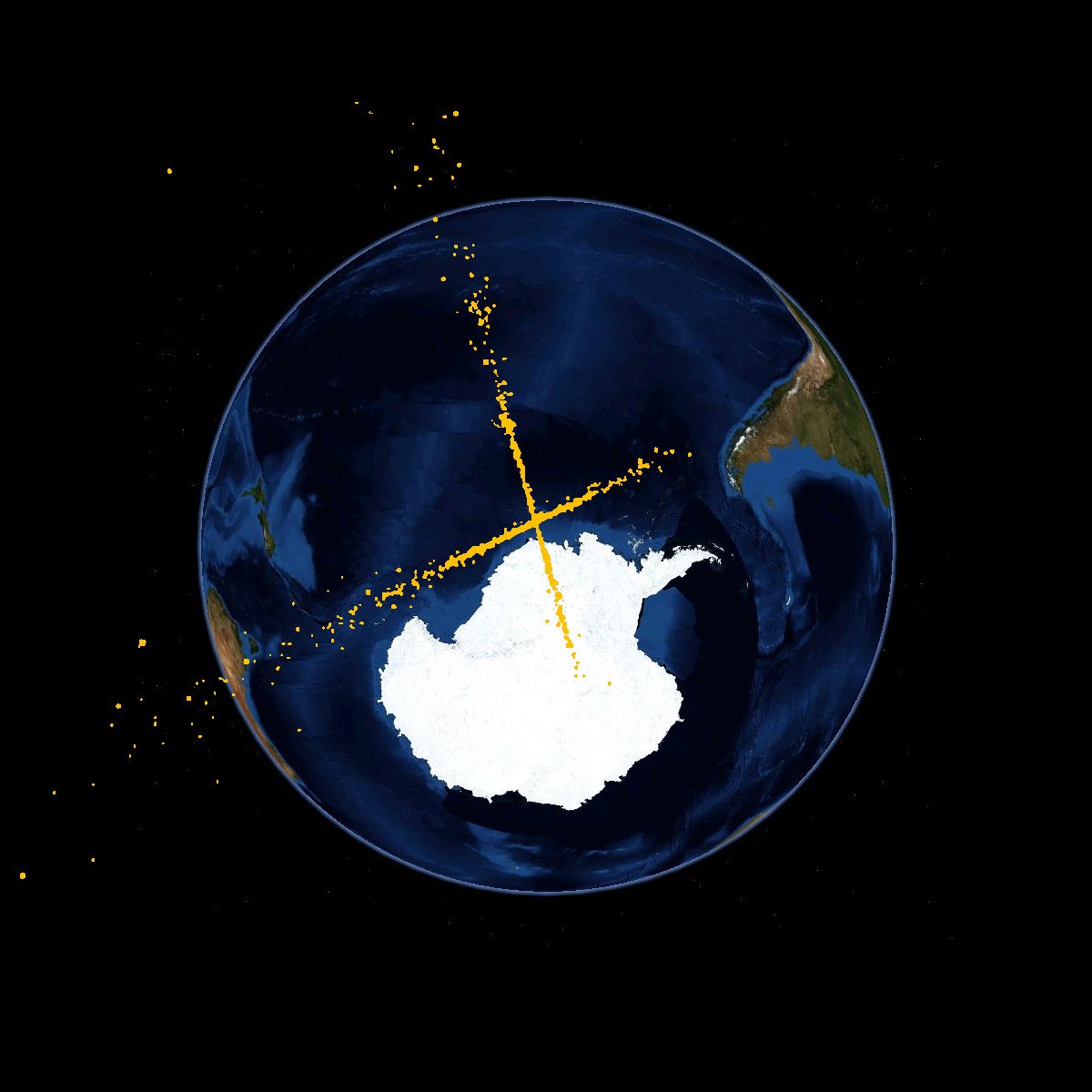
Eleven days after launch the stage is in a 160 by 210 kilometre orbit and losing ground fast. Tracking networks put the reentry inside a six-hour window centred on 07:40 UTC on a Tuesday. Six hours of uncertainty at orbital speed is a ground track that wraps the planet roughly four times. The stage will come down somewhere along a line that crosses, among other places, the North Atlantic approaches, the Low Countries, the Baltic and northern Japan, each of them during a working morning.
The dilemma arrives before the stage does
Nobody can narrow the window usefully until the last two or three orbits, and the last two or three orbits are about three hours. The aviation authorities have to decide earlier than that, because rerouting transatlantic traffic is a decision made at dispatch, not in the air.
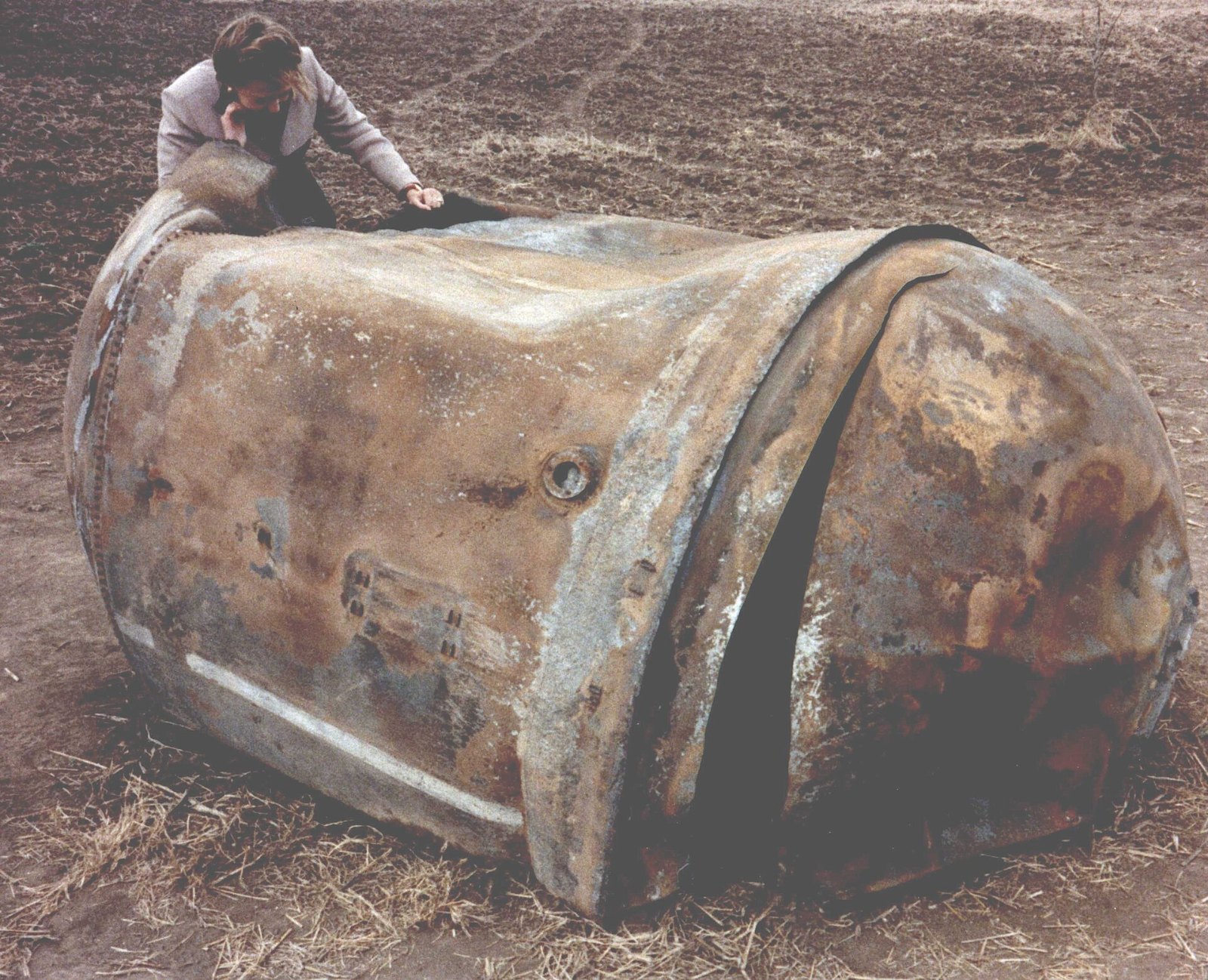
This is the exact situation European regulators have already faced. On 3 November 2022, with the core stage of a Long March 5B due back uncontrolled, EASA issued a safety information bulletin recommending that member states "implement and notifying airspace restrictions on a path of minimum 70 km and up to 120 km on each side of the estimated re-entry trajectory" EASA SIB 2022-09. Spain closed airspace over its northern regions and France closed airspace south of Corsica for an hour; the stage, roughly 21 tonnes dry, came down over the Pacific at 10:01 UTC the following day, nowhere near either SpaceNews.
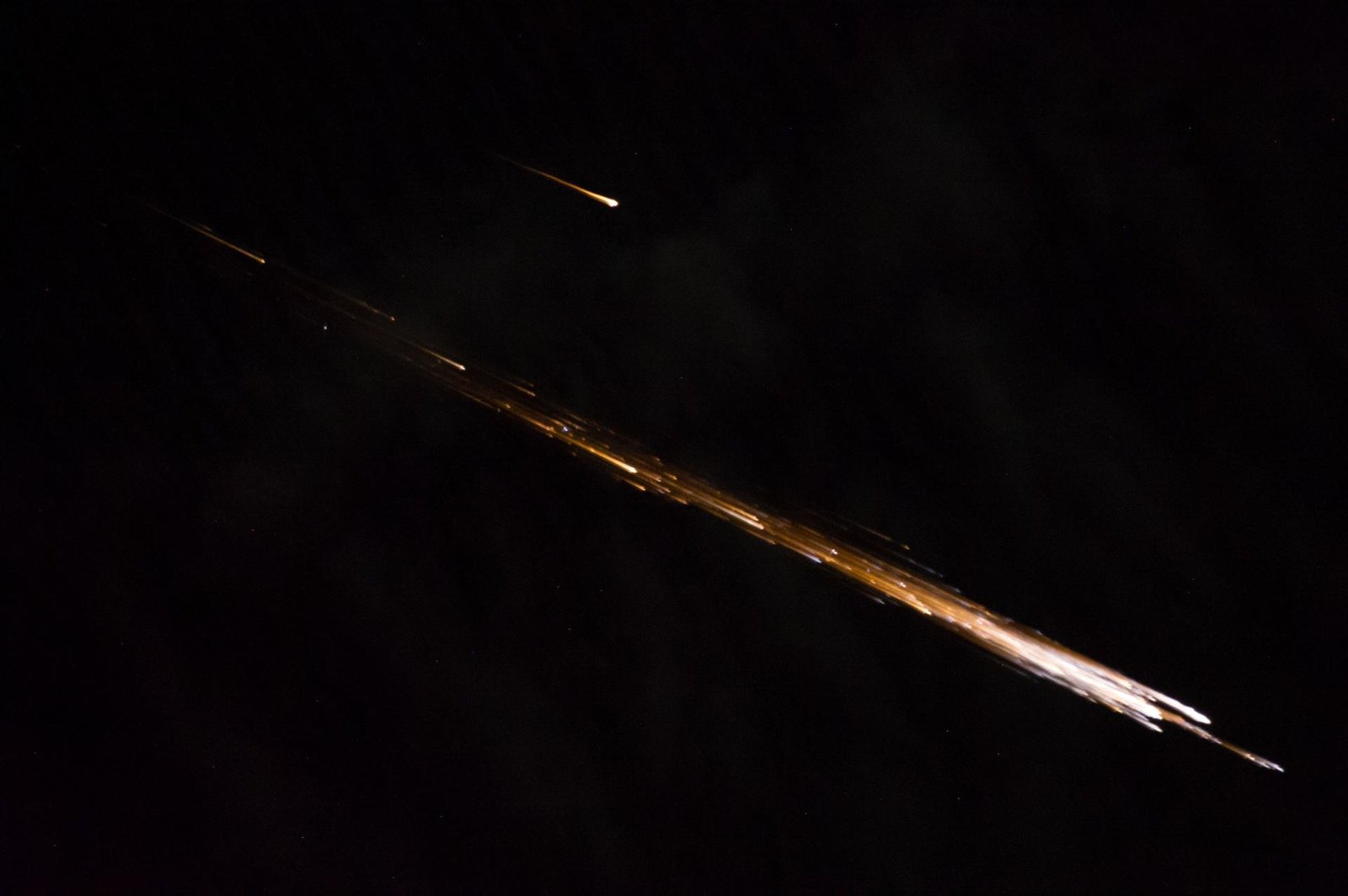
That is the shape of the problem. The corridor is drawn around a prediction, the prediction is mostly wrong about where, and the cost of being right is paid whether or not anything falls. In this scenario four national authorities apply the 70-kilometre rule to a ground track crossing some of the densest airspace on Earth, for a ninety-minute window each. About 1,100 flights are delayed, a few dozen are cancelled, and two long-haul services divert. The stage breaks up over the Norwegian Sea at 08:12 UTC, 400 kilometres from the nearest closed sector. No fragment comes within sixty kilometres of an aircraft.
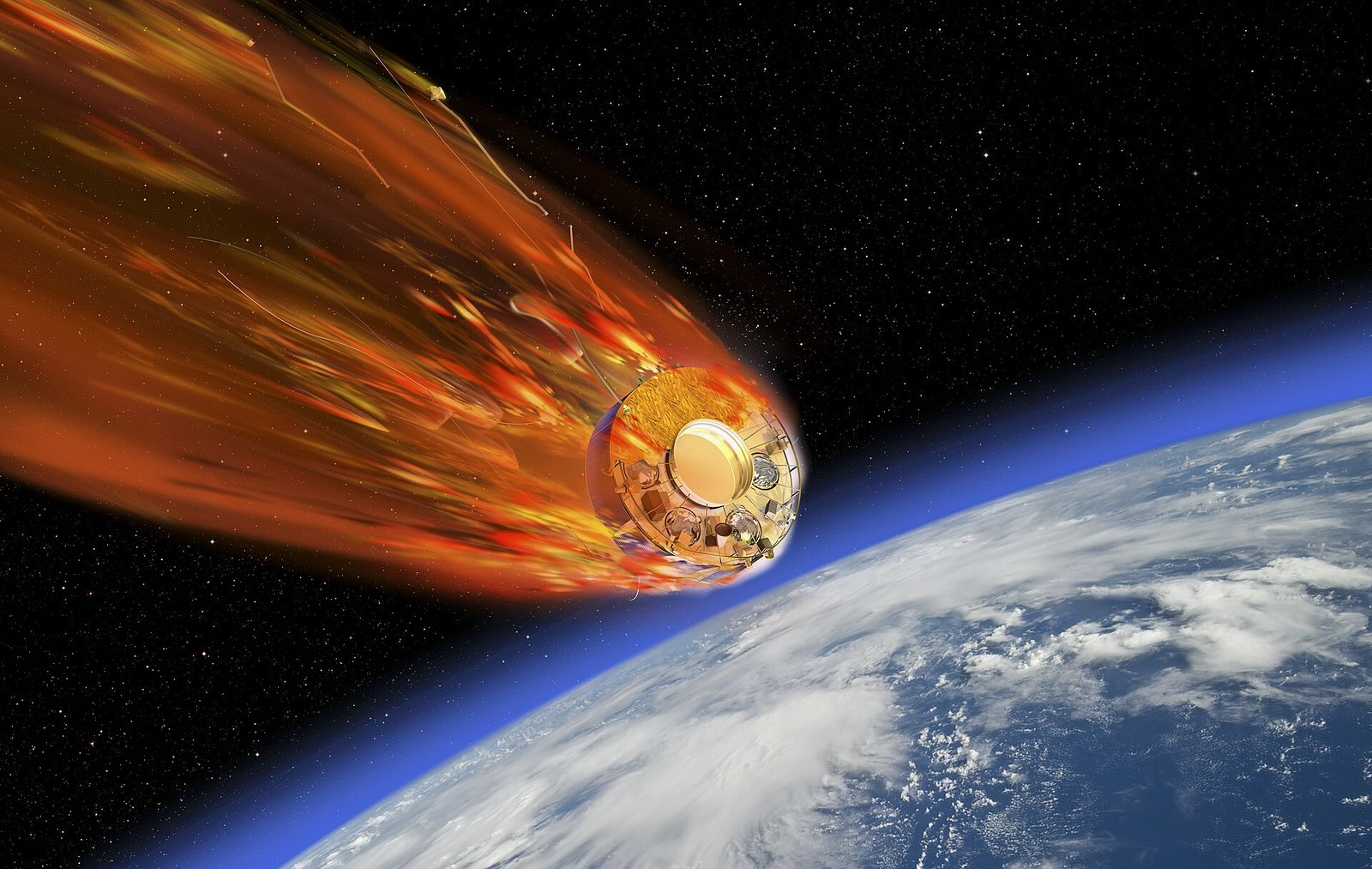
By lunchtime the event is being described in two incompatible ways. One is that the system worked: a known hazard was tracked, a corridor was cleared, nobody was hurt. The other is that an entire morning of European aviation was spent on a one-in-many-thousands risk, and that the authorities will be less willing to do it next time. Both are true, and the second is the dangerous one.
The numbers behind the dilemma
The risk is small per event and not small in aggregate. Wright, Boley and Byers put the annual probability that an uncontrolled rocket body reenters through the very densest airspace — the peak-50 regions immediately around major airports — at 0.8%. For the larger busy regions, the peak-10 airspace covering the northeastern United States, northern Europe and the big Asia-Pacific metropolitan areas, it is 26% a year. For peak-5 airspace, comparable to what southern Europe closed in November 2022, it is 75% a year Scientific Reports.
Three quarters of a chance per year, in other words, that somebody somewhere faces this decision in airspace as busy as the airspace already closed once. The strike risk itself stays remote: the same paper puts the 2023 annual probability of a rocket body hitting an aircraft at 2.3 × 10⁻⁶, about one in 430,000, with an associated annual casualty risk of one in 2,200 Scientific Reports. An aircraft is a small target and the sky is enormous. The authors' point is not that a strike is likely, it is that the dilemma is now routine, and that closing airspace has its own costs that grow with exactly the traffic density that makes closing it tempting.
The supply of these events is already fixed. More than 2,300 rocket bodies are in orbit and will eventually reenter uncontrolled, a stock that grows by roughly 30 to 40 a year Scientific Reports. Today's catalog lists 2,113 spent rocket bodies still on orbit GCAT. ESA's latest environment report notes that more than three intact satellites or rocket bodies reenter the atmosphere every day on average, against about ten new payloads launched daily ESA. Almost all of those reentries are small, or over water, or both. The scenario above only needs one of them to be large and unlucky in its timing.
What would have prevented it
Not removal. Nothing in orbit today could have caught this stage in eleven days, and nothing will be able to for years; active removal of a derelict remains Proposed, with nothing Flown.
What would have prevented it is a design decision taken before launch. A stage with a restartable engine and a propellant margin performs a controlled deorbit into an ocean clearance area, a practice that is Flown routinely on many vehicles and absent on others. Where full control is not available, a targeted reentry can still do most of the work: ESA brought the Cluster spacecraft Salsa down over a remote part of the South Pacific on 8 September 2024, within four seconds of prediction, by adjusting its orbit nine months earlier even though the satellite had no controlled-reentry capability of its own ESA. Making either approach mandatory for all large stages is Proposed, and is the single change that would shrink the problem at its source.
The other half of the answer is cheaper and duller: knowing where the thing is. A six-hour window exists because tracking a tumbling stage through a variable upper atmosphere is hard, and the atmosphere's density on the day depends on solar activity nobody models perfectly. Narrowing that window from six hours to one would turn four national closures into one short one. That is instrumentation and modelling work, and it is covered in how tracking works and in what the stages themselves do on the way down in what reentry actually does.
ClearOrbit's view
The reason to take this scenario seriously is not the chance of a strike. It is that the aviation system is being asked, more and more often, to absorb a cost created entirely by somebody else's launch, with no mechanism to recover it and no say in whether the stage was designed to come home safely. That arrangement does not survive being tested every year.
We think the honest framing is that uncontrolled reentry of a large stage is a form of unpriced disposal. It is cheaper than a deorbit burn because the delay costs land on airlines, the closure costs on national authorities, and the residual risk on whoever is underneath. Where controlled or targeted reentry is practicable, it should be the condition of launch rather than a courtesy, and where it is not practicable the operator should be the one paying for the corridor.
Removal does not help with this problem, and we would rather say so than claim otherwise. The 2,113 stages already up there will come down the way they were built to come down. What removal eventually buys is the other end of the same ledger: the derelicts at 800 kilometres that will not reenter inside a human lifetime and will not close anyone's airspace, but will keep breaking up into the fragments that make orbit worse. Both problems come from the same decision not to design for the end of the mission. Only one of them has a deadline the public can see.
Reader mail
Have a better idea?Spotted something we got wrong?
We publish in public so the numbers can be checked. If a figure looks wrong, a source is missing, or you know something this piece should have said, send it over. One box, no sign-up.
Send an idea or correctionQuick question
If you could fund one thing first to cut collision risk in low Earth orbit, what would it be?
Anonymous. You will see how others answered after you vote.