Daily briefing · · 3 min read
Orbit on 22 September 2026: twenty-seven fragments in a band that held nine
33,643 objects on orbit. Every one of the day's twenty-seven new debris entries shares a single 260 km orbit, with no parent object assigned to any of them.
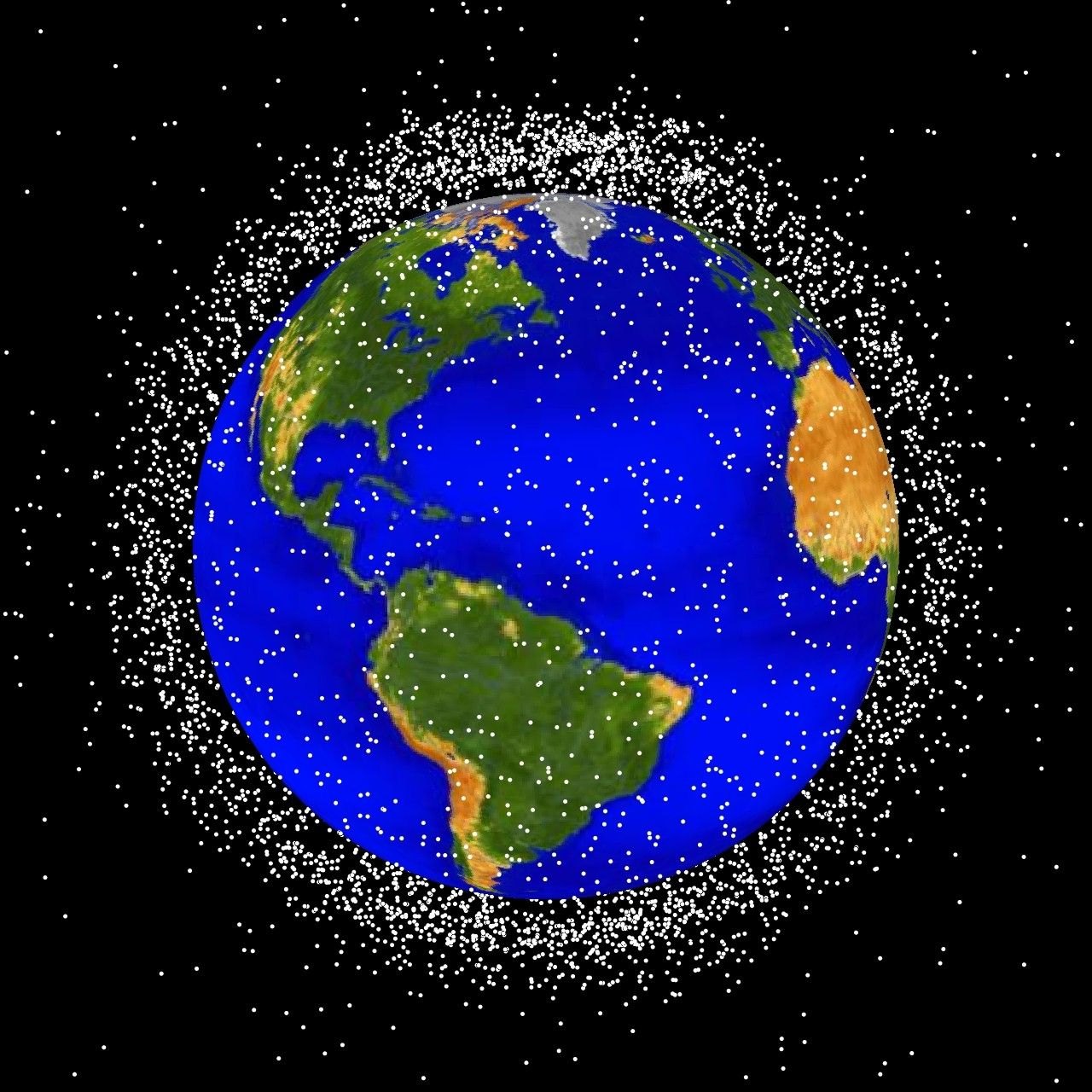
Today's catalog refresh counts 33,643 objects in Earth orbit, twenty-six more than yesterday: 19,569 payloads and 14,074 rocket bodies, fragments and discarded components (GCAT). The payload count actually fell by two. All of the day's growth is debris — and unusually, every new fragment is in the same place.
What changed
Catalogued fragmentation debris rose from 10,608 to 10,635 (GCAT). That increase is not spread across the catalog; it is a single cluster. The 200-to-300 kilometre shell held nine debris objects yesterday and holds thirty-six today. Those twenty-seven new entries are the entire day's change, and in a band normally almost empty of fragments, that is a conspicuous arrival.
The rest of the ledger is quiet. The 30-day launch tally reads 250 new objects, down from 278 as the window rolls forward. Fifty-nine objects re-entered in the last 30 days, though the catalog has recorded none since 14 September — an eight-day gap that reflects decay dates being entered after the fact rather than a week without reentries. 197 catalogued objects now have perigees below 250 km (GCAT).
Object of the day: twenty-seven fragments with no parent
GCAT lists them as S290001 through S290027, under the name "Starshield debris?" — the question mark belongs to the catalog, not to us. All twenty-seven share an orbit of 260 by 266 km at 70.01 degrees inclination, with an element epoch of 20 September 2026. None carries a launch date, a parent object, or a US catalog number, and the owner field reads NRO (GCAT).

This is what the catalog looks like when something sheds pieces and the tracking network sees them before anyone identifies the source. It is not a confirmed breakup: no parent has been assigned, and the identification is explicitly provisional. The neighbourhood is not in doubt. The National Reconnaissance Office's proliferated architecture flies a large fleet through this exact band — GCAT lists 230 NRO payloads between 69 and 71 degrees of inclination, the lowest of them at a perigee of 267 km. The fragments sit just underneath.
At 260 km the atmosphere settles the matter. Air that low is thick enough to bring an unpowered object down in weeks to months; NASA's rule of thumb returns anything below 600 km within a few years, and the timescale collapses as you descend (NASA ODPO). Twenty-seven fragments is an uncomfortable headline and a small problem. The same event 600 kilometres higher would have been a permanent one.
Where the junk is
The busiest shell is 400 to 500 km, with 10,175 objects, of which 9,989 are payloads and only 186 debris: crowded and self-cleaning. The dangerous shell is 800 to 900 km — 2,765 objects, 2,487 of them debris or rocket bodies — in air far too thin to help on any human timescale (GCAT).
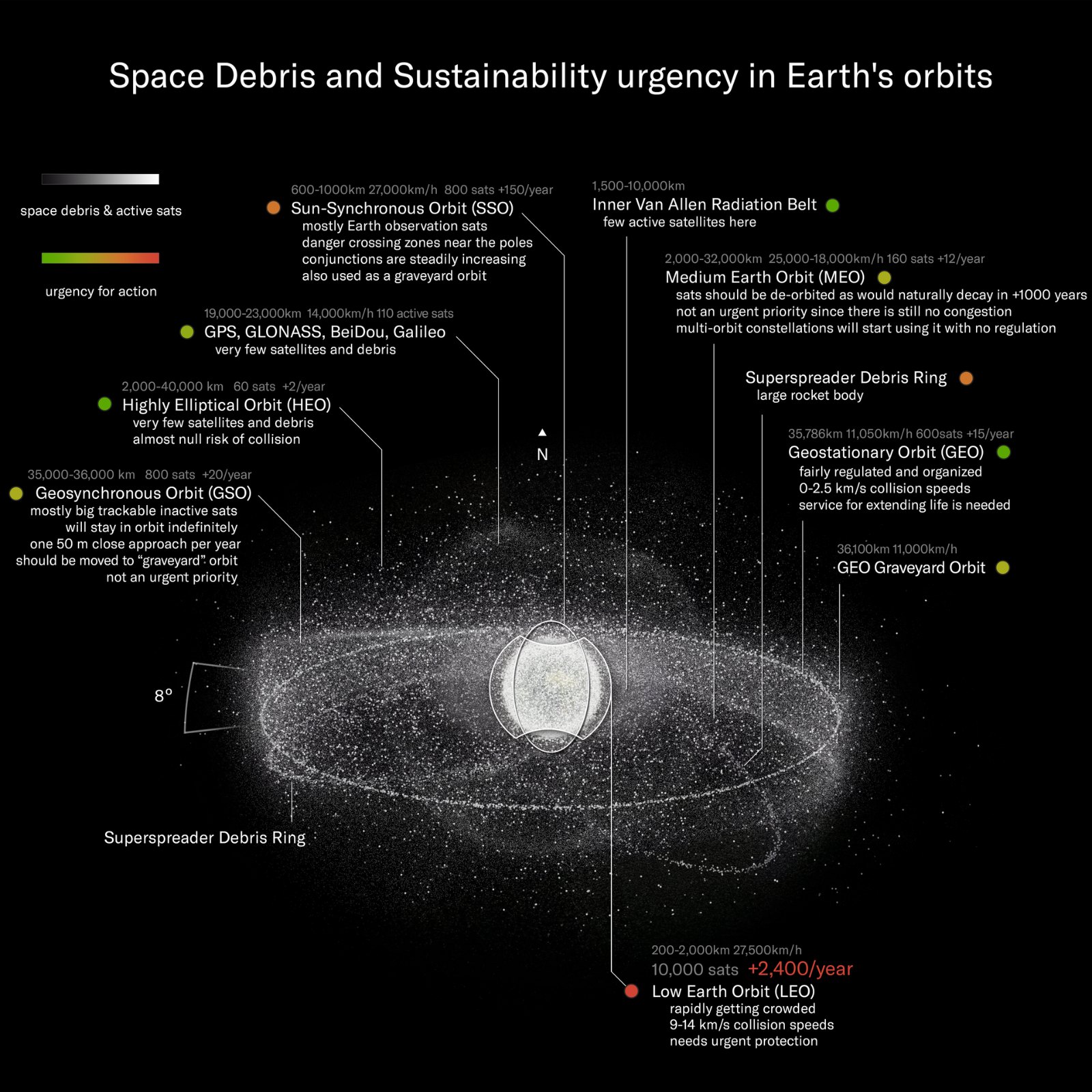
Below the catalog sits the population nobody tracks. ESA's MASTER-8 model, reference population February 2026, estimates 68,450 objects larger than 10 cm and 1.5 million between 1 and 10 cm, against more than 17,000 tonnes of material in orbit (ESA DISCOS).
ClearOrbit's view
The catalog noticed this within a day. Attribution is what lags: twenty-seven objects can be measured, named and given orbits while the question of what they came off stays open indefinitely. Detection is a solved problem. Accountability is not.
We would like a standing attribution clock (ClearOrbit vision): when a cluster of fragments appears inside an operator's shell, that operator confirms or rules out its own hardware within a fixed, published window, and the tally of unresolved clusters is kept in public. It would not have prevented today's entries, but it would make the next twenty-seven traceable — the precondition for anyone being asked to clear them.
The luck here is altitude: these fragments will be gone without anyone lifting a finger, because 260 km does work that the orbital clock will not do at 800. The objects that need removing are those parked where the air ran out, and nobody has removed a piece of debris yet. The cheap version of this problem is designing hardware to come down on its own; the expensive version is waiting at 800 kilometres.
Reader mail
Have a better idea?Spotted something we got wrong?
We publish in public so the numbers can be checked. If a figure looks wrong, a source is missing, or you know something this piece should have said, send it over. One box, no sign-up.
Send an idea or correctionQuick question
Who should pay for cleaning up orbit?
Anonymous. You will see how others answered after you vote.