Daily briefing · · 3 min read
Orbit on 26 September 2026: 1,262 Starlinks below 400 kilometres, and one of them at 173
33,646 objects on orbit, identical to the last refresh. The movement is inside one constellation, where 1,262 satellites already sit in air thick enough to finish them.
Today's refresh counts 33,646 objects in Earth orbit: 19,556 payloads and 14,090 rocket bodies, fragments and discarded components (GCAT). Every figure matches the last refresh, and the catalog file carries its own update stamp of 24 September, so today's numbers are Thursday's. What moved is the calendar underneath them: the 30-day launch window has fallen from 232 new objects to 205, and the seven-day reentry count from 19 to 11, because both windows slid across a static ledger (GCAT).
What changed: 1,262 satellites in air thick enough to matter
The motion today is inside one constellation. Starlink accounts for 11,134 of the 19,556 payloads on orbit — just under 57 per cent of all catalogued spacecraft, working or dead — at a mean altitude of 458 kilometres (GCAT).
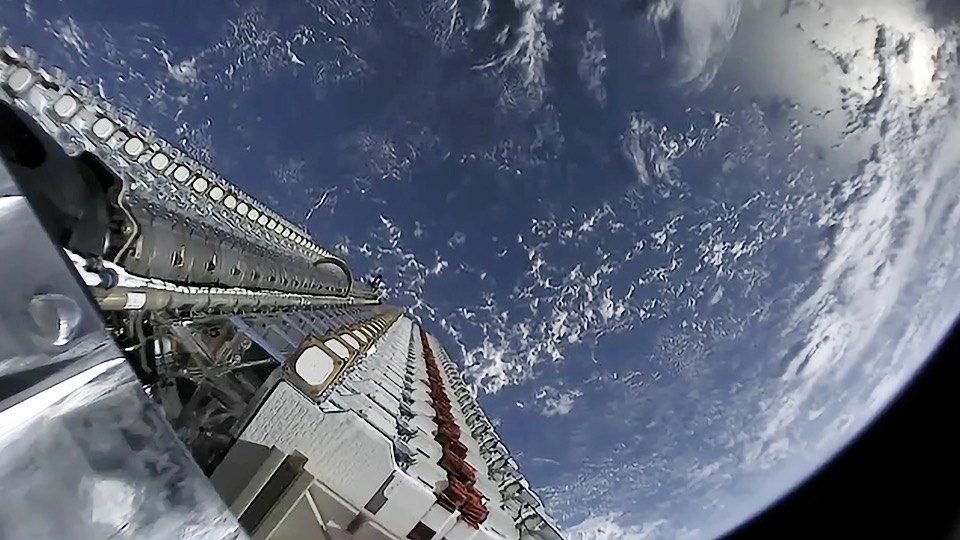
12,886 have been launched and 11,134 remain, so roughly 1,750 have already left orbit. The flow is current: of the 177 objects that re-entered in the last 60 days, 49 were Starlink (GCAT). The queue behind them is visible in the element sets — 1,262 Starlink satellites sit below 400 kilometres and 486 below 300 (GCAT), an altitude nothing holds without thrust, and NASA returns anything below 600 kilometres within several years (NASA ODPO). Disposal at this scale is Flown, not proposed.
Object of the day: Starlink 3069, five years and twelve days old
Starlink 3069, catalog number 49176, is a 297-kilogram spacecraft listed as Starlink Group 2-1-46 and launched on 14 September 2021 into a 70-degree orbit. Its 24 September elements put it at 173 by 186 kilometres (GCAT): five years and twelve days old, with days to weeks left.
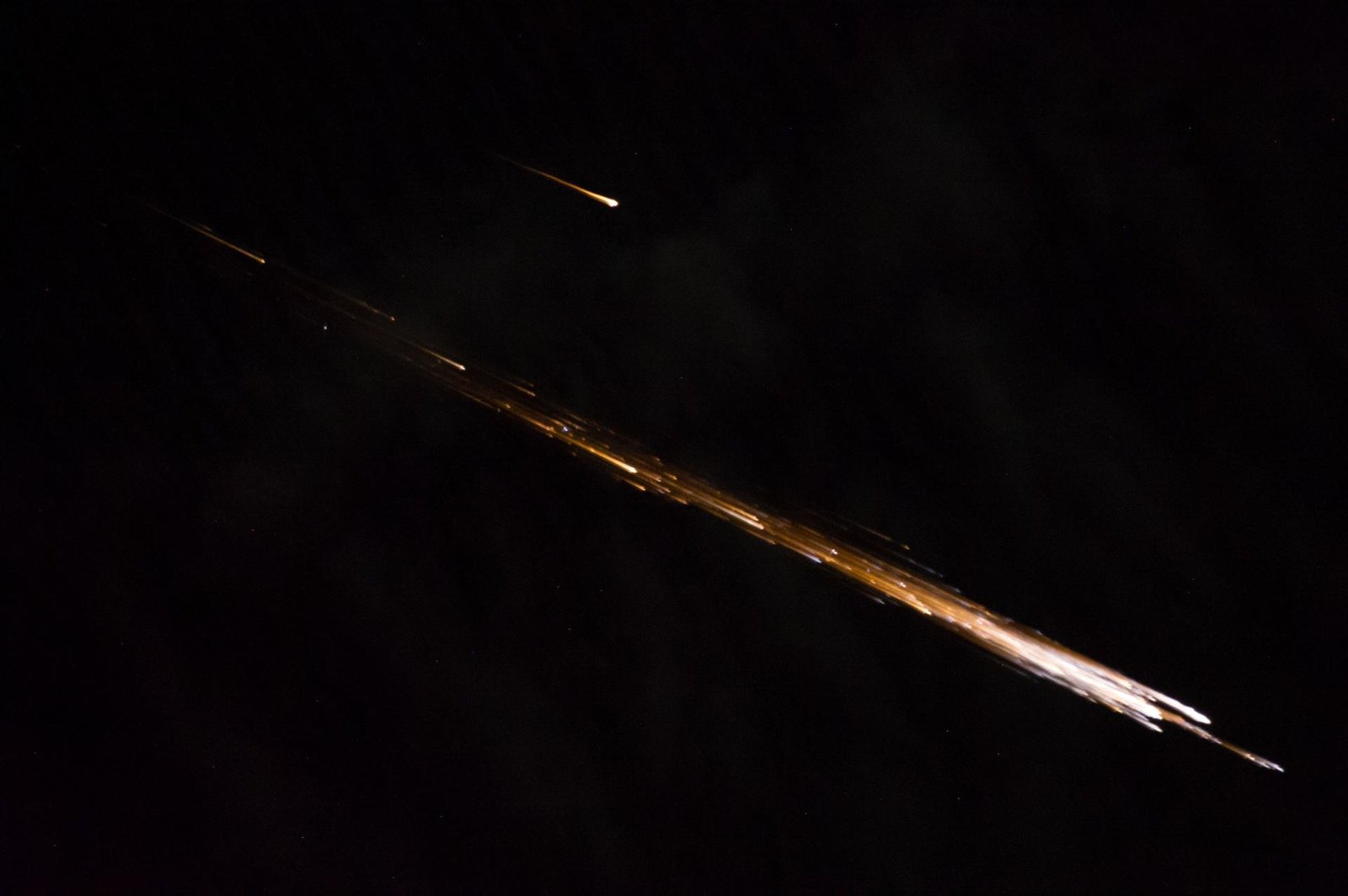
Its batch tells more. Group 2-1 put 51 satellites up on one flight; 13 have re-entered, the first on 17 December 2024 and the most recent on 20 May 2026, and 38 are still on orbit (GCAT). One shell, one design, retiring in a staggered line across two years rather than all at once: not a cliff, but a steady drip out of a shell low enough for the atmosphere to reach.
The shells that do not drain
Starlink has nothing above 600 kilometres, and that is the point. The 400 to 500 kilometre band holds 10,197 objects, 10,013 of them payloads and only 184 debris: crowded, but self-clearing. The 800 to 900 kilometre band holds 2,769 objects, 2,497 of them debris or spent hardware (GCAT), where decay is measured in centuries and above 1,000 kilometres in a thousand years or more (NASA ODPO).
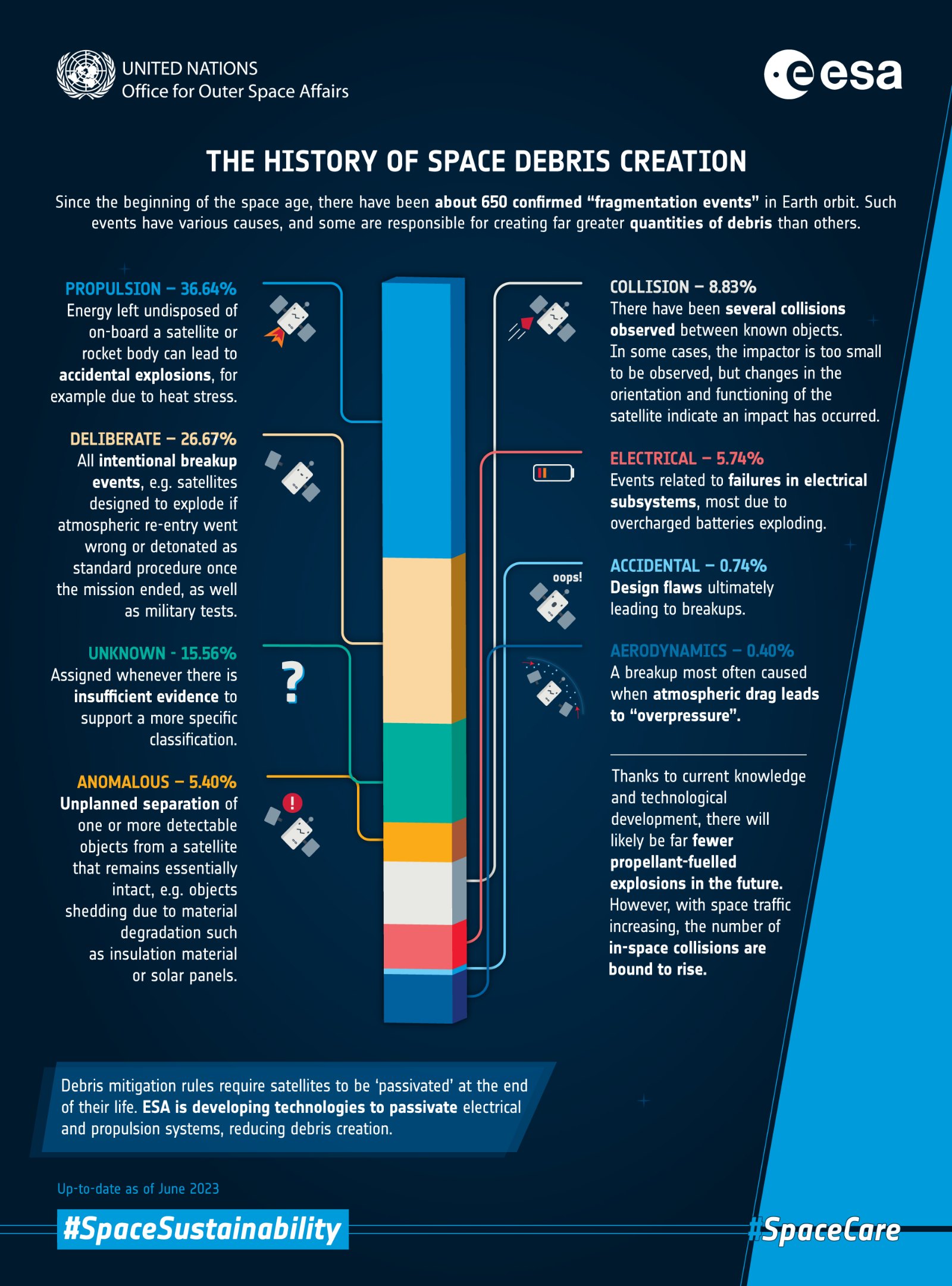
Two events made most of it. 2,127 Fengyun-1C fragments are still tracked at a mean altitude of 832 kilometres (GCAT), ; that 2007 destruction and the 2009 Iridium-33 and Cosmos-2251 collision account for about a third of all catalogued debris (NASA ODPO). ESA's MASTER-8 model (reference population February 2026) puts the wider population at 68,450 objects larger than 10 centimetres and some 1.5 million between 1 and 10 centimetres (ESA DISCOS).
ClearOrbit's view
Starlink is the strongest evidence available that disposal is an engineering choice, not a physics problem. Some 1,750 spacecraft have come down because they were flown low and built to be let go, and 141 catalogued objects now have perigees below 250 kilometres that will need no one's help (GCAT).
The lesson does not transfer upward. Nothing in the 800 to 900 kilometre shell is coming down on its own, and no one has cleared any of it. Low disposal is cheap because the orbital clock works for free; at 850 kilometres that clock runs slower than institutions last.
So the two problems belong apart in policy and in budgets (ClearOrbit vision). Below 600 kilometres the answer is known and should simply be required of everyone: design the satellite to come down on its own and fly it low enough that the air finishes the job. Above 800 the answer has to be built, and the cheapest first step is to stop launching into those shells without something a future spacecraft can hold on to.
Reader mail
Have a better idea?Spotted something we got wrong?
We publish in public so the numbers can be checked. If a figure looks wrong, a source is missing, or you know something this piece should have said, send it over. One box, no sign-up.
Send an idea or correctionQuick question
Who should pay for cleaning up orbit?
Anonymous. You will see how others answered after you vote.