Scenario · · 7 min read
The week the air came up: a severe storm over a crowded shell
In this scenario a severe geomagnetic storm thickens the air at 400 kilometres, thousands of satellites move at once, and for four days nobody can say where anything is.
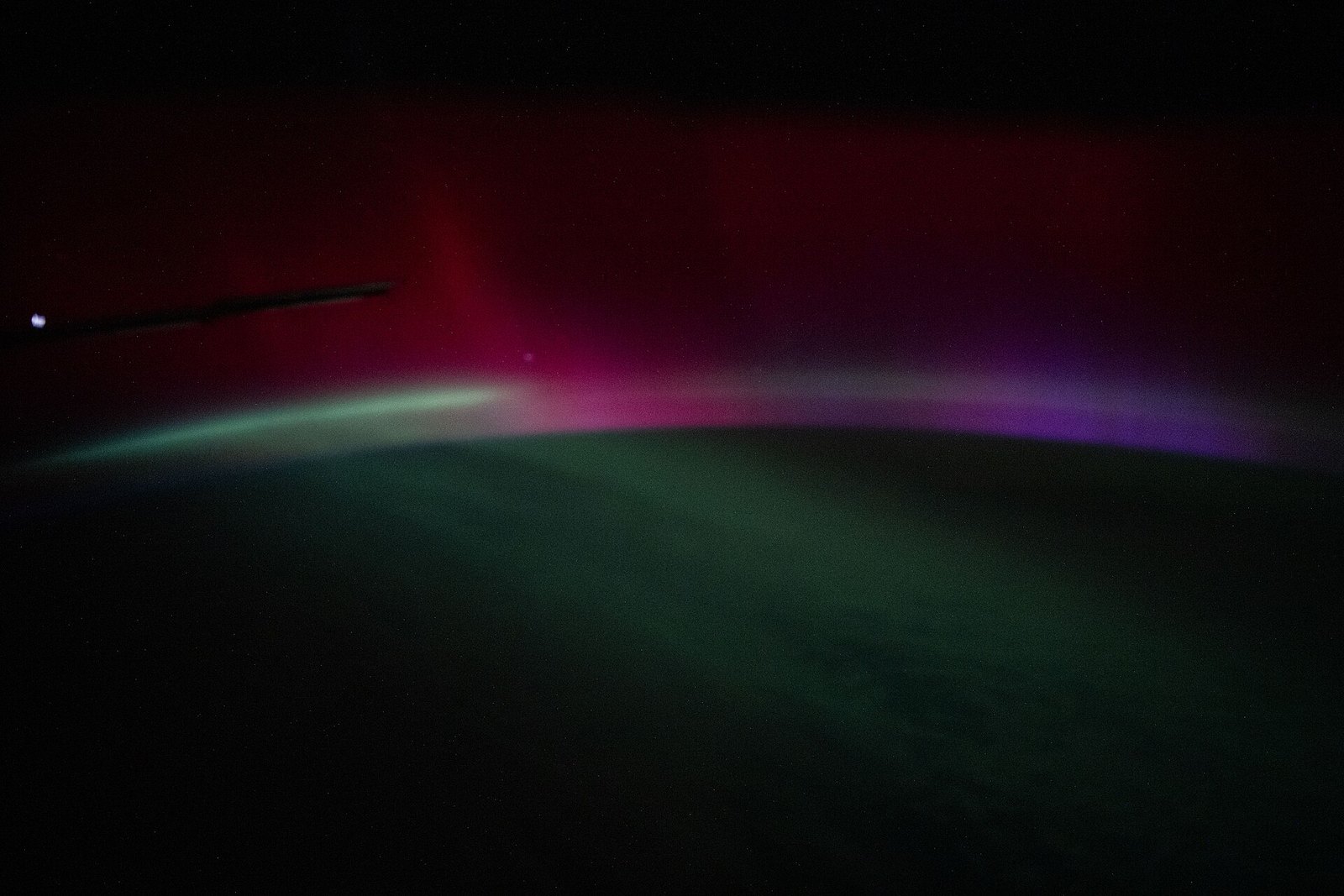
In this scenario it is a Tuesday in March 2027, and a fast coronal mass ejection leaves the Sun on a line that intersects Earth. Forecasters give it about eighteen hours' warning and rate the expected disturbance at the top of the scale. Nothing in what follows has happened. Every number used to set the stage is real and current, and every effect described has a measured precedent.
The shell it arrives over
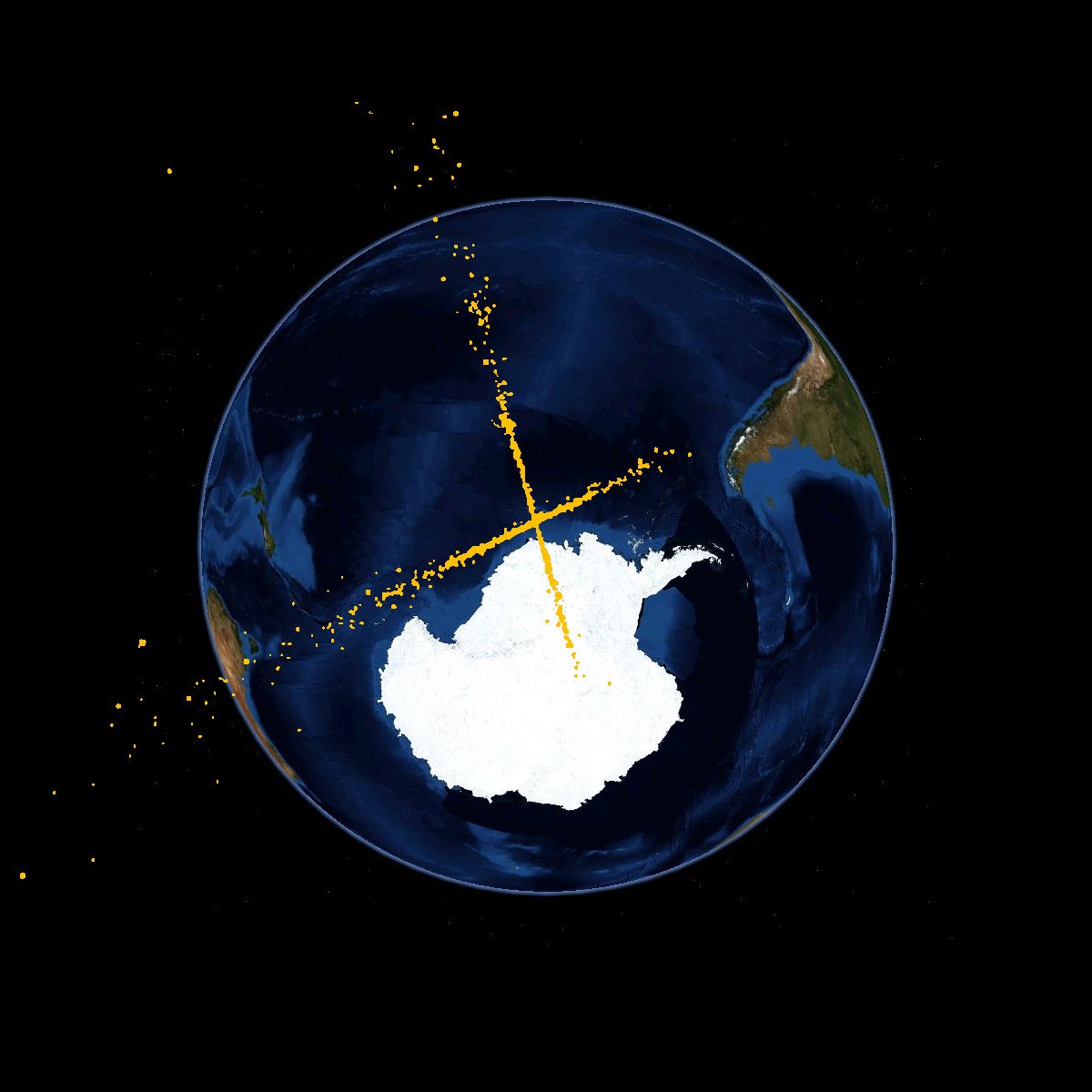
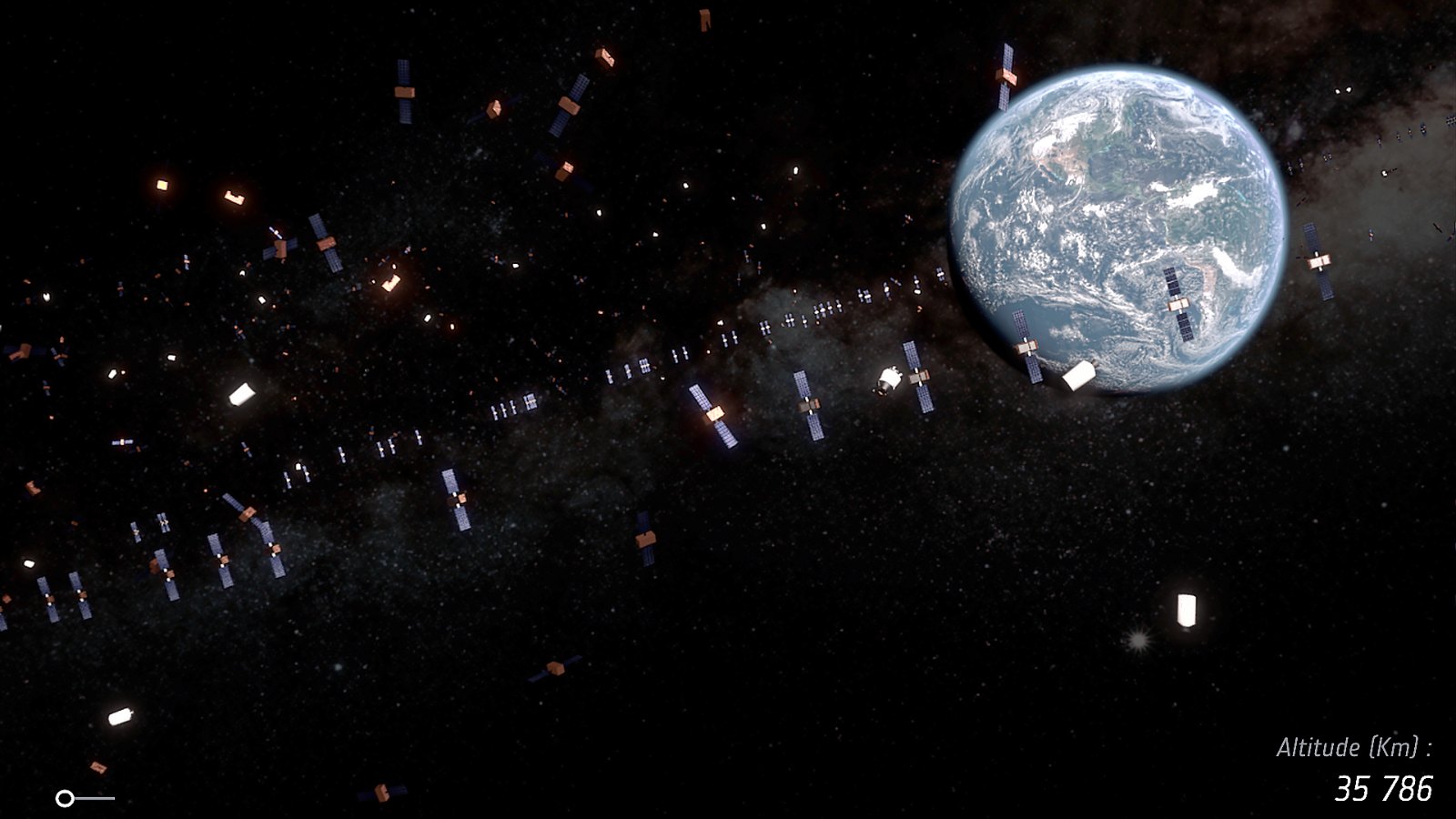
The arithmetic of the target matters more than the storm. There are 10,197 catalogued objects between 400 and 500 kilometres, and 10,013 of them are working payloads rather than debris GCAT. Starlink alone accounts for 9,225 of them, with a further 1,262 Starlinks already below 400 kilometres, either on their way up from an insertion orbit or on their way down for good. This is the densest band of functioning hardware that has ever existed, and it sits exactly where the atmosphere still has a vote.
Above it, the picture inverts. Between 800 and 900 kilometres there are 2,769 objects, of which 2,497 are debris and only 272 are payloads GCAT. A storm barely touches that band. The air up there is too thin for a density spike to matter on any human timescale, which is the whole reason the debris is still there. The storm in this scenario is therefore an event that afflicts the living and leaves the dead untouched.
Hours 0 to 12: the air thickens
The measured effect of a severe storm on the upper atmosphere is not subtle. During the geomagnetic superstorm of 10 to 11 May 2024, mass density at 400 kilometres reached up to six times the value measured twelve hours earlier, and for one tracked object the orbital decay rate rose from roughly 38 metres a day to 180 metres a day, a factor of more than four Parker & Linares.
In this scenario the same thing happens over a shell that has grown since. Constellation operators do what they did in 2024: they turn their satellites edge-on to the flow, suspend orbit-raising, and in the phrase used in the literature, thousands of satellites begin to manoeuvre en masse Parker & Linares. Roughly ten thousand active payloads in low orbit change their drag profile, their thrust plan, or both, inside a few hours.
Anything without an engine simply sinks. The objects already below 250 kilometres — 114 of them in today's catalog GCAT — come down days ahead of their predicted dates. So do a scattering of derelicts in the 500 to 600 kilometre band, unevenly, because a tumbling dead satellite's effective cross-section is not something anyone knows precisely.
Hours 12 to 96: nobody knows where anything is
This is the part of the scenario that does the damage, and it is not the part people expect.
Orbit predictions rest on an atmosphere model. When the real atmosphere departs from the model by a factor of six, every propagated position in the catalog degrades at once, and the error is largest exactly where the traffic is thickest. The 2024 event produced precisely this: many conjunctions anticipated before the storm were invalidated because the satellites involved had manoeuvred and ended up somewhere else entirely Parker & Linares. NOAA's own scale is blunt about the operational consequence, listing problems with orientation, uplink, downlink and tracking satellites at the severe and extreme levels NOAA SWPC.
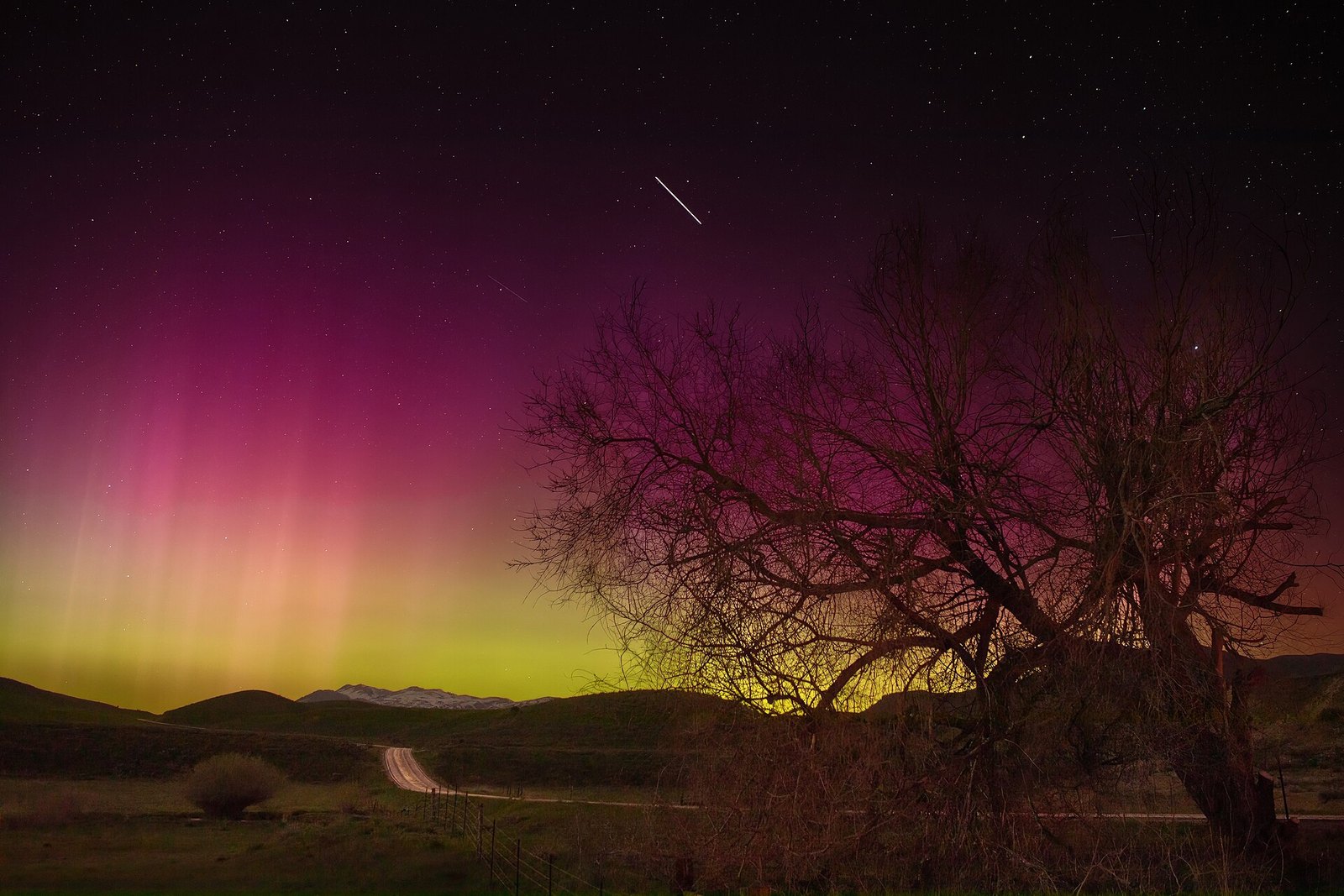
So for four days in this scenario, conjunction screening across low orbit is running on stale states. Warnings arrive for encounters that will not happen. Encounters that will happen generate no warning. Operators who would normally act on a screening message have nothing trustworthy to act on, and the ones who do manoeuvre make the catalog staler still. Tracking networks work through the backlog, but re-establishing a good state vector on tens of thousands of objects that all moved at once takes days, not hours. How that work is normally done is covered in how space debris tracking actually works.
The people best placed to ride this out are the ones with engines, telemetry and a control room. The 2,497 dead objects at 800 to 900 kilometres have none of those things, and they keep closing on each other on schedule, blind to the fact that the screening service watching them has temporarily gone deaf.
What the precedent says
The February 2022 case is the reason none of this is speculative. SpaceX launched 49 Starlink satellites on 3 February 2022 into an insertion orbit with a perigee near 210 kilometres. Two moderate magnetic storms followed, peaking at a Dst of −77 nT, and the reported increase in atmospheric drag was up to 50 per cent above previous launches. Thirty-eight of the 49 satellites reentered J. Space Weather Space Clim..
That was a moderate storm, against a single batch, in a much emptier sky. The scenario here is a severe one against a shell holding ten thousand working payloads, and the loss of satellites is not the interesting part. The interesting part is the interval in which the collective picture of low orbit stops being reliable while the derelicts carry on regardless.
What would actually help
Three things, in descending order of how ready they are.
Better atmospheric density modelling is the cheapest and the least glamorous. Every improvement in forecasting the thermosphere during a storm directly shortens the blind window, and it is ordinary science on real data rather than new hardware.
Operational discipline in the shell is next. Constellation operators already coordinate manoeuvres; the storm case argues for publishing planned states during an event rather than after it, so that screening services can work with intent instead of inference.
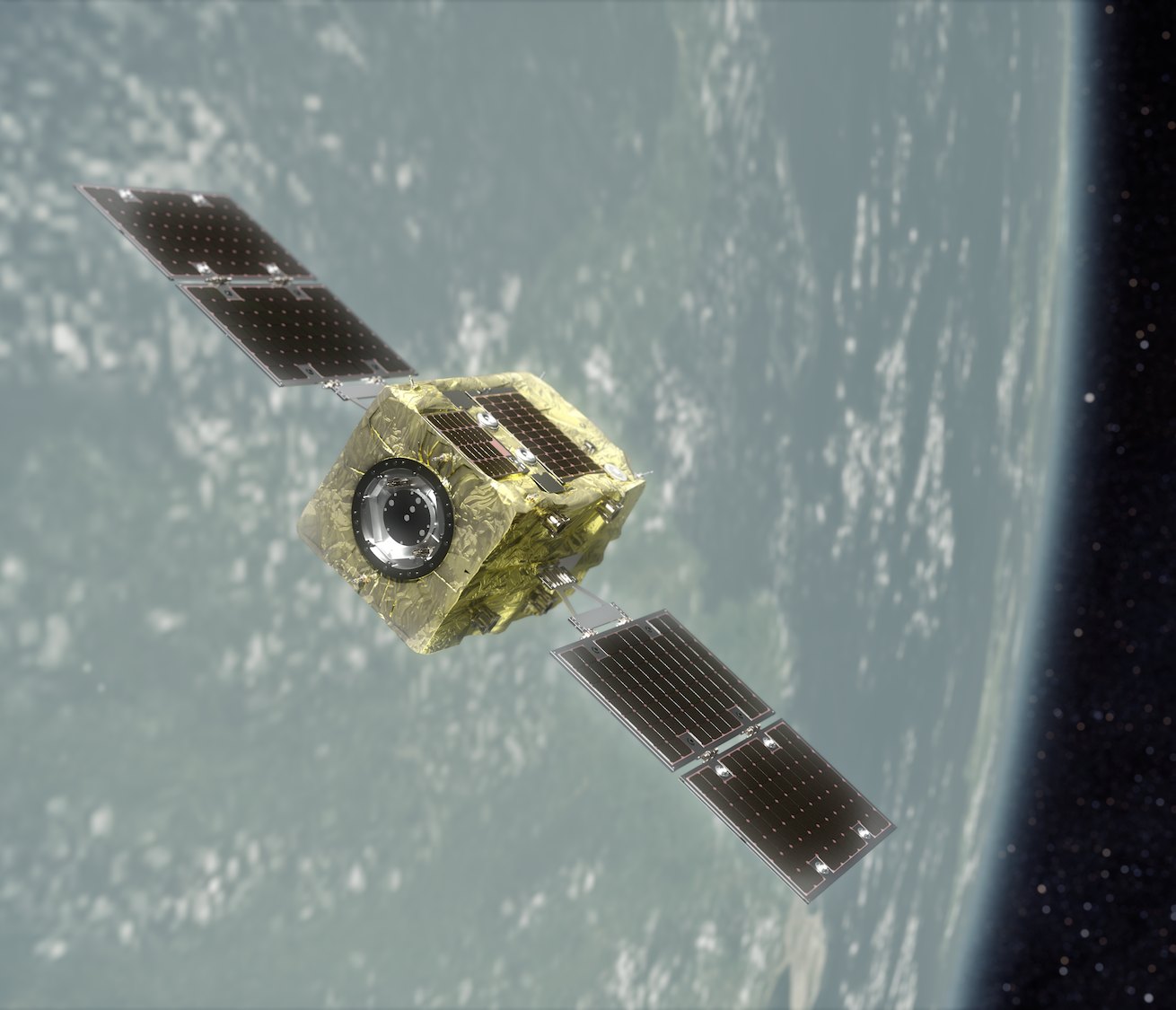
And then there is the thing that does not exist. Just-in-time collision avoidance, a Proposed concept, would nudge one of two converging derelicts hours before a predicted encounter — the idea is set out in just-in-time collision avoidance. It has never flown. Nor has any removal mission: the closest anyone has come to handling a real derelict is Astroscale's ADRAS-J, which inspected a spent H-IIA upper stage at close range without touching it, and RemoveDEBRIS, which demonstrated a net and a harpoon against its own targets. Both are Flown; neither removed anything. If a storm week produced a genuine derelict-on-derelict conjunction at 800 kilometres, there is currently no instrument on Earth or in orbit that could do anything about it but watch. What that looks like afterwards is the subject of the 850-kilometre cascade.
ESA's modelled population already counts more than 660 fragmentation events and about 1.5 million objects between 1 and 10 centimetres ESA DISCOS. A storm does not add to that number directly. It adds to it by taking away, for several days, the ability to see the events that would.
ClearOrbit's view
We think the space weather case is the clearest argument against the idea that low orbit is a solved problem because the busy part self-cleans. It self-cleans beautifully. It also wobbles, all at once, whenever the Sun decides, and the machinery that keeps ten thousand satellites from hitting each other depends on a model of the air that is at its worst precisely when the traffic is at its most active.
The honest position is that the industry currently manages this by luck and by margin. The margin is real: most objects in the 400 to 500 kilometre band are actively flown by operators who can react. The luck is that no storm interval has yet coincided with a close approach between two large derelicts in a band that will not clear for a century.
What we want to build is the thing that turns that luck into a capability: hardware that can reach a dead object and change where it is going, on a timescale of hours rather than mission cycles. That is a ClearOrbit vision and nothing more today. But the storm scenario is a useful test of any removal plan, because it asks the right question — not how quickly you could take an object away, but whether you could do anything at all on the week when nobody can see straight.
Reader mail
Have a better idea?Spotted something we got wrong?
We publish in public so the numbers can be checked. If a figure looks wrong, a source is missing, or you know something this piece should have said, send it over. One box, no sign-up.
Send an idea or correctionQuick question
If you could fund one thing first to cut collision risk in low Earth orbit, what would it be?
Anonymous. You will see how others answered after you vote.
Sources
- GCAT, J. McDowell
- Parker & Linares, Satellite Drag Analysis During the May 2024 Gannon Geomagnetic Storm
- Unexpected space weather causing the reentry of 38 Starlink satellites in February 2022 (J. Space Weather Space Clim.)
- NOAA Space Weather Prediction Center: NOAA space weather scales
- ESA DISCOS space environment statistics